10 Best Under Sink Water Purifiers in 2026
This post contains affiliate links. As an Amazon Associate, we earn from qualifying purchases.
The iSpring RCC7AK-BN Alkaline RO System earns our best overall pick for its full NSF 58 certification and alkaline remineralization that restores balanced pH. For a space-saving design, the Waterdrop G3P600 Tankless RO System offers fast flow without a bulky tank, while the APEC Water ROES-50 delivers certified performance at a budget-friendly price.
Real talk: under-sink purifiers live in tight, dark cabinets. You need a system that fits your space, filters what’s actually in your water, and doesn’t require a plumbing degree to install. Tank-based models store water but take up room, while tankless units are compact but need an electrical outlet.
This guide is based on manufacturer specifications, certification data, and patterns we found in owner feedback across dozens of models. We evaluated each purifier on filtration effectiveness, installation requirements, footprint, and long-term maintenance costs so you can match the right system to your home.
Top 10 Under Sink Water Purifiers in the Market

Certain content that appears on this site comes from Amazon. This content is provided "as is" and is subject to change or removal at any time.
The Best Under Sink Water Purifiers, Reviewed
iSpring RCC7AK-BN Alkaline RO System
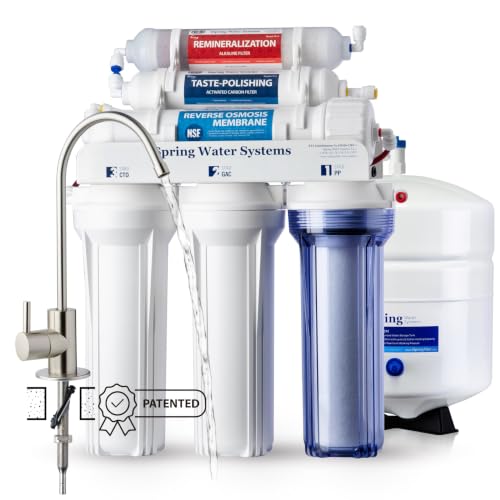
What We Like
- NSF 58 certified whole system
- Alkaline remineralization for balanced pH
- Transparent first-stage filter housing
- Patented top-mounted faucet design
Trade-offs
- 27.6 lb is heavier than some tankless systems
- 75 GPD flow is slower than tankless models
- Tank takes up under-sink space
The iSpring RCC7AK-BN is an NSF 58 certified 6-stage reverse osmosis system that adds essential minerals back into your water for a balanced, healthy pH. That certification covers the entire system, not just individual components, which gives you real peace of mind about what’s being removed, over 1,000 contaminants including lead, fluoride, and PFAS. The transparent first-stage housing lets you see when it’s time to change filters, and the patented top-mounted faucet design means you can install it entirely from above the countertop without crawling under the sink. For anyone who wants a proven, reliable RO system with the added benefit of alkaline remineralization, this is a setup that delivers on every promise.
Lifetime technical support from Atlanta, GA provides expert assistance whenever needed. Replacement filter sets are clearly labeled by duration, 6-month, 1-year, 2-year, and 3-year options, making reordering straightforward. Reviewers appreciate knowing exactly which set to purchase without guesswork. This practical approach simplifies maintenance and ensures the system continues performing at its best.
Waterdrop G3P600 Tankless RO System

What We Like
- Tankless design saves 70% under-sink space
- Smart LED faucet with TDS and filter life display
- High 600 GPD capacity with fast 8-second cup fill
Trade-offs
- Requires under-sink electrical outlet for operation
- Heavier than some tankless RO systems at 32 pounds
With a 600-gallon-per-day output and an 8-second fill time for an 8-ounce cup, this tankless system keeps up with busy kitchens without waiting around. The 2:1 pure-to-drain ratio means less water waste than older RO units, and the smart faucet shows TDS levels and filter life at a glance. It’s a great fit for anyone who wants clean water on demand and values a compact footprint that frees up cabinet space for storage.
For those who can accommodate the under-sink power requirement, the G3P600 offers a rare combination of speed, certification depth, and space-saving design. The tankless unit saves 70% of under-sink space compared to traditional systems, and filters swap in three seconds without tools. It produces 600 gallons per day, filling an 8-ounce cup in eight seconds, which makes it practical for both drinking and washing vegetables. The system holds NSF/ANSI certifications for TDS reduction, lead-free material, and chlorine reduction, so owners can trust the water quality without guesswork.
APEC Water ROES-50 RO System
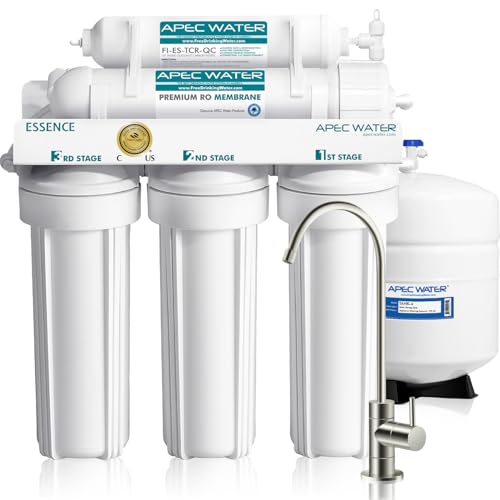
What We Like
- NSF/ANSI 58 certified performance
- Removes 99.99% of impurities
- DIY-friendly quick-connect fittings
- Includes faucet, tank, and filter set
Trade-offs
- 50 GPD output is slower than tankless models
- At 24.9 lb, it's heavy for small cabinets
With NSF/ANSI 58 certification and five stages of filtration, this system removes up to 99.99% of impurities including arsenic, chlorine, lead, fluoride, and heavy metals. That level of proven contaminant reduction means you can trust the water coming out of your tap. The package includes a brushed nickel faucet, a storage tank, a filter set, an installation kit, and instructions, and the quick-connect fittings and color-coded tubing make setup straightforward.
The trade-off is its 50-gallon-per-day output, which is slower than tankless options like the Waterdrop G3P600. The system weighs 24.9 pounds, so it’s heavier than some alternatives. But for someone who wants certified performance and easy DIY maintenance, this APEC model delivers.
Waterdrop G5P500A Alkaline RO System
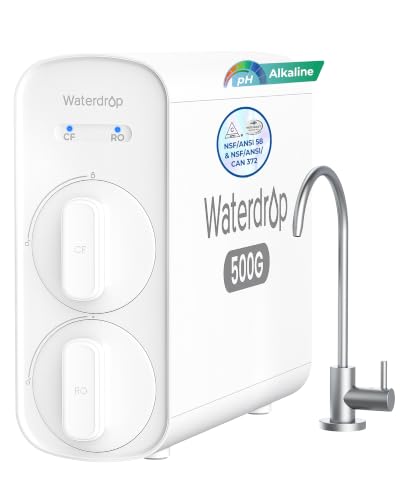
What We Like
- Compact tankless design saves space
- 500 GPD fast flow fills cup in 8 seconds
- 2:1 pure to drain ratio reduces waste
- Connects to ice makers and fridges
Trade-offs
- Faucet installation requires countertop drilling
- 21.4-pound unit is heavy for under-sink installation
With a 500 GPD flow rate that fills a 6-ounce cup in just 8 seconds, this system delivers purified water on demand without waiting for a storage tank. Its tankless design frees up to 70% of under-sink space, making it a smart fit for kitchens where every inch counts. The 8-stage filtration includes an alkaline mineralization stage that adds calcium, magnesium, sodium, and potassium back into the water, so you get both purity and a balanced taste. For a household that wants clean, mineral-enhanced water without sacrificing cabinet room, this is a streamlined solution.
The trade-off comes with installation: the included faucet requires drilling a hole in the countertop, which adds a step if your sink doesn’t already have one. Compared to the iSpring RCC7AK-BN, which also offers alkaline remineralization but uses a tank and a different faucet setup, the Waterdrop is more compact and faster-flowing. However, the iSpring’s tank-based design might be simpler to install in some existing configurations. If you prioritize a small footprint and quick water access, this model is worth the extra setup effort.
Aquasana Claryum 3-Stage Max Flow
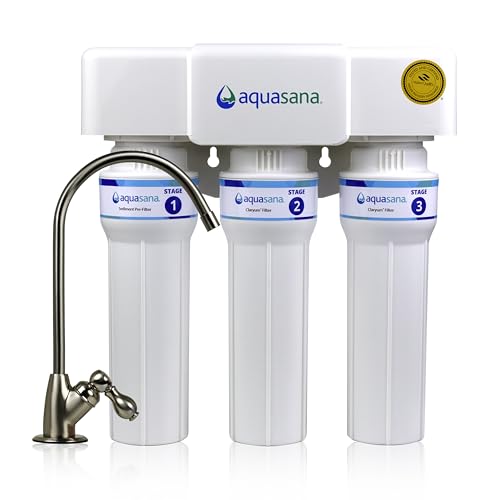
What We Like
- Fast 0.72 GPM flow rate
- Reduces 78 contaminants including PFAS
- Retains healthy minerals
- 6-month filter life at 10¢/gal
Trade-offs
- Requires 15.85 inches of under-sink clearance
- Does not reduce TDS (total dissolved solids)
With a flow rate of 0.72 gallons per minute, this filter delivers water seven times faster than a typical pitcher. Filling a pot for pasta or a water bottle for the gym takes seconds instead of minutes. It’s WQA certified to reduce 78 contaminants, including lead, PFAS, and microplastics, while leaving beneficial minerals in the water. That makes it a smart pick for households that want high-performance filtration without the stripped taste of reverse osmosis systems.
This system needs 15.85 inches of clearance under the sink, which may rule out cramped cabinets. If your under-sink area can accommodate it and you value speed and mineral retention, this is a strong contender.
iSpring CU-A4 Ultrafiltration System
What We Like
- No wastewater produced
- Retains healthy minerals
- Quick twist-on filter changes
- Includes brushed nickel faucet
Trade-offs
- Does not reduce TDS like RO systems
- Requires 6-12 month filter replacements
- Not suitable for high TDS source water
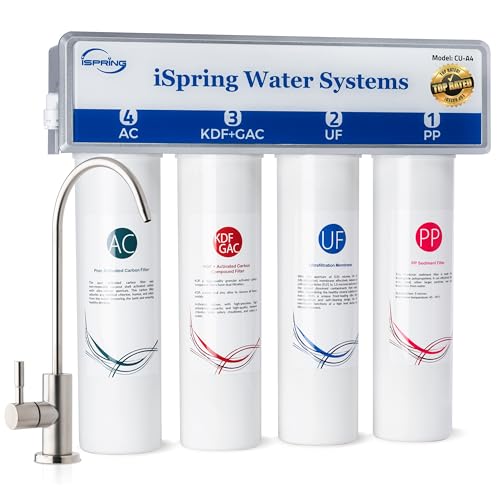
With a 0.01-micron ultrafiltration membrane, this system reduces up to 99% of chlorine, lead, and other contaminants while retaining beneficial minerals, so you get clean water without the wastewater or storage tank of reverse osmosis. It’s ideal for anyone who wants effective filtration without sending water down the drain, and the four-stage design includes a KDF/GAC stage that controls chloramine, heavy metals, and other compounds. The push-to-connect fittings simplify setup, and the twist-on filter cartridges mean you don’t need to disconnect hoses when it’s time for a change.
Unlike reverse osmosis systems, this ultrafiltration system does not lower total dissolved solids (TDS). If you need TDS reduction, an RO system may be a better fit. But for everyday drinking and cooking, the CU-A4 delivers contaminant reduction with zero wastewater, making it a low-maintenance choice for many households.
Product photos
Frizzlife PD1000-TAM4 RO System

What We Like
- 1000 GPD high capacity
- 2:1 super low drain ratio
- Real-time TDS and filter life monitoring
- Tankless design saves under-sink space
Trade-offs
- Tankless design requires built-in pump for operation
- RO membrane removes natural minerals before remineralization
With a tested flow rate of 0.7 gallons per minute, this system fills a cup in about three seconds, making it one of the fastest options for busy households or small offices. The 1000 GPD capacity means you can keep up with heavy daily demand without waiting, and the ratio of purified to waste water is 2:1, which cuts water waste dramatically compared to older RO designs. It suits anyone who wants high-volume, mineral-enhanced water without the bulk of a storage tank.
The RO membrane strips naturally occurring minerals, which the TAM4 post-filter then restores along with raising pH above 7.5. That means the water is remineralized rather than retaining its original mineral content. The iSpring RCC7AK-BN produces 75 GPD, so the Frizzlife’s 1000 GPD capacity is a major step up in volume, though the filtration path includes an extra remineralization stage. If you want high output and don’t mind the added step, this system delivers.
Product photos
Home Master TMAFC-ERP Artesian Full Contact RO System
What We Like
- Patented 2-pass alkaline remineralization
- Fast 4.5-second fill rate
- 1:1 waste ratio with non-electric pump
- Tool-free modular filter replacement
Trade-offs
- Large footprint at 20 inches long
- Requires 20-inch-long under-sink cabinet space
A 4.5-second fill rate for an 8-ounce glass means you are not waiting around for a drink, a feature that sets this system apart from slower traditional and tankless RO units. The patented two-pass alkaline remineralization adds calcium and magnesium twice during purification, so the water comes out tasting like mineral water rather than flat. This makes it a great match for anyone who wants both speed and flavor from their under-sink filter, especially if you prefer alkaline water without buying a separate pitcher or bottle.
At 20 inches long, this system takes up more cabinet space than the compact Waterdrop G3P600 (18.1 inches), and the 14.5-pound weight means you will want a sturdy shelf. The non-electric permeate pump keeps the waste ratio at an efficient 1:1 without needing power, which is a plus for eco-conscious users. If your under-sink area is tight, the smaller iSpring RCC7AK-BN might fit better, but for those with room, this system delivers fast, mineral-rich water with easy yearly filter swaps.
Product photos
Philips Aquaporin Inside Tankless RO System
What We Like
- 600 GPD high-flow tankless design
- Biomimetic Aquaporin membrane filters to 0.0001 micron
- 2.3:1 pure-to-drain ratio with 70% recovery
- Auto-cycle self-flushing protects membrane
Trade-offs
- Requires under-sink power outlet and faucet hole
- Ice maker connection requires separate kit
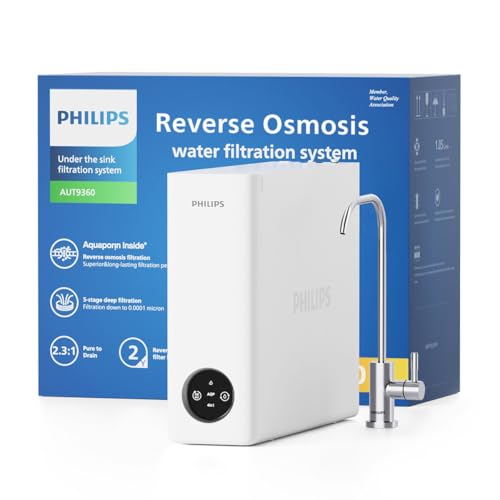
With a 600 GPD flow rate, this tankless RO system can fill an 8-ounce cup in about eight seconds under specified test conditions. You rarely wait for cooking or refilling a bottle. The Aquaporin biomimetic membrane, inspired by natural water channels, filters down to 0.0001 micron to reduce TDS, chlorine, and particulates, and the technology behind it has been tested with NASA and ESA for space-related water filtration research. For a household that wants fast, high-capacity purified water on demand without a storage tank, this is a smart fit.
The ratio of purified to waste water is 2.3:1, meaning you get about 2.3 cups of purified water for every cup that goes down the drain. That cuts water waste compared to many conventional RO systems. Installation does require an under-sink power outlet and a dedicated faucet hole, and you may need a separate kit to hook it up to a fridge or ice maker. The auto-cycle self-flushing helps keep the membrane performing well over its filter life, so you don’t have to worry about manual maintenance.
Product photos
Express Water ROALKUV10D 11-Stage RO System

What We Like
- 11-stage filtration with UV and alkaline
- Leak stop detector included
- Removes up to 99.99% of contaminants
- 1-year warranty on system
Trade-offs
- 31 lb weight makes installation a two-person job
- Tank-based system takes up under-sink space
- 100 GPD slower than tankless competitors
With 11 stages of filtration including UV sterilization and an alkaline remineralization filter, this system removes up to 99.99% of lead, chlorine, fluoride, nitrates, calcium, arsenic, bacteria, and more. The alkaline filter adds calcium, potassium, and magnesium to your water. The built-in leak stop detector shuts off water flow when it detects moisture. It comes with a 1-year warranty on the system.
At 100 gallons per day, this system delivers filtered water at a steady pace, enough for most households, though slower than tankless models that can push higher volumes on demand. Weighing 31 pounds and fitted with a storage tank, it’s a substantial unit that needs dedicated cabinet space. If you’re after a single system that includes UV sterilization and alkaline remineralization, this package bundles those stages without requiring separate add-ons.
Product photos
How We Evaluated Under Sink Water Purifiers
We started by reviewing each system’s filtration certifications, flow rates, and physical dimensions from manufacturer documentation. Cross-referencing these specs with expert round-ups and verified owner feedback gave us a clear picture of real-world performance.
The four criteria that mattered most were filtration quality, which includes NSF certifications and contaminant reduction. Also important were space efficiency (tank versus tankless and cabinet clearance needed), installation demands (DIY friendliness, power requirements, and faucet drilling), and ongoing value (filter replacement frequency and cost per gallon).
A research-led evaluation like this has honest limits. We didn’t test water chemistry in a lab, and individual results depend on your source water quality. What we can tell you is which systems are certified for specific contaminants and which owners consistently report easy setup and reliable operation.
What To Look For In Under Sink Water Purifiers
Choosing the right under sink purifier means balancing filtration power with the physical realities of your cabinet space and plumbing setup. Here’s what to consider before you buy.
Look for NSF certification for the contaminants in your water. Also measure your under-sink clearance, both height and depth, and decide whether you prefer a tank-based or tankless system based on your space and electrical access.
Filtration Type and Certification
The most effective under sink purifiers use reverse osmosis (RO), which forces water through a semipermeable membrane to remove up to 99% of contaminants including lead, chlorine, arsenic, and PFAS. Ultrafiltration (UF) systems like the iSpring CU-A4 filter without wastewater but don’t reduce total dissolved solids (TDS).
NSF/ANSI 58 certification means the entire system, not just individual filters, has been tested to reduce specific contaminants. The iSpring RCC7AK-BN and APEC ROES-50 both carry this full-system certification. If you’re concerned about a specific contaminant like fluoride or nitrates, check the system’s performance data sheet.
Space Requirements and Tank vs. Tankless
Standard RO systems include a storage tank that holds 2-4 gallons, requiring roughly 10-15 inches of cabinet depth. The APEC ROES-50 and Express Water ROALKUV10D are tank-based, so measure your under-sink area before committing.
Tankless systems like the Waterdrop G3P600 and Frizzlife PD1000-TAM4 eliminate the tank entirely, saving about 70% of under-sink space. The trade-off: they need a nearby electrical outlet to power the built-in pump. If your cabinet has no outlet, stick with a tank-based system or a non-electric option like the Home Master TMAFC-ERP.
Flow Rate and Fill Speed
Flow rate matters if you’re filling large pots or waiting for a drinking glass. Tankless RO systems typically deliver 400-1000 gallons per day (GPD), filling an 8-ounce cup in 8-10 seconds. The Waterdrop G3P600 and Philips Aquaporin Inside both hit 600 GPD for fast, continuous flow.
Tank-based systems have slower membrane output (50-100 GPD) but store purified water in the tank, so your faucet flow is faster than the membrane rate. The Aquasana Claryum 3-Stage Max Flow is a non-RO option that delivers 0.72 GPM without a tank, making it one of the fastest filters available.
- Measure your under-sink cabinet height and depth before choosing a system.
- Check whether the system requires a dedicated faucet hole or can share your existing one.
- Confirm filter replacement costs and intervals (typically 6-12 months).
- For tankless units, verify you have an electrical outlet within reach.
- Look for quick-connect fittings if you plan a DIY installation.
A good rule of thumb: if your water has high TDS (over 500 ppm), choose an RO system. If you’re on municipal water with moderate contamination, a UF or carbon filter may suffice.
Under Sink Water Purifiers Compared
The table below compares all 10 under sink water purifiers side by side, covering filtration type, flow rate, and key features to help you narrow your choices.
| Product | Filtration Stages | Flow Rate / Capacity | Dimensions | Weight |
|---|---|---|---|---|
| iSpring RCC7AK-BN Alkaline RO System | 6-Stage | 75 GPD | 14.5 x 5.2 x 18.5 in | 27.6 lb |
| Waterdrop G3P600 Tankless RO System | 8-stage | 600 GPD | 18.1 x 5.7 x 17.8 in | 32.0 pounds |
| APEC Water ROES-50 RO System | 5-Stage | 50 GPD | 15.5 x 5.2 x 17.0 in | 24.9 lb |
| Waterdrop G5P500A Alkaline RO System | 8-Stage | 500 GPD | 16.7 x 5.7 x 13.9 in | 21.4 lbs |
| Aquasana Claryum 3-Stage Max Flow | 3-Stage | 0.72 GPM | 12.0 x 4.2 x 12.8 in | 8.3 pounds |
| iSpring CU-A4 Ultrafiltration System | 4-Stage | N/A | 10.5 x 4.5 x 12.5 inches | 4.4 pounds |
| Frizzlife PD1000-TAM4 RO System | 9-Stage | 1000 GPD | 17.4 x 5.3 x 15.5 in | 0.5 pounds |
| Home Master TMAFC-ERP Artesian Full Contact RO System | 7-Stages | 4.5 sec per 8 oz | 20 x 16 x 12 inches | 14.5 pounds |
| Philips Aquaporin Inside Tankless RO System | N/A | 600 GPD | 15.8"L x 4.3"W x 12.3"H | 22.0 pounds |
| Express Water ROALKUV10D 11-Stage RO System | 11 | 100 GPD | 15 x 5 x 17 in | 31.0 lb |
Frequently Asked Questions
What is the difference between RO and ultrafiltration under sink purifiers?
Reverse osmosis systems use a semipermeable membrane to remove up to 99% of contaminants, including dissolved solids, heavy metals, and fluoride. Ultrafiltration filters to 0.01 microns but does not reduce TDS, meaning minerals and some dissolved solids remain in the water. RO systems produce wastewater, while UF systems like the iSpring CU-A4 have zero wastewater.
How much under-sink space do I need for a tankless RO system?
Tankless RO systems typically require a width of 10 to 15 inches, a depth of 15 to 18 inches, and a height of 15 to 18 inches. The Waterdrop G3P600 and Frizzlife PD1000-TAM4 are designed to fit in most standard kitchen cabinets. You’ll also need access to an electrical outlet for the pump.
Do under sink water purifiers remove fluoride?
Yes, most reverse osmosis systems remove a high percentage of fluoride from drinking water. Systems with NSF/ANSI 58 certification, like the APEC ROES-50 and iSpring RCC7AK-BN, have verified fluoride reduction. Ultrafiltration and carbon-only filters do not remove fluoride effectively.
How often do I need to replace filters on an under sink purifier?
Filter replacement schedules vary by system and water usage. Most RO systems need sediment and carbon filter changes every 6-12 months, with the RO membrane lasting 2-3 years. The Aquasana Claryum filters last 6 months, while the iSpring CU-A4 requires replacement every 6-12 months. Always follow the manufacturer’s recommended schedule.
Can I install an under sink water purifier myself?
Many under sink purifiers are designed for DIY installation with quick-connect fittings and clear instructions. The APEC ROES-50 and iSpring RCC7AK-BN are known for straightforward setup. You’ll need basic tools, a drill for the faucet hole (if required), and the ability to connect to your cold water line. Tankless systems with electrical pumps are slightly more complex but still manageable for a handy homeowner.
The Bottom Line
The iSpring RCC7AK-BN Alkaline RO System is our top recommendation for most households. Its full NSF 58 certification, alkaline remineralization, and transparent filter housing make it a reliable choice for homeowners who want great-tasting water and easy maintenance. It’s best for those with standard under-sink space who don’t mind a storage tank.
If your cabinet is tight, the Waterdrop G3P600 Tankless RO System saves significant space and delivers fast 600 GPD flow with a smart faucet display. Budget-conscious buyers should look at the APEC Water ROES-50, which offers NSF-certified performance and a straightforward DIY setup at a lower entry point.
The most important factor is matching the system to your water quality and cabinet dimensions. Check your local water report for contaminants, measure your under-sink clearance, and decide whether you have access to an electrical outlet. Get those three things right, and you’ll find a purifier that delivers clean water for years.
