10 Best Office Chairs For Posture in 2026
This post contains affiliate links. As an Amazon Associate, we earn from qualifying purchases.
The Herman Miller Embody Ergonomic Office Chair is our best overall pick for posture because its pixelated support conforms to your micro-movements and the Backfit adjustment aligns with your natural spine curve. We also highlight the Steelcase Gesture for its 360-degree arm support and the Haworth Breck for customizable lumbar support.
Sitting for long hours in a chair that doesn’t support your spine can lead to back pain, stiffness, and poor alignment. The right office chair helps you maintain a neutral posture, reduces pressure points, and encourages healthy movement throughout the day.
This guide is research-based, drawing on manufacturer specifications, expert round-ups, and patterns in owner feedback. We evaluated over a dozen chairs to find the ten that best support healthy posture for different body types, workspaces, and budgets.
Top 10 Office Chairs For Posture in the Market
Certain content that appears on this site comes from Amazon. This content is provided "as is" and is subject to change or removal at any time.
The Best Office Chairs For Posture, Reviewed
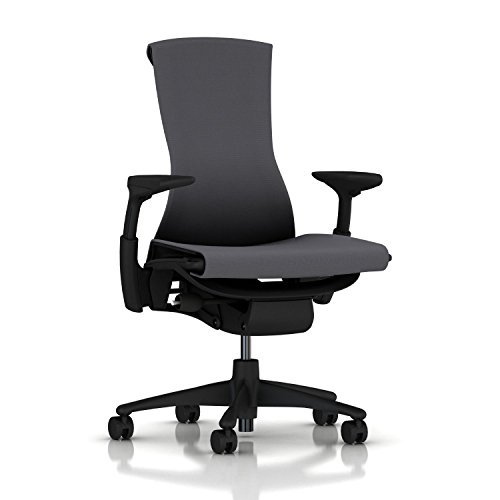
Herman Miller Embody Ergonomic Office Chair
What We Like
- Pixelated support conforms to micro-movements
- Backfit adjustment aligns with natural spine curve
- Four support layers for airflow and comfort
Trade-offs
- At 52 lb, it's heavy to move around
- No headrest for those who want neck support
The Embody’s seat and back use a dynamic matrix of pixels that automatically conform to your body’s micro-movements, distributing weight evenly to reduce pressure and encourage movement, key to maintaining healthy circulation and focus. Developed with input from over 20 physicians and PhDs in biomechanics and ergonomics, this chair sets a new benchmark for natural alignment and support. It’s ideal for anyone who spends long hours at a desk and wants a seat that adapts to them, not the other way around.
The trade-off is weight: at 52 pounds, it’s not a chair you’ll want to move from room to room. Compared to the Steelcase Gesture, which weighs 70 pounds, the Embody is lighter but still substantial. If you prefer a headrest for leaning back, you won’t find one here, so the Humanscale Freedom with headrest might be a better fit for those who need that extra support.
Product photos
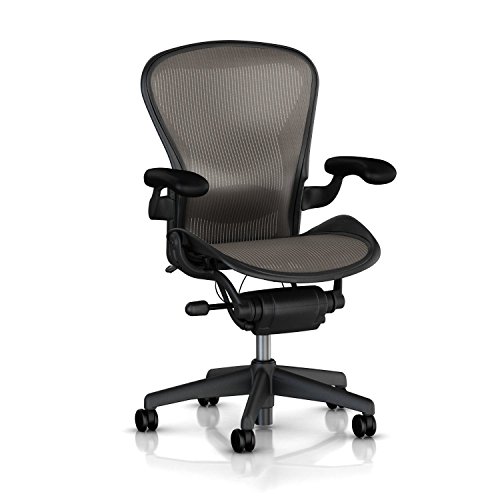
Herman Miller Classic Aeron Task Chair
What We Like
- Breathable Pellicle mesh keeps you cool
- Waterfall seat edge reduces thigh pressure
- Kinemat tilt supports natural body movement
- 12-year warranty for long-term peace of mind
Trade-offs
- At 48 lb, it's heavy to move around
- Vinyl arms lack the premium feel of leather or fabric
The Pellicle suspension is a breathable mesh that dissipates body heat, helping you stay cool and comfortable during work. Combined with the waterfall front edge that relieves pressure behind your thighs, this chair is built for sustained comfort and focus. It’s an excellent fit for anyone who runs warm or spends hours at a desk and wants a seat that breathes with them, not against them.
That said, the 48-pound weight makes it a stationary piece; you won’t want to roll it between rooms frequently. Compared to the Haworth Soji at 19.8 pounds, the Aeron is much heavier. The vinyl arms are fully adjustable. If breathability and a proven ergonomic design are your top priorities, this classic delivers without compromise.
Product photos
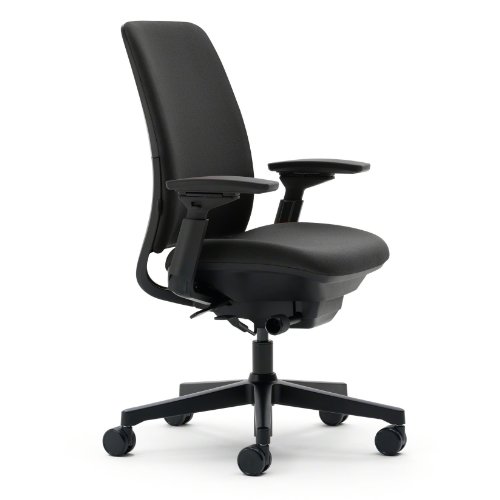
Steelcase Amia Office Chair
What We Like
- Hidden LiveLumbar adjusts to your movement
- Extra cushioning for 8-10 hour comfort
- 4D arm support for personalized fit
Trade-offs
- At 54.5 pounds, it's heavy to move
- No headrest for neck support during reclining
The hidden LiveLumbar system that adapts to every shift in your posture is the standout feature here, it means continuous lower back support without having to fiddle with knobs or levers. That dynamic support, paired with extra cushioning and flexible seat edges, makes this chair ideal for anyone who spends eight to ten hours seated and wants pressure-free comfort. It’s a design that prioritizes ease and long-session ease over flashy adjustments, so you can focus on your work instead of your chair.
At 54.5 pounds, this chair is not something you’ll want to move from room to room often. Compared to the lighter Haworth Soji (19.8 pounds), the Amia is clearly built for a permanent spot in your home office. If you value a chair that stays put and delivers steady, adaptive lumbar support without a headrest, this is a comfortable, well-considered pick.
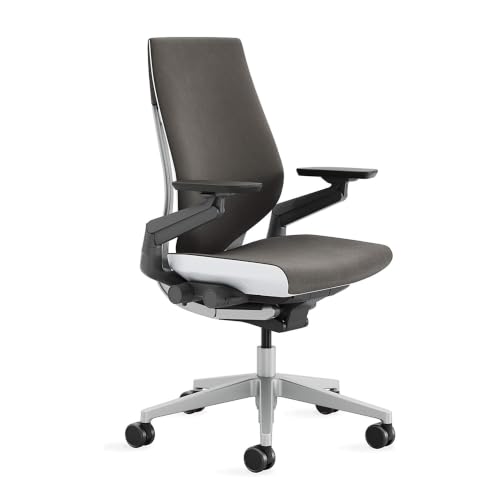
Steelcase Gesture Office Chair
What We Like
- 360-degree arms for any posture
- Contoured back supports spine's natural shape
- Intuitive adjustments within arm's reach
- Full recline with upright lock
Trade-offs
- At 70 lb, it's heavy to move
- No headrest or lumbar pad included
The 360-degree arms on this chair move with you in every direction, so when you’re typing, leaning back to think, or reaching for a file, your elbows stay supported. That’s the kind of thoughtful design that makes the Gesture a standout for anyone who shifts positions throughout the day. It’s built for long hours too, with a contoured back that follows your spine’s natural curve and all the adjustments placed right where your hand falls. If you want a chair that adapts to how you actually sit, not the other way around, this one delivers.
At 70 pounds, this chair is heavy enough that you won’t want to roll it from room to room. Compared to the lighter Haworth Soji at under 20 pounds, the Gesture is clearly meant to stay put. But for someone who values arm support that truly follows their body and doesn’t mind a chair that’s built like a tank, this is a premium choice that earns its place in a posture-focused guide.
Product photos
Haworth Soji Ergonomic Office Chair

What We Like
- Arrives fully assembled
- 4D adjustable armrests
- Flexible mesh back support
- 12-year warranty
Trade-offs
- No forward tilt adjustment
- Plastic swivel base
A 350-pound weight capacity means this chair comfortably supports a wide range of body types, and arriving fully assembled saves you from any awkward Saturday afternoon with an Allen wrench. The flexible mesh back breathes and moves with you, while the 4D armrests let you dial in elbow support for typing, reading, or just slouching with a cup of tea. It’s a smart pick for anyone who wants ergonomic adjustability without the headache of setup.
One thing you don’t get is a forward tilt, which some people like for perching forward during focused work. Compared to the Steelcase Gesture, which weighs 70.0 lb, the Soji is much lighter at 19.8 lb, making it easier to move around a home office. The plastic swivel base contributes to that low weight, so you can slide it across a rug without much effort.
Product photos
Haworth Breck Ergonomic Office Chair

What We Like
- Height-adjustable lumbar for custom support
- 4D armrests for personalized positioning
- Adaptive seat depth reduces thigh pressure
- Three-zoned GeoStretch recline system
Trade-offs
- Heavier than some alternatives at 38 pounds
The height-adjustable lumbar support lets you dial in lower back pressure exactly where you need it, making long hours at a desk far more comfortable. With a three-zoned GeoStretch recline that responds to your weight and a 3-position backstop, you can lock in an upright posture or lean back without losing support. This chair suits anyone who wants precise control over their lower back alignment and values adjustability in the seat depth and armrests to match their body.
At 38 pounds, this chair is heavier than some alternatives, so it’s less convenient to move between rooms. The height-adjustable lumbar support lets you dial in lower back comfort precisely, which is a key feature for anyone who spends long hours at a desk. The 4D armrests move in four directions, giving you plenty of ways to find a comfortable arm position without feeling restricted.
Product photos
Humanscale Freedom Office Chair with Headrest
What We Like
- Responsive backrest auto-adapts to spine
- Recline maintains near-consistent eye level
- Contoured cushions reduce concentrated loads
Trade-offs
- 38 lb frame is cumbersome to move
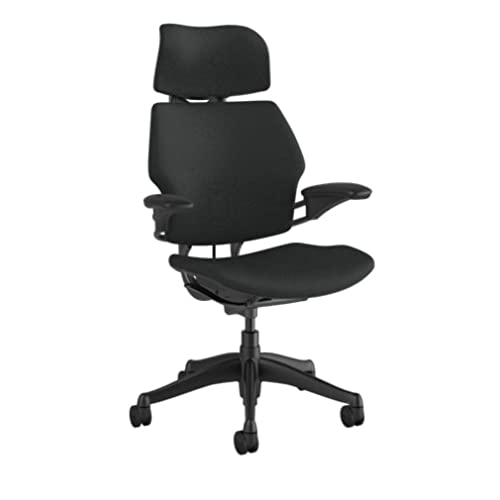
The pivoting backrest automatically adapts to your spine as you lean back, so you don’t have to fiddle with tension knobs or lock levers. This responsive recline keeps your eye level nearly constant, which helps you stay focused while typing or taking a call. The contoured cushions follow your body’s curves, spreading your weight more evenly and reducing pressure points. It’s a thoughtful design for anyone who shifts between tasks and wants the chair to move with them, not against them.
At 38 pounds, this chair is heavy enough that you’ll think twice before rolling it between rooms or lifting it onto a platform. The responsive backrest automatically adapts to your spine as you recline, so you get a smooth, connected motion without fiddling with levers. Reviewers report that the pivoting backrest keeps your eye level nearly constant during recline, which helps you stay focused on your screen.
Product photos
ELABEST X100 Ergonomic Mesh Office Chair

What We Like
- 17-point micro-adjustment system
- Dynamic 3D lumbar support
- 5D flip-up armrests with EVA foam
- BIFMA-certified heavy-duty build
Trade-offs
- At 43 lb, it's heavier than some mesh chairs
- Footrest adds bulk under the seat
A 17-point micro-adjustment system means you can dial in everything from lumbar depth to arm angle, making this chair feel custom-fit without a trip to a showroom. The 3D synchro-tilt lumbar tracks your spine’s natural curve, while the 5D flip-up armrests tuck away when you need to slide under a desk. If you want a single chair that handles both focused work and quick breaks with a built-in footrest, the X100 delivers real flexibility for the price.
At 43 pounds, this chair is noticeably heavier than the Marsail Ergonomic Office Chair, so moving it between rooms takes more effort. The footrest, while handy for relaxation, adds a bit of bulk beneath the seat that might feel tight for shorter users. For anyone who values adjustability over portability and wants a chair that supports active sitting throughout the day, this is a thoughtful, feature-packed option.
Marsail Ergonomic Office Chair

What We Like
- Adaptable lumbar moves 1.18" forward/back
- Breathable mesh backrest promotes airflow
- 3D armrests adjust for multiple postures
- High weight capacity of 330 lbs
Trade-offs
- At 30.4 lb, lighter than many office chairs
- Mesh back lacks padding of upholstered models
The lumbar support on this chair adjusts 1.18 inches forward and backward and 2.16 inches up and down, so you can tailor the lower-back pressure to your body shape throughout the day. The breathable mesh back keeps you cool during long work sessions, and the 3.14-inch thick foam seat cushions without sagging. With a 330-pound capacity, it accommodates a wide range of body types without compromising on support.
At 30.4 pounds, the Marsail is noticeably lighter than the Steelcase Gesture (70 pounds), so it’s easier to slide around when rearranging your workspace. The mesh back breathes better than fully upholstered chairs like the Steelcase Amia, keeping you cooler during long sits. For anyone who prioritizes adjustable lumbar support and airflow without spending a fortune, this chair delivers where it counts.
Product photos
CASASIO Ergonomic Office Chair
What We Like
- 4-way adjustable lumbar cushion
- 3D adjustable headrest for neck support
- Tilt & rock function with adjustable tension
- Flip-up armrests save space
Trade-offs
- At 30 lb, lighter than many heavy-duty chairs
- No width or depth adjustment on armrests
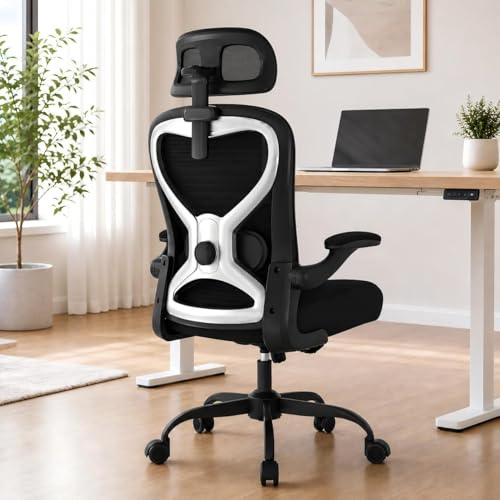
A 3.5-inch virgin foam seat distributes weight evenly, so you can sit for eight-plus hours without that familiar ache in your hips and thighs. That’s the core reason this chair wins for all-day comfort: the cushion is thick and resilient, and the contoured mesh back follows your spine while the dual-direction lumbar pad lets you dial in exactly where you need support. It’s a smart pick for anyone who spends full workdays at a desk and prefers a seat that stays soft and supportive from morning to night.
The 330-pound capacity and BIFMA-tested build give you real durability, and the 3D headrest adds a level of neck support that many chairs in this range skip entirely. The flip-up armrests let you tuck the chair under a desk when not in use, a handy feature for tight spaces.
How We Evaluated Office Chairs For Posture
Our evaluation started with a deep dive into manufacturer specifications and design philosophies. We looked at how each chair’s engineering, from lumbar support systems to seat depth and armrest adjustability, contributes to maintaining a healthy seated posture.
We focused on four key criteria: lumbar support adjustability, seat and back design for spinal alignment, armrest range of motion, and overall build quality. A chair that only looks ergonomic but lacks real adjustability won’t help you sit better, so we prioritized models with meaningful customization.
Our findings come from analyzing owner feedback patterns and expert reviews. This approach gives you a reliable picture of how each chair performs for real people over time, but we always recommend trying a chair yourself when possible.
What To Look For In Office Chairs For Posture
A good posture-supporting chair is more than just comfortable, it actively helps you sit in a way that reduces strain on your spine, shoulders, and hips. Here are the features that matter most.
Look for a chair with adjustable lumbar support, a seat depth that fits your leg length, and armrests that move in multiple directions. The best chairs let you fine-tune every point of contact with your body.
Lumbar Support Adjustability
The lower back naturally curves inward, and a chair that supports this curve prevents slouching and reduces pressure on spinal discs. Look for lumbar support that adjusts both in height and depth so you can position it exactly where your back needs it. Some chairs, like the Haworth Breck, offer a height-adjustable lumbar that moves independently of the backrest.
Seat Depth and Cushioning
A seat that is too deep will press against the back of your knees, while one too shallow won’t support your thighs. Look for a seat depth adjustment range of at least two inches. The cushioning should be firm enough to support your pelvis without bottoming out, and a waterfall front edge reduces pressure on your thighs by sloping downward.
Armrest Adjustability
Your arms should rest comfortably with your shoulders relaxed, not hunched or reaching. The more directions an armrest moves, up/down, forward/back, pivot, and width, the better you can position it for typing, reading, or reclining. The Steelcase Gesture’s 360-degree arms are the gold standard here.
- Check that the armrests can be adjusted without tools.
- Make sure the armrests are wide enough to support your forearm.
- Verify that the armrest height range matches your desk height.
- Test that the armrests don’t interfere with pulling the chair under your desk.
A good rule of thumb: your elbows should form a 90-degree angle when your hands are on the keyboard and your arms rest on the armrests.
Office Chairs For Posture Compared
The table below compares the key ergonomic features of our top ten office chairs for posture, making it easy to see which model fits your needs.
| Product | Weight | Dimensions | Lumbar Support | Arm Adjustability |
|---|---|---|---|---|
| Herman Miller Embody Ergonomic Office Chair | 52.0 lb | 29.0 x 29.5 x 43.5 in | Backfit | fully adjustable arms |
| Herman Miller Classic Aeron Task Chair | 48.0 lb | 17.0 x 27.0 x 42.0 in | lumbar pad | Fully Adj Vinyl Arms |
| Steelcase Amia Office Chair | 54.5 lb | 24.8 x 26.6 x 42.5 in | Hidden LiveLumbar system | 4D (height, width, pivot, depth) |
| Steelcase Gesture Office Chair | 70.0 lb | 32.5 x 27.5 x 21.2 in | N/A | 360-degree arms |
| Haworth Soji Ergonomic Office Chair | 19.8 lb | 27 x 28 x 39-44 in | lumbar support | 4D adjustable |
| Haworth Breck Ergonomic Office Chair | 38.0 lb | 28.5 x 28.5 x 39.0 in | Height-adjustable | 4D (vertical, horizontal, forward/backward, pivot) |
| Humanscale Freedom Office Chair with Headrest | 38.0 lb | 25.0 x 26.8 x 42.4 in | N/A | Standard Height Adjustable Duron Arms |
| ELABEST X100 Ergonomic Mesh Office Chair | 43.0 lb | 26.0 x 24.0 x 41.0 in | 3D Synchro-Tilt | 5D Flip-Up |
| Marsail Ergonomic Office Chair | 30.4 lb | 46.9 x 24.8 x 24.4 in | 1.18" forward/back, 2.16" up/down | 3D adjustable, flip-up |
| CASASIO Ergonomic Office Chair | 30.0 lb | 20.0 x 20.0 x 50.0 in | 4-way adjustable | Flip-up |
Frequently Asked Questions
What is the best office chair for posture?
The Herman Miller Embody is our best overall pick because its pixelated support system conforms to your micro-movements and the Backfit adjustment aligns with your natural spine curve. It is designed for people who want a highly adjustable, scientifically designed chair that promotes healthy movement.
How much should I spend on an ergonomic office chair?
Investing in a quality ergonomic chair is worth it for your long-term comfort and health. Budget-friendly options like the Marsail Ergonomic Office Chair offer adjustable lumbar support and breathable mesh, while premium models like the Herman Miller Aeron come with extensive warranties and advanced adjustability.
What is the difference between a task chair and an ergonomic chair?
A task chair is a basic office chair with limited adjustability, while an ergonomic chair is designed to support your body’s natural posture with features like adjustable lumbar support, seat depth, and armrests. Ergonomic chairs are better for preventing back pain during long sitting sessions.
Can an office chair fix my back pain?
An ergonomic chair can help reduce back pain by supporting proper spinal alignment and reducing pressure points, but it is not a medical device. If you have chronic back pain, consult a healthcare professional for a diagnosis and treatment plan.
How do I know if an office chair fits me?
A properly fitting chair allows you to sit with your feet flat on the floor, knees at a 90-degree angle, and lower back supported. Your armrests should be at elbow height, and there should be two to three inches of space between the back of your knees and the seat edge.
The Bottom Line
The Herman Miller Embody is the best overall office chair for posture, offering unmatched adjustability and a support system that adapts to your every movement. It is ideal for anyone who spends long hours at a desk and wants a chair that actively promotes healthy sitting.
If you need a chair with more breathable mesh for warm environments, the Herman Miller Aeron is our best breathable mesh pick. For those on a tighter budget, the Marsail Ergonomic Office Chair provides excellent adjustable lumbar support and a high weight capacity at a more accessible price point.
The single most important factor in choosing a posture-supporting chair is lumbar adjustability. No matter your budget or style, make sure the chair you choose lets you position the lumbar support exactly where your back needs it most.
