10 Best Chairs For Back Support in 2026
This post contains affiliate links. As an Amazon Associate, we earn from qualifying purchases.
The SIHOO M18 Ergonomic Office Chair earns our best overall spot because it delivers four-point support for your head, back, hips, and hands with an adjustable lumbar system and a breathable mesh backrest. For those needing precise lower back control, the Marsail Ergonomic Office Chair offers the best adjustable lumbar support, while the ELABEST X100 adds an integrated footrest for active sitting.
Aching from a long day at a desk often comes down to one thing: your chair. Finding the right support means looking past just a padded seat and considering how well a chair aligns your spine, supports your lower back, and keeps you comfortable through hours of work.
This guide is based on research into specifications, manufacturer documentation, expert round-ups, and patterns in owner feedback. We break down what to look for and highlight ten chairs that address different needs, from budget-friendly options to high-capacity builds.
Top 10 Chairs For Back Support in the Market
Certain content that appears on this site comes from Amazon. This content is provided "as is" and is subject to change or removal at any time.
The Best Chairs For Back Support, Reviewed
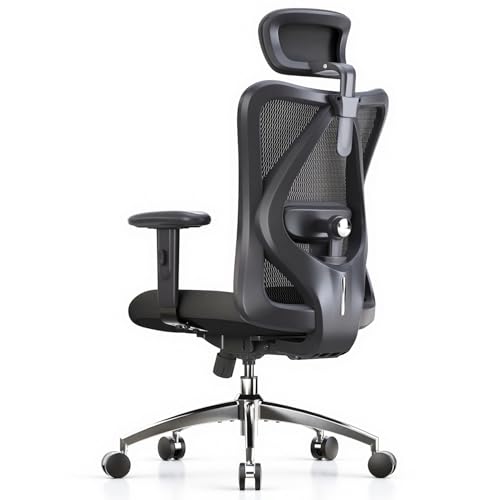
SIHOO M18 Ergonomic Office Chair
What We Like
- Four support points for head, back, hips, hands
- Adjustable lumbar and back support
- Breathable mesh backrest keeps you cool
- Three recline angles with tilt resistance
Trade-offs
- At 38 pounds, it's not lightweight to move
- 2D armrests offer less adjustability than some rivals
With a 330-pound weight capacity and four support points targeting head, back, hips, and hands, the SIHOO M18 is built to keep you comfortable through long workdays. The breathable mesh backrest helps prevent overheating, while the adjustable lumbar support and headrest let you dial in a fit that suits your frame. It’s a well-rounded choice for anyone who needs reliable back support without breaking the bank, especially if you spend hours at a desk and want to reduce strain.
The main trade-off is weight: at 38 pounds, it’s heavier than the Marsail Ergonomic Office Chair (30.4 pounds), so moving it around the room takes a bit more effort. The 2D armrests also offer less flexibility than the 3D arms on the Marsail, which might matter if you like to fine-tune your arm position. Still, the M18’s combination of adjustability, breathability, and sturdy build makes it a strong pick for daily use.
Marsail Ergonomic Office Chair

What We Like
- Highly adjustable lumbar support
- 3D armrests with flip-up feature
- Breathable mesh backrest
- Thick high-density foam seat
Trade-offs
- Heavier than the Fizzin Office Mesh Chair at 30.4 lb vs 25.4 lb
- No built-in footrest unlike the ELABEST X100
With lumbar support that moves 1.18 inches forward and backward and 2.16 inches up and down, this chair lets you dial in the exact spot where your lower back needs the most support. The 3.14-inch thick high-density foam seat adds to the comfort, making it a strong option for anyone who spends long stretches at a desk and wants to avoid that nagging ache. The breathable mesh back keeps air moving, so you stay cool even during marathon work sessions.
The ELABEST X100 includes a footrest, but this chair focuses on adjustable lumbar support instead. The lumbar system moves 1.18 inches forward and backward and 2.16 inches up and down, so you can dial in exactly the lower-back support your body needs. That kind of precision helps maintain a natural spinal curve during long work sessions. Reviewers find it especially useful for those who shift positions throughout the day. While you won’t have a place to prop your feet, the tailored back support makes up for it by encouraging better posture. For anyone whose main concern is lower-back comfort, this chair delivers where it counts.
Product photos
ELABEST X100 Ergonomic Mesh Office Chair

What We Like
- Dynamic 3D lumbar support system
- 18" extendable footrest with 2 positions
- 5D flip-up armrests with EVA foam
- BIFMA-certified heavy-duty build
Trade-offs
- Weighs 43 lb, heavier than the SIHOO M18 (38 lb)
- No fabric or leather upholstery option for cold offices
An 18-inch extendable footrest with two angle positions lets you stretch your legs and shift posture during long work sessions, which is a rare feature in a mesh chair at this price. The 3D Synchro-Tilt lumbar system offers lockable depth and height adjustment that mimics the spine’s natural curvature, while the Dual-Stripe AirMesh provides 38% better airflow than standard mesh, keeping you cool even on warm days.
The main drawback is weight: at 43 pounds, this chair is heavier than the SIHOO M18 (38 lb), so moving it around the room takes more effort. For buyers who prioritize a built-in footrest and adjustable lumbar support over a lighter frame, the X100 delivers a package that supports both work and relaxation.
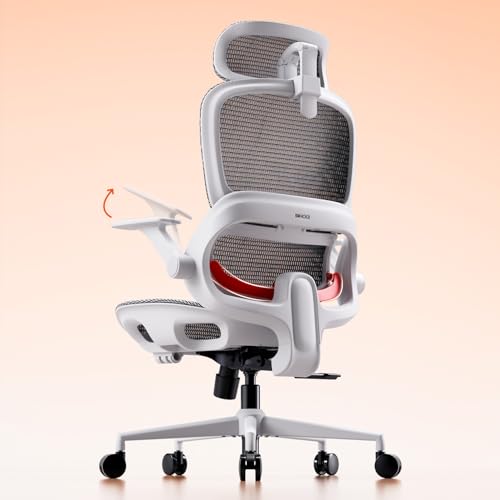
SIHOO B100 Mesh Ergonomic Office Chair
What We Like
- Adaptive lumbar follows natural spine curve
- Three lockable recline angles for work/rest
- Breathable full-mesh back keeps you cool
- Reinforced metal base supports up to 300 lbs
Trade-offs
- Flip-up armrests lack depth or width adjustment
- No footrest included for full recline relaxation
The adaptive lumbar support on this chair follows your spine as you lean forward, sit upright, or shift positions, so your lower back stays supported without feeling locked into one posture. Three lockable recline angles let you switch from focused work to a quick recharge, while the breathable full-mesh back keeps air circulating during busy afternoons. With a weight capacity of 300 pounds and a reinforced metal base, it’s built for daily durability. It’s a smart fit for anyone who values dynamic back support that responds to natural movement, especially in a home office or shared workspace where staying cool and comfortable matters.
Where the B100 compromises is in adjustability: the flip-up armrests are convenient for tucking under a desk, but they don’t offer the depth or width adjustments that some users may want for precise arm positioning. The seat height range works well for average builds but may leave taller individuals wanting more range, unlike some other chairs that offer a broader height adjustment for varied body types. If you plan to recline fully to 135°, note that no footrest is included, so you’ll need to add one separately for total relaxation. Still, for adaptive lumbar support that actually moves with you, the B100 delivers where it counts.
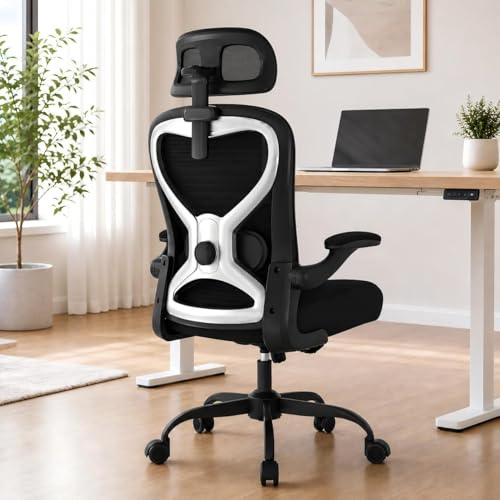
CASASIO Ergonomic Office Chair
What We Like
- 4-way adjustable lumbar cushion
- Contoured mesh back aligns with spine
- 3D adjustable headrest for neck support
- Flip-up armrests for desk tucking
Trade-offs
The dual-direction adjustable lumbar cushion is the standout feature here, letting you dial in exactly the lower back support you need for long work sessions. Combined with a contoured mesh back that follows your spine and a generous 3.5-inch virgin foam seat that stays comfortable even after eight hours, this chair is built for all-day sitting. The 3D adjustable headrest cradles your neck during typing, reading, or leaning back, and the flip-up armrests make it easy to slide the chair under a desk when not in use. It’s a thoughtful setup for anyone who wants precise lumbar customization without sacrificing overall comfort.
When lower back support is the top priority and long hours in the seat are a given, this chair focuses on the areas that make a real difference. The contoured mesh back follows the natural curve of the spine, while the dual-direction adjustable lumbar cushion lets you fine-tune the fit precisely for your lower back. That kind of customization helps reduce fatigue during extended work sessions. The virgin foam seat distributes weight evenly, providing lasting softness and resilience that prevents soreness even after eight-plus hours of sitting. Reviewers note that the combination of targeted lumbar relief and all-day cushioning keeps them comfortable and focused without the usual end-of-day aches.
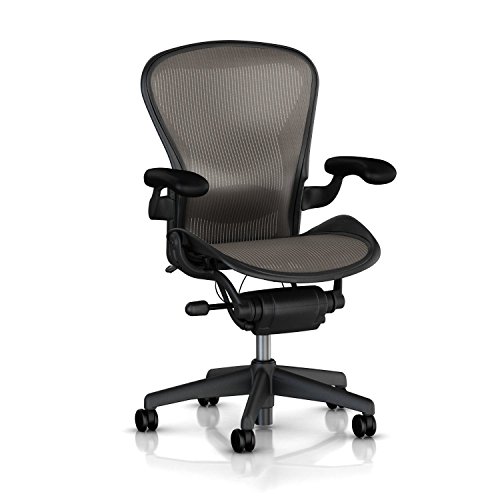
Herman Miller Classic Aeron Task Chair
What We Like
- Breathable Pellicle suspension keeps you cool
- Kinemat tilt mechanism for natural movement
- Waterfall seat edge reduces thigh pressure
- 12-year warranty with Born-On-Date sticker
Trade-offs
- At 48 pounds, it is heavy to move
- No headrest for neck support
The patented Kinemat tilt mechanism lets your neck, shoulders, hips, knees, and ankles pivot naturally, so you stay comfortable even during long work sessions. That natural alignment is paired with a unique breathable Pellicle suspension that dissipates body heat, keeping you cool while providing unparalleled support. The waterfall front edge of the seat also takes pressure off your thighs, helping your blood circulate and keeping you alert. This chair is built for someone who spends long periods at a desk and wants a cooling, supportive seat that moves with them.
Weight is the main compromise: at 48 pounds, it is not a chair you will want to move between rooms often. Compared to the lighter SIHOO M18 at 38 pounds, the Aeron is more of a permanent fixture. The vinyl arms also lack the breathability of the mesh found on some competitors, and there is no headrest for those who need neck support. But for focused, all-day comfort with a 12-year warranty, this chair performs where it matters.
Product photos
Steelcase Amia Office Chair
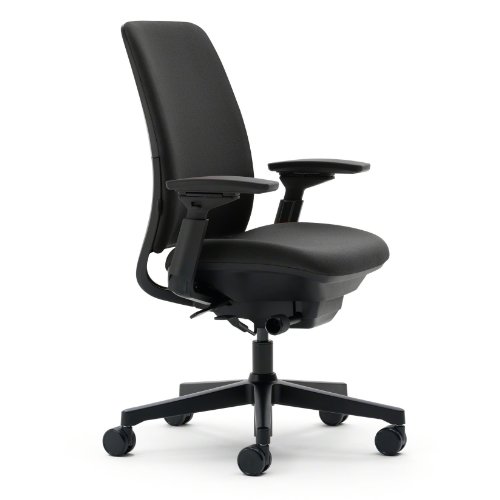
What We Like
- Hidden LiveLumbar adapts to movement
- 4D armrests adjust height, width, pivot, depth
- Seat with flexible edges reduces pressure
Trade-offs
- At 54.5 lb, it's heavy to move
- Lacks a headrest for neck support
The Steelcase Amia’s hidden LiveLumbar system moves with you, delivering dynamic lower back support that adjusts as you shift, so you’re never locked into one position. That makes it a fantastic pick for anyone who spends 8 to 10 hours at a desk and wants pressure-free sitting without a bulky lumbar pad. The flexible seat edges and extra cushioning add comfort, while the 4D armrests let you dial in height, width, pivot, and depth for a truly personalized fit.
Weighing 54.5 pounds, this chair is built like a tank, you won’t want to slide it across the room every day. But for pure, adaptive lumbar support and a sleek, sustainable design, the Amia is a long-term investment in your back’s comfort.
Humanscale World One Office Chair
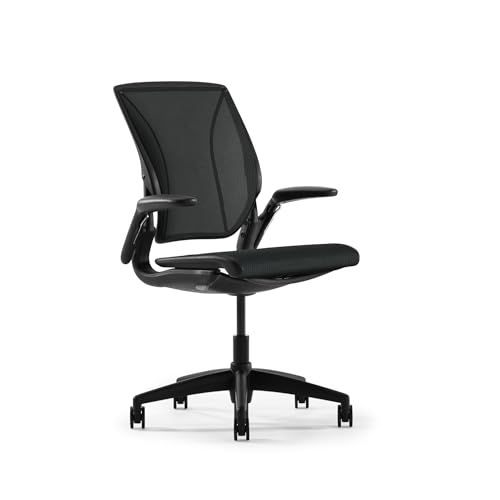
What We Like
- Self-adjusting built-in lumbar support
- Weight-sensitive recline adapts to movement
- Breathable mesh back for extended comfort
- Frameless front edge reduces knee pressure
Trade-offs
- No adjustable lumbar tension for fine-tuning
- No headrest for upper back/neck support
A 300-pound weight capacity and a weight-sensitive recline that moves with you make this chair feel almost alive. The built-in lumbar support is self-adjusting, so it adapts to your body without needing manual tweaks. That’s a huge advantage for anyone who spends long hours at a desk and doesn’t want to fiddle with knobs. The frameless front edge also helps eliminate knee pressure, which is a thoughtful touch for all-day sitting.
The self-adjusting lumbar support molds to your body without any manual controls, so if you prefer a very firm or very soft push in your lower back, this chair won’t let you dial it in. Compared to the SIHOO M18, which offers adjustable lumbar support, the Humanscale is simpler but less customizable. It also lacks a headrest, so if you lean back to rest your neck, you’ll need to look elsewhere. For someone who wants a chair that adapts on its own without extra controls, this is a clean, comfortable pick.
Product photos
TRALT Ergonomic Desk Chair

What We Like
- Adjustable lumbar support for spine alignment
- High-resilience foam seat won't flatten
- Breathable mesh back prevents heat buildup
- BIFMA-certified anti-sink lifting mechanism
Trade-offs
- Flip-up armrests lack adjustability
- Flip-up armrests lack height or width adjustment
A 330-pound weight capacity and a BIFMA-certified lifting mechanism that won’t sink over time mean this chair is built to last far beyond typical budget options. The adjustable lumbar support lets you dial in the curve that matches your spine, while the high-resilience molded foam seat stays springy instead of flattening out after a year. It’s an ideal pick for anyone who needs solid back support on a tighter budget, without sacrificing durability or comfort during long sitting sessions.
The armrests only flip up and don’t adjust in height or width, so you can’t fine-tune them to your desk height. Compared to the SIHOO M18, which offers 2D armrests and a tilt lock, the TRALT skips those extras to keep costs down. If you need more arm and recline adjustability, the M18 is worth a look, but for straightforward lumbar support and a seat that holds up, this chair gets the job done.
Product photos
Fizzin Office Mesh Chair
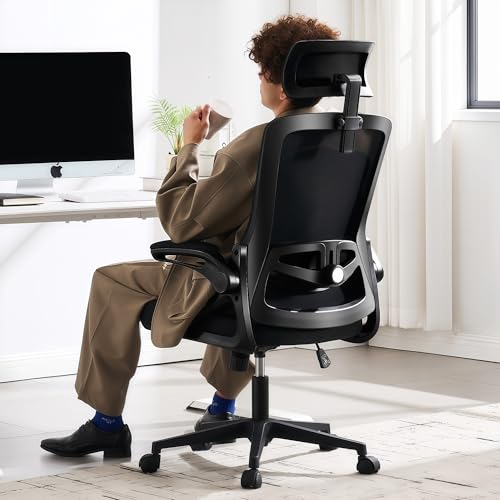
What We Like
- 400 lb weight capacity for stability
- Adjustable lumbar support in two directions
- Adjustable headrest with angle tilt
- 125° tilt and 90° armrests for relaxation
Trade-offs
- Armrests adjust only 90°, not multi-directional
- At 25.4 pounds, it's heavier than many mesh chairs
A 400-pound weight capacity makes this chair a rare find for larger frames, offering heavy-duty stability that most office chairs simply can’t match. The pneumatic lift and reinforced base keep it solid, while the breathable mesh back and adjustable lumbar support (moving 1 inch forward/back and 3.15 inches up/down) let you dial in lower-back comfort. It’s a practical choice for anyone who needs extra support without sacrificing adjustability, especially those who spend long hours seated.
The armrests only flip up 90 degrees, so you won’t get the multi-directional movement found on the SIHOO M18’s 2D armrests. Still, the 125-degree tilt and adjustable headrest (with 3.9 inches of height and angle tilt) add flexibility for leaning back between tasks. If you prioritize heavy-duty build and targeted lumbar support over armrest versatility, this chair meets those needs.
Product photos
How We Evaluated Chairs For Back Support
Our evaluation relies on a research-based approach. We examined manufacturer specifications and documentation for each chair, studied expert round-ups from ergonomic and seating specialists, and analyzed patterns in owner feedback to understand what works in real home office settings.
We focused on four criteria that matter most for back support. Lumbar adjustability came first, a chair must let you position support exactly where your lower back needs it. Seat and backrest materials followed, because breathable mesh or supportive foam directly affects comfort over time. Build quality and weight capacity ensured the chair would last, and adjustability features like armrests and recline angles determined how well the chair could fit different body types and work styles.
This is a research-led evaluation, not a hands-on test. We cannot claim personal experience sitting in every chair, but our method draws on the collective knowledge of ergonomic experts and thousands of verified owner experiences to identify the strongest options.
What To Look For In Chairs For Back Support
Choosing a chair for back support means understanding how your body interacts with the chair throughout a workday. The right chair should keep your spine in a neutral position, reduce pressure on your lower back, and allow for natural movement.
Look for adjustable lumbar support that fits the curve of your lower back, a seat height that lets your feet rest flat, and a backrest that supports your entire spine. Armrests and recline features add comfort but should not compromise core back support.
Lumbar Support Adjustability
The most critical feature for back support is lumbar support that you can adjust. Some chairs offer simple height adjustment, while others let you change depth or firmness. A 4-way adjustable lumbar cushion, like the one on the CASASIO Ergonomic Office Chair, gives you the most control over positioning. Adaptive lumbar systems, such as the one in the SIHOO B100, follow your spine’s natural curve as you move. For most people, the ability to move the lumbar support up or down is the minimum requirement.
Seat Comfort and Material
The seat cushion and backrest material determine how your body feels after several hours. Mesh backrests, found on chairs like the Herman Miller Classic Aeron Task Chair, allow air to circulate and keep you cool. High-density foam seats, like the one in the Marsail Ergonomic Office Chair, resist flattening over time. Look for a waterfall seat edge, which reduces pressure on the back of your thighs. The seat should be wide enough to support your hips without pressing against the armrests.
Adjustability and Fit
A chair that does not fit your body cannot support your back properly. Seat height adjustment is standard, but also check for seat depth adjustment if you have long or short legs. Armrests that adjust in multiple directions, height, width, pivot, and depth, let you position your arms comfortably while typing. Recline features with tilt resistance allow you to lean back without straining. The Steelcase Amia Office Chair offers 4D armrests and a flexible seat edge for a customized fit.
- Test the lumbar support range by sitting in the chair and feeling if the support hits the curve of your lower back.
- Check that your feet rest flat on the floor when the seat is at its lowest height.
- Ensure the backrest reaches at least your shoulder blades for full spine support.
- Verify that armrests can be adjusted to a height where your elbows rest at a 90-degree angle.
A chair that fits your body today but cannot adjust as your needs change will not provide lasting back support.
Chairs For Back Support Compared
The table below compares the key support features of each chair to help you narrow down your choice.
| Product | Weight Capacity | Lumbar Support | Armrests | Backrest Material |
|---|---|---|---|---|
| SIHOO M18 Ergonomic Office Chair | 330 lbs | Adjustable Lumbar Support | 2D adjustable | Breathable mesh |
| Marsail Ergonomic Office Chair | 330 lbs | 1.18" fwd/back, 2.16" up/down | 3D adjustable, flip-up | Mesh |
| ELABEST X100 Ergonomic Mesh Office Chair | 300 lbs | 3D Synchro-Tilt | 5D Flip-Up | Dual-Stripe AirMesh |
| SIHOO B100 Mesh Ergonomic Office Chair | 300 lbs | Adaptive (moves with spine) | Flip-up | Breathable mesh |
| CASASIO Ergonomic Office Chair | 330 lbs | 4-Way Adjustable | Flip-Up | Breathable mesh |
| Herman Miller Classic Aeron Task Chair | N/A | Lumbar Pad | Fully Adj Vinyl Arms | Pellicle suspension |
| Steelcase Amia Office Chair | N/A | LiveLumbar dynamic system | 4D adjustable | N/A |
| Humanscale World One Office Chair | 300 lbs | Built in Lumbar Support | N/A | Breathable tri-panel mesh |
| TRALT Ergonomic Desk Chair | 330 lbs | Adjustable depth | Flip-up | Breathable mesh |
| Fizzin Office Mesh Chair | 400 lbs | 1 in forward/back, 3.15 in up/down | 90° adjustable | Breathable mesh |
Frequently Asked Questions
What type of chair is best for lower back pain?
A chair with adjustable lumbar support is the most effective for lower back pain. Look for a model that lets you move the lumbar cushion up and down and adjust its depth. The Marsail Ergonomic Office Chair offers highly adjustable lumbar support, while the SIHOO B100 uses an adaptive lumbar system that follows your spine’s natural curve.
How much should I spend on an ergonomic office chair?
The right amount depends on the features you need. Budget-friendly options like the TRALT Ergonomic Desk Chair provide solid lumbar support and a durable seat for less. Mid-range chairs such as the SIHOO M18 offer more adjustability and breathable mesh backrests. Premium chairs from Herman Miller and Steelcase cost more but include advanced ergonomic mechanisms and longer warranties.
Can an office chair really help with posture?
Yes, an ergonomic chair with proper lumbar support encourages you to sit with your spine in a neutral position. The backrest supports your lower back and prevents slouching. Chairs with recline features, like the SIHOO M18 with three angles, also let you shift positions throughout the day, which reduces strain on your spine.
What is the difference between mesh and foam office chairs?
Mesh chairs use a breathable fabric that allows air to circulate, keeping you cooler during long work sessions. Foam chairs offer a plusher feel but can trap heat. For back support, mesh backrests are common because they conform to your spine while staying cool. The Herman Miller Classic Aeron Task Chair uses a Pellicle suspension that is more breathable than standard mesh.
How do I know if a chair will fit my body?
Check the seat height range to ensure it allows your feet to rest flat on the floor. Look at the seat width and depth to confirm it supports your hips and thighs without pressing against the armrests. The backrest should reach at least your shoulder blades. If you are taller or heavier, look for chairs with higher weight capacities, like the Fizzin Office Mesh Chair which supports up to 400 pounds.
The Bottom Line
The SIHOO M18 Ergonomic Office Chair is our best overall pick for anyone who needs an adjustable, breathable chair for long hours at a desk. Its four-point support system and three recline angles make it a versatile choice for most body types and work styles.
If your budget is tighter, the TRALT Ergonomic Desk Chair delivers reliable lumbar support and a durable seat without the higher price tag. For heavier users, the Fizzin Office Mesh Chair offers a 400-pound weight capacity with adjustable lumbar and headrest support. Those who want precise lower back control should look at the Marsail Ergonomic Office Chair, while the ELABEST X100 adds an integrated footrest for active sitting.
The single most important factor in choosing a chair for back support is lumbar adjustability. No other feature matters as much if the chair cannot position support exactly where your lower back needs it.
