10 Best Mesh Office Chairs in 2026
This post contains affiliate links. As an Amazon Associate, we earn from qualifying purchases.
The Herman Miller Classic Aeron Chair is our best overall pick for mesh office chairs because it combines fully loaded tension control, lumbar support, and hardwood floor casters in one iconic design. For those who want responsive lumbar support that adapts automatically, the Steelcase Karman is a strong alternative, while the Marsail Ergonomic Office Chair offers the most adjustability for the price.
Sitting in a mesh chair for eight hours means your back needs to stay cool and supported. The right chair balances breathability with enough lumbar structure to prevent slouching, and the wrong one leaves you either sweaty or sore by mid-afternoon.
We evaluated these chairs by studying manufacturer specifications, expert ergonomic round-ups, and patterns in owner feedback across multiple sources. This guide gives you the key differences between models so you can match the right chair to your body type, workspace, and budget.
Top 10 Mesh Office Chairs in the Market
Certain content that appears on this site comes from Amazon. This content is provided "as is" and is subject to change or removal at any time.
The Best Mesh Office Chairs, Reviewed
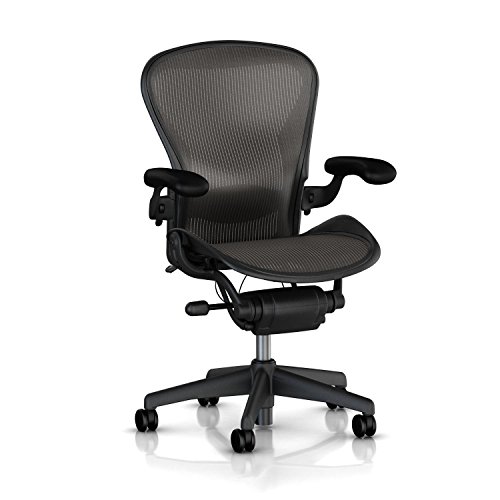
Herman Miller Classic Aeron Chair
What We Like
- Fully loaded with tension control
- Includes lumbar support
- Hardwood floor casters included
- Forward tilt and rear tilt lock
Trade-offs
- 50-pound weight makes it hard to move
- No headrest included with this model
A fully loaded chair with tension control means you can dial in exactly how much resistance you feel when leaning back, making long workdays far more comfortable. The included lumbar support cradles your lower back, while the forward tilt feature lets you shift into a more active sitting position when you need to focus. This is a chair built for someone who spends hours at a desk and wants every adjustment at their fingertips, from the rear tilt lock to the hardwood floor casters that roll smoothly without scratching. It’s a premium choice for anyone serious about ergonomic support.
The trade-off is weight: at 50 pounds, this is a hefty piece of furniture, so moving it between rooms or adjusting your setup frequently takes real effort. Compared to the Steelcase Karman at 47 pounds, the Aeron is slightly heavier, but the difference is small. Where the Aeron truly stands apart is in its fully loaded feature set and the proven lumbar support, which many lighter chairs like the Marsail Ergonomic Office Chair at 30.4 pounds simply don’t offer. If you value adjustability and long-term comfort over portability, this is the chair to choose.
Product photos
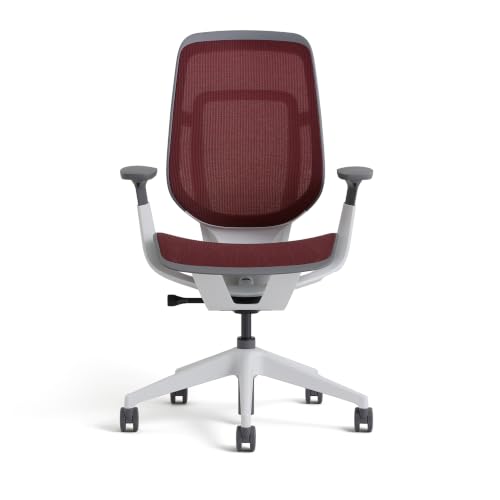
Steelcase Karman Ergonomic Chair
What We Like
- Proprietary Intermix mesh resists sagging
- Hybrid cushion for 8-10 hour comfort
- Suspension seat reduces pressure points
Trade-offs
- At 47 lb, it's heavy to move around
- No headrest or adjustable arms listed
The Intermix mesh textile is engineered to stay taut without sagging, while the hybrid cushion underneath supports long sessions of eight to ten hours without that numb feeling. It’s a chair built for focus, not fiddling.
The trade-off comes in its weight: at 47 pounds, it’s noticeably heavier than the Haworth Soji (19.8 lb), so relocating it between rooms or adjusting its position on hardwood takes more effort. That solid build also means a firmer feel than some mesh chairs, which might not suit everyone who prefers a softer seat. For someone who values instant, responsive lumbar support and is willing to accept a heavier frame, the Karman delivers a refined sitting experience that stays out of your way.
Product photos
Marsail Ergonomic Office Chair

What We Like
- 330 lb weight capacity for durability
- 3D adjustable armrests for multiple postures
- 1.18" forward/back lumbar adjustment
- 3.14" thick high-density foam seat
Trade-offs
- At 30.4 lb, heavier than the Haworth Soji (19.8 lb)
- No padded upper-back support for shoulders
A 330-pound weight capacity means this chair supports a wide range of body types without sacrificing stability, and the 3.14-inch thick high-density foam seat doubles comfort during long workdays. The fully adjustable design, with a 2D headrest, 90° to 120° recline, and 3D armrests that move forward, back, and swivel, lets you dial in multiple work postures. It’s ideal for anyone who needs personalized support throughout the day, especially if you shift between typing, reading, and leaning back.
Product photos
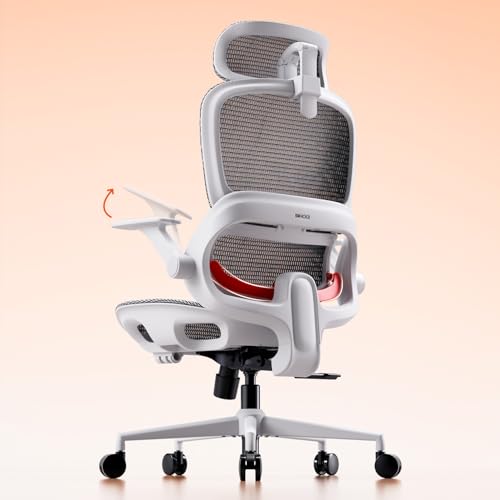
SIHOO B100 Mesh Ergonomic Chair
What We Like
- Adaptive lumbar follows your spine's curve
- Full mesh backrest keeps air circulating
- Widened seat spreads weight evenly
- Three lockable recline angles for breaks
Trade-offs
- Flip-up armrests lack depth or width adjustment
A dynamic lumbar support that moves with you as you lean, sit upright, or shift positions throughout the day is the standout feature here. The SIHOO B100’s backrest adapts to your spine’s natural curve, so you stay supported while typing, on a call, or leaning back to think. With a seat height adjustable from 18.3 to 21.9 inches and a reinforced metal base rated for up to 300 pounds, this chair suits a wide range of body types and desk heights. The full mesh back keeps air moving, helping you stay cool during long work sessions, while the widened seat cushion spreads your weight evenly across hips and thighs. It’s a thoughtful design for anyone who spends long stretches at a desk and wants lower back support that doesn’t feel rigid or forced.
The adaptive lumbar support that actually moves with you is the standout feature here. It follows your spine as you lean forward, sit upright, or shift positions, so your lower back stays supported without feeling forced. The flip-up armrests let you tuck the chair under your desk when not in use, but they lack the depth, width, or angle adjustments you’d find on a chair like the Steelcase Karman. For the price, the B100 delivers focused comfort that many mesh chairs at this level skip, making it a smart pick if your priority is a backrest that works with you, not against you.
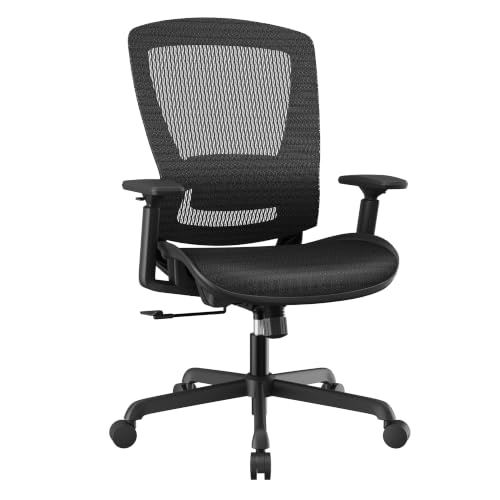
ELABEST Ergonomic Mesh Office Chair
What We Like
- BIFMA 5.1 certified commercial grade
- 3D adjustable armrests for custom fit
- Ultra-breathable mesh seat prevents heat buildup
- Adjustable lumbar support with synchro-tilt
Trade-offs
- At 36.0 lb, heavier than some mesh chairs
- Seat height adjustment requires contacting the manufacturer for customization
BIFMA 5.1 certification means this chair is built to withstand the demands of daily multi-shift use in a commercial workspace, so it’s a durable investment for long hours at a desk. The bionic-curve backrest with adjustable lumbar support and synchro-tilt mechanism is designed to reduce lower back strain even after eight-plus hours of continuous sitting. It offers three lockable positions and adjustable tension. Professionals who spend all day typing and coding will appreciate the Golden Triangle back structure that targets shoulders and upper back, plus the 3D adjustable armrests that let you set height, width, and angle to match your desk setup. The full-mesh seat keeps you cool and promotes healthy blood flow by eliminating pressure points, a clear advantage over foam seats that can sag and trap heat.
The ELABEST Ergonomic Mesh Office Chair meets BIFMA 5.1 commercial-grade durability standards, so it’s built to hold up under daily multi-shift use in a busy workspace. At 36.0 pounds, it’s heavier than some mesh chairs, but that weight comes from a heavy-duty base and smooth-rolling casters designed for stability on any floor surface. The seat depth of 17.7 inches and width of 20 inches offer a generous sitting area, and the full-mesh seat uses stretch-resistant mesh to promote healthy blood flow by eliminating pressure points.
CAPOT Ergonomic Mesh Office Chair

What We Like
- Micro-adjust lumbar with 8 levels
- Flip-up arms for desk storage
- Cooling Aerovith mesh seat
Trade-offs
- Heavy at 38 pounds for moving
- Only 3 backrest lock positions
- Armrests flip up but don't slide
With a steel base that supports up to 400 pounds, this chair stays planted even during long shifts, no wobble or sudden sinking, thanks to the leak-proof gas lift. The lumbar support adjusts two inches across eight levels, so you can target the exact spot that needs relief, and the headrest moves in height and depth to fit people from 5’5″ to 6’2″. That range means taller users won’t have to hunch, and the whole setup is built to handle heavy use without feeling flimsy.
The trade-off is weight: at 38 pounds, this chair is noticeably heavier than the SIHOO B100 (35.5 lbs) and much heavier than the Haworth Soji (19.8 lbs), so moving it from one room to another takes more effort.
Haworth Soji Ergonomic Chair

What We Like
- Fully assembled out of box
- 4D adjustable armrests
- GREENGUARD Gold & BIFMA Level certified
- 12-year warranty
Trade-offs
- No forward tilt adjustment
- Plastic swivel base
At just 19.8 pounds, the Haworth Soji is one of the lightest mesh chairs in this guide, making it easy to move from desk to desk or tuck away when not in use. It arrives fully assembled, so you can sit down and start working immediately without wrestling with an Allen wrench. The 4D armrests let you dial in the exact height, width, depth, and angle you need, while the adjustable lumbar and seat depth help keep your spine aligned through long work sessions. This chair is built for someone who wants serious ergonomic adjustability in a package that doesn’t dominate the room or require a forklift to reposition.
The Soji’s plastic swivel base supports up to 350 pounds, but it lacks the forward tilt mechanism that some users rely on for perching at the edge of their seat during focused work. Reviewers note the chair arrives fully assembled, so you can start using it immediately without any setup hassle. Backed by a 12-year warranty and GREENGUARD Gold certification, it’s built to last while keeping sustainability in mind.
Product photos
GABRYLLY Ergonomic Office Chair
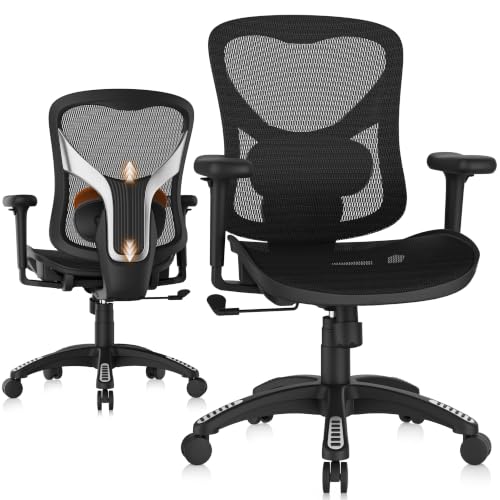
What We Like
- Adjustable padded lumbar support moves up and down
- 3D armrests with 215° rotation range
- BIFMA 5.1 certified for commercial-grade stability
- Breathable mesh back and seat for cool comfort
Trade-offs
- Mid-back design offers less upper spine support
- 36-pound weight makes it harder to move around
A 300-pound weight capacity and BIFMA 5.1 certification give this chair a sturdy, commercial-grade feel that rivals far pricier options. The adjustable padded lumbar support moves up and down to target lower back pressure precisely, making it a smart fit for anyone who needs relief from fatigue during long workdays. The breathable mesh back and seat keep you cool, while the waterfall seat edge reduces pressure behind the knees for better circulation.
The mid-back design focuses support on the lower and middle back, which suits users who don’t need upper back or head support from their chair. At 36 pounds, it’s a solidly built chair that stays put once placed, though moving it around the room takes a little more effort than lighter models. Still, the 3D armrests with a 215-degree rotation range and the 3-stage recline with tension control deliver real ergonomic flexibility for the price.
Product photos
Steelcase Series 2 Ergonomic Chair
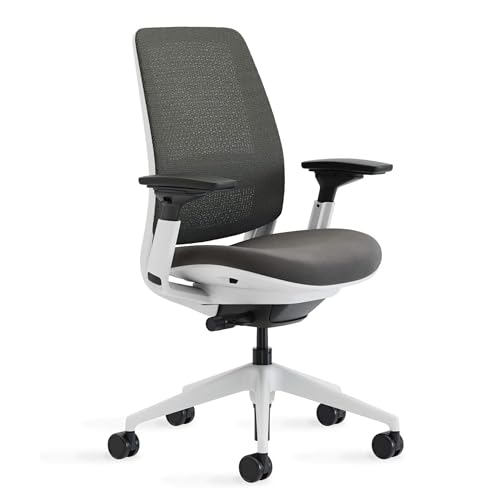
What We Like
- Weight-activated mechanism adjusts automatically
- Air LiveBack technology supports posture
- Comfort dial for quick personalized fit
- Sturdy hard-floor wheels included
Trade-offs
- At 36 pounds, heavier than some mesh chairs
- No headrest for reclining or napping
The weight-activated mechanism takes the guesswork out of finding the right recline tension, automatically responding to your body weight so anyone can sit down and get comfortable quickly. This Steelcase Series 2 chair uses Air LiveBack technology to encourage movement and support your posture throughout the day, while the comfort dial lets you fine-tune the fit without fuss. It’s a high-performing task chair that suits a shared workspace or a home office where multiple people might use the same seat, because no one has to fiddle with knobs or levers to feel supported.
That said, at 36 pounds it’s noticeably heavier than mesh alternatives like the Haworth Soji (19.8 pounds), so shifting it between rooms takes more effort. The included wheels are designed for hard flooring, which is a plus if you have wood or tile. For anyone who values instant, intuitive adjustability and a sturdy build over ultralight portability, this chair delivers reliable all-day comfort without the learning curve.
Product photos
Haworth Fern Ergonomic Chair

What We Like
- Patented Wave Suspension cradles spine
- 12-year warranty for long-term use
- Breathable mesh finish keeps you cool
- Ships fully assembled
Trade-offs
- At 65.0 lb, it is heavy to move
- Plastic base feels less premium than steel options
A 350-pound weight capacity and a 12-year warranty tell you this chair is built for the long haul. The patented Wave Suspension mimics your spine’s natural curves, distributing weight as you shift, so during a deep work session or when leaning back to think, the Fern adapts to you. Its breathable mesh finish keeps air moving, making it a top pick for anyone who runs warm or spends hours seated. The chair arrives fully assembled, so you can start enjoying that support right out of the box.
The main trade-off is heft: at 65.0 pounds, the Fern is noticeably heavier than the Steelcase Karman (47.0 lb), so moving it from room to room takes some effort. The plastic base keeps costs reasonable, but if you prefer the look of metal, you might notice the difference. Still, for someone who prioritizes long-lasting comfort and a chair that breathes, the Fern’s combination of ergonomic innovation and generous warranty makes it a compelling choice for a dedicated home office.
Product photos
How We Evaluated Mesh Office Chairs
Our research began with a close look at manufacturer specifications for each chair: weight capacity, adjustment ranges, materials, certifications, and warranty terms. We then cross-referenced these specs with expert ergonomic reviews and compiled common themes from hundreds of owner experiences to understand what holds up over time and what doesn’t.
Four criteria mattered most for this category. Lumbar support was the top priority because mesh chairs rely on it to replace the structure of padded foam backs. Adjustability came next. Armrests, seat height, recline, and tilt all affect how well a chair fits different body types. Build quality and certifications like BIFMA and GREENGUARD Gold helped separate commercial-grade chairs from lighter-duty options. Breathability was the final check, since the whole point of mesh is airflow.
A research-led evaluation like this can’t replace sitting in a chair for a full workday. What it does is narrow the field to models with strong engineering and verified owner satisfaction, so you can make a confident choice without testing ten chairs yourself.
What To Look For In Mesh Office Chairs
The best mesh office chair keeps your back cool while giving you the support you need to sit comfortably for hours. Here’s what to check before you buy.
Focus on lumbar adjustability, armrest range, weight capacity, and certifications. A chair that fits your body and your floor type will serve you longer than one with flashy features that don’t align with how you actually sit.
Lumbar Support Type and Adjustability
Mesh backs need intentional lumbar support because the fabric itself doesn’t contour like foam. Look for chairs with adjustable lumbar that moves up and down or in and out. The Steelcase Karman uses a proprietary Intermix mesh that resists sagging and provides responsive support, while the SIHOO B100 features adaptive lumbar that follows your spine’s curve as you shift positions. Fixed lumbar pads work for some body types but leave others unsupported.
Armrest Adjustment Range
Armrests that only move up and down limit how well you can position your arms for typing. The best chairs offer 3D or 4D armrests that adjust for height, width, depth, and angle. The Haworth Soji includes 4D adjustable armrests, while the Marsail offers 3D adjustment. Flip-up armrests, like those on the CAPOT, help if you need to slide the chair under a desk, but they sacrifice the fine-tuning that fixed multi-directional arms provide.
Weight Capacity and Seat Construction
Mesh seats must support your weight without sagging over time. The Marsail supports up to 330 lb with a 3.14-inch thick high-density foam seat, while the CAPOT uses a cooling Aerovith mesh seat designed for heavier users. Check the weight capacity against your own needs and consider whether the seat has a hybrid cushion or suspension system, like the Steelcase Karman, for longer comfort.
- Check whether the chair comes with hard-floor casters or carpet casters for your floor type.
- Look at the recline range and lock positions, three or more lockable angles give you more options.
- Verify the warranty length; 12-year warranties like those on the Haworth Soji and Fern signal commercial-grade confidence.
- Measure your desk height against the chair’s seat height range to ensure a proper fit.
A chair that matches your body weight and floor type from day one will save you the hassle of returns and aftermarket caster swaps.
Mesh Office Chairs Compared
The table below compares all ten mesh office chairs across key specs so you can see at a glance which models fit your priorities for adjustability, weight capacity, and certifications.
| Product | Weight | Lumbar Support | Armrest Type |
|---|---|---|---|
| Herman Miller Classic Aeron Chair | 50.0 pounds | Yes | N/A |
| Steelcase Karman Ergonomic Chair | 47.0 pounds | Weight-activated | N/A |
| Marsail Ergonomic Office Chair | 30.4 pounds | Adjustable | 3D adjustable, flip-up |
| SIHOO B100 Mesh Ergonomic Chair | 35.5 pounds | Adaptive | Flip-up Armrests |
| ELABEST Ergonomic Mesh Office Chair | 36.0 pounds | Adjustable | 3D adjustable |
| CAPOT Ergonomic Mesh Office Chair | 38.0 pounds | Adjustable | 4D Flip-up Arms |
| Haworth Soji Ergonomic Chair | 19.8 pounds | Yes | 4D armrests |
| GABRYLLY Ergonomic Office Chair | 36.0 pounds | Adjustable | 3D adjustable with 215° rotation |
| Steelcase Series 2 Ergonomic Chair | 36.0 pounds | Adjustable lumbar | N/A |
| Haworth Fern Ergonomic Chair | 65.0 pounds | Yes | Padded 4D |
Frequently Asked Questions
How long do mesh office chairs typically last?
A well-built mesh office chair with commercial-grade components can last a decade or more with regular use. Chairs with BIFMA 5.1 certification, like the ELABEST and GABRYLLY models, are tested for durability under repeated use. The mesh fabric itself may begin to lose tension after several years, but brands like Haworth and Steelcase back their chairs with 12-year warranties that cover structural defects.
Is a mesh office chair better for your back than a padded chair?
Mesh chairs offer better airflow, which keeps you cooler and reduces sweat buildup during long sitting sessions. For back health, the key factor is lumbar support adjustability rather than the material itself. A mesh chair with adjustable lumbar support can be just as good for your posture as a padded chair, provided the lumbar pad fits the curve of your lower spine.
Can you use a mesh office chair on carpet?
Yes, but you may need to swap the casters. Most mesh office chairs ship with hard-floor casters designed for wood, tile, or laminate. Using them on thick carpet can make the chair harder to roll. The Steelcase Series 2 includes sturdy hard-floor wheels, so if you have carpet, look for models that offer carpet caster options or plan to buy a separate set.
What is the difference between 3D and 4D armrests?
3D armrests adjust in three directions: height, width, and depth. 4D armrests add a fourth direction, angle or rotation, so you can pivot the arm pads to match how you position your arms while typing or resting. The Haworth Soji offers 4D adjustable armrests, while the Marsail and ELABEST provide 3D adjustment. The extra dimension matters most if you switch between typing and reclining throughout the day.
How much weight can a mesh office chair hold?
Weight capacities vary widely by model. The Marsail supports up to 330 lb, making it one of the highest-capacity mesh chairs available. Other models like the CAPOT are built specifically for heavier users with reinforced frames and cooling mesh seats. Always check the manufacturer’s stated weight capacity against your own weight, and leave a margin of at least 20 to 30 pounds for long-term durability.
The Bottom Line
The Herman Miller Classic Aeron Chair remains the best overall mesh office chair for anyone who wants a fully adjustable, heavy-duty seat with premium ergonomic features and lumbar support. Its tension control, forward tilt, and included hardwood floor casters make it a complete package for long workdays, though its 50-pound weight means it’s not ideal for frequent room rearranging.
If you need a chair that adapts to multiple users or body types without manual adjustments, the Steelcase Series 2 uses a weight-activated mechanism that automatically dials in the right support. For those on a tighter budget who still want full adjustability, the Marsail Ergonomic Office Chair offers 3D armrests, a high weight capacity, and thick foam cushioning at a more accessible price point.
The single most important factor when buying a mesh office chair is lumbar support that matches your spine. No other feature matters as much for your comfort and posture over an eight-hour day, so prioritize adjustability in that area above all else.
