10 Best Office Chairs For Back Support in 2026
This post contains affiliate links. As an Amazon Associate, we earn from qualifying purchases.
The Steelcase Amia Office Chair is the best overall for back support thanks to its Dynamic LiveLumbar technology that adjusts to your every movement. For those on a budget, the SIHOO M18 offers excellent ergonomic value, while the ELABEST X100 provides the most adjustable lumbar support.
Finding an office chair that truly supports your back means looking past general comfort. You need a chair that maintains the natural S-curve of your spine, distributes pressure evenly, and adapts to your unique body and work habits. The wrong chair can lead to discomfort that follows you from the desk to the rest of your day.
This guide is based on a thorough review of manufacturer specifications, expert ergonomic round-ups, and patterns found in owner feedback. We’ve focused on the features that directly impact back support to help you make a confident choice.
Top 10 Office Chairs For Back Support in the Market
Certain content that appears on this site comes from Amazon. This content is provided "as is" and is subject to change or removal at any time.
The Best Office Chairs For Back Support, Reviewed
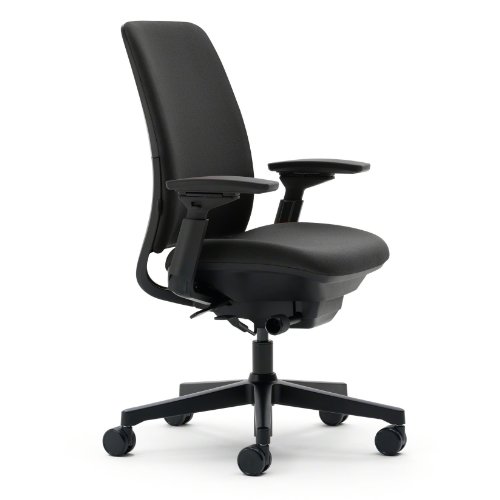
Steelcase Amia Office Chair
What We Like
- Dynamic LiveLumbar adjusts to movement
- 4D arm support for personalized fit
- Extra cushioning for long hours
- Carbon Neutral certified option
Trade-offs
- At 54.5 lb, it's heavy to move
- No headrest included
The Steelcase Amia’s hidden LiveLumbar system is its standout feature, it continuously adapts to your every shift, delivering dynamic lower back support that moves with you rather than locking you into one position. That means you can lean forward to type, recline to think, or sit upright for a video call, and the chair responds instantly, keeping your spine aligned without you having to fiddle with knobs. With extra cushioning and flexible seat edges, it’s built to keep pressure points at bay during eight- to ten-hour workdays, making it a top pick for anyone who spends long stretches at a desk and wants support that feels intuitive, not intrusive.
The main trade-off is weight: at 54.5 pounds, this chair is substantial and not something you’ll want to move from room to room often. It’s also missing a headrest, which the lighter Marsail Ergonomic Office Chair includes for those who need neck support. But if your priority is a chair that disappears under you while providing continuous, responsive lumbar support, and you don’t plan to relocate it regularly, the Amia’s thoughtful engineering and premium materials make it a worthy investment for your home office.
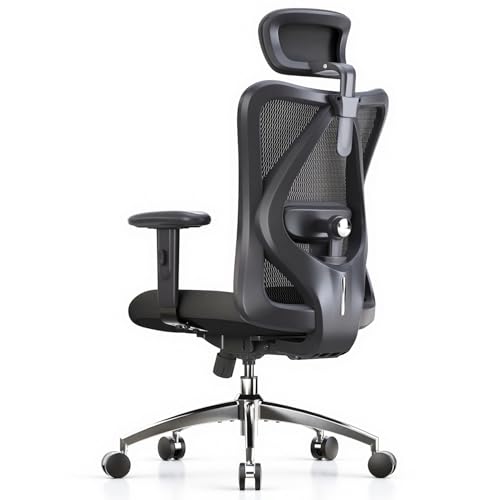
SIHOO M18 Ergonomic Office Chair
What We Like
- 4-point ergonomic support (head/back/hip/hands)
- Adjustable lumbar and back support
- Breathable mesh backrest keeps you cool
- Reclines up to 128° with tilt lock
Trade-offs
- Only 2D armrests limit adjustability
- Weight capacity lower than some alternatives
Four points of ergonomic support, head, back, hips, and hands, help reduce strain during long sitting sessions, according to the manufacturer. The breathable mesh backrest keeps you cool, and the adjustable lumbar and back support let you tailor the fit to your spine. It holds up to 330 pounds and suits people from 5’6″ to 6’2″ tall, so it accommodates a wide range of body types without feeling cramped.
The trade-off comes in the armrests: they adjust in two dimensions only, so you won’t get the same fine-tuning you’d find on a chair like the Steelcase Gesture, which offers 360-degree arm movement. But if you’re looking for solid lumbar support and a chair that moves with you through focused typing and leaning back for a break, the M18 delivers where it counts.
ELABEST X100 Ergonomic Mesh Office Chair

What We Like
- Dynamic 3D Synchro-Tilt lumbar support
- 17-point micro-adjustment system
- 5D flip-up armrests with EVA foam
- BIFMA-certified 300 lb capacity
Trade-offs
- At 43 lb, heavier than some mesh chairs
- Footrest adds bulk for tight spaces
The ELABEST X100’s 3D Synchro-Tilt lumbar support, with lockable depth, height, and rotation adjustments, actively tracks your spine’s natural curve, a feature certified by the American Ergonomics Partnership for fatigue reduction during long workdays. This chair is built for anyone who needs precise, customizable back support during long work sessions, thanks to its 17-point micro-adjustment system that lets you fine-tune everything from the headrest to the armrests. The Dual-Stripe AirMesh keeps you cool, while the 5D flip-up armrests tuck neatly under a desk when not in use.
The X100’s built-in footrest makes it easy to kick back and relax during breaks, but that extra feature also adds depth that might feel bulky in a compact workspace. If you prioritize a truly adjustable lumbar system and don’t mind a sturdier frame, this chair delivers active spinal support that many chairs at this level can’t match.
Marsail Ergonomic Office Chair

What We Like
- Highly adjustable lumbar support
- Breathable mesh backrest
- 3D flip-up armrests
- Thick high-density foam seat
Trade-offs
- No seat depth adjustment listed
- Backrest recline range limited to 120°
With lumbar support that adjusts 1.18 inches forward and back and 2.16 inches up and down, this chair lets you dial in lower-back pressure exactly where you need it. The breathable mesh backrest keeps air moving so you stay cool during long stretches at the desk, while the 3.14-inch thick high-density foam seat doubles down on comfort for heavier builds. It’s a thoughtful pick for anyone who prioritizes airflow and customizable lumbar fit over plush upholstery.
At 30.4 pounds, this chair is light enough to roll across a carpet without leaving ruts, yet substantial enough to feel stable during a full recline. The 3D armrests can be moved forward, backward, or swiveled to match your typing angle, and they flip up when you want to slide the chair under a desk. The mesh back breathes freely, so you won’t get sticky on warm days, and the lumbar support adjusts 1.18 inches forward and 2.16 inches up or down to hit the curve of your spine.
Product photos
HOLLUDLE Ergonomic Mesh Office Chair

What We Like
- 3D adjustable lumbar support
- 2D adjustable headrest
- 3D adjustable armrests
- 350 lbs weight capacity
Trade-offs
- At 43.7 pounds, it's heavy to move
- No seat depth adjustment mentioned
The fully 3D adjustable lumbar support moves up, down, forward, backward, and rotates to fit your spine, easing back pressure and helping maintain good posture during long hours at a desk. The 2D headrest and 3D armrests add more tailoring, making it a strong match for anyone who wants to fine-tune their seating position. It holds up to 350 pounds, so it accommodates a wide range of body types, and the breathable mesh keeps you cool through the workday.
At 43.7 pounds, it’s not a chair you’ll want to slide around the room frequently. Compared to the Haworth Soji, which weighs under 20 pounds, this one is noticeably heavier. The tilt lock offers three positions for working, gaming, or relaxing, but there’s no seat depth adjustment, so taller users may find the seat pan a bit short. If you prioritize extensive lumbar customization and don’t mind a heavier build, this chair delivers strong support for long hours at a desk.
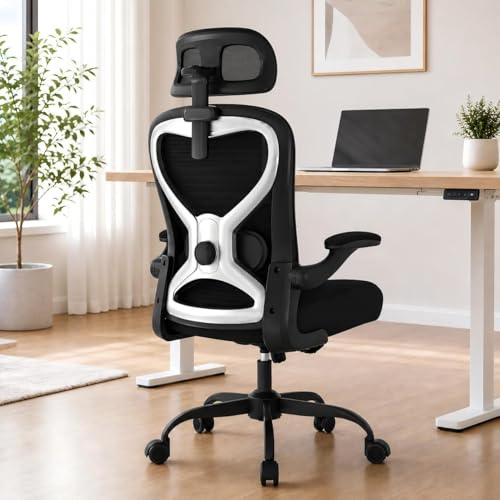
CASASIO Ergonomic Office Chair
What We Like
- 4-way adjustable lumbar support
- 3.5" virgin foam seat cushion
- 3D adjustable headrest
- Flip-up armrests for space saving
Trade-offs
- Armrests flip up but lack depth/width adjustment
- No seat depth adjustment for taller users
A 3.5-inch virgin foam seat cushion distributes weight evenly to prevent soreness during eight-plus-hour days, making this chair a natural fit for anyone who lives at their desk. The contoured mesh back pairs with a dual-direction adjustable lumbar cushion, so you can dial in lower-back support exactly where you need it. Combined with a 3D adjustable headrest that cradles your neck and head, the design targets the three key pressure points that cause fatigue in long work sessions.
The trade-off comes in the armrests: they flip up to tuck under a desk, but they lack the depth, width, and angle adjustments found on some competitors like the Steelcase Gesture. That said, the CASASIO still offers a generous 330-pound weight capacity, a reinforced metal base, and a 5-year warranty for peace of mind. For the price-conscious shopper focused on all-day back support, this chair delivers where it counts most.
Haworth Soji Ergonomic Office Chair

What We Like
- Flexible mesh back adapts to movement
- 4D armrests for personalized positioning
- Fully assembled out of the box
- GREENGUARD Gold certified for low emissions
Trade-offs
- No forward tilt adjustment included
- No headrest for neck support
With a flexible mesh back that moves with you, this chair keeps your spine supported through long shifts without that stiff, locked-in feeling. The 4D armrests let you dial in height, width, depth, and angle, while the seat depth adjustment helps taller or shorter users find their ideal leg support. It arrives fully assembled, so you can start working right away, and the GREENGUARD Gold certification means it won’t off-gas harsh chemicals into your home office.
This model skips forward tilt, a feature some users rely on for active sitting or leaning into desk work. Compared to the Steelcase Amia, which offers a more traditional padded back and a heavier build at 54.5 lb, the Soji is lighter and easier to move but may feel less substantial under aggressive reclining. Best for anyone who wants breathable, adaptive back support with eco-friendly credentials, not for those who need forward tilt or a plusher, cushioned back.
Product photos
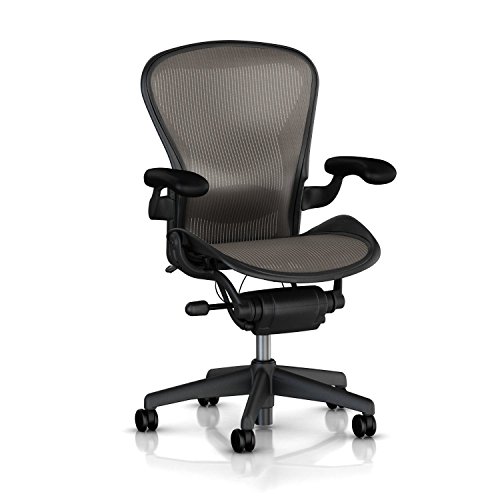
Herman Miller Classic Aeron Task Chair
What We Like
- Breathable Pellicle suspension dissipates body heat
- Kinemat tilt allows natural pivot of joints
- Waterfall seat edge reduces thigh pressure
- 12-year warranty with Born-On-Date sticker
Trade-offs
- Fixed lumbar pad not adjustable for height or depth
- Heavier than the SIHOO M18 at 48 pounds
The Pellicle suspension is the standout feature here, actively dissipating body heat so you stay cool and comfortable through long work sessions. That breathable mesh works with the Kinemat tilt mechanism, which lets your neck, shoulders, hips, knees, and ankles pivot naturally as you move. This chair suits anyone who runs warm or spends hours at a desk and wants a seat that breathes with them while keeping pressure off the thighs thanks to the waterfall front edge.
At 48 pounds, it is noticeably heavier than the SIHOO M18, so moving it between rooms takes more effort. The lumbar support comes as a fixed pad rather than an adjustable system, which means you get targeted lower back support but cannot fine-tune the height or depth.
Product photos
Ergoa Ergonomic Mesh Office Chair
What We Like
- 8-position adjustable lumbar support
- 9-position adjustable backrest
- 4D soft-padded armrests with rotation
- Removable 11-position 3D headrest
Trade-offs
- 48 lb weight makes moving difficult
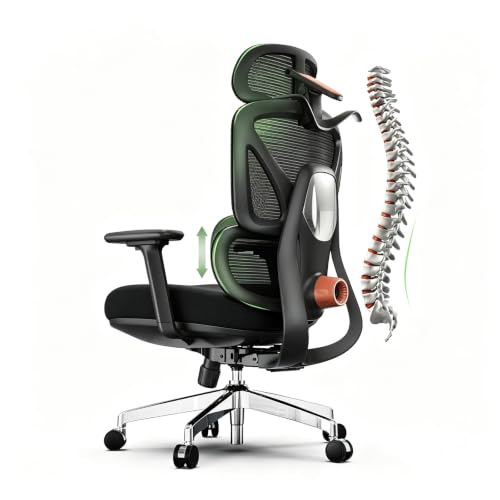
With 8 lumbar positions and 9 backrest adjustments, the Ergoa Ergonomic Mesh Office Chair lets you dial in spinal support with precision. The 2.36 inches of lumbar travel and 1.97 inches of backrest movement mean you can match the curve of your lower back exactly, keeping your spine aligned during long work sessions. It’s a strong fit for anyone who needs targeted lower-back relief and wants to fine-tune their sitting posture without guesswork.
At 48 pounds, this chair is noticeably heavier than the SIHOO M18 (38 lbs), so rearranging your setup takes more effort. The 4D armrests and removable headrest add versatility, but if you’re shorter or prefer a lighter frame, the SIHOO might feel easier to handle. For those who prioritize deep lumbar customization and a sturdy build, the Ergoa delivers where it counts.
Product photos
Steelcase Gesture Office Chair
What We Like
- 360-degree arms for any posture
- Contoured back follows spine's natural shape
- Intuitive adjustments all on right side
- Full recline with three lock settings
Trade-offs
- At 70 pounds, it's heavy to move
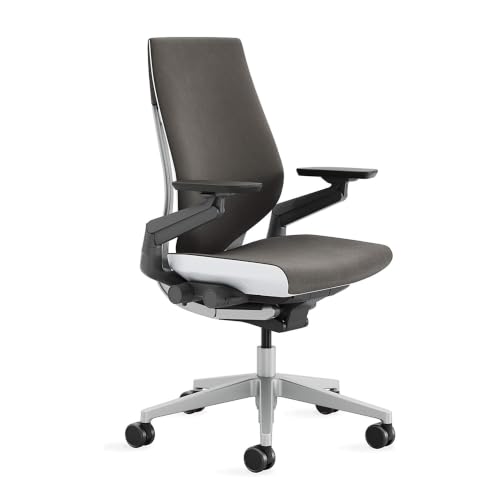
The 360-degree arms track your elbows through typing, leaning, and reaching, so support never drops. That intuitive adjustability suits anyone who shifts postures all day. The contoured back mirrors your spine, and every control sits on the right side, reachable without looking. It handles long desk hours with a full recline range and three lock settings, keeping you comfortable whether focused or resting.
At 70 pounds, this chair is not something you’ll want to move from room to room. It’s a set-it-and-forget-it piece for a dedicated home office. Compared to the Steelcase Amia, which weighs about 54.5 pounds, the Gesture gives you more arm movement with its 360-degree arms. If you value being able to fine-tune your position in every direction and don’t need to shift the chair around, this is the more versatile choice.
Product photos
How We Evaluated Office Chairs For Back Support
Our evaluation is research-based, drawing on detailed product specifications, manufacturer documentation, and insights from expert ergonomic round-ups. We also analyzed patterns in owner feedback to understand what features truly contribute to long-term comfort and support.
We prioritized four key criteria: lumbar support adjustability, seat comfort and ergonomics, build quality and durability, and overall value. Lumbar support was weighted most heavily, as it is the primary feature for back health. We looked for chairs offering adjustable depth, height, and firmness to accommodate different spinal curves.
A research-led evaluation has limits. We cannot replicate the experience of sitting in a chair for eight hours. Instead, we rely on objective data like weight capacity, material certifications, and adjustment ranges, combined with the consensus of expert and owner experiences, to identify the chairs most likely to provide excellent back support.
What To Look For In Office Chairs For Back Support
Choosing an office chair for back support means understanding how your body interacts with the chair throughout the day. Focus on adjustability, material, and build quality to find a chair that works with you, not against you.
Look for a chair with adjustable lumbar support (height, depth, and firmness), a seat that supports your thighs without pressure, and a breathable backrest that keeps you cool during long sessions.
Lumbar Support Adjustability
The most critical feature for back support is a lumbar system that can be tailored to your spine. Look for chairs that allow you to adjust the lumbar support up and down (height) and in and out (depth). Some advanced models, like the ELABEST X100, offer a dynamic 3D synchro-tilt that moves with you. A fixed lumbar pad, like on the Herman Miller Classic Aeron, may not suit everyone.
Seat Comfort and Ergonomics
A supportive seat is just as important as the backrest. The cushion should be firm enough to prevent you from bottoming out but soft enough for comfort over hours. A waterfall seat edge reduces pressure on the back of your thighs. Seat depth adjustment is a valuable feature for taller users, ensuring your knees are at a 90-degree angle with support behind your knees.
Build Quality and Adjustability Range
A chair that wobbles or has limited adjustments will fail to provide consistent support. Look for a high weight capacity (300 lbs or more is a good benchmark), a sturdy base, and a long warranty. The more points of adjustment, armrests (4D is best), seat height, recline tension, and tilt lock, the more precisely you can fit the chair to your body.
- Check if the lumbar support adjusts in both height and depth.
- Ensure the seat cushion is high-density foam and has a waterfall edge.
- Verify the chair’s weight capacity meets your needs.
- Look for 4D armrests that move up, down, in, out, and pivot.
- Confirm the chair has a tilt lock and adjustable recline tension.
A good rule of thumb: the more adjustments a chair offers, the better your chances of dialing in perfect back support.
Office Chairs For Back Support Compared
The table below compares the key specifications and features of our top picks for office chairs with back support.
| Product | Weight | Lumbar Support | Arm Adjustability |
|---|---|---|---|
| Steelcase Amia Office Chair | 54.5 pounds | LiveLumbar system | 4D (height, width, pivot, depth) |
| SIHOO M18 Ergonomic Office Chair | 38.0 pounds | Adjustable Lumbar Support | 2D Adjustable |
| ELABEST X100 Ergonomic Mesh Office Chair | 43.0 pounds | 3D Synchro-Tilt | 5D Flip-Up |
| Marsail Ergonomic Office Chair | 30.4 pounds | 1.18" forward/back, 2.16" up/down | 3D adjustable, flip-up |
| HOLLUDLE Ergonomic Mesh Office Chair | 43.7 pounds | 3D Adjustable | 3D Adjustable |
| CASASIO Ergonomic Office Chair | 30.0 pounds | 4-way adjustable | Flip-up |
| Haworth Soji Ergonomic Office Chair | 19.8 pounds | lumbar support | 4D armrests |
| Herman Miller Classic Aeron Task Chair | 48.0 pounds | Lumbar Pad | Fully Adj Vinyl Arms |
| Ergoa Ergonomic Mesh Office Chair | 48.0 pounds | 8 positions, 2.36" travel | 4D soft-padded, 45° rotation |
| Steelcase Gesture Office Chair | 70.0 pounds | Contoured back fits spine | 360-degree arms |
Frequently Asked Questions
How do I know if an office chair has good lumbar support?
Good lumbar support is adjustable. Look for a chair where you can change the height and depth of the lumbar pad to fit the natural curve of your lower back. A static bump may not work for everyone.
Is a mesh back or a padded back better for back support?
Both can provide excellent support. Mesh backs are more breathable and conform to your shape, while padded backs offer a softer feel. The best choice depends on your climate and personal comfort preference.
What is the difference between a task chair and an ergonomic chair?
A task chair is a basic office chair with limited adjustments. An ergonomic chair is designed with multiple points of adjustment (lumbar, armrests, seat depth, recline) to support a wide range of body types and promote healthy posture.
Can a good office chair fix my back pain?
A supportive chair can significantly reduce discomfort caused by poor posture, but it is not a medical device. For persistent back pain, consult a healthcare professional. A good chair is a tool for prevention, not a cure.
How long should a quality office chair last?
A well-built ergonomic chair should last between 7 and 12 years with regular use. High-end models from brands like Steelcase and Herman Miller often come with 12-year warranties, reflecting their expected lifespan.
The Bottom Line
For most people, the Steelcase Amia Office Chair offers the best balance of dynamic back support and all-day comfort. Its LiveLumbar technology is a standout feature that adjusts to your movement, making it ideal for anyone who spends long hours at a desk.
If your budget is more limited, the SIHOO M18 provides excellent ergonomic support with a breathable mesh back. For those who need the most control over their lumbar support, the ELABEST X100 offers a remarkable 17-point micro-adjustment system.
The single most important factor in choosing a chair for back support is finding one with adjustable lumbar that fits your spine. A chair that fits you perfectly will support you for years to come.
