10 Best Photocell Sensors For Outdoor Lighting in 2026
This post contains affiliate links. As an Amazon Associate, we earn from qualifying purchases.
For reliable dusk-to-dawn automation, the J.LUMI YCA1030 Photocell Sensor is the best overall pick thanks to its UL listing, IP65 weatherproof rating, and built-in time delay that prevents false switching from passing headlights. For buyers who want a wall plate included, the J.LUMI Photocell Sensor with Wall Plate is a strong alternative, while the ORRGENA 2-Pack offers an affordable option for multiple fixtures.
The challenge with outdoor photocell sensors is matching the right model to your specific fixture type, wiring setup, and bulb compatibility. A sensor that works perfectly in a post-top light may not fit a wall-mount floodlight, and some units require specific mounting holes or knockout access.
This guide evaluates ten photocell sensors based on manufacturer specifications, safety certifications, weatherproofing ratings, and patterns in owner feedback. We focus on what matters most for outdoor use: reliability, ease of installation, and compatibility with modern LED bulbs.
Top 10 Photocell Sensors For Outdoor Lighting in the Market
Certain content that appears on this site comes from Amazon. This content is provided "as is" and is subject to change or removal at any time.
The Best Photocell Sensors For Outdoor Lighting, Reviewed
J.LUMI YCA1030 Photocell Sensor

What We Like
- UL listed for safety compliance
- IP65 weatherproof rating for outdoor use
- Built-in time delay avoids false switching
- Works with LED, fluorescent, and HID bulbs
Trade-offs
- Requires a 5/8-inch through-hole for mounting
- No included wall plate for surface mounting
- Frosty cap sold separately for aesthetics
This photocell sensor carries a 600W tungsten rating, so it can handle incandescent, LED, fluorescent, and HID bulbs for outdoor fixtures like flood lights and wall packs. It is UL listed for commercial and residential use and has an IP65 weatherproof rating, meaning it resists rain and dust for outdoor applications. The built-in time delay prevents the load from switching off temporarily due to passing vehicle headlights or lightning flashes, which keeps your lights stable.
Installation requires a minimum 5/8-inch through-hole and uses a locking nut and washer gasket to keep moisture out. This works well for post lamp poles and wall packs, but if you need a surface-mount option, the J.LUMI model with a wall plate is available. For fixtures where you can create the opening, the YCA1030’s compact size and standard fit make it a practical choice.
Product photos
J.LUMI Photocell Sensor with Wall Plate

What We Like
- UL listed for safety
- IP65 weatherproof rating
- Includes metal wall plate
- Works with many bulb types
Trade-offs
- Larger than some competitors at 5 inches
- Wall plate adds bulk for tight spaces
An included metal wall plate and IP65 weatherproofing make this J.LUMI a ready-to-mount solution for exterior floodlights and wall sconces. It handles 600W of tungsten and works with incandescent, fluorescent, LED, halogen, mercury vapor, high pressure sodium, and CFL bulbs, so you can pair it with almost any fixture. The UL listing adds peace of mind for both commercial and residential installations, and the next-gen electronic trigger circuit offers superior performance and reliability compared to older photocell designs. If you need a sensor that comes with its own mounting plate and can stand up to rain and snow, this is the one to grab.
The biggest trade-off is size: at 5 inches long, this photocell is larger than the compact J.LUMI YCA1030, which is better suited for tight post fixtures. The included metal wall plate adds some bulk, so it may not be the best fit for installations where space is limited. For most porch, yard, and garage applications where a visible sensor is fine, the convenience of having the plate and weatherproofing built in outweighs the extra inches.
Product photos
Intermatic Nightfox EK4336S Photocontrol

What We Like
- Non-drift silicon sensor with IR filter
- Conformal coated PCB for outdoor protection
- Exceeds 10,000 on/off switching cycles
- Works with HID and LED fixtures
Trade-offs
- Wall-mount design limits installation options
- No adjustable light threshold for custom sensitivity
With a non-drift silicon light sensor that includes an IR filter, this photocontrol delivers consistent dusk-to-dawn switching even under changing light conditions. The conformal coated PCB adds an extra layer of protection against moisture and debris, making it a reliable choice for outdoor fixtures exposed to the elements. It’s built to exceed 10,000 on/off cycles, so you can count on it for years of automatic lighting control without the drift or failure that plagues cheaper sensors.
The wall-mount design is straightforward for permanent installations, but it does not include a locking mechanism. If you’re wiring a single outdoor light and want durability above all else, this model’s construction and high cycle life make it a smart pick. Just plan for a fixed mount rather than a twist-lock setup.
Intermatic EK4536 Electronic Photocontrol

What We Like
- Non-drifting silicon light sensor for accurate dusk-to-dawn
- Zero-cross technology extends relay life
- CSA certified to US and Canadian safety standards
Trade-offs
- Locking type requires compatible twist-lock receptacle
- 0.3-pound weight adds heft to smaller mounts
The Intermatic EK4536 is built for heavy-duty outdoor lighting, with a non-drifting silicon light sensor that mimics human eye response for accurate dusk-to-dawn switching. Its zero-cross technology handles severe in-rush current, making it ideal for parking lots and roadway fixtures where LED loads demand reliable relay life. This photocontrol is engineered to keep up with the longevity of modern LED lamps. If you need a sensor that won’t drift over time and can handle commercial-grade cycling, this is the one.
The trade-off is its size: at 3 inches cubed, it’s noticeably larger than the J.LUMI YCA1030, which is only 1.2 inches long and better suited for tight fixtures. The locking twist-lock design also means you need a compatible receptacle, so it’s not a drop-in replacement for all outdoor lights. For parking lots and area lighting where durability and precision matter more than compactness, the EK4536 delivers exactly what it promises.
Product photos
Leviton PCOUT Outdoor Photocell
What We Like
- 0-10VDC output for dimming control
- 50-750 foot-candle sensing range
- Weatherproof housing for outdoor use
- Supports automatic daylight harvesting
Trade-offs
- Requires 24VDC supply, not line voltage
- Not compatible with standard 120V AC wiring
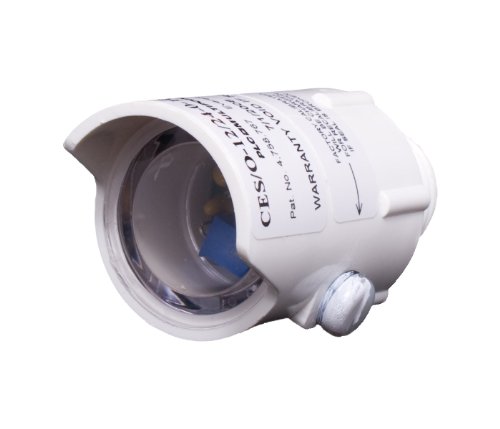
A 0-10VDC output lets this sensor communicate with compatible dimmable LED drivers and ballasts, so you can adjust light levels based on available daylight. The 50-750 foot-candle range covers a wide span of outdoor light conditions, from dim to bright. It’s designed for automatic daylight harvesting setups where you need proportional control rather than a simple on/off switch.
The 0-10VDC output makes this photocell ideal for daylight harvesting setups, but it needs a 24VDC power supply, so you’ll have to add a transformer rather than wiring it directly to a standard junction box. Its weatherproof housing handles outdoor conditions, though the unit is bulkier than some compact sensors. For anyone building a controlled lighting system, the extra wiring step is a fair trade-off for the dimming capability.
ORRGENA 2-Pack Photocell Sensor
What We Like
- UL listed with surge protection
- Multi-voltage handles 120-277V
- Delay prevents false triggers from headlights
- Swivel mount for precise positioning
Trade-offs
- Threaded installation requires knockout hole access
- Requires knockout hole for threaded mount
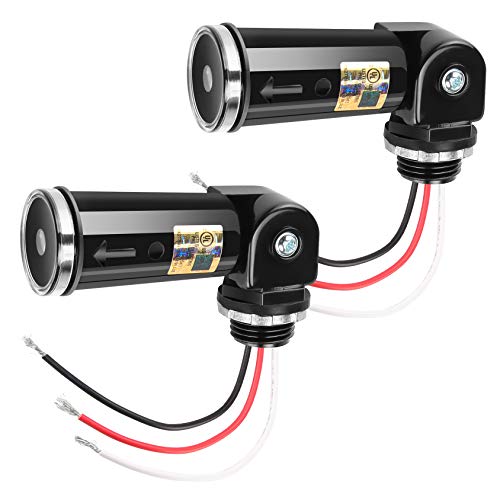
A UL listed rating and IP65 water resistance mean this photocell is built to handle rain, snow, and outdoor exposure without worry. The built-in surge protection adds an extra layer of safety for your lights. The swivel mount lets you aim the sensor exactly where you need it, so passing car headlights or a neighbor’s porch light won’t confuse the dusk-to-dawn cycle. That delay feature is a real lifesaver: it prevents the light from flickering on and off when a vehicle rolls by, keeping your outdoor lighting steady and reliable all night long. For anyone looking to automate their exterior lights without spending a fortune, this two-pack delivers solid, no-fuss performance that covers two fixtures at once.
At 3.4 inches long and 0.4 pounds, this sensor is built to last. A heavy-duty body feels substantial in hand, and a threaded mount locks securely into standard knockout holes on outdoor fixtures. That extra size means it won’t fit every light housing, but for typical porch or yard lights with a knockout port, the durable construction and included three-year warranty offer long-term reliability that smaller sensors can’t match.
Product photos
SURAIELEC Light Sensor Socket 2-Pack

What We Like
- 360° rotatable sensor for light direction
- Works with LED, CFL, incandescent, halogen bulbs
- UL listed for safe outdoor use
- Easy screw-in installation, no wiring needed
Trade-offs
- Adds 1.61 inches of height to fixture
- Limited to 150W max bulb wattage
The SURAIELEC Light Sensor Socket 2-Pack turns any standard E26 or E27 fixture into an automatic dusk-to-dawn light without any wiring. Its 360° rotatable sensor lets you aim the photocell toward the darkest direction, so it responds accurately to natural light changes. This makes it a perfect choice for renters or anyone who wants to add smart outdoor lighting without calling an electrician. The compact design adds just 1.61 inches to your fixture, so it blends in without looking bulky. It works with up to 150W bulbs across LED, CFL, incandescent, and halogen types, giving you flexibility in bulb choice.
If your porch light has a solid cover, you’d need a hardwired photocell like the J.LUMI YCA1030 instead. But for open-bottom lanterns, wall sconces, or post lamps, this socket adapter is the easiest way to automate your lighting. The 2-pack gives you two fixtures covered at once, making it a budget-friendly upgrade for your home’s entryways and garage lights.
Product photos
OPAXIS 2-Pack Photocell Sensor
What We Like
- Brass mounting nuts resist weathering
- UL Certified for safety and performance
- Works with most light types
- Waterproof and weather-resistant
Trade-offs
- Not compatible with external dimmers
- Requires drilling a 3/8-inch hole for installation
- Hard-wired only, no plug-in option
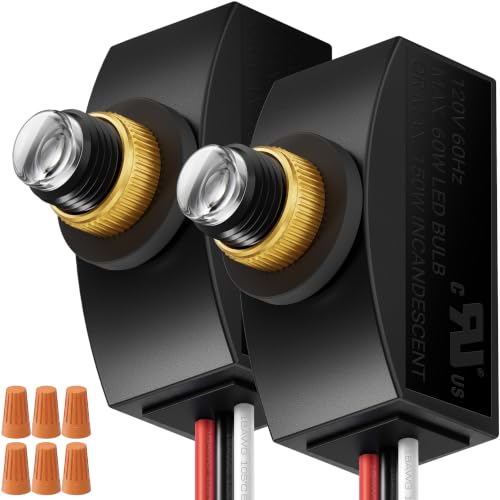
The brass mounting nuts resist weathering and degradation even after long-term exposure to the open air, so this photocell sensor holds up reliably in rain, snow, and sun. It’s UL Certified to meet safety and performance standards, and it works with a wide range of bulbs including LEDs and dimmable lights. That makes it a practical choice for upgrading outdoor fixtures like wall sconces or post lights without worrying about corrosion or premature failure.
Installation requires drilling a 3/8-inch hole into your fixture and hard-wiring it, which takes more effort than a screw-in socket sensor like the SURAIELEC Light Sensor Socket. If you’re comfortable with basic wiring and want a weather-resistant build, this is the one to choose. But if you prefer a simpler, tool-free setup, you might want to look at the plug-in options instead.
Product photos
DEWENWILS 2 Pack Light Sensor Socket
What We Like
- No wiring or programming needed
- Built-in dusk to dawn sensor
- Off-delay prevents flickering
- Works with LED, CFL, halogen bulbs
Trade-offs
- Sensor must face natural light source
- Indoor or sheltered outdoor use only
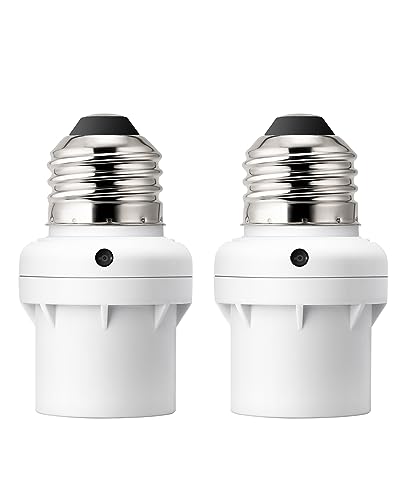
The DEWENWILS Light Sensor Socket turns any standard light fixture into an automatic dusk-to-dawn light without a single wire or tool. You simply screw the bulb into the socket, then screw the whole assembly into your fixture. Its built-in sensor reads ambient light and flips the bulb on at dusk, off at dawn. A 60-second delay keeps it from flickering when a car’s headlights sweep by or a porch light next door clicks on. For anyone who wants outdoor lighting that works on its own schedule, this is the simplest route to get there.
The trade-off is placement. It’s best under an open eave or in a wall-mounted fixture that faces the sky. Compared to a hard-wired photocell like the J.LUMI YCA1030, this socket skips the junction box and wire nuts entirely. That makes it a great fit for renters or anyone who wants automation without permanent changes to their home’s wiring.
RAWILL 2-Pack Photocell Sensor

What We Like
- Supports 1800W/1100VA loads
- IP54 waterproof for rain and dust
- Built-in delay prevents false triggers
- Rotating installation for angle adjustment
Trade-offs
- IP54 is less sealed than IP65 alternatives
- Hardwired design requires wiring work
With a 1800W/1100VA load capacity, this sensor handles heavy-duty lighting like parking lots or streetlights without breaking a sweat. The IP54 waterproofing means it stands up to rain and dust, while the built-in delay keeps passing headlights from flickering your lights off. It’s a great fit for anyone running multiple high-wattage fixtures or commercial-grade setups where reliability matters most.
The IP54 rating handles rain and dust, but if your sensor will be in a spot that gets direct, heavy downpours, you might want a sensor with a higher waterproof rating. The hardwired design requires basic wiring, so it’s not a simple screw-in socket. For high-power setups and a two-pack value, this RAWILL set is a practical choice.
Product photos
How We Evaluated Photocell Sensors For Outdoor Lighting
Our evaluation is research-based, drawing on manufacturer documentation, safety certifications, and expert round-ups from electrical and home improvement sources. We also analyzed common themes in owner feedback to understand real-world performance and installation challenges.
The four criteria that mattered most for this category are safety certification (UL or CSA listing), weatherproof rating (IP65 or higher for exposed outdoor use), bulb-type compatibility (especially with LEDs), and installation method (threaded mount, twist-lock, or socket adapter). These factors determine whether a sensor will work safely and reliably in your specific outdoor setup.
A research-led evaluation cannot replicate every installation scenario or local climate condition. We prioritize verified specs and documented owner experiences over anecdotal claims, so you can make an informed decision based on your fixture type and wiring requirements.
What To Look For In Photocell Sensors For Outdoor Lighting
Choosing the right photocell sensor means matching its specifications to your fixture type, bulb load, and exposure to weather. The key factors are safety certification, weatherproof rating, bulb compatibility, and installation method.
Look for a UL or CSA listed sensor with an IP65 or higher rating for outdoor use. Match the load capacity to your bulb wattage, and choose an installation style that fits your fixture without requiring major modifications.
Safety Certification and Weatherproof Rating
A UL or CSA listing means the sensor has passed independent safety testing for electrical and fire hazards. For outdoor use, an IP65 rating ensures protection against dust and water jets, while IP54 offers basic rain and dust resistance but is less sealed. Sensors without these certifications may fail prematurely or pose a safety risk in wet conditions.
Bulb Type and Load Capacity
Not all photocell sensors work with LED bulbs, which have different electrical characteristics than incandescent or HID bulbs. Look for sensors explicitly rated for LED, fluorescent, and HID compatibility. Load capacity matters too: a sensor rated for 600W tungsten may handle fewer LED watts, so check the manufacturer’s specifications for your bulb type.
Installation Method and Fixture Fit
Photocell sensors install in several ways: threaded mount (requires a knockout hole), twist-lock (needs a compatible receptacle), socket adapter (screws into a light socket), or wall-mount (attaches to a junction box). Measure your fixture’s available space and mounting hole size before purchasing. Some sensors require a 5/8-inch or 3/8-inch through-hole, while socket adapters add height to the fixture.
- Measure your fixture’s mounting hole diameter before ordering a threaded sensor.
- Check if your fixture has a knockout hole or requires drilling a new one.
- For socket adapters, ensure the sensor will face natural light and not be blocked by frosted glass.
- Verify that your bulb wattage does not exceed the sensor’s maximum load rating.
- For twist-lock sensors, confirm your fixture has a compatible receptacle.
If you are not comfortable with wiring, choose a socket adapter or a sensor with a wall plate that matches your existing junction box.
Photocell Sensors For Outdoor Lighting Compared
The table below compares the ten photocell sensors across key specs to help you find the right fit for your outdoor lighting setup.
| Product | Voltage | UL Listed | Compatibility |
|---|---|---|---|
| J.LUMI YCA1030 Photocell Sensor | 120V-277V | Yes | incandescent, fluorescent, LED, halogen, mercury vapor, high pressure sodium, CFL |
| J.LUMI Photocell Sensor with Wall Plate | 100-277V AC | Yes | incandescent, fluorescent, LED, halogen, mercury vapor, high pressure sodium, CFL |
| Intermatic Nightfox EK4336S Photocontrol | N/A | N/A | HID and LED |
| Intermatic EK4536 Electronic Photocontrol | N/A | N/A | N/A |
| Leviton PCOUT Outdoor Photocell | 24VDC | N/A | N/A |
| ORRGENA 2-Pack Photocell Sensor | 120-277V AC | Yes | LED, CFL, fluorescent, incandescent |
| SURAIELEC Light Sensor Socket 2-Pack | N/A | Yes | Incandescent/CFL/LED/Halogen |
| OPAXIS 2-Pack Photocell Sensor | 110-120 VAC | N/A | Incandescent, fluorescent, LED, dimmable |
| DEWENWILS 2 Pack Light Sensor Socket | N/A | N/A | Incandescent/CFL/LED/Halogen |
| RAWILL 2-Pack Photocell Sensor | 120VAC | N/A | incandescent bulbs, compact |
Frequently Asked Questions
Do photocell sensors work with LED bulbs?
Yes, many modern photocell sensors are rated for LED bulbs, but not all. Check the manufacturer’s specifications for LED compatibility before purchasing. Sensors like the J.LUMI YCA1030 and the SURAIELEC Light Sensor Socket work with LED, CFL, and incandescent bulbs.
How do I install a photocell sensor?
Installation depends on the type of sensor. Threaded sensors require a knockout hole in the fixture, twist-lock sensors need a compatible receptacle, and socket adapters screw into an existing light socket. Some wall-mount sensors attach to a junction box with included hardware.
What does IP65 mean on a photocell sensor?
IP65 means the sensor is dust-tight and protected against water jets from any direction. This rating is suitable for outdoor use in rain and snow. IP54 offers less protection, being dust-protected and splash-resistant, so it is better for sheltered outdoor areas.
Can a photocell sensor be used with a dimmer switch?
Most standard photocell sensors are not compatible with external dimmers. The OPAXIS 2-Pack Photocell Sensor, for example, explicitly states it is not compatible with external dimmers. If you need dimming control, look for a sensor with 0-10VDC output like the Leviton PCOUT.
What is the difference between a photocell and a timer?
A photocell sensor automatically turns lights on at dusk and off at dawn based on ambient light levels. A timer operates on a set schedule regardless of daylight. Photocells are more energy-efficient for outdoor lighting because they adjust to seasonal changes in daylight hours.
The Bottom Line
For most homeowners and electricians, the J.LUMI YCA1030 Photocell Sensor is the best overall choice because it combines UL safety certification, IP65 weatherproofing, and broad bulb compatibility in a reliable, time-delay design. It is ideal for fixtures with a pre-drilled 5/8-inch through-hole and works well with LED, fluorescent, and HID bulbs.
If you need a sensor with a wall plate included for a cleaner installation, the J.LUMI Photocell Sensor with Wall Plate is a great alternative. Budget-conscious buyers should consider the ORRGENA 2-Pack, which offers UL listing and surge protection at an affordable price point, while the SURAIELEC Light Sensor Socket is perfect for renters who want a no-wiring solution.
The single most important factor when buying a photocell sensor is matching its installation method and weatherproof rating to your specific fixture and climate. A sensor that fits properly and is rated for your bulb type will provide years of reliable dusk-to-dawn automation.
