10 Best Ergonomic Chairs For Back Pain in 2026
This post contains affiliate links. As an Amazon Associate, we earn from qualifying purchases.
For back pain relief, the ELABEST X100 Ergonomic Mesh Office Chair wins best overall with its dynamic 3D lumbar support and 5D flip-up armrests. The SIHOO M18 offers excellent four-point support, while the CASASIO delivers precise adjustable lumbar support for targeted relief.
Choosing the right ergonomic chair for back pain means finding one that supports your spine’s natural curve and fits your body type. The wrong chair can aggravate pain, while the right one provides lasting comfort during long workdays.
This guide is based on research of specifications, manufacturer documentation, and patterns in owner feedback. We focus on the features that matter most for back pain, like lumbar support adjustability, seat comfort, and build quality, to help you choose with confidence.
Top 10 Ergonomic Chairs For Back Pain in the Market
Certain content that appears on this site comes from Amazon. This content is provided "as is" and is subject to change or removal at any time.
The Best Ergonomic Chairs For Back Pain, Reviewed
ELABEST X100 Ergonomic Mesh Office Chair

What We Like
- Dynamic 3D lumbar support with spinal alignment
- 5D flip-up armrests with dense EVA foam
- 18" extendable footrest for relaxation
- BIFMA-certified heavy-duty support up to 300 lbs
Trade-offs
- At 43 lb, it's heavier for frequent moves
- Footrest adds bulk under the chair
A 17-point micro-adjustment system and 3D Synchro-Tilt lumbar support mean this chair actively follows your spine’s natural curve, not just props it up. The 5D flip-up armrests tuck neatly under a desk when not needed. The 18″ footrest with two angle positions makes it easy to shift from focused work to a quick stretch break without leaving your seat.
The main trade-off is weight: at 43 pounds, it’s not a chair you’ll want to slide around the room often, and the integrated footrest adds some depth underneath. The Haworth Soji weighs under 20 pounds, so the ELABEST is clearly heavier. For someone who wants adjustability developed with California-based orthopedic specialists, breathable Dual-Stripe AirMesh, and the ability to recline with foot support, this chair balances support and comfort.
SIHOO M18 Ergonomic Office Chair
What We Like
- Four support points (head/back/hip/hands)
- Breathable mesh backrest keeps you cool
- Adjustable lumbar and headrest support
- Tilt lock and resistance adjustment
Trade-offs
- Armrests only adjust in 2 directions
- Weight capacity limited to 330 lbs
- No seat depth adjustment
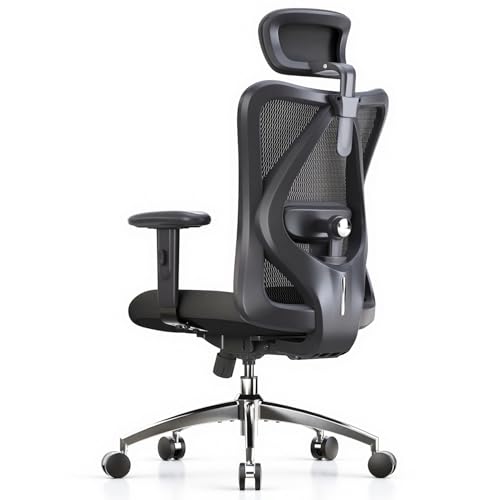
Four separate support points, head, back, hips, and hands, mean this chair targets pressure evenly across your body, which is exactly what you want when back pain makes sitting through a workday a challenge. The breathable mesh backrest keeps air moving so you don’t end up sweaty during long stretches, and the adjustable lumbar support lets you dial in the curve that feels right for your spine. With a 330-pound weight capacity and a height range from 5’6″ to 6’2″, it covers a wide swath of body types without feeling flimsy.
The trade-off here is that the armrests only adjust in two dimensions (up/down and swivel). If you need to move them in and out or forward and back to match your desk height exactly, you’ll feel the limit. For someone whose back pain stems from poor lumbar and head support rather than needing ultra-fine arm positioning, the SIHOO M18 delivers strong value with its four-point approach and solid adjustability.
CASASIO Ergonomic Office Chair
What We Like
- 4-way adjustable lumbar cushion
- 3D adjustable headrest for neck support
- Flip-up armrests for compact storage
- Reinforced metal base supports 330 lbs
Trade-offs
- Flip-up armrests lack depth or width adjustment
- Seat depth not adjustable for different leg lengths
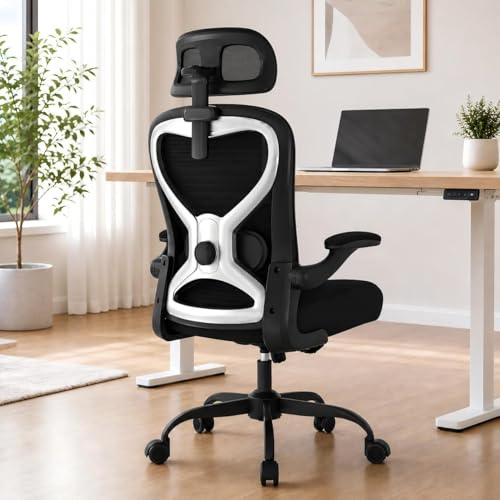
The 4-way adjustable lumbar cushion on this chair lets you dial in exactly where and how much lower back support you need. That is the single most important feature for anyone dealing with back pain during long workdays. Combined with a 3.5-inch virgin foam seat that distributes weight evenly, it keeps hips and thighs comfortable even after eight-plus hours of sitting. The contoured mesh back follows your spine’s natural curve, and the 3D adjustable headrest cradles your neck during typing, reading, or leaning back to recharge. This chair is built for people who spend full days at a desk and need targeted, customizable lumbar relief without sacrificing all-day cushioning.
The flip-up armrests are great for tucking the chair under a desk in a small home office, but they only flip up and down. They don’t offer the width, depth, or angle adjustments you’d find on a chair like the ELABEST X100’s 5D arms. If you need to fine-tune arm position for precise ergonomic alignment, you may find these a bit limiting. The mesh back breathes well but won’t appeal to anyone who prefers a fully padded backrest for a softer feel. Still, for the price of a mid-range chair, you get a BIFMA-tested build, a 5-year warranty, and responsive customer support, reassuring when you’re making a long-term investment in your comfort.
CAPOT Ergonomic Mesh Office Chair

What We Like
- Micro-adjust lumbar with 8 levels
- Supports up to 400 lbs
- Cooling Aerovith mesh seat
- 5-year warranty with free parts
Trade-offs
- Seat depth not adjustable
- Headrest range limited to 5'5"–6'2"
- Assembly takes about 30 minutes
The lumbar support adjusts through two inches of travel across eight levels, so you can position it precisely where your lower back needs it most. That kind of fine-tuning helps prevent the stiffness that sets in after a full workday. The seat uses a breathable mesh that keeps you cool, and the steel base supports up to 400 pounds, making it a good fit for larger users.
One limitation is that the seat depth doesn’t change, which might leave shorter or taller people without ideal thigh support. The SIHOO M18 holds up to 330 pounds, while this chair handles 400 pounds and lets you lock the backrest at three angles. You can also flip the arms up to slide the chair under your desk, which frees up space when you’re not sitting.
Haworth Soji Ergonomic Office Chair

What We Like
- Arrives fully assembled
- 4D adjustable armrests
- Flexible mesh back support
- 12-year warranty
Trade-offs
- No forward tilt function
- At 19.8 lb, lighter than some chairs
Arriving fully assembled means you can sit down and get comfortable the moment the box arrives, no tools, no frustration. That alone makes the Haworth Soji a standout for anyone who wants a proper ergonomic chair without the Saturday morning assembly project. With a 350 lb weight capacity, 4D armrests, adjustable seat depth, and lumbar support, it packs serious adjustability into a lightweight 19.8 lb frame. The flexible mesh back keeps you cool and supports your posture during long work sessions, making it a strong fit for home offices and desk setups where comfort matters.
This model skips forward tilt, a feature some users rely on for active sitting or leaning into detailed tasks. If that’s a must for your workflow, the Steelcase Gesture offers 360-degree arm movement and a different tilt experience, though at a much higher weight and price point. For most people dealing with back pain, the Soji’s combination of ready-to-use convenience, solid adjustability, and sustainability certifications (GREENGUARD Gold, BIFMA Level) makes it a smart, hassle-free choice that doesn’t compromise on ergonomic essentials.
Product photos
Herman Miller Classic Aeron Task Chair
What We Like
- Breathable Pellicle suspension dissipates body heat
- Kinemat tilt keeps natural body pivot
- Waterfall seat edge reduces thigh pressure
- 12-year Herman Miller warranty
Trade-offs
- At 48 pounds, it's heavy to move
- No headrest for reclining support
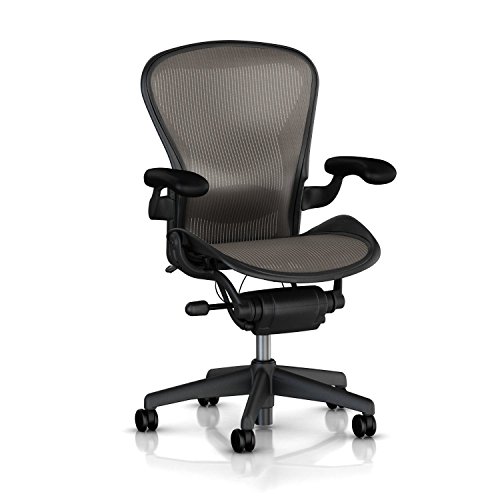
The breathable Pellicle suspension actively dissipates body heat, so you stay cool and comfortable even during long work sessions. This chair’s patented Kinemat tilt mechanism lets your neck, shoulders, hips, knees, and ankles pivot naturally, encouraging movement that supports healthy posture. It’s a thoughtful design for anyone who spends hours at a desk and wants a chair that works with their body rather than against it. The waterfall front edge of the seat takes pressure off your thighs, keeping blood circulating and helping you stay alert and focused throughout the day.
That said, at 48 pounds this chair is noticeably heavier than many alternatives, so moving it between rooms or adjusting your setup takes more effort. Compared to the Haworth Soji at just under 20 pounds, the Aeron is heavier and less portable. For those who prioritize cooling mesh and a smooth, natural recline over portability, this classic design delivers lasting comfort backed by a 12-year warranty.
Product photos
Steelcase Amia Office Chair
What We Like
- Dynamic LiveLumbar adapts to movement
- 4D armrests for personalized fit
- Extra cushioning for long hours
- Carbon Neutral certified option
Trade-offs
- At 54.5 lb, heavy to move around
- No headrest included for neck support
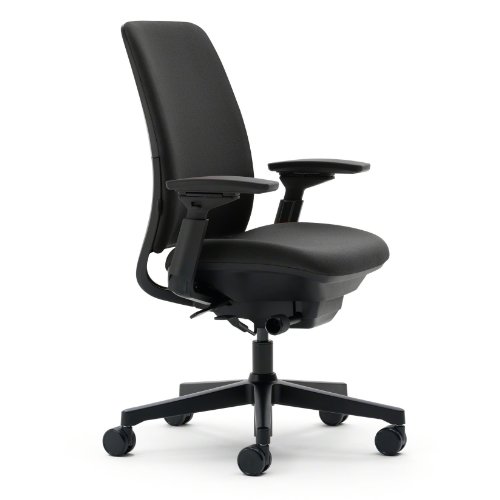
The hidden LiveLumbar system in this chair adjusts continuously as you shift, so your lower back gets support that moves with you rather than forcing you into one position. That dynamic response, paired with extra seat cushioning and flexible edges, makes it a strong match for anyone spending 8-10 hours at a desk who needs pressure relief without constant manual tweaking. The 4D armrests adjust in height, width, pivot, and depth, which can help reduce shoulder strain during long typing sessions.
The main compromise is weight: at 54.5 pounds, it’s heavier than some mesh chairs like the CASASIO Ergonomic Office Chair (30.0 lb), so moving it between rooms or adjusting your setup frequently takes more effort. There’s also no built-in headrest, which matters if you lean back often for neck support. For someone who prioritizes adaptive lumbar support and full adjustability over portability, this chair delivers where it counts.
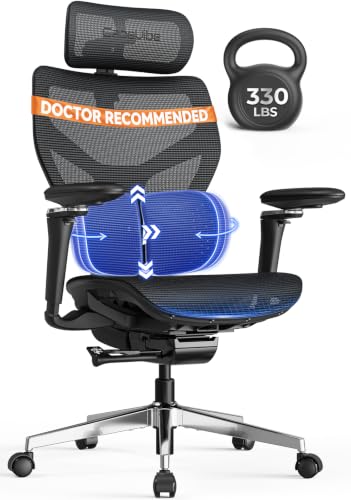
CabeVibe C3 Ergonomic Mesh Office Chair
What We Like
- Dual-wing lumbar moves with you
- 630° armrests eliminate hanging arm
- 4D headrest prevents neck strain
- 330 lb capacity with BIFMA certification
Trade-offs
- No integrated footrest for breaks
- Heavy at 70 pounds shipping weight
The CabeVibe C3’s dual-wing lumbar system spans 17.5 by 8.5 inches, roughly twice the coverage of a typical desk chair. That large surface, combined with both automatic and manual height and depth adjustments, means your lower back gets continuous support whether you lean forward to type or recline to read. It’s a strong match for anyone who spends full days at a desk and wants to avoid the hollow-back feeling common in standard office chairs. The 630-degree armrests also stand out, letting you rotate and pivot into any position to keep your shoulders relaxed during long work sessions.
One trade-off is the lack of a footrest, which some chairs in this guide include for quick stretching breaks. The 630-degree armrests offer extensive positioning flexibility, far more than the simpler two-way armrests on the SIHOO M18, but they require a bit more initial setup to get the angles right. If you prioritize a truly customizable fit over simplicity, this chair delivers where it counts.
Product photos
Haworth Breck Ergonomic Office Chair

What We Like
- Height-adjustable lumbar for custom lower back support
- 4D armrests for dynamic neck, shoulder, and arm support
- Seat depth slides over 2 inches for thigh support
Trade-offs
- Weighs 38 lb, heavier than the 30 lb CASASIO chair
- No headrest for neck support during reclining
A height-adjustable lumbar that lets you fine-tune lower back support to your exact posture is the standout feature here. That means you’re not stuck with a one-size-fits-all curve, you can dial in the pressure exactly where you need it.
Product photos
Steelcase Gesture Office Chair
What We Like
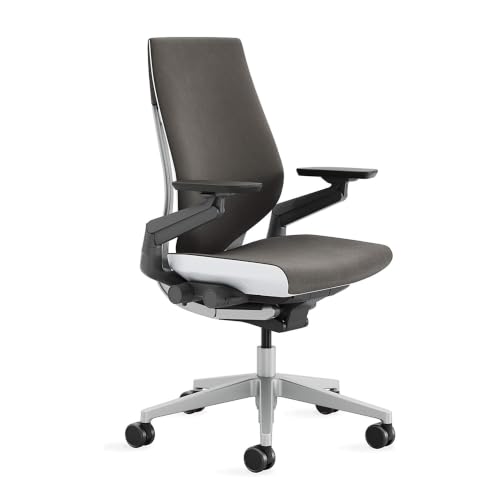
- 360-degree arm adjustability
- Contoured back supports spine shape
- Full recline with upright lock
- Intuitive controls on right side
Trade-offs
- At 70 pounds, difficult to move
- Wheels designed only for carpet
The contoured back follows the natural curve of your spine, and the full recline range with three settings means you can lock in a comfortable angle or rock back when you need a break.
Weighing 70 pounds, this chair is heavy and not something you’ll want to move between rooms. It’s also fitted with wheels for carpet only, so if your home office has hard floors, you’ll need to swap the casters or add a mat. Compared to the CASASIO Ergonomic Office Chair, which is 40 pounds lighter, the Gesture demands more effort to set up and relocate. But if you want adjustable arm support and plan to keep your chair in one spot, this is a chair to consider.
Product photos
How We Evaluated Ergonomic Chairs For Back Pain
We evaluated each chair by examining manufacturer specifications, expert round-ups, and patterns in owner feedback. Our research focused on the features that directly impact back pain relief, not marketing claims.
The four criteria that mattered most were lumbar support adjustability, overall adjustability (armrests, seat height, headrest), seat comfort and breathability, and build quality with warranty. For back pain, lumbar support that can be moved up, down, in, or out is essential for a personalized fit.
A research-led evaluation cannot replace sitting in a chair yourself. We prioritize chairs with strong adjustability and positive owner feedback patterns to help you narrow your options before a potential in-person test.
What To Look For In Ergonomic Chairs For Back Pain
Choosing an ergonomic chair for back pain starts with understanding the key features that support your spine. Focus on adjustability, comfort, and build quality.
Look for chairs with adjustable lumbar support, multiple armrest adjustments, a breathable seat, and a weight capacity that fits you. A strong warranty is a sign of durability.
Lumbar Support Adjustability
The most critical feature for back pain is lumbar support that you can adjust. Look for chairs that allow you to move the lumbar support up and down, and ideally in and out as well. The ELABEST X100 offers dynamic 3D lumbar support, while the CAPOT provides micro-adjust with 8 levels for precise positioning.
Overall Chair Adjustability
A chair that fits your body reduces strain. Armrests should adjust in at least 2 directions (height and width), and a headrest should be adjustable for neck support. The Steelcase Gesture offers 360-degree arm adjustability, while the SIHOO M18 provides four points of support (head, back, hips, hands).
Seat Comfort and Breathability
A comfortable seat prevents pressure points during long hours. Mesh seats, like those on the Herman Miller Classic Aeron, offer breathability and help dissipate body heat. Look for a waterfall seat edge to reduce thigh pressure and a seat depth that supports your legs without cutting off circulation.
- Check that the seat depth is adjustable or fits your leg length.
- Ensure the seat cushion or mesh is firm enough for all-day use.
- Verify the weight capacity matches your body weight.
- Look for a tilt lock feature to change your sitting angle.
- Confirm the chair’s base is sturdy and certified (like BIFMA).
A good ergonomic chair should feel like it disappears under you, letting you focus on work, not your back.
Ergonomic Chairs For Back Pain Compared
The table below compares the key features of each chair to help you find the right fit for your back pain needs.
| Product | Lumbar Support | Armrests | Weight |
|---|---|---|---|
| ELABEST X100 Ergonomic Mesh Office Chair | 3D Synchro-Tilt, lockable | 5D Flip-Up | 43.0 pounds |
| SIHOO M18 Ergonomic Office Chair | Adjustable Lumbar Support | 2D adjustable | 38.0 pounds |
| CASASIO Ergonomic Office Chair | 4-way adjustable | Flip-up | 30.0 pounds |
| CAPOT Ergonomic Mesh Office Chair | 2 inches, 8 levels | 4D Flip-up | 38.0 pounds |
| Haworth Soji Ergonomic Office Chair | Lumbar Support | 4D adjustable | 19.8 pounds |
| Herman Miller Classic Aeron Task Chair | Lumbar Pad | Fully Adj Vinyl Arms | 48.0 pounds |
| Steelcase Amia Office Chair | LiveLumbar dynamic system | 4D (height, width, pivot, depth) | 54.5 pounds |
| CabeVibe C3 Ergonomic Mesh Office Chair | Dual Lumbar Support | 630° universal | N/A |
| Haworth Breck Ergonomic Office Chair | Height-adjustable | 4D (vertical, horizontal, forward/back, pivot) | 38.0 pounds |
| Steelcase Gesture Office Chair | Contoured back | 360-degree arms | 70.0 pounds |
Frequently Asked Questions
What type of ergonomic chair is best for lower back pain?
A chair with adjustable lumbar support is best for lower back pain. Look for models like the ELABEST X100 or CASASIO that let you change the position and depth of the lumbar cushion to match your spine’s curve.
How much should I spend on an ergonomic chair for back pain?
Value varies widely. Budget-friendly chairs with good lumbar support start around the mid-range, while premium options from brands like Steelcase and Herman Miller offer extensive warranties and durability. Focus on adjustability features rather than price alone.
Do ergonomic chairs with headrests help with back pain?
Yes, a headrest can reduce neck and upper back strain, which often contributes to overall back pain. Chairs like the SIHOO M18 and CabeVibe C3 include adjustable headrests for better neck support during reclining.
How long do ergonomic chairs typically last?
High-quality ergonomic chairs can last 10 years or more with proper care. Brands like Haworth and Steelcase offer 12-year warranties, which is a good indicator of expected durability. Cheaper models may need replacement sooner.
Can an ergonomic chair fix my back pain?
An ergonomic chair can significantly reduce back pain by supporting proper posture, but it is not a cure. It works best alongside regular movement, stretching, and consulting a medical professional for chronic pain.
The Bottom Line
For most people with back pain, the ELABEST X100 Ergonomic Mesh Office Chair is the best overall choice. Its dynamic lumbar support, extensive adjustability, and built-in footrest make it ideal for all-day comfort and relaxation.
If you need a more budget-friendly option with targeted four-point support, the SIHOO M18 is a strong pick. For those who want precise micro-adjust lumbar support and a high weight capacity, the CAPOT Ergonomic Mesh Office Chair delivers excellent value.
The single most important factor when buying an ergonomic chair for back pain is lumbar support adjustability. No other feature matters more for a personalized fit that relieves pressure on your spine.
