10 Best Actual Ergonomic Chairs in 2026
This post contains affiliate links. As an Amazon Associate, we earn from qualifying purchases.
The SIHOO B100 Mesh Ergonomic Office Chair earns our Best Overall award for its adaptive lumbar support that moves with your body and breathable full-mesh backrest. For precise lower back control, the CASASIO Ergonomic Office Chair with 4-Way Lumbar is our Best Adjustable Lumbar pick, while the CAPOT Ergonomic Mesh Office Chair leads for heavy-duty support up to 400 pounds.
Choosing a truly ergonomic chair means cutting through marketing claims to find real adjustability that fits your body. The wrong chair can lead to back pain, poor posture, and reduced productivity over a long workday.
This guide is based on manufacturer specifications, expert round-ups, and patterns in owner feedback. We focus on the features that actually matter for all-day comfort: lumbar support, armrest adjustability, seat depth, and build quality.
Top 10 Actual Ergonomic Chairs in the Market
Certain content that appears on this site comes from Amazon. This content is provided "as is" and is subject to change or removal at any time.
The Best Actual Ergonomic Chairs, Reviewed
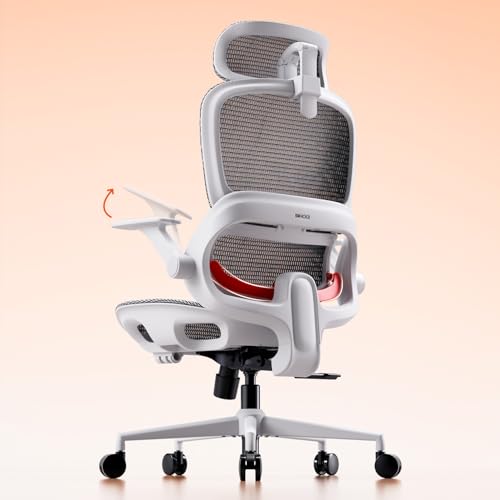
SIHOO B100 Mesh Ergonomic Office Chair
What We Like
- Adaptive lumbar support moves with you
- Breathable full-mesh backrest stays cool
- Three lockable recline angles for relaxation
- Reinforced metal base supports up to 300 lbs
Trade-offs
- No seat depth adjustment for taller users
- Flip-up armrests lack width or height adjustment
- At 35.5 lb, heavier than some mesh chairs
A 300-pound weight capacity and SGS-certified Class 4 gas lift mean this chair handles long workdays without wobbling or sagging. The adaptive lumbar support follows your spine as you shift from typing to reclining, so your lower back stays cradled when you lean in for focus or tilt back at 135 degrees to reset. It’s a smart pick for anyone who spends full shifts at a desk and wants breathable mesh that keeps heat from building up during busy afternoons.
The trade-off is adjustability: the flip-up armrests don’t offer width or height settings, and there’s no seat depth slider for taller frames. Compared to the CASASIO with its 4-way lumbar and 330-pound limit, the SIHOO B100 gives you a simpler setup that still delivers solid ergonomic basics. For the price, you get adaptive back support, a quiet glide, and a 36-month warranty, making it a balanced choice for most home offices.
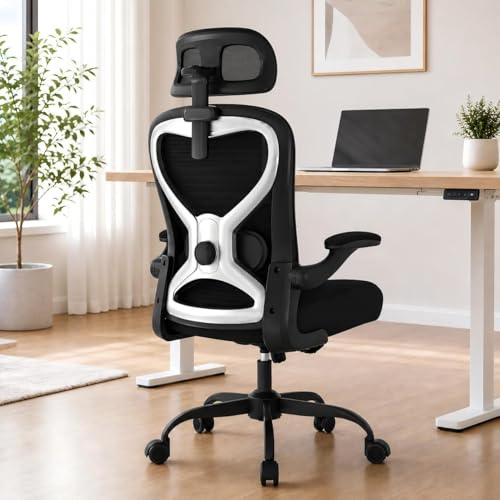
CASASIO Ergonomic Office Chair with 4-Way Lumbar
What We Like
- 4-way adjustable lumbar cushion
- 3D adjustable headrest for neck support
- Flip-up armrests save space
- Tilt & rock with adjustable tension
Trade-offs
- Flip-up armrests do not adjust in depth or width, unlike the CAPOT's 4D arms
A 4-way adjustable lumbar cushion means you can dial in support exactly where your lower back needs it most, up, down, in, or out, rather than settling for a fixed curve. The virgin foam seat, at 3.5 inches thick, distributes weight evenly to keep hips and thighs comfortable during long workdays, while the contoured mesh back follows your spine’s natural shape. This chair suits anyone who spends eight-plus hours at a desk and wants precise lower back relief without paying premium prices.
Weighing 30 pounds, this chair is heavier than the 35.5-pound SIHOO B100, so moving it between rooms requires a bit more effort. However, the trade-off comes in targeted support. The dual-direction adjustable lumbar cushion lets you dial in exactly the lower-back relief you need, while the virgin foam seat distributes weight evenly to prevent soreness even after eight-plus hours of sitting. Reviewers note that the contoured mesh back aligns naturally with the spine, reducing fatigue during long work sessions. For anyone prioritizing precise lumbar customization and all-day comfort, this model delivers where it counts.
Product photos
CAPOT Ergonomic Mesh Office Chair

What We Like
- 400 lb weight capacity
- Micro-adjust lumbar with 8 levels
- Cooling Aerovith mesh seat
- 5-year warranty with free parts
Trade-offs
- 38 lb weight makes moving harder
- No 4D armrest adjustment offered
- Headrest limited to 5'5"–6'2" users
A 400-pound weight capacity sets this chair apart for larger users who need a sturdy, long-lasting base. The backrest locks at 90, 110, or 125 degrees, and the 5-year warranty with free parts adds peace of mind for heavy daily use.
At 38 pounds, this chair is heavier than some alternatives, making it less convenient to slide around or lift. The headrest also only suits a specific height range, which may exclude shorter or taller users. For someone who prioritizes a high weight limit and precise lumbar support over portability or arm flexibility, this chair delivers where it counts.
Haworth Soji Ergonomic Office Chair

What We Like
- Fully assembled upon arrival
- 4D adjustable armrests
- Greenguard Gold certified
- 12-year warranty
Trade-offs
- No forward tilt function
- Plastic swivel base instead of metal
Weighing just 19.8 pounds, the Haworth Soji is lighter than many ergonomic chairs, which makes it easier to reposition around a home office or small workspace. It arrives fully assembled, so you can start adjusting the 4D armrests, seat depth, and lumbar support right out of the box. This chair is ideal for anyone who wants solid ergonomic adjustability without the heavy, bulky footprint of a traditional task chair, especially in smaller spaces or shared rooms.
At just under 20 pounds, the Soji is one of the lightest fully adjustable ergonomic chairs you can buy, which means you can slide it across a carpet or hardwood floor without breaking a sweat. The trade-off for that lighter build is a plastic swivel base instead of metal, and there’s no forward tilt mechanism, which some users rely on for active sitting. Compared to the Steelcase Gesture at 70 pounds, the Soji is far easier to reposition, but it won’t feel as planted during aggressive leaning. If you prioritize a lightweight, adjustable chair with a 12-year warranty over maximum heft, this is a smart pick.
Product photos
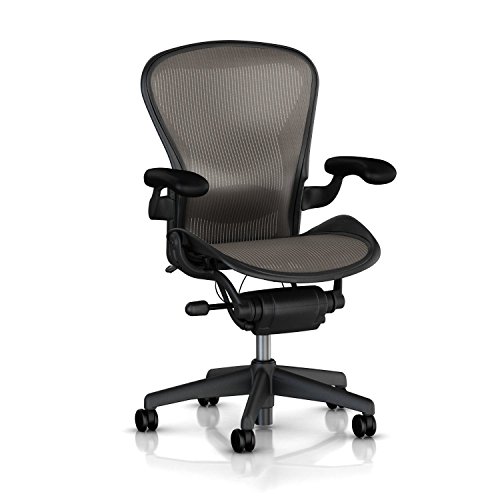
Herman Miller Classic Aeron Task Chair
What We Like
- Breathable Pellicle suspension dissipates body heat
- Kinemat tilt lets body pivot naturally
- Waterfall seat edge reduces thigh pressure
- 12-year warranty with Born-On-Date sticker
Trade-offs
- At 48 lb, it's heavy to move around
- 48-pound weight makes it hard to relocate
The patented Kinemat tilt mechanism lets your neck, shoulders, hips, knees, and ankles pivot in a natural, synchronized motion, so you stay comfortable even during long hours at a desk. The breathable Pellicle suspension actively dissipates body heat, keeping you cool while providing unparalleled support. This chair is built for someone who values iconic design and long-term durability, backed by a 12-year warranty that speaks to its quality. It’s a thoughtful choice for a home office where you want both style and serious ergonomic function.
At 48 pounds, this chair is not one you’ll want to move from room to room frequently. Compared to the Haworth Soji at just 19.8 pounds, the Aeron is significantly heavier and better suited to a dedicated workstation. The vinyl armrests are fully adjustable, but if you prefer a softer or more padded feel, they may not be your first choice. For someone who wants a timeless, well-engineered chair that supports your body’s natural movement, this is a worthy investment.
Product photos
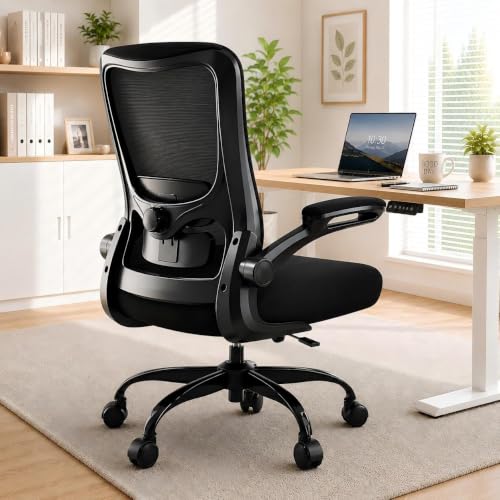
Zeonsit Ergonomic Office Chair with 4-Way Lumbar
What We Like
- 4-way adjustable lumbar support
- Breathable mesh back
- Flip-up armrests for extra space
- 5-year warranty
Trade-offs
- Fixed flip-up arms lack depth adjustment
- At 28 lb, it's light but less sturdy-feeling
A 330-pound weight capacity and a 3.5-inch thick foam seat cushion mean this chair is built to handle long hours without sagging. The 4-way adjustable lumbar support lets you dial in exactly the lower back curve you need, while the breathable mesh back keeps air moving so you don’t overheat during a full workday. It’s an ideal pick for anyone wanting genuine ergonomic features on a budget, no need to sacrifice comfort just to save money.
The trade-off comes in adjustability. The flip-up armrests are handy for tucking the chair under a desk, but they don’t slide forward or backward, so you can’t fine-tune arm position like you can on the CASASIO Ergonomic Office Chair with 4-Way Lumbar. Still, for the price, you get a supportive seat, a solid warranty, and a design that focuses on the essentials without extra frills.
Product photos
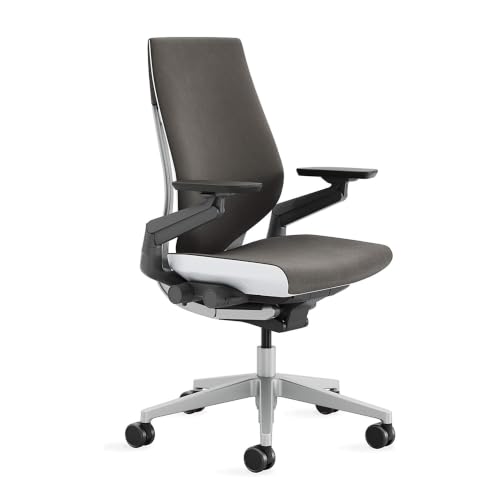
Steelcase Gesture Office Chair
What We Like
- 360-degree arms for full adjustability
- Contoured back fits spine's natural shape
- Intuitive adjustments within arm's reach
- Full recline range with upright lock
Trade-offs
- At 70 pounds, it's very heavy to move
- Wheels designed only for carpet floors
A 360-degree arm range lets you rest your elbows and forearms in any position, whether typing, reading, or leaning back to think. That adjustability makes this chair a strong match for anyone who shifts between many postures throughout the day and wants a precise fit without fighting with levers. The intuitive controls sit on the right side, so you can tweak the seat height, recline, and arm angle without twisting or reaching behind you. It’s built for long hours at a desk, with a contoured back that follows your spine’s natural curve and a full recline range. You can lock in an upright position or rock back into one of three settings.
At 70 pounds, this is a heavy chair that won’t be easy to slide across the room or carry up stairs. It also comes with wheels made specifically for carpet, so if you have hardwood or tile floors, you’ll need to swap them out or buy a floor mat. Compared to the Haworth Soji, which weighs under 20 pounds and rolls easily on hard casters, the Gesture is a much more substantial piece of furniture that stays put once you place it. That solid feel is great for stability, but it does limit how often you’ll want to move it around your workspace.
Product photos
Haworth Breck Ergonomic Office Chair

What We Like
- 4D arm adjustability for dynamic support
- Height-adjustable lumbar for lower back
- Adaptive seat depth reduces knee pressure
- Three-zoned GeoStretch recline system
Trade-offs
- At 38 pounds, it's heavier for frequent moves
- No headrest or neck support included
The four-way adjustable armrests move vertically, horizontally, forward/backward, and pivot inward and outward, so you can dial in support exactly where your neck, shoulders, and arms need it most. That kind of flexibility makes this chair a strong match for anyone who spends long hours typing or mousing and wants to avoid strain. The height-adjustable lumbar and over two inches of seat depth adjustment let you fine-tune the fit further. The weight-activated recline with a three-position backstop keeps you comfortable whether you lean in to work or sit back to think.
You don’t get a headrest or neck support with this chair, which some users might miss during extended leans. Compared to the CAPOT Ergonomic Mesh Office Chair, which includes a 3D headrest and flip-up arms, the Breck focuses its adjustability on the arms and seat rather than upper-body support. At 38 pounds, it’s also heavier than the 30-pound CASASIO with 4-Way Lumbar, so moving it between rooms takes more effort. For someone who prioritizes precise arm positioning and lumbar customization over extra features, this chair delivers where it counts.
Product photos
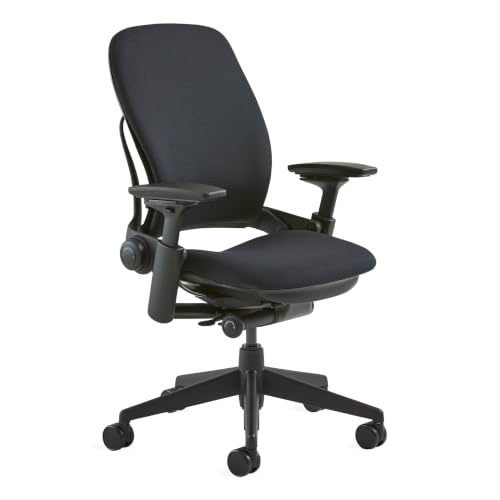
Steelcase Leap Office Chair
What We Like
- Natural Glide System keeps posture in check
- 3D LiveBack technology mimics spine shape
- Lower back firmness dial for custom lumbar support
- 70+ years of seating expertise
Trade-offs
- No adjustable headrest for tall users or neck support needs
- Lacks headrest for neck support during reclining
The Steelcase Leap’s 3D LiveBack technology mimics the natural shape of your spine, allowing the chair to contour to your needs and provide lumbar support regardless of your seating position. The Natural Glide System lets the seat glide back and forth as you recline, keeping your posture in check and you closer to your work surface. This chair is built for someone who values precise, customizable back support above all else.
At 22 pounds, the Leap is notably lighter than the 48-pound Herman Miller Aeron Task Chair, which means it’s easier to move around but might feel less planted under aggressive movement. For pure spine-following ergonomics, though, the Leap’s LiveBack technology and lumbar firmness dial deliver targeted comfort that few chairs match.
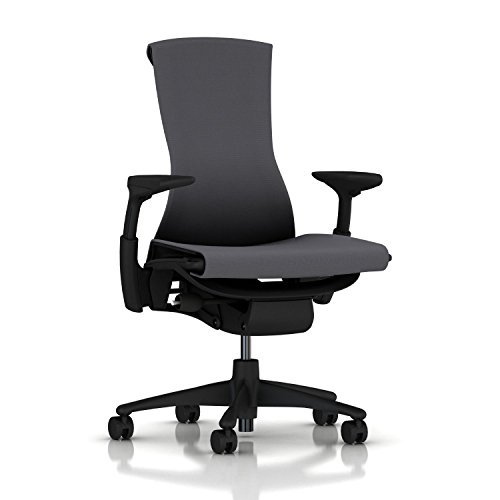
Herman Miller Embody Ergonomic Office Chair
What We Like
- Pixelated support matrix distributes weight evenly
- Four-layer seat designed for airflow
Trade-offs
- 52-pound weight makes it hard to move
- Requires assembly, which can be time-consuming
Sitting down in this chair, you immediately notice the Pixelated Support surface. A dynamic matrix of pixels automatically conforms to your body’s micro-movements, distributing weight evenly. This reduces pressure points and encourages movement, both of which are key to maintaining healthy circulation and focus. The result is a sensation of floating while remaining perfectly balanced, making long work sessions far more comfortable.
That engineering comes at a cost in weight: at 52 pounds, the Embody is noticeably heavier than mesh options like the Haworth Soji (19.8 lb), so it’s not a chair you’ll want to shift between rooms often. The Rhythm fabric is tight and smooth, but if you prefer the open feel of a mesh back, the Soji or the Classic Aeron Task Chair might feel airier. For buyers who prioritize cutting-edge ergonomic design and are willing to commit to a fixed spot, the Embody delivers a level of personalized support that few chairs can match.
Product photos
How We Evaluated Actual Ergonomic Chairs
Our evaluation began with a close look at each chair’s specifications and manufacturer documentation. We compared lumbar support systems, armrest adjustability levels, weight capacities, and warranty terms across all ten models. We also reviewed patterns in owner feedback to understand which features hold up over years of daily use.
The four criteria that mattered most were lumbar support adjustability, armrest customization, seat depth range, and overall build quality. A chair that lacks lumbar depth adjustment or armrest width control may cause discomfort for many body types, no matter how good the mesh backrest looks.
A research-led evaluation has limits: we cannot replicate years of wear or test every body type. We prioritize chairs with strong warranties and proven track records in user feedback, and we note where a chair may not suit taller or heavier users.
What To Look For In Actual Ergonomic Chairs
Finding a truly ergonomic chair means looking beyond the label. Focus on adjustable lumbar support, armrests that move in multiple directions, and a seat depth that fits your thigh length.
Lumbar Support Adjustability
The best chairs offer lumbar support that adjusts in height and depth. A fixed lumbar bump may hit your back in the wrong spot. Look for chairs with at least two axes of lumbar adjustment, like the CASASIO’s 4-way cushion or the CAPOT’s eight-level micro-adjust system. The Steelcase Leap adds a firmness dial for fine-tuning lower back pressure.
Armrest Adjustability
Armrests should move in height, width, depth, and pivot angle. Basic flip-up arms save space but offer no ergonomic benefit. The Steelcase Gesture leads with 360-degree arms, while the Haworth Soji and Breck both offer 4D adjustability. If you switch between typing, reading, and mouse work, adjustable armrests prevent shoulder strain.
Seat Depth and Cushioning
Your thighs should be fully supported without pressure behind the knees. A seat depth range of 16 to 20 inches suits most adults. The Herman Miller Embody uses a pixelated support matrix to distribute weight evenly, while the CAPOT’s Aerovith mesh seat prioritizes airflow. Waterfall seat edges, like on the Aeron, reduce thigh pressure during long sits.
- Check that the seat pan slides forward and backward independently of the backrest
- Confirm the chair’s weight capacity matches your body weight with a safety margin
- Look for a 12-year warranty as a sign of long-term durability
- Test whether the recline tension adjusts easily while seated
A good rule of thumb: if you cannot adjust the lumbar height and depth independently, the chair is not truly ergonomic.
Actual Ergonomic Chairs Compared
The table below compares the key adjustability features, weight capacities, and warranty terms for all ten chairs in this guide.
| Product | Weight | Lumbar Support | Armrests |
|---|---|---|---|
| SIHOO B100 Mesh Ergonomic Office Chair | 35.5 pounds | Adaptive Lumbar Support | Flip-up Armrests |
| CASASIO Ergonomic Office Chair with 4-Way Lumbar | 30.0 pounds | 4-way adjustable | Flip-up |
| CAPOT Ergonomic Mesh Office Chair | 38.0 pounds | 2 inches, 8 levels | 4D Flip-up Arms |
| Haworth Soji Ergonomic Office Chair | 19.8 pounds | Yes | 4D |
| Herman Miller Classic Aeron Task Chair | 48.0 pounds | Lumbar Pad | Fully adjustable vinyl arms |
| Zeonsit Ergonomic Office Chair with 4-Way Lumbar | 28.0 pounds | 4-way adjustable | Flip-Up Arms |
| Steelcase Gesture Office Chair | 70.0 pounds | N/A | 360-degree arms |
| Haworth Breck Ergonomic Office Chair | 38.0 pounds | Height-adjustable | 4D |
| Steelcase Leap Office Chair | 22.0 pounds | Lower back firmness dial | N/A |
| Herman Miller Embody Ergonomic Office Chair | 52.0 pounds | Backfit adjustment | Fully adjustable arms |
Frequently Asked Questions
What makes an ergonomic chair different from a regular office chair?
An ergonomic chair offers multiple points of adjustment, lumbar height and depth, armrest height and width, seat depth, and recline tension, so you can fit the chair to your body. A regular office chair typically has fixed lumbar support and basic height adjustment only.
How much lumbar adjustment do I really need?
At minimum, look for lumbar support that adjusts in height and depth. Four-way lumbar adjustment, like the CASASIO offers, lets you dial in the exact curve and pressure for your lower back. A fixed lumbar bump often misses the mark for taller or shorter users.
Should I choose mesh or padded seating?
Mesh seats breathe better and stay cooler during long workdays, making them ideal for warm environments or extended sitting. Padded seats offer more cushioning but can trap heat. The SIHOO B100 and CAPOT both use breathable mesh, while the Herman Miller Embody uses a layered support matrix for airflow without mesh.
What is the best ergonomic chair for heavy users?
The CAPOT Ergonomic Mesh Office Chair supports up to 400 pounds with a reinforced metal base and eight-level micro-adjust lumbar support. Its five-year warranty and cooling mesh seat make it a strong choice for larger body types who need durability and comfort.
How long should an ergonomic chair last?
A well-built ergonomic chair should last for many years with proper care. The Herman Miller Aeron and Steelcase Leap both come with 12-year warranties, and the Haworth Soji offers a 12-year warranty as well. Cheaper chairs with shorter warranties may need replacement sooner.
The Bottom Line
The SIHOO B100 Mesh Ergonomic Office Chair is our Best Overall pick for anyone who needs adaptive lumbar support and a breathable mesh backrest for long workdays. It balances comfort, adjustability, and value better than any other chair in this lineup.
If you need a higher weight capacity, choose the CAPOT Ergonomic Mesh Office Chair for its 400-pound limit and precise lumbar control. Budget-conscious shoppers will find real value in the Zeonsit Ergonomic Office Chair with 4-Way Lumbar, which offers solid support without a premium price tag.
The single most important factor in choosing an ergonomic chair is lumbar adjustability. If the chair cannot match the curve of your lower back, no other feature will save you from discomfort.
