10 Best Office Desk Chairs in 2026
This post contains affiliate links. As an Amazon Associate, we earn from qualifying purchases.
The Marsail Ergonomic Office Chair takes our best overall spot for its adaptable lumbar support and 3D adjustable armrests that let you dial in a custom fit. For those logging long hours, the CASASIO Ergonomic Office Chair offers a plush virgin foam seat, while the Haworth Soji provides the most extensive adjustability with its 4D armrests and seat depth control.
The right office chair can make the difference between a productive workday and one spent shifting uncomfortably. With so many options, from budget-friendly picks to premium ergonomic designs, the challenge is finding the chair that matches your body, your workspace, and your daily routine.
We based this guide on manufacturer specifications, expert ergonomic recommendations, and patterns in owner feedback to identify the chairs that offer real, lasting comfort. Here are the ten office desk chairs worth your consideration.
Top 10 Office Desk Chairs in the Market
Certain content that appears on this site comes from Amazon. This content is provided "as is" and is subject to change or removal at any time.
The Best Office Desk Chairs, Reviewed
Marsail Ergonomic Office Chair

What We Like
- 3D adjustable armrests for custom positioning
- Adaptable lumbar support moves 1.18" forward and 2.16" up/down
- Breathable mesh backrest promotes airflow
- Thick 3.14" high-density foam seat for comfort
Trade-offs
- 2D headrest limits tilt adjustment compared to 4D models
- Weighs 30.4 pounds, which is heavier than some alternatives
A 330-pound weight capacity and 3.14 inches of high-density foam mean this chair supports a wide range of body types with serious all-day comfort. The mesh backrest breathes to keep you cool, while the lumbar support adjusts both forward and up-down to match your spine. For someone setting up a home office who wants tailored ergonomics without a four-figure price tag, this chair delivers the essentials that matter most.
For desk workers who need targeted back support, the Marsail chair’s lumbar system moves 1.18 inches forward and backward and 2.16 inches up and down. That lets you dial in exactly where the cushion hits your spine. The mesh backrest lets air flow freely, which helps prevent that sticky heat buildup on long days. Underneath, a 3.14-inch thick high-density foam seat provides generous padding, and the whole chair supports up to 330 pounds. Reviewers note that the combination of adjustable lumbar, breathable mesh, and a well-cushioned seat makes this a practical choice for extended sitting sessions.
Product photos
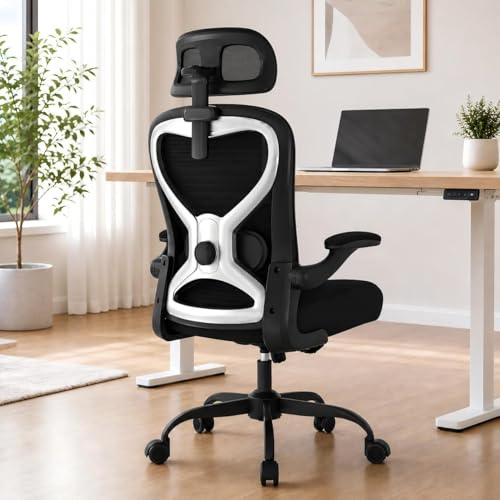
CASASIO Ergonomic Office Chair
What We Like
- 3D adjustable headrest for neck support
- Virgin foam seat for all-day comfort
- Tilt & rock function with adjustable tension
Trade-offs
- Flip-up armrests lack height or width adjustment
- At 30 lb, it's not the lightest to move
A 3.5-inch virgin foam seat that distributes weight evenly means you can sit through an eight-hour workday without that familiar ache in your hips and thighs. That’s the kind of all-day comfort that makes this chair a natural fit for anyone logging long hours at a desk. The tilt-and-rock function with adjustable tension adds a gentle motion that eases tension and keeps blood flowing, so you stay comfortable even when the workday stretches on.
The trade-off here is that the flip-up armrests are great for tucking the chair under a desk, but they don’t adjust in height or width the way the 4D arms on the Haworth Breck do. That means if you need to fine-tune arm support for your specific setup, you may find them less flexible. Still, the CASASIO offers a reinforced metal base, a 330-pound weight capacity, and a five-year warranty that speaks to its build quality.
Haworth Soji Ergonomic Office Chair

What We Like
- 4D armrests for personalized positioning
- Seat depth adjustment for varied leg lengths
- Back lock and tilt tension control
- 12-year warranty for long-term value
Trade-offs
- No forward tilt for active sitting
- Plastic swivel base feels less premium than metal
With a 350 lb weight capacity and a full suite of adjustments, the Soji lets you dial in a fit that supports posture and reduces fatigue over long hours. You get 4D armrests, seat depth, lumbar support, back lock, and tilt tension. The flexible mesh back breathes and moves with you, while the seat height and depth controls accommodate different body types. This chair is built for anyone who needs precise, personalized support at a desk, whether for work or study, and it arrives fully assembled so you can start adjusting right away.
The main trade-off is the lack of forward tilt, which some users prefer for leaning into tasks. The plastic swivel base is standard for this price range, and the hard casters are designed for carpet use. Still, at just 19.8 pounds and with a 12-year warranty, the Soji is an exceptionally lightweight, adjustable, and sustainable choice. GREENGUARD Gold and BIFMA Level certified with recycled content, for those who prioritize ergonomic fit over heavy-duty build.
Product photos
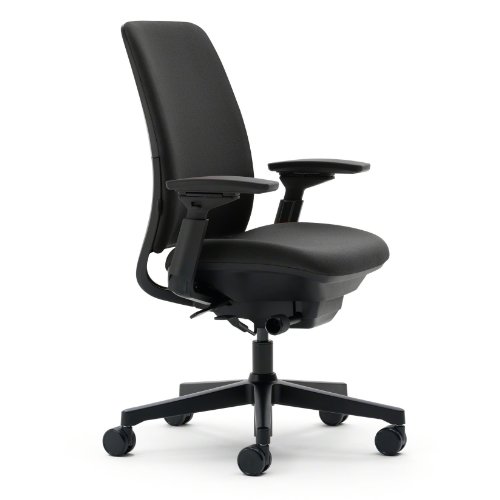
Steelcase Amia Office Chair
What We Like
- LiveLumbar dynamic lower back support
- 4D arm support adjustments
- Flexible seat edges for comfort
Trade-offs
- At 54.5 lb, it is quite heavy
- No headrest for neck support
The Steelcase Amia’s hidden LiveLumbar system adjusts to your movement, providing dynamic lower back support that keeps you comfortable through long workdays. The seat includes flexible edges and adjustable lumbar support, designed for 8-10 hours of sitting. The 4D armrests allow adjustments in height, width, pivot, and depth, while the full recline range can be locked in the upright position, adding versatility for focused work or quick breaks.
That said, the Amia is a hefty chair at 54.5 pounds, so moving it around the room takes some effort. It also lacks a headrest, which may be a drawback if you like to lean back fully. Compared to the lighter CASASIO Ergonomic Office Chair at 30 pounds, the Amia feels more substantial and built to last, but it’s less portable. For those who prioritize a supportive, all-day seat over easy mobility, the Amia delivers exceptional comfort without the frills.
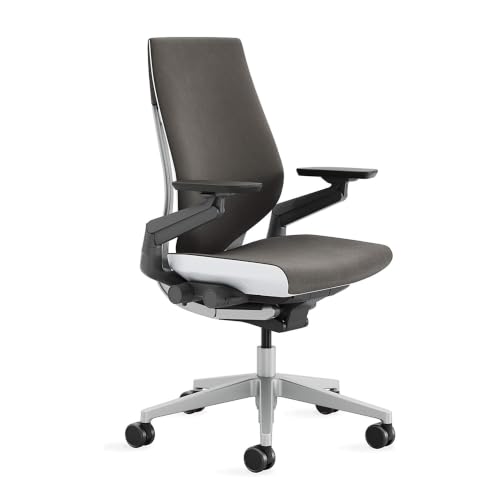
Steelcase Gesture Office Chair
What We Like
- 360-degree arms for any posture
- Intuitive adjustments within arm's reach
- Contoured back supports natural spine shape
- Full recline with upright lock
Trade-offs
- At 70 pounds, very heavy to move
- No headrest or lumbar adjustment listed
The 360-degree arms on this chair adjust to virtually any position you can imagine. So you can pull up close to type, lean back to think, or stretch out an elbow without fighting a fixed armrest. It’s designed for people who shift postures throughout the day and want a chair that follows them intuitively. The contoured back mirrors your spine’s natural curve, and all controls sit on the right side within easy reach, so you never have to hunt for a lever. This is a chair that rewards you for moving, not for sitting still.
The trade-off is weight: at 70 pounds, this is a piece of furniture you set up once and leave, not something you’ll want to roll between rooms. Compared to the Haworth Soji at under 20 pounds, the Gesture is heavier and less portable. The wheels are designed for carpet floors, so if your home office has hardwood or tile, you may need to consider caster compatibility. But if you spend many hours at a desk and value a chair that adjusts to you rather than the other way around, the Gesture’s thoughtful engineering makes that heft worth it.
Product photos
Haworth Breck Ergonomic Office Chair

What We Like
- Weight-activated recline with 3-position backstop
- 4D armrests for full adjustability
- Height-adjustable lumbar support
- Adaptive seat depth over 2 inches
Trade-offs
- At 38 lb, it's heavier than mesh-back models
- No headrest for neck support
A responsive weight-activated recline with a 3-position backstop lets you lock in an upright posture or control your recline range, so you can lean back without losing support. The height-adjustable lumbar feature fine-tunes lower back support to match your natural curve, while the 4D armrests move vertically, horizontally, forward/backward, and pivot inward/outward to keep your shoulders relaxed. This chair suits anyone who values a dynamic, personalized recline and wants to dial in arm and lumbar positioning for long work sessions.
Weighing 38 pounds, the Breck is heavier than the mesh-backed Haworth Soji (19.8 lb), which may be a consideration if you need to move the chair frequently. It also lacks a headrest, which may be a dealbreaker if you need upper neck support during reclined breaks. For buyers who prioritize a smooth, adjustable recline and adjustable armrests over portability, the Breck delivers a comfortable ergonomic experience that fits well in a mid-range guide.
Product photos
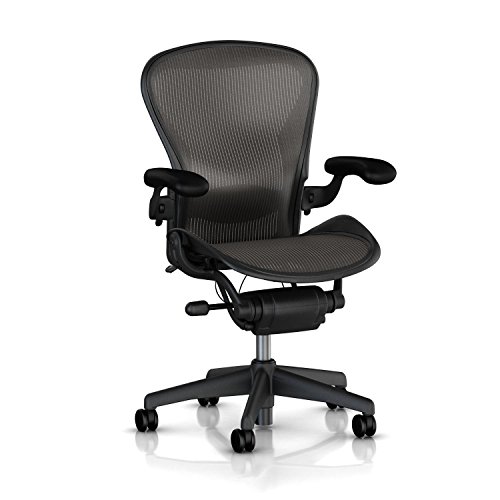
Herman Miller Classic Aeron Chair
What We Like
- Tension control for customized support
- Forward tilt and rear tilt lock
- Lumbar support included
- Hardwood floor casters
Trade-offs
- At 50.0 lb, it's heavy to move
- Size B excludes users outside its body dimension range
The tension control on this chair lets you dial in exactly how much resistance you feel when leaning back, so you’re not fighting the chair or flopping too easily. That fully loaded setup also includes a rear tilt lock, forward tilt, and built-in lumbar support, features that together create a highly adjustable sitting experience. This chair is for someone who wants a fully loaded ergonomic chair with tension control, rear tilt lock, forward tilt, and lumbar support.
The Aeron weighs 50.0 pounds, so it’s a chair you’ll want to place and keep rather than shift around. That’s more than double the 19.8-pound Haworth Soji, which is a real consideration if you frequently reconfigure your office. The size B fit targets a specific body range rather than offering a universal size, so it’s not for everyone. If you need tension control, rear tilt lock, forward tilt, and lumbar support in a fully loaded chair and can live with the heft, this remains a classic design.
Product photos
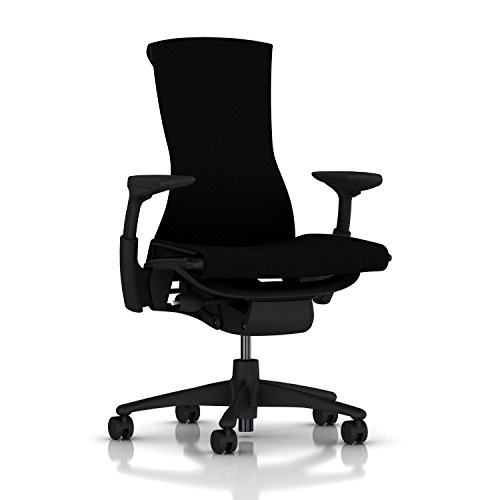
Herman Miller Embody Ergonomic Office Chair
What We Like
- Pixelated Support for even weight distribution
- Backfit adjustment aligns with spine's curve
- Four support layers with airflow design
- Developed with input from 20+ health experts
Trade-offs
- At 51.0 lb, heavy to move or reposition
- Carpet casters limit use on hard floors
The Embody’s Pixelated Support, a dynamic matrix of pixels in the seat and back, automatically conforms to your micro-movements, distributing weight evenly to reduce pressure and encourage healthy circulation. Developed with input from over 20 physicians and PhDs in biomechanics and ergonomics, this chair sets a new standard for natural alignment. The Backfit adjustment lets you position the backrest along your spine’s curve, so support stays constant whether you lean forward or recline. It’s a thoughtful choice for anyone who spends many hours at a desk and values precise, science-backed comfort.
That said, the Embody is a substantial piece of furniture. At 51 pounds, it’s heavier than the Haworth Soji (19.8 lb), so moving it around a room takes more effort. The Rhythm fabric is smooth and breathable, but if you prefer a mesh back or a different texture, you might want to compare with the Steelcase Amia. The included carpet casters are great for plush floors but won’t roll as smoothly on hard surfaces. For those who want cutting-edge ergonomic innovation and don’t mind the weight, this chair delivers a truly tailored sitting experience.
Product photos
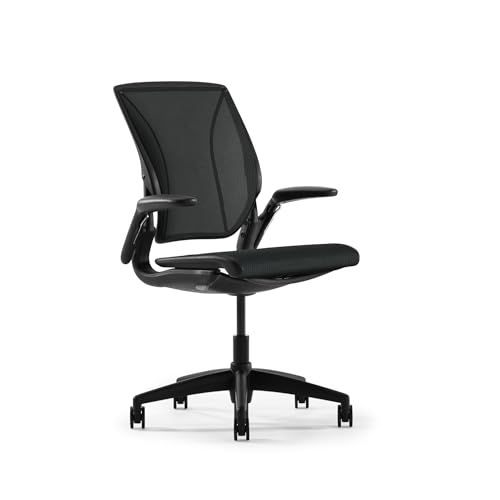
Humanscale World One Black Office Chair
What We Like
- Self-adjusting lumbar support
- Weight-sensitive recline adapts to you
- Breathable mesh back for comfort
- Frameless front edge reduces knee pressure
Trade-offs
- No headrest for neck support
- Limited recline at 17° for napping
A weight-sensitive recline that moves with your body and a self-adjusting lumbar curve make this chair feel like it’s reading your posture in real time. The breathable tri-panel mesh back keeps you cool during long work sessions, while the frameless front edge relieves pressure behind your knees. This is a chair for anyone who wants support that responds automatically, without fiddling with levers and knobs all day.
Simplicity is the trade-off here: there’s no headrest for leaning back, and the 17° recline is modest compared to chairs like the Haworth Soji that offer more tilt range. If you prefer to lock in your own settings, the fully adjustable Steelcase Amia might suit you better. But if you want a chair that adapts to you as you shift positions, the World One delivers that intuitive feel right out of the box.
TRALT Office Chair Ergonomic Desk Chair

What We Like
- High-density foam won't flatten over time
- Adjustable lumbar support for spine alignment
- Breathable mesh back prevents heat buildup
- BIFMA-certified lift avoids sinking
Trade-offs
- No tilt or rocking mechanism for dynamic sitting
- Armrests flip up but lack 3D adjustability
The high-density molded foam seat is built to resist flattening and sagging, so you get consistent cushioning day after day. That makes this chair a practical option for anyone who spends many hours at a desk and wants a seat that holds its shape. The adjustable lumbar support and breathable mesh back add comfort for lower back pressure and airflow, while the BIFMA-certified lift and metal-core base give it a sturdy, reliable feel.
The armrests flip up but do not offer the 3D adjustability found on the Marsail Ergonomic Office Chair. If you prioritize a foam seat that stays supportive over years of use and don’t need extra armrest customization, this is a straightforward choice that focuses on durability where it counts most.
Product photos
How We Evaluated Office Desk Chairs
Our evaluation focused on what makes a chair genuinely supportive for a home office. We examined each model’s adjustability features, seat construction, build quality, and the feedback from people who use them daily.
The most important criteria were lumbar support, armrest adjustability, seat comfort, and overall durability. A chair that lets you set the lumbar curve, position the armrests, and sit on a cushion that won’t go flat is a chair you can trust for years.
We analyzed technical specifications, reviewed expert ergonomic guidance, and looked for consistent themes in what owners report about long-term comfort and durability. This research-led approach helps you narrow the field before you sit down.
What To Look For In Office Desk Chairs
Choosing an office chair means focusing on the adjustments that matter most for your body and your work habits. Here are the key factors to consider.
Look for adjustable lumbar support, armrests that move in at least two directions, a seat cushion with high-density foam, and a weight capacity that fits your needs. These four features determine most of the comfort difference between chairs.
Lumbar Support
Adjustable lumbar support is the single most important ergonomic feature. A fixed lumbar bump may hit the wrong spot on your back. Look for support that moves up and down at least two inches and can be pushed forward or backward. The Marsail’s lumbar, for example, adjusts 1.18 inches forward and 2.16 inches vertically, letting you match your spine’s natural curve.
Armrest Adjustability
Armrests that move in multiple directions let you keep your shoulders relaxed and your elbows at a 90-degree angle. 3D armrests adjust for height, width, and angle, while 4D armrests add depth adjustment. The Haworth Soji and Steelcase Gesture both offer 4D armrests for the most personalized positioning.
Seat Comfort and Materials
The seat cushion and backrest material directly affect how you feel after hours of sitting. High-density foam, like the 3.14-inch thick foam in the Marsail or the long-lasting foam in the TRALT, resists flattening over time. A breathable mesh backrest keeps air moving, which helps you stay cool during long work sessions.
- Check the seat depth: your knees should bend at a 90-degree angle with two to three inches of space behind your calves.
- Look at the weight capacity to ensure the chair is built for your size.
- Consider the base material: a plastic swivel base is lighter, while a metal base is more durable.
- Think about floor type: hardwood floor casters protect flooring, while carpet casters are meant for rugs.
A good rule of thumb: spend more of your budget on adjustability and seat quality than on brand name or aesthetics.
Office Desk Chairs Compared
The table below compares the key specs and features of each chair, so you can see at a glance which models offer the adjustments you need most.
| Product | Weight Capacity | Armrests | Weight |
|---|---|---|---|
| Marsail Ergonomic Office Chair | 330 lbs | 3D adjustable, flip-up | 30.4 pounds |
| CASASIO Ergonomic Office Chair | 330 lbs | Flip-up | 30.0 pounds |
| Haworth Soji Ergonomic Office Chair | 350 lb | 4D adjustable | 19.8 lb |
| Steelcase Amia Office Chair | N/A | 4D adjustable | 54.5 lb |
| Steelcase Gesture Office Chair | N/A | 360-degree arms | 70.0 pounds |
| Haworth Breck Ergonomic Office Chair | N/A | 4D (4 directions) | 38.0 pounds |
| Herman Miller Classic Aeron Chair | N/A | N/A | 50.0 pounds |
| Herman Miller Embody Ergonomic Office Chair | N/A | Fully adjustable arms | 51.0 pounds |
| Humanscale World One Black Office Chair | 300 lbs | N/A | 30.0 pounds |
| TRALT Office Chair Ergonomic Desk Chair | 330 lbs | Flip-up | 28.0 pounds |
Frequently Asked Questions
How do I know what size office chair to buy?
Measure your desk height and your leg length. When seated, your feet should rest flat on the floor, your knees should be at a 90-degree angle, and your elbows should be level with your desk surface. Check the chair’s seat height range and weight capacity to ensure a proper fit.
What is the difference between 3D and 4D armrests?
3D armrests adjust for height, width, and angle. 4D armrests add depth adjustment, letting you slide the arm pad forward or backward. For most people, 3D armrests provide enough customization, but 4D armrests are helpful if you have longer arms or need precise positioning for typing.
Is mesh or padded upholstery better for an office chair?
Mesh backrests allow air to circulate, keeping you cooler during long hours. Padded upholstery offers a softer feel but can trap heat. Many people prefer a mesh back for breathability combined with a padded foam seat for comfort under the thighs.
How often should I replace my office desk chair?
A well-built office chair with a solid warranty should last five to ten years with regular use. Signs it is time to replace include a seat cushion that has flattened, a gas lift that no longer holds height, or armrest padding that has worn through.
Can an office chair help with back pain?
An adjustable chair with proper lumbar support can help maintain good posture and reduce strain on your lower back. Look for a chair that lets you set the lumbar curve to fit your spine. If you have chronic back pain, consult a healthcare professional for personalized advice.
The Bottom Line
The Marsail Ergonomic Office Chair is the best overall pick for most home office workers. Its combination of adjustable lumbar support, 3D armrests, a thick foam seat, and a breathable mesh back covers the essentials for all-day comfort at a reasonable investment.
If you spend eight or more hours at a desk, the CASASIO Ergonomic Office Chair offers the plush cushioning and headrest support that make long sessions more bearable. For those who want every possible adjustment point, the Haworth Soji delivers 4D armrests and seat depth control backed by a long warranty.
The most important buying factor is lumbar support that you can actually adjust. No other feature does more to keep your spine aligned and your back comfortable through a full workday.
