10 Best Ergonomic Desk Chairs in 2026
This post contains affiliate links. As an Amazon Associate, we earn from qualifying purchases.
The SIHOO M18 Ergonomic Office Chair earns our best overall spot thanks to its four-point ergonomic support system that addresses the back, neck, hips, and posture. For those who need deeper lumbar customization, the Marsail Ergonomic Office Chair offers 3D adjustable armrests and fine-tuned back support. Budget-minded shoppers will appreciate the BestOffice Ergonomic Office Chair for its breathable mesh back and straightforward assembly.
Choosing an ergonomic desk chair for a home office means balancing support with the realities of your space. A chair that looks great in a showroom may feel wrong after a full workday, especially when your desk shares a room with a bed or a dining table. The right fit depends on your height, your typical sitting posture, and whether you need to tuck the chair away at day’s end.
This guide is built on manufacturer specifications, expert round-ups, and patterns in owner feedback. We highlight what matters most for each room and use case, so you can match a chair to your actual setup. No testing claims here, just honest, guidance.
Top 10 Ergonomic Desk Chairs in the Market
Certain content that appears on this site comes from Amazon. This content is provided "as is" and is subject to change or removal at any time.
The Best Ergonomic Desk Chairs, Reviewed
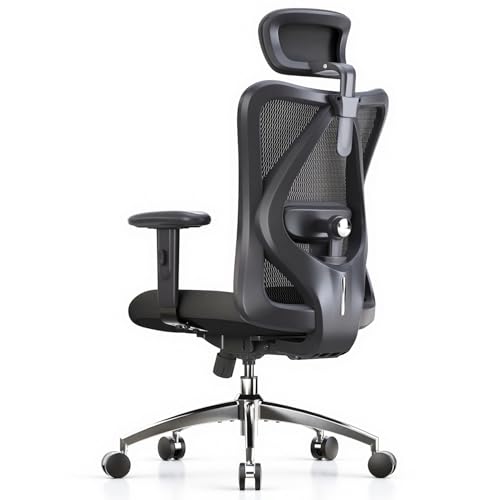
SIHOO M18 Ergonomic Office Chair
What We Like
- Four-point ergonomic support system
- Breathable mesh backrest
- Adjustable lumbar and headrest
- Tilt lock and resistance control
Trade-offs
- 2D armrests limit lateral movement
- No seat angle adjustment for varied sitting positions
With a 330-pound weight capacity and four points of support, head, back, hips, and hands, this chair is built to keep you comfortable through long workdays. The adjustable lumbar and headrest let you dial in the fit, while the breathable mesh backrest helps you stay cool during focused typing or video calls. It provides reliable ergonomic features for home and office use.
The 2D armrests adjust up and down but don’t swivel or slide laterally, which limits how you can position your arms during different tasks. At 38 pounds, the chair is heavy enough that moving it around the room takes noticeable effort. Still, the adjustable lumbar support and multiple recline angles help reduce discomfort during long work sessions, making it a practical choice for users who want straightforward ergonomic features.
Marsail Ergonomic Office Chair

What We Like
- 3D adjustable armrests for custom arm support
- Lumbar support adjusts 1.18" forward/back and 2.16" up/down
- 3.14-inch thick high-density foam seat cushion
- Breathable mesh back with responsive support
Trade-offs
- No seat depth adjustment for different leg lengths
- Backrest recline limited to 120° maximum angle
Supporting up to 330 pounds, this chair uses a generously padded 3.14-inch thick high-density foam seat to handle longer workdays without sacrificing comfort. The real standout is the lumbar support system, which adjusts 1.18 inches forward and back and 2.16 inches up and down, letting you dial in the exact lower back pressure you need. That kind of fine-tuned adjustability makes it a strong match for anyone who struggles to find a chair that fits their unique body shape or who spends hours at a desk and wants to avoid that nagging ache. The 3D armrests add to the customization, moving forward, back, and swiveling left or right, then flipping up to tuck the chair under a desk when not in use.
The trade-off comes in the backrest’s recline range, which stops at 120 degrees, so you won’t get a deep lean-back if that’s your preference. There’s also no seat depth adjustment, which means taller users or those with longer legs may find the fixed seat pan less accommodating. Still, for the price point, the Marsail delivers an unusual level of personalized lumbar and arm support that many chairs in this category skip. If your priority is a chair that adapts to your body rather than the other way around, this one deserves a close look.
Product photos
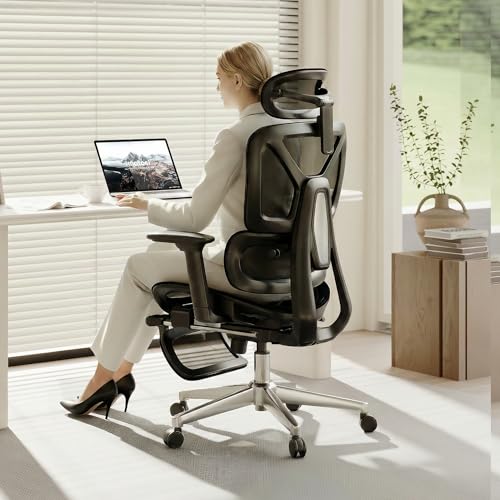
FLEXISPOT ErgoX Premium Ergonomic Office Chair
What We Like
- Dynamic lumbar support
- 3D adjustable headrest
- Nap footrest included
- 400 lb weight capacity
Trade-offs
- Footrest adds bulk for tight spaces
- Heavier than some comparable chairs at 38 pounds
A 400-pound weight capacity and a built-in nap footrest set this chair apart for anyone who wants to stretch out during a break. The dynamic lumbar support and 3D adjustable headrest work together to keep you comfortable through long hours, whether you’re at a desk or leaning back. It’s designed for users between 5’1″ and 6’2″, with seat depth that adjusts from 17 to 20 inches, so finding a good fit is straightforward.
The trade-off comes in the form of weight: at 38 pounds, this chair is heavier than the Marsail Ergonomic Office Chair (30.4 lb), making it less convenient to roll between rooms or rearrange. If you prioritize a built-in place to rest your legs and don’t mind the extra heft, this chair delivers solid ergonomic support for a wide range of body types.
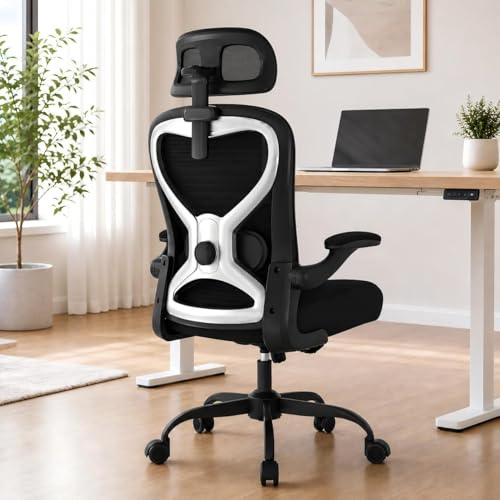
CASASIO Ergonomic Office Chair
What We Like
- 3D adjustable headrest for neck support
- Flip-up armrests save desk space
- Tilt & rock function with adjustable tension
Trade-offs
- At 30 lb, heavier for frequent moving
- Flip-up armrests lack depth/width adjustment
A 3.5-inch virgin foam seat that distributes weight evenly is the standout feature here, keeping hips and thighs comfortable even after eight-plus hours of sitting. That makes this chair a natural fit for anyone who spends full workdays at a desk and needs all-day relief without soreness. Add a 3D adjustable headrest that cradles your neck during focused work or relaxation, and you have a setup designed to reduce fatigue through long sessions.
The trade-off is in the armrests: they flip up to tuck the chair under a desk, which is great for small spaces. But they don’t offer the depth or width adjustments found on some competitors like the SIHOO M18. That means you may not get the same customized arm positioning if you need to fine-tune elbow support. Still, the reinforced metal base supports up to 330 pounds, and with a 5-year warranty and 90-day returns, the value here is about lasting comfort for marathon workdays rather than maximum adjustability.
CAPOT Ergonomic Mesh Office Chair

What We Like
- Micro-adjust lumbar with 8 levels
- 400 lb weight capacity
- 5-year warranty with free parts
- Flip-up arms save desk space
Trade-offs
- At 38 lb, heavier than some mesh chairs
A 400-pound weight capacity means this chair can handle larger frames and long hours without compromise. The stainless steel base and leak-proof SGS gas lift work together to prevent accidental sinking and keep height adjustments stable. BIFMA X5.1 certification further confirms the structure’s reliability for sustained daily use. Reviewers note that the sturdy build inspires confidence during extended desk sessions, and the silent PU wheels roll smoothly under a desk without marking floors, making the most of available workspace.
At 38 pounds, it is heavier than the Marsail Ergonomic Office Chair, which weighs just over 30 pounds. That extra heft comes from a stainless steel base and leak-proof gas lift, making it feel more planted but less easy to move around. The flip-up arms and silent PU wheels help reclaim desk space.
Haworth Soji Ergonomic Office Chair

What We Like
- Fully assembled out of box
- 4D armrests for custom positioning
- GREENGUARD Gold certified
- 12-year warranty
Trade-offs
- No forward tilt for active sitting
At 19.8 pounds, the Haworth Soji is lighter than several chairs in this guide, such as the Steelcase Amia at 54.5 lb, making it easier to move between rooms or reposition in a small home office. It arrives fully assembled, so you can start using it right away. The 4D armrests allow adjustments in multiple directions for a more personalized fit. The GREENGUARD Gold certification supports better indoor air quality.
The Soji weighs just under 20 pounds, making it one of the lightest ergonomic chairs available, which means you can easily roll it between rooms or tuck it under a desk. Unlike the FLEXISPOT ErgoX with its footrest and heavier frame, the Soji lacks forward tilt, so if you like to perch forward while working, you’ll miss that extra support. The mesh back breathes well and the lumbar support is adjustable, but the chair’s overall lightness means it can shift on carpet when you recline deeply. Still, for someone who prioritizes easy mobility and a compact, sustainable design (up to 94% recyclable), the Soji delivers a surprisingly full feature set in a package that won’t dominate a room.
Product photos
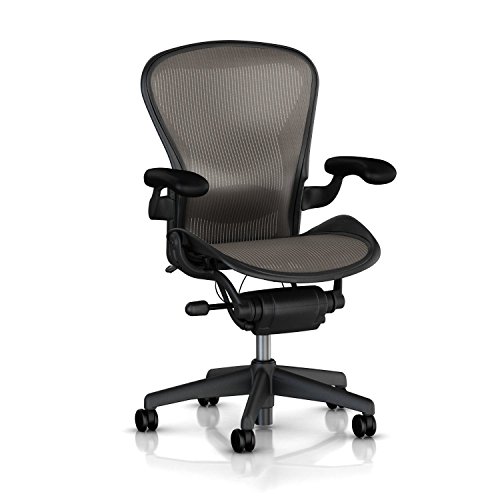
Herman Miller Classic Aeron Task Chair
What We Like
- Breathable Pellicle mesh dissipates body heat
- Kinemat tilt keeps body pivoting naturally
- Waterfall seat edge reduces thigh pressure
- 12-year warranty for long-term peace of mind
Trade-offs
- At 48 pounds, it's heavy to move around
The breathable Pellicle suspension mesh actively dissipates body heat while you work, so you stay cool and comfortable even during long sessions. This chair’s Kinemat tilt mechanism lets your neck, shoulders, hips, knees, and ankles pivot naturally, encouraging movement rather than locking you into one static position. It’s an ideal match for anyone who runs warm or spends hours at a desk and wants a seat that breathes with them, backed by a 12-year warranty that speaks to its build quality.
At 48 pounds, this chair is noticeably heavier than mesh options like the Haworth Soji (19.8 pounds), making it less convenient to shift around a room or carry upstairs. For those who value cooling mesh, natural movement, and a chair that feels substantial and durable, the Aeron delivers on its reputation.
Product photos
Steelcase Amia Office Chair
What We Like
- Hidden LiveLumbar adjusts to your movement
- 4D arm support for personalized fit
- Seat cushion for 8-10 hour comfort
- Carbon Neutral certified option
Trade-offs
- At 54.5 pounds, it's heavy to move
- No headrest included for neck support
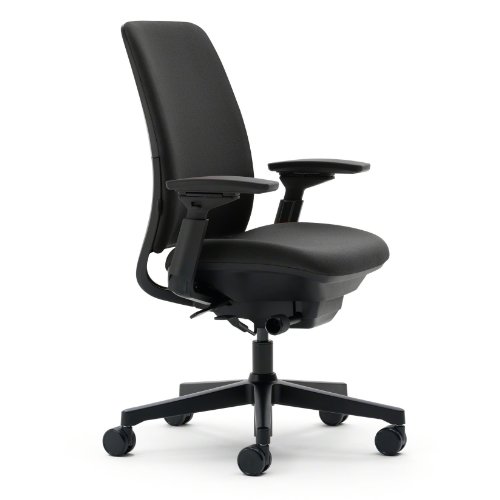
The hidden LiveLumbar system in the Steelcase Amia adjusts to your movement, providing dynamic lower back support throughout the day. That support, paired with a seat that has flexible edges and extra cushioning, makes this chair suitable for long work sessions. It’s built for someone who spends eight to ten hours seated and wants pressure-free comfort without a bulky look. The 4D armrests let you dial in height, width, pivot, and depth, so your elbows rest naturally as you type or lean back.
The Steelcase Amia weighs 54.5 pounds, so it’s built for a permanent spot in your home office rather than for moving between rooms. If you need to reposition your setup often, the Haworth Soji at 19.8 pounds is far easier to shift. But for a dedicated workspace where long-term comfort is the priority, the Amia’s hidden LiveLumbar system and extra cushioning support eight to ten hours of pressure-free sitting.
Humanscale World One Office Chair
What We Like
- Self-adjusting lumbar support
- Weight-sensitive recline adapts to you
- Breathable mesh back for long hours
- Frameless front edge reduces knee pressure
Trade-offs
- No headrest included for neck support
- At 28 lbs, lighter but less sturdy feel
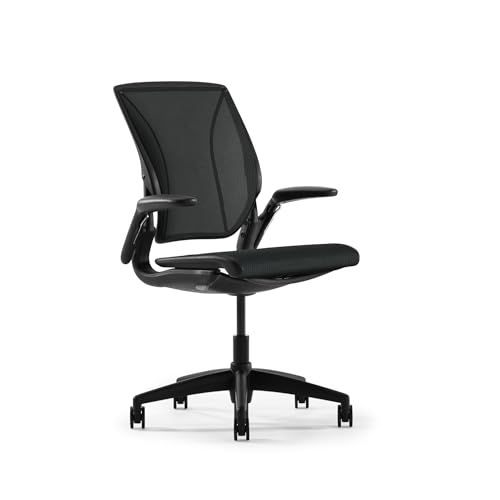
The weight-sensitive recline and self-adjusting lumbar support mean this chair moves with you, not against you. It automatically tailors its contour to your spine, so you don’t have to fiddle with levers or knobs to get comfortable. Designed for all body types up to 300 pounds, the breathable tri-panel mesh back keeps you cool during long work sessions, while the frameless front edge eases pressure behind your knees. This is a chair that prioritizes intuitive ergonomics for someone who wants support without complexity.
The trade-off is a simpler feature set: there’s no headrest, which could be a dealbreaker if you lean back often or need neck support. Compared to the SIHOO M18, which offers an adjustable headrest and a higher weight capacity of 330 pounds, the Humanscale World One focuses on a streamlined, self-adjusting experience rather than a long list of manual adjustments. It’s best for those who value a clean, responsive fit over extra add-ons.
Product photos
BestOffice Ergonomic Office Chair
What We Like
- Breathable mesh back keeps you cool
- Adjustable seat height and armrests
- Supports up to 250 lbs
- Quick 10-15 minute assembly
Trade-offs
- Mid-back design offers no headrest
- Armrests are not adjustable in width or depth
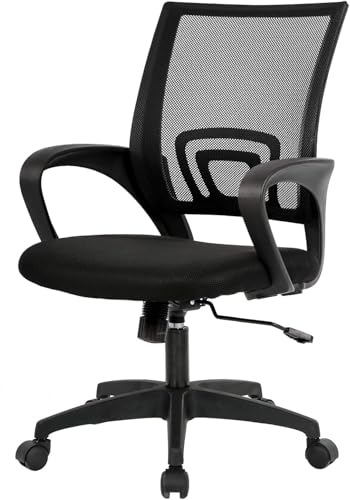
A 250-pound weight capacity and adjustable seat height from 17.1 to 20.3 inches make this chair a practical choice for budget-conscious shoppers who still want ergonomic basics. The breathable mesh back promotes airflow during long work sessions, while the curved lumbar support helps reduce fatigue without breaking the bank. It’s ideal for home offices or small spaces where comfort matters but the budget is tight.
If you need a headrest for full neck support while reclining, this mid-back chair isn’t for you. The SIHOO M18 offers a headrest and supports up to 330 pounds, while the BestOffice is lighter at 19 pounds and simpler in design. For the price, you get solid lumbar support and quick assembly, but you give up upper-back support and adjustable armrests.
Product photos
How We Evaluated Ergonomic Desk Chairs
Our evaluation started with a close look at each chair’s published specifications and the manufacturer’s own claims about adjustability and support. We then cross-referenced those details with expert round-ups from established home office and ergonomics sources to see which features consistently get recommended for long sitting sessions. Finally, we reviewed patterns in owner feedback to understand how these chairs perform in real rooms, not just spec sheets.
The three criteria that mattered most were adjustability range, seat comfort for extended use, and build quality relative to weight capacity. A chair with limited lumbar or armrest adjustment may cause discomfort over time, while a poorly padded seat can make even the best back support irrelevant. Weight capacity also told us a lot about the frame’s durability, especially for heavier users or chairs that need to survive years of daily use.
A research-led evaluation like this has honest limits. We cannot tell you exactly how a chair will feel after eight hours because that depends on your body, your desk height, and your posture. What we can do is point you toward the chairs with the best combination of adjustability, materials, and owner satisfaction for your specific needs.
What To Look For In Ergonomic Desk Chairs
Choosing an ergonomic chair starts with understanding your own body and workspace. The best chair is the one that fits you, not the one with the most features.
Look for adjustable lumbar support, armrests that move in at least two directions, a seat height range that matches your desk, and a backrest that supports your full spine. Breathable mesh helps in warm rooms, while dense foam cushions better for long hours.
Lumbar Support and Backrest Adjustability
The lower back bears the most strain during long sits. Look for lumbar support that adjusts vertically and, ideally, in depth. The Marsail chair, for example, lets you move the lumbar pad forward and backward as well as up and down. A backrest that reclines with tension control, like the SIHOO M18’s tilt lock and resistance, lets you shift positions without losing support. Chairs with self-adjusting lumbar, like the Humanscale World One, remove the guesswork but offer less manual control.
Armrest Adjustability
Armrests that only move up and down (2D) limit how well you can align your elbows at 90 degrees while typing. Chairs with 3D or 4D armrests let you adjust height, width, depth, and sometimes angle. The Haworth Soji’s 4D armrests and the Steelcase Amia’s 4D arm support are strong examples. If your desk surface is high or you share the chair with someone of a different build, more armrest dimensions make a real difference.
Seat Comfort and Material
Seat cushion density and shape matter more than thickness alone. High-density foam, like the 3.14-inch thick cushion on the Marsail, resists flattening over months of use. Mesh seats, like the Herman Miller Aeron’s Pellicle material, breathe better but may feel firm to some users. A waterfall front edge, found on the Aeron and Humanscale chairs, reduces pressure behind the knees. For all-day comfort, consider whether you prefer a cushioned seat or a suspended mesh feel.
- Check the seat height range against your desk height and your own leg length.
- Confirm the chair’s weight capacity matches or exceeds your needs.
- Measure your room’s floor space, especially if the chair has a footrest or wide armrests.
- Consider assembly time if you are setting up in a bedroom or small home office.
A chair that fits your body today will serve you better than one with features you will never adjust.
Ergonomic Desk Chairs Compared
The table below compares all ten chairs across key specs to help you narrow your choice.
| Product | Armrests | Lumbar Support | Weight |
|---|---|---|---|
| SIHOO M18 Ergonomic Office Chair | 2D Adjustable | Adjustable | 38.0 pounds |
| Marsail Ergonomic Office Chair | 3D adjustable, flip-up PU-padded | Adjustable 1.18" forward/back, 2.16" up/down | 30.4 pounds |
| FLEXISPOT ErgoX Premium Ergonomic Office Chair | 3D adjustable | Dynamic Lumbar Support | 38.0 pounds |
| CASASIO Ergonomic Office Chair | Flip-up | 4-Way Lumbar | 30.0 pounds |
| CAPOT Ergonomic Mesh Office Chair | 4D Flip-up | 2" / 8 levels | 38.0 pounds |
| Haworth Soji Ergonomic Office Chair | 4D armrests | lumbar | 19.8 pounds |
| Herman Miller Classic Aeron Task Chair | Fully adjustable vinyl arms | Lumbar Pad | 48.0 pounds |
| Steelcase Amia Office Chair | 4D (height, width, pivot, depth) | Hidden LiveLumbar system | 54.5 pounds |
| Humanscale World One Office Chair | N/A | Built in Lumbar Support | 30.0 pounds |
| BestOffice Ergonomic Office Chair | ergonomic armrests | Lumbar Support | 19.0 pounds |
Frequently Asked Questions
What is the best ergonomic desk chair for long hours?
The CASASIO Ergonomic Office Chair is built for all-day comfort with a 3D adjustable headrest and a tilt and rock function with adjustable tension. Its flip-up armrests also help save desk space when you need to push in close.
How much should I spend on an ergonomic desk chair?
Value depends on the features you need. Budget-friendly options like the BestOffice Ergonomic Office Chair offer breathable mesh and basic adjustability. Mid-range chairs add 3D armrests and better lumbar support, while premium models like the Steelcase Amia include advanced lumbar systems and longer warranties.
Do I need a chair with adjustable armrests?
Adjustable armrests help keep your shoulders relaxed and your elbows at a 90-degree angle while typing. If you share a desk or work at a non-standard height, 3D or 4D armrests, like those on the Haworth Soji, make a noticeable difference in daily comfort.
What is the difference between mesh and foam seat cushions?
Mesh seats, like the Herman Miller Aeron’s Pellicle material, allow air to circulate and reduce heat buildup during long sits. Foam cushions, such as the high-density padding in the Marsail chair, provide a plusher feel but may retain more heat. Your preference depends on your room’s temperature and your comfort priority.
How do I know if an ergonomic chair fits me properly?
Your feet should rest flat on the floor with your knees at a 90-degree angle. The seat pan should not press into the back of your knees, and your lower back should feel supported by the lumbar pad. Most chairs in this guide offer enough adjustment to achieve this fit for a range of body sizes.
The Bottom Line
The SIHOO M18 Ergonomic Office Chair is our best overall pick for anyone who wants a balanced set of ergonomic adjustments without stepping into premium pricing. Its four-point support system and breathable mesh back make it a strong choice for a primary home office chair in any room of the house.
If your budget is tighter, the BestOffice Ergonomic Office Chair covers the basics with a breathable mesh back and simple assembly, though it lacks a headrest and advanced armrests. For heavier users or those who want a footrest for breaks, the FLEXISPOT ErgoX offers a 400-pound capacity and a built-in nap footrest.
The single most important factor in choosing an ergonomic desk chair is lumbar support that matches your spine. Everything else, from armrests to seat material, comes second to keeping your lower back properly aligned through a full workday.
