10 Best Ergonomic Office Chairs For Long Hours in 2026
This post contains affiliate links. As an Amazon Associate, we earn from qualifying purchases.
For long hours at a desk, the Herman Miller Embody Ergonomic Chair stands out as the best overall choice, thanks to its pixelated support matrix that distributes weight evenly and adapts to your every movement. For breathable comfort, the Herman Miller Classic Aeron Task Chair is a top contender, while the Steelcase Amia Office Chair offers dynamic lumbar support that responds to shifting postures.
The real challenge of sitting for extended periods isn’t just comfort, it’s maintaining healthy circulation and spinal alignment without constantly readjusting. A chair that works with your body, not against it, makes the difference between finishing your day energized or aching.
This guide is built on manufacturer specifications, expert ergonomic round-ups, and patterns in owner feedback from thousands of long-hour sitters. We highlight the key criteria that matter most for all-day use and match each pick to the right user.
Top 10 Ergonomic Office Chairs For Long Hours in the Market
Certain content that appears on this site comes from Amazon. This content is provided "as is" and is subject to change or removal at any time.
The Best Ergonomic Office Chairs For Long Hours, Reviewed
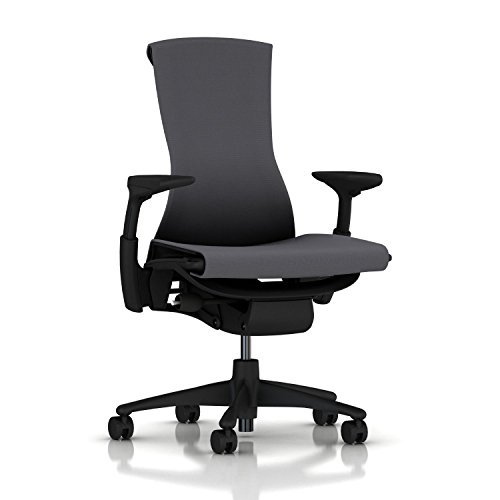
Herman Miller Embody Ergonomic Chair
What We Like
- Pixelated support matrix distributes weight evenly
- Backfit adjustment aligns with spine's natural curve
- Four support layers with airflow design
- Developed with input from 20+ ergonomics experts
Trade-offs
- At 52 pounds, it's heavy to move around
- Carpet casters only, not for hard floors
A dynamic pixelated support surface that conforms to your micro-movements is the reason this chair feels like floating while keeping you balanced. Developed with input from over 20 physicians and PhDs in biomechanics and ergonomics, the Embody distributes your weight evenly across its seat and back, reducing pressure points that lead to discomfort during long hours. The Backfit adjustment lets you align the backrest with your spine’s natural curve, and the chair automatically adapts as you shift positions. For anyone spending extended periods at a desk, this design encourages healthy movement and circulation without requiring constant readjustment.
The trade-off is weight: at 52 pounds, it’s not a chair you’ll want to reposition frequently. Compared to the Steelcase Gesture, which weighs 70 pounds, the Embody is lighter, though the Gesture offers a different arm design. The Embody focuses on pressure distribution and airflow through its four-layer seat construction. If you prioritize a seat that breathes and moves with you, this is a specialized choice for all-day comfort.
Product photos
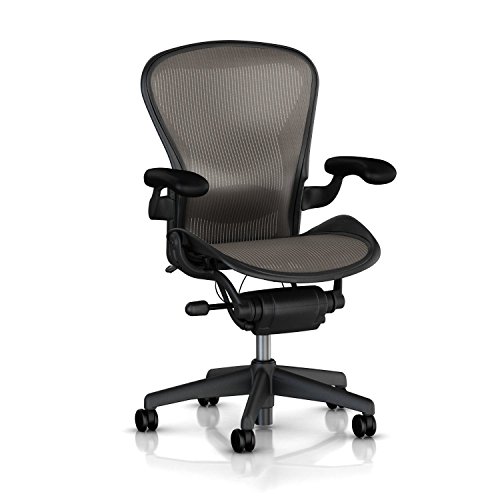
Herman Miller Classic Aeron Task Chair
What We Like
- Breathable Pellicle suspension keeps you cool
- Kinemat tilt for natural movement
- Waterfall seat edge reduces thigh pressure
- 12-year warranty for long-term use
Trade-offs
- At 48 pounds, it's heavy to move
- Carpet casters limit floor type options
The Pellicle suspension in this chair actively dissipates body heat, so you stay cool and comfortable even during marathon work sessions. That breathable design, paired with the Kinemat tilt mechanism, lets your neck, shoulders, hips, knees, and ankles pivot naturally. This makes it a top choice for anyone who spends long hours at a desk and values airflow and freedom of movement. The waterfall front edge of the seat also takes pressure off your thighs, keeping circulation flowing and helping you stay alert.
This chair is heavy at 48 pounds, so it’s not something you’ll want to reposition often. Compared to the lighter SIHOO M18, which weighs 38 pounds, the Aeron is heavier. The carpet casters are designed for carpeted floors.
Product photos
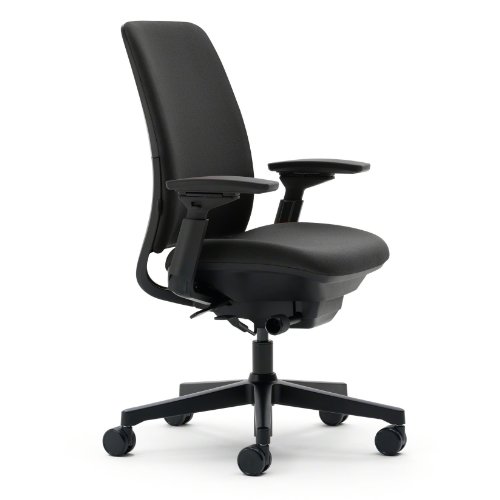
Steelcase Amia Office Chair
What We Like
- Hidden LiveLumbar adjusts to your movement
- 4D arm support for personalized fit
- Full recline range with lockable upright position
- Carbon Neutral certified sustainable choice
Trade-offs
- At 54.5 lb, it's heavy to move around
- No headrest included for neck support
The hidden LiveLumbar system in the Steelcase Amia adjusts continuously as you shift, so your lower back gets dynamic support whether you are leaning in to type or reclining to think. The seat has flexible edges and extra cushioning, which helps relieve pressure on your legs. If you spend long days at a desk and want support that moves with you rather than locking you into one position, this chair is built for exactly that.
At 54.5 pounds, the Amia is heavy enough that moving it between rooms feels like a workout, but that solid build also means it feels planted and durable once it’s in place. Compared to the Haworth Soji at just 19.8 pounds, it’s far less portable. The 4D armrests adjust in height, width, pivot, and depth, so you can dial in exactly where your arms rest while typing.
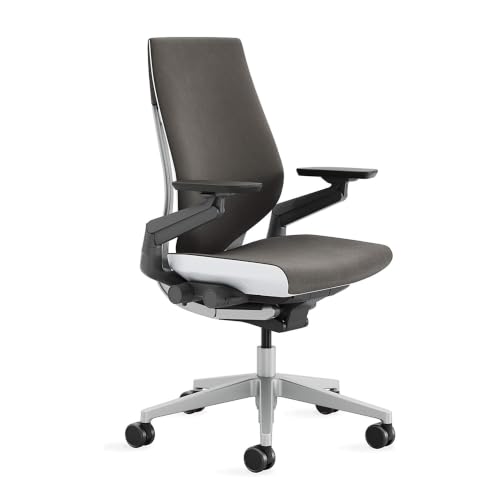
Steelcase Gesture Office Chair
What We Like
- 360-degree arms for any posture
- Full recline with three settings
- Intuitive adjustments within arm's reach
- Contoured back supports spine's natural shape
Trade-offs
- At 70 pounds, very heavy to move
- Wheels designed for carpet, not hard floors
The Steelcase Gesture’s 360-degree arms move with you in every direction, so you can shift from typing to leaning back without losing support. It’s built for people who spend long hours at a desk and need a chair that adapts to their body rather than the other way around. The full recline range with three lock settings means you can find your ideal angle, and the contoured back follows your spine’s natural curve. All adjustments are on the right side within easy reach, so you never have to twist or stretch. This is a chair that prioritizes a precise, personalized fit for extended sitting.
At 70 pounds, this chair is a substantial piece of furniture that you won’t want to move often, but it stays planted during long work sessions. The included wheels are made for carpet, so on hard floors they won’t roll as smoothly. Compared to the 52-pound Herman Miller Embody, the Gesture feels more grounded but less portable. For someone who wants maximum adjustability and all-day comfort without shifting the chair around, it delivers, just make sure your workspace can handle its heft.
Product photos
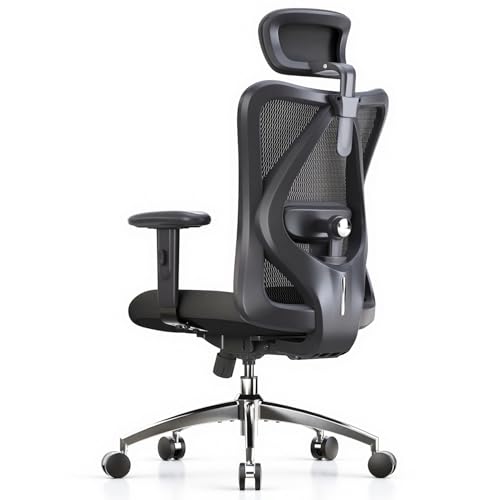
SIHOO M18 Ergonomic Office Chair
What We Like
- Four support points for head, back, hips, hands
- Adjustable lumbar and headrest for custom fit
- Breathable mesh back keeps you cool
- Tilt lock and resistance adjustment for recline
Trade-offs
- 2D armrests limit arm positioning options
- Weight capacity lower than some heavy-duty chairs
A 330-pound weight capacity and a height range of 5’6″ to 6’2″ mean this chair can handle bigger frames and taller users without feeling cramped. The four-point support system, head, back, hips, and hands, covers the areas that typically need help during long sits. You can adjust the lumbar support and headrest to fit your body, and the breathable mesh back keeps you from overheating, so you stay comfortable through a full workday.
The armrests adjust in two dimensions, height and width, but not depth or angle, so you might not find the perfect elbow position for every task. Compared to the Steelcase Gesture with its 360-degree arms, the M18 offers less flexibility for those who shift between typing, reading, and leaning back. Still, the recline range of 108° to 128° and the tilt resistance knob let you set the backrest tension to your preference. Best for users who want solid ergonomic support at a practical price and don’t need the most adjustable armrests.
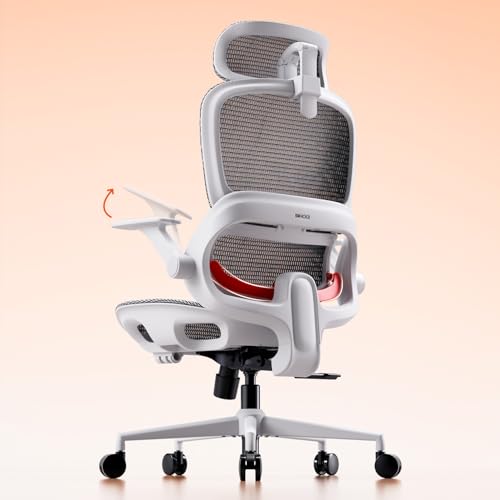
SIHOO B100 Mesh Ergonomic Chair
What We Like
- Adaptive lumbar follows spine movement
- Breathable full-mesh backrest
- Three lockable recline angles
- Reinforced metal base supports 300 lbs
Trade-offs
- No seat depth adjustment for taller users
- Flip-up armrests lack width or pivot adjustability
Adaptive lumbar support that follows your spine as you shift from typing to leaning back means your lower back gets continuous support without feeling locked into one position. This chair suits anyone who spends extended periods at a desk and wants a breathable, adjustable seat that stays cool and comfortable through a full workday or study session. The full-mesh back keeps air moving, while the widened cushion spreads weight evenly across your hips and thighs, so you can sit longer without discomfort.
The B100’s flip-up armrests lack the width or pivot adjustments found on some pricier models, but the reinforced metal base and SGS-certified Class 4 gas lift support up to 300 pounds. At 35.5 pounds, it’s a midweight option that still offers adaptive lumbar and solid ergonomic basics for the price.
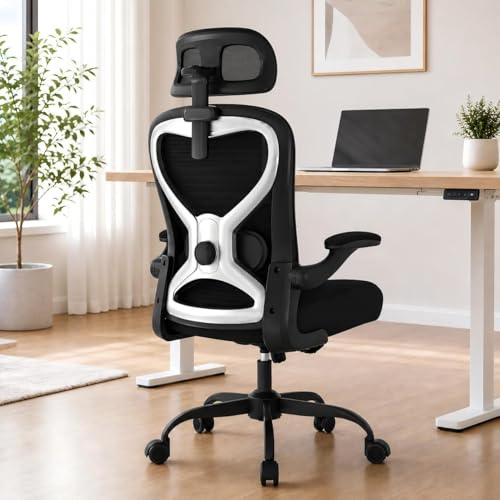
CASASIO Ergonomic Office Chair
What We Like
- 3.5" thick virgin foam seat cushion
- 3D adjustable headrest for neck support
- Flip-up armrests for desk tucking
Trade-offs
- No seat depth adjustment for taller users
- Armrests lack height and angle adjustability
A 3.5-inch virgin foam seat cushion that distributes weight evenly is the standout feature here, it keeps hips and thighs comfortable even after eight hours of sitting, so you can power through a full workday without that nagging soreness. This chair is built for marathon sessions, with a reinforced metal base that supports up to 330 pounds and a gentle tilt-and-rock motion that helps relieve tension and improve blood flow. It’s a smart fit for anyone who prioritizes all-day cushioning and wants a chair that adapts to their body rather than forcing them into one position.
One thing to consider is that the CASASIO lacks seat depth adjustment, which can be a dealbreaker if you have longer legs and need to shift your sitting position forward or back. If your main goal is a chair that feels soft yet supportive hour after hour, this one delivers where it counts.
Haworth Soji Ergonomic Chair

What We Like
- Lightweight at just 19.8 pounds
- 4D armrests and seat depth adjustment
- Supports up to 350 lb
- GREENGUARD Gold and BIFMA Level certified
Trade-offs
- No forward tilt feature
- No forward tilt for leaning into desk work
At only 19.8 pounds, the Haworth Soji is the lightest full-featured ergonomic chair in this guide. You can easily slide it between desks or carry it up a flight of stairs without breaking a sweat. Despite the featherweight build, it supports up to 350 pounds and offers a level of adjustability that rivals chairs twice its weight: 4D armrests, lumbar support, seat depth adjustment, and back lock let you dial in a fit that keeps fatigue at bay during long work sessions. This chair suits anyone who wants serious ergonomic support without the heavy, permanent feel of a traditional office throne.
There’s also no forward tilt, so if you lean into your desk for detailed tasks, you’ll miss that extra adjustment. Still, with a 12-year warranty and strong sustainability credentials (up to 94% recyclable materials), the Soji delivers lasting value for home office users who prioritize easy mobility and eco-conscious design.
Product photos
Branch Ergonomic Chair Pro

What We Like
- 14 points of adjustment for custom fit
- 5D armrests for personalized arm support
- Two-way adjustable lumbar cushion
- Smooth tilt and forward tilt seat
Trade-offs
- Heavier than the SIHOO B100 at 42 pounds
- No headrest for reclining or napping
With 14 points of adjustment, this chair lets you dial in everything from seat depth to armrest pivot, so you can find a position that truly supports your body during long workdays. The 5D armrests move in height, width, depth, pivot, and pad angle, which means your arms stay aligned while typing or reaching for a file. The two-way lumbar cushion adds targeted back support, and the high-density foam seat distributes weight evenly to keep you comfortable hour after hour. It’s built for someone who wants a highly customizable seat without stepping into the premium price tier of brands like Herman Miller.
At 42 pounds, this chair is heavier than the SIHOO B100 (35.5 pounds), so moving it around the room takes a bit more effort. If you prioritize adjustability over weight, the Branch Ergonomic Chair Pro gives you a tailored fit that many chairs at this level can’t match.
Product photos
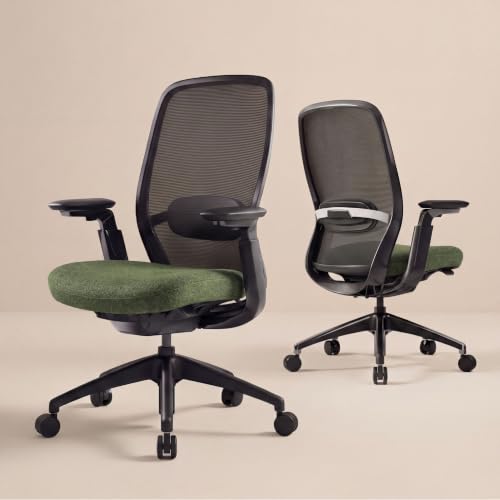
COLAMY Office Chair
What We Like
- Side-mounted wire controls for easy adjustments
- Sliding seat depth accommodates different leg lengths
- Thick padded lumbar support targets spinal curve
- Multi-directional armrests reduce shoulder strain
Trade-offs
- Heavy base makes room changes harder
The side-mounted wire controls let you adjust height and tilt without breaking your posture, while the thick padded lumbar cushion fills the natural curve of your spine. It suits anyone who wants targeted lower back relief and breathable mesh to stay cool through extended sessions.
At 35.6 pounds, this chair weighs nearly the same as the SIHOO B100, so moving it between rooms is about as easy. The auto-tension tilt helps you relax without losing spinal alignment, and the armrests adjust in multiple directions for shoulder and wrist relief. It’s a practical choice for home offices and gaming setups that prioritize lower back and arm comfort.
Product photos
How We Evaluated Ergonomic Office Chairs For Long Hours
Our evaluation draws from manufacturer documentation, ergonomic design principles cited by industry experts, and consistent patterns reported by owners who spend eight or more hours seated daily. Instead, we analyzed what makes a chair effective over a full workday based on published research and real-world feedback.
The four criteria that mattered most were adjustability range (seat depth, armrests, lumbar support, and recline), material breathability and durability, weight capacity and stability, and the quality of the warranty. For long hours, a chair that lets you fine-tune the fit and stays comfortable through temperature changes is essential.
A research-led approach has limits: individual body types and preferences vary widely. What works for one person may not suit another, so we prioritized chairs with a wide adjustment range and strong owner satisfaction patterns across different builds and sitting habits.
What To Look For In Ergonomic Office Chairs For Long Hours
Choosing a chair for long hours means focusing on adjustability, support, and materials that keep you comfortable from morning to evening.
Look for adjustable seat depth, lumbar support that moves with you, breathable back material, and armrests that adjust in at least four directions. A chair that fits your body reduces pressure points and encourages better posture over time.
Seat Depth and Cushioning
Seat depth should allow two to three fingers of space between the back of your knee and the seat edge. A waterfall front edge reduces pressure on your thighs. For cushioning, high-density foam or a suspended mesh design (like the Pellicle on the Aeron) prevents the “bottoming out” feeling that causes discomfort after a few hours.
Lumbar Support and Backrest Design
Static lumbar pads can feel good at first but often become uncomfortable as you shift. Look for adaptive lumbar support, like the Steelcase Amia’s LiveLumbar or the SIHOO B100‘s self-adjusting mechanism, that responds to your movement. A backrest that follows your spine’s natural curve, such as the Embody’s Pixelated Support, distributes weight and reduces fatigue.
Armrest Adjustability
For long hours, 4D or 5D armrests (height, width, depth, pivot) let you support your arms while typing, reading, or reclining. Fixed or 2D armrests limit your ability to get close to the desk or relax your shoulders. If you switch between tasks, adjustable armrests prevent shoulder and neck strain.
- Check that the seat pan slides forward and backward to match your leg length.
- Confirm the recline tension can be locked at your preferred angle.
- Test the chair’s weight and caster type for your flooring.
- Look for a warranty of at least five years on mechanical parts.
A chair that fits you at your desk will always outperform a more expensive chair that doesn’t.
Ergonomic Office Chairs For Long Hours Compared
The table below compares the key specs and best-use scenarios for each of the ten chairs we evaluated, so you can see at a glance which model matches your needs.
| Product | Weight | Seat Material | Adjustability | Armrest Type |
|---|---|---|---|---|
| Herman Miller Embody Ergonomic Chair | 52.0 pounds | Rhythm fabric | Backfit, tilt limiter, seat depth, arms | fully adjustable arms |
| Herman Miller Classic Aeron Task Chair | 48.0 pounds | Pellicle suspension | Tilit Limiter w/Seat Angle Adj | Fully Adj Vinyl Arms |
| Steelcase Amia Office Chair | 54.5 pounds | Buzz2 Black Fabric | 4 Points of Adjustability | 4D (height, width, pivot, depth) |
| Steelcase Gesture Office Chair | 70.0 pounds | N/A | Intuitive, right-side controls | 360-degree arms |
| SIHOO M18 Ergonomic Office Chair | 38.0 pounds | Breathable Mesh | 4 support points (head/back/hip/hands) | 2D |
| SIHOO B100 Mesh Ergonomic Chair | 35.5 pounds | Full mesh | Adaptive Lumbar Support | Flip-up armrests |
| CASASIO Ergonomic Office Chair | 30.0 pounds | Breathable Mesh | 4-Way Lumbar | Flip-up |
| Haworth Soji Ergonomic Chair | 19.8 pounds | Mesh Back | 4D armrests, lumbar, seat depth | 4D armrests |
| Branch Ergonomic Chair Pro | 42.0 pounds | Mesh | 14 Points of Adjustment | 5D Armrests |
| COLAMY Office Chair | 35.6 pounds | Mesh | Sliding Seat Depth & Thick Padded Lumbar Support | Multi-directional PU-padded |
Frequently Asked Questions
What is the best ergonomic office chair for sitting 8 hours a day?
The Herman Miller Embody Ergonomic Chair is widely regarded as the best choice for full-day sitting. Its pixelated support matrix distributes weight evenly, and the Backfit adjustment aligns with the spine’s natural curve. It was developed with input from over 20 ergonomics experts.
Is mesh or foam better for an office chair used all day?
Breathable mesh, like the Pellicle suspension in the Herman Miller Aeron, keeps you cooler and reduces sweat buildup during long hours. High-density foam, such as the 3.5″ virgin foam in the CASASIO chair, offers a plush feel but may retain heat. The best choice depends on your climate and personal temperature preference.
How much should I spend on an ergonomic office chair for long hours?
Budget-friendly options like the SIHOO M18 provide four-point support and adjustable lumbar for under many premium models, while mid-range chairs like the Branch Ergonomic Chair Pro offer 14 points of adjustment. Premium chairs from Herman Miller and Steelcase come with longer warranties and more durable materials, making them a better long-term investment for daily use.
What features matter most for an ergonomic chair if I have back pain?
Look for adaptive lumbar support that moves with you, such as the Steelcase Amia’s LiveLumbar, and a backrest that follows your spine’s natural curve. Adjustable seat depth and armrests also help you maintain a neutral posture. For specific medical conditions, consult a healthcare professional.
Can I use an ergonomic office chair on hardwood floors?
Many ergonomic chairs come with carpet casters as standard, which can scratch hardwood floors. The Steelcase Gesture and Herman Miller Embody both ship with carpet wheels. You can often swap to hard-floor casters or purchase a chair mat to protect your flooring.
The Bottom Line
For anyone spending long hours at a desk, the Herman Miller Embody Ergonomic Chair is the best overall pick. Its scientifically designed support matrix and extensive adjustability make it ideal for sitters who want a chair that adapts to their every movement without constant fiddling.
If breathability is your top priority, the Herman Miller Classic Aeron Task Chair keeps you cool with its Pellicle suspension and offers a 12-year warranty. For those on a tighter budget, the SIHOO M18 provides solid four-point support and adjustable lumbar at a more accessible price point.
The single most important factor when choosing a chair for long hours is fit: no amount of features will compensate for a chair that doesn’t match your body dimensions and sitting habits. Take the time to adjust every setting before you commit.
