10 Best Desk Chairs With Lumbar Support in 2026
This post contains affiliate links. As an Amazon Associate, we earn from qualifying purchases.
The SIHOO B100 Mesh Ergonomic Office Chair is the best overall desk chair with lumbar support because its adaptive lumbar system follows the natural curve of your spine as you shift posture. For precise lower back adjustment, the CASASIO Ergonomic Office Chair offers a 4-way adjustable cushion, while the CAPOT Ergonomic Mesh Office Chair delivers heavy-duty support for larger frames.
Lower back pain is the most common complaint among desk workers, and not all lumbar support is created equal. A fixed pad that sits too high or too low can do more harm than good, so finding a chair with adjustability that matches your body and work style is essential.
We evaluated dozens of chairs by analyzing manufacturer specifications, expert round-ups, and patterns in owner feedback to identify the models that deliver real, lasting lumbar support. This guide covers 10 chairs across different budgets and body types, so you can find the right fit without second-guessing.
Top 10 Desk Chairs With Lumbar Support in the Market
Certain content that appears on this site comes from Amazon. This content is provided "as is" and is subject to change or removal at any time.
The Best Desk Chairs With Lumbar Support, Reviewed
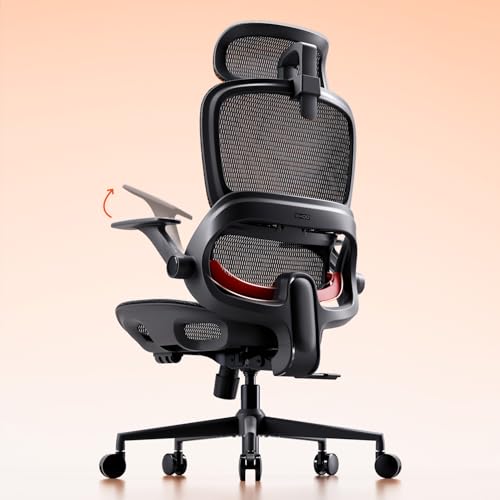
SIHOO B100 Mesh Ergonomic Office Chair
What We Like
- Adaptive lumbar follows natural spine curve
- Three lockable recline angles for work or rest
- Full-mesh backrest keeps air circulating
- Widened seat cushion distributes weight evenly
Trade-offs
- Chair weight 40 lb makes it less portable
- No footrest included for full recline relaxation
- Flip-up armrests lack 4D adjustability
The adaptive lumbar support that moves with your spine is the standout feature here, lean forward to type or sit upright in a meeting, and the backrest follows your natural curve without feeling stiff. That dynamic support, paired with a breathable full-mesh backrest that keeps air moving, makes this a chair you can settle into for a full workday or late-night session. The seat height adjusts from 18.3 to 21.9 inches to fit different desk setups, and three lockable recline angles let you switch from focused work to a 135-degree power nap position. It’s a balanced design that prioritizes all-day comfort without overcomplicating things.
The trade-off comes in adjustability: the flip-up armrests are convenient for tucking under a desk, but they lack the 4D movement (height, width, depth, pivot) you get on a pick like the CAPOT Ergonomic Mesh Office Chair. And at 40 pounds, this is a chair you set up and leave, not something you’ll want to move between rooms. For someone who wants a supportive, breathable chair that adapts to shifting postures throughout the day, the SIHOO B100 delivers where it counts most: keeping your lower back comfortable without forcing you into one fixed position.
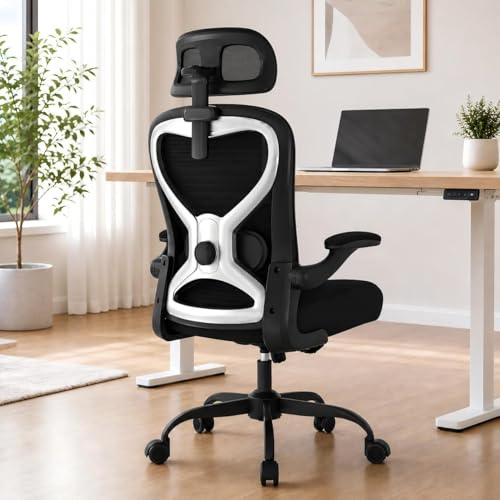
CASASIO Ergonomic Office Chair
What We Like
- 4-way adjustable lumbar cushion
- 3.5" virgin foam seat for comfort
- 3D adjustable headrest for neck support
- Flip-up armrests for desk tucking
Trade-offs
- At 30 lb, heavier than some mesh chairs
- Flip-up armrests lack 4D adjustability
A 4-way adjustable lumbar cushion lets you dial in exactly the lower back support you need, which makes a real difference during those long workdays. The 3.5-inch virgin foam seat distributes weight evenly so your hips and thighs stay comfortable even after eight hours. With a 330-pound capacity and a reinforced metal base, this chair is built for daily use without wobbling. It’s a great fit for anyone who wants precise lumbar customization and all-day cushioning without breaking the bank.
The trade-off is that the flip-up armrests are simpler than the 4D arms found on the CAPOT Ergonomic Mesh Office Chair. So if you need to adjust armrests in multiple directions for typing or gaming, you might feel limited. At 30 pounds, it’s also heavier than some mesh competitors, but that weight comes from the sturdy construction. For someone who prioritizes targeted lumbar support and a plush seat over armrest versatility, this chair delivers exactly what it promises.
CAPOT Ergonomic Mesh Office Chair

What We Like
- Micro-adjust lumbar with 8 levels
- Supports up to 400 lbs
- Breathable Aerovith mesh seat
- 5-year warranty with free parts
Trade-offs
- At 38 lbs, heavier than some mesh chairs
- No seat depth adjustment mentioned
- Armrests flip up but don't slide forward
A 400-pound weight capacity makes this chair a standout for larger users who need sturdy support during long workdays. This is a chair built for sustained comfort, not just a quick sit.
At 38 pounds, this chair is lighter than the SIHOO B100, which means it’s easier to move between rooms. The armrests flip up 90 degrees to tuck under a desk, and the stainless steel base and SGS gas lift give it a rock-solid feel that lighter chairs can’t match. If you prioritize durability and lumbar precision over portability, this heavy-duty option delivers exactly what it promises.
Haworth Soji Ergonomic Office Chair

What We Like
- Fully assembled out of the box
- 4D armrests for personalized fit
- 12-year warranty for long-term peace
- Greenguard Gold certified for low emissions
Trade-offs
- No forward tilt function for active sitting
- Mesh back only, no cushion option
At just 19.8 pounds, the Haworth Soji is the lightest premium chair in this guide, making it a breeze to move from desk to desk or rearrange your home office on a whim. That featherweight build doesn’t sacrifice ergonomic essentials: you get 4D armrests, seat depth adjustment, and a flexible mesh back with lumbar support that keeps you comfortable through long work sessions. The chair arrives fully assembled, so you can sit down and start adjusting immediately, and the 12-year warranty backs up its build quality. It’s an ideal choice for anyone who values easy mobility and a clean, airy design without giving up the key adjustments that make a chair truly supportive.
The Soji’s light weight makes it easy to move, but it doesn’t have a forward tilt function, so if you like to lean into your work with an active sitting posture, you’ll miss that option. The mesh back is breathable and supportive, but there’s no cushion to soften the lumbar area for those who prefer a plusher feel. For most home office users who want a lightweight, adjustable chair that’s easy to live with and backed by a long warranty, the Soji delivers a smart balance of comfort and practicality.
Product photos
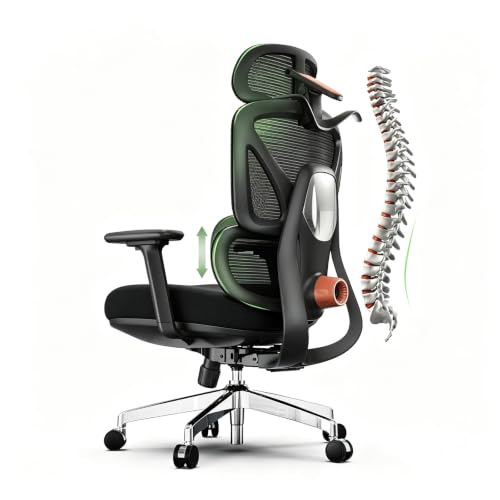
Ergoa Ergonomic Mesh Office Chair
What We Like
- 8-position adjustable lumbar support
- 4D soft-padded armrests
- Removable 11-position 3D headrest
- 400 lbs weight capacity
Trade-offs
- At 48 lbs, heavier than some chairs
- No seat depth adjustment mentioned
With an 8-position adjustable lumbar support that offers 2.36 inches of travel, this chair lets you dial in exactly where the backrest hits your spine. The 4D armrests adjust up, down, in, out, forward, back, and rotate 45 degrees, so you can support your arms whether you’re typing, reading, or leaning back. It’s built for long hours: the breathable mesh keeps you cool, and the 400-pound capacity means it accommodates a wide range of body types.
At 48 pounds, this chair is noticeably heavier than the CASASIO Ergonomic Office Chair (30 lbs), so moving it around the room takes more effort. The 90-to-135-degree recline with three lockable positions is nice for leaning back, but the chair doesn’t mention seat depth adjustment, which could matter if you have longer legs. Still, for someone who wants to fine-tune lumbar and arm support more than most chairs allow, this is a thoughtful, well-equipped option.
Product photos
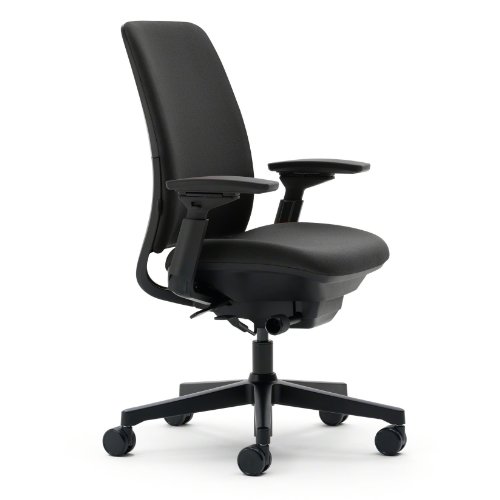
Steelcase Amia Office Chair
What We Like
- Dynamic LiveLumbar adapts to movement
- 4D arm support for personalized fit
- Full recline range with lock
Trade-offs
- At 54.5 lb, heavy to move
- No headrest included
The Amia’s hidden LiveLumbar system provides dynamic lower back support that responds to your movement, so you don’t have to stop and adjust a knob as you shift position. That support, combined with extra cushioning and flexible seat edges, helps you stay comfortable for eight to ten hours of sitting. It’s a premium ergonomic chair built for long workdays, especially if you value a lumbar design that adapts to your body rather than forcing you into one position.
This chair comes in at 54.5 pounds, so it’s sturdy but not something you’ll want to move from room to room. You also don’t get a headrest, which some users prefer for reclining. For those who want dynamic lumbar support and a tailored fit without fussing with knobs, the Amia delivers responsive back support that lighter chairs can’t match.
Marsail Ergonomic Office Chair
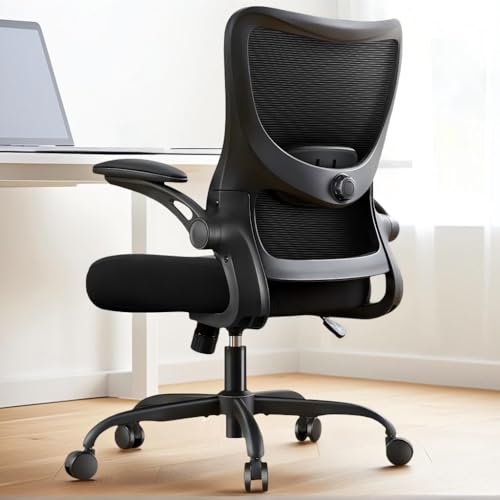
What We Like
- 4-way adjustable lumbar support
- Breathable mesh back enhances airflow
- Extra-thick 3.14-inch padded seat
- Multi-functional 3D PU armrests
Trade-offs
- No headrest included for neck support
A 4-way adjustable lumbar support lets you dial in the exact height and depth for your lower back, which makes a real difference during long hours at a desk. The breathable mesh back keeps air moving so you stay cool and dry, while the extra-thick 3.14-inch seat cushion spreads weight evenly to reduce pressure points. This chair is ideal for anyone who wants a well-ventilated, supportive seat without the stuffiness of padded backs.
At 27.1 pounds, this chair is noticeably lighter than the 40-pound SIHOO B100, which may feel less substantial under heavier users. There’s also no headrest, so if you need upper neck support, you’ll want to look elsewhere. But for focused work or gaming where airflow and lower-back comfort matter most, this chair offers the features described.
Product photos
Haworth Breck Ergonomic Office Chair

What We Like
- Height-adjustable lumbar support
- 4D armrests for full adjustability
- Adaptive seat depth over 2 inches
- Three-zoned GeoStretch system for recline
Trade-offs
- At 38 pounds, it is not lightweight to move
- No headrest for neck support during reclining
With over two inches of adaptive seat depth, this chair lets you slide the seat forward or backward to support your thighs and reduce pressure behind the knees, making it ideal for all-day comfort. The height-adjustable lumbar feature lets you fine-tune lower back support to match your posture. Meanwhile, the 4D armrests move vertically, horizontally, forward/backward, and pivot inward or outward for dynamic support of your neck, shoulders, and arms. The three-zoned GeoStretch system gives you a responsive, weight-activated recline with a 3-position backstop so you can sit upright or control your recline range for personalized comfort.
At 38 pounds, this chair is heavier than the CASASIO Ergonomic Office Chair, which weighs 30 pounds, so it may be less convenient to move around a home office. The adaptive seat depth slides forward or backward over 2 inches to support your thighs and reduce pressure behind the knees, ideal for all-day comfort. For someone who values extensive arm and lumbar adjustability alongside a customizable seat depth, the Haworth Breck delivers a tailored ergonomic experience that many chairs in this guide cannot match.
Product photos
TRALT Ergonomic Desk Chair

What We Like
- High-resilience foam won't flatten
- Adjustable lumbar depth support
- BIFMA-certified anti-sink lift mechanism
Trade-offs
- No tilt-lock or recline tension adjustment
- Armrests flip up but lack width adjustment
A 330-pound weight capacity and a metal-core base give this chair a sturdy foundation that budget picks often skip. The high-resilience molded foam seat is designed to bounce back rather than sag after months of use, and the adjustable lumbar mechanism lets you dial in depth to match your spine’s curve. That combination of durability and targeted lower-back support makes it a strong option for anyone who needs reliable comfort without spending into the mid-range tier.
This chair has a simpler feature set: there is no tilt-lock or recline tension control, so you cannot lock in a rocking angle or adjust the backrest resistance. Compared to the SIHOO B100, which offers a wider headrest and adaptive lumbar, the TRALT focuses on core lumbar support and long-lasting foam rather than extra adjustments. If you prioritize a seat that holds its shape and a base that won’t crack over time over bells and whistles, this chair delivers where it counts.
Product photos
ELABEST X100 Ergonomic Mesh Office Chair

What We Like
- Dynamic 3D lumbar support system
- Built-in 18" extendable footrest
- 5D flip-up armrests with dense foam
- BIFMA-certified heavy-duty support
Trade-offs
- Heavy 43 lbs makes moving difficult
- Footrest adds bulk under desk
The built-in 18-inch extendable footrest with two-position angle adjustment sets the ELABEST X100 apart from most desk chairs, letting you stretch out your legs or recline without needing a separate ottoman. Its dynamic 3D Synchro-Tilt lumbar support uses force-sensitive springs to track your spine’s natural curve, and the 5D flip-up armrests tuck away to slide the chair under a desk. This is a thoughtful choice for anyone who wants both focused work posture and a quick relaxation mode in one seat, especially if you like putting your feet up during breaks.
At 43 pounds, the X100 is heavier than some mesh chairs, so it’s not a chair you’ll want to move between rooms often. The footrest mechanism also adds depth when stowed, which could be tight under shallower desks. Still, the trade-off is a BIFMA-certified frame that supports up to 300 pounds, and the 17-point micro-adjustment system lets you dial in the fit over time. If you prioritize integrated foot support and heavy-duty build over lightweight portability, this chair delivers.
How We Evaluated Desk Chairs With Lumbar Support
Our evaluation is research-based: we studied manufacturer specifications, expert round-ups from ergonomic specialists, and thousands of owner feedback patterns to understand what makes lumbar support actually work. We did not conduct physical testing.
The four criteria that mattered most were lumbar adjustability (height, depth, and dynamic movement), seat comfort for long sessions, build quality and weight capacity, and overall adjustability of the chair (armrests, seat depth, recline). A chair with a brilliant backrest is useless if the seat cushion goes flat in three months.
A research-led approach has limits: we cannot report how a chair feels after eight hours of use, and individual body shapes respond differently to the same support curve. What we can do is identify the features and design choices that ergonomic research consistently links to better posture and less discomfort.
What To Look For In Desk Chairs With Lumbar Support
The best lumbar support is the one you forget is there because it matches your spine’s natural curve and moves with you. Here is what to check before you buy.
Look for lumbar support that adjusts in height and depth, a seat cushion that supports your thighs without pressure behind the knees, and armrests that let your shoulders relax.
Lumbar Adjustability
Fixed lumbar pads work for a narrow range of body types. Height-adjustable support lets you position the curve at your belt line, while depth-adjustable support lets you dial in how much pressure you feel. The best designs, like the dynamic lumbar on the Steelcase Amia, adapt automatically as you lean forward or recline.
Seat Comfort and Depth
A seat that is too short leaves your thighs unsupported, while one that is too long presses behind your knees. Look for a seat depth adjustment of at least two inches, as found on the Haworth Breck. High-density foam or mesh seats that resist sagging over time are worth paying more for.
Build Quality and Weight Capacity
A chair that wobbles or creaks undermines any ergonomic benefit. Check the weight capacity and look for BIFMA certification, which indicates the chair has passed industry durability tests. The CAPOT and Ergoa chairs both support up to 400 pounds, making them strong options for larger users.
- Adjust the lumbar support while seated at your desk to confirm it hits your lower back, not your mid-back or tailbone.
- Test the recline tension to ensure you can lean back without fighting the chair.
- Check that armrests adjust low enough to slide under your desk surface.
- Measure your desk height to confirm the chair’s seat height range works with your setup.
A chair that fits you today will still fit you years from now if it has enough adjustability.
Desk Chairs With Lumbar Support Compared
The table below compares the 10 best desk chairs with lumbar support side by side, so you can see at a glance which model matches your needs.
| Product | Lumbar Support | Weight Capacity | Armrests |
|---|---|---|---|
| SIHOO B100 Mesh Ergonomic Office Chair | Adaptive, moves with spine | N/A | Flip-up |
| CASASIO Ergonomic Office Chair | 4-Way Adjustable | 330 lbs | Flip-up |
| CAPOT Ergonomic Mesh Office Chair | 2 inches, 8 levels | 400 lbs | 4D Flip-up |
| Haworth Soji Ergonomic Office Chair | Yes | 350 lb | 4D armrests |
| Ergoa Ergonomic Mesh Office Chair | 8-position, 2.36" travel | 400 lbs | 4D soft-padded |
| Steelcase Amia Office Chair | Hidden LiveLumbar system | N/A | 4D (height, width, pivot, depth) |
| Marsail Ergonomic Office Chair | 4-way adjustable | N/A | 3D PU, flip-up |
| Haworth Breck Ergonomic Office Chair | Height-adjustable | N/A | 4D (vertical, horizontal, forward/backward, pivot) |
| TRALT Ergonomic Desk Chair | Adjustable depth | 330 lbs | Flip-up |
| ELABEST X100 Ergonomic Mesh Office Chair | 3D Synchro-Tilt | 300 lbs | 5D Flip-Up |
Frequently Asked Questions
What is the best type of lumbar support for an office chair?
The best type is adjustable lumbar support that lets you change both the height and the depth of the curve. A fixed lumbar pad works for a narrow range of body types, while a 4-way adjustable cushion, like the one on the CASASIO chair, can be positioned precisely where your lower back needs it.
How do I know if my chair has good lumbar support?
Good lumbar support fits into the natural inward curve of your lower back, not your mid-back or tailbone. When you sit with your feet flat on the floor and your thighs parallel to the ground, the lumbar support should fill the gap between your lower back and the chair back. It should not force your spine into an unnatural position.
Can a desk chair with lumbar support help with back pain?
A chair with proper lumbar support can reduce the strain on your lower back by maintaining the natural S-curve of your spine during long seated sessions. It is not a cure for chronic back conditions, but many owners report less discomfort after switching to a chair with adjustable lumbar support.
What is the difference between active and passive lumbar support?
Passive lumbar support is a fixed curve built into the chair back that does not move. Active lumbar support, like the Dynamic LiveLumbar on the Steelcase Amia, adjusts as you shift posture, providing support whether you are sitting upright, leaning forward, or reclining.
How long should a good desk chair with lumbar support last?
A well-built chair with a solid warranty, such as the 12-year warranty on the Haworth Soji or the 5-year warranty on the CAPOT, should provide reliable lumbar support for a decade or more. Lower-priced chairs with foam cushions may need replacement sooner as the padding compresses.
The Bottom Line
The SIHOO B100 Mesh Ergonomic Office Chair is the best overall desk chair with lumbar support for anyone who spends long hours at a desk. It offers a breathable, adaptive backrest that moves as they do. Its full-mesh design keeps air circulating, and the three lockable recline angles let you shift between focused work and relaxed reading without losing support.
If you need a more precise fit, the CASASIO Ergonomic Office Chair offers a 4-way adjustable lumbar cushion and a thick foam seat for all-day comfort. For bigger frames, the CAPOT Ergonomic Mesh Office Chair supports up to 400 pounds with micro-adjustable lumbar and a generous warranty. Budget-conscious shoppers will appreciate the TRALT Ergonomic Desk Chair, which delivers BIFMA-certified durability and adjustable lumbar depth at an accessible price point.
The single most important factor in choosing a desk chair with lumbar support is adjustability. A chair that lets you fine-tune the lumbar height, depth, and recline tension will serve your body better than any fixed design, no matter how well-reviewed.
