10 Best Office Chairs For Scoliosis in 2026
This post contains affiliate links. As an Amazon Associate, we earn from qualifying purchases.
For those managing scoliosis, the right office chair can make the difference between a productive day and one spent shifting uncomfortably. The CASASIO Ergonomic Office Chair earns our Best Overall spot with its 4-way adjustable lumbar cushion and 3D headrest, while the CAPOT Ergonomic Mesh Chair offers the best micro-adjust lumbar for fine-tuning support.
Scoliosis introduces a unique challenge: your spine’s natural curve means that a one-size-fits-all chair back simply will not work. You need targeted lumbar support that can be positioned precisely, a headrest that accommodates your posture, and a seat that keeps you aligned without pressure points.
This guide is based on a thorough analysis of specifications, manufacturer documentation, expert ergonomic round-ups, and patterns found in owner feedback. We focused on the features that matter most for scoliosis support to help you choose with confidence.
Top 10 Office Chairs For Scoliosis in the Market
Certain content that appears on this site comes from Amazon. This content is provided "as is" and is subject to change or removal at any time.
The Best Office Chairs For Scoliosis, Reviewed
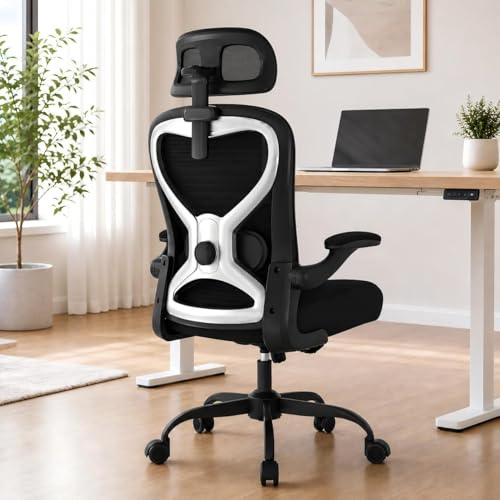
CASASIO Ergonomic Office Chair
What We Like
- 4-way adjustable lumbar cushion
- 3D adjustable headrest for neck support
- 330 lb weight capacity
- Virgin foam seat for all-day comfort
Trade-offs
- Flip-up armrests lack depth/width adjustment
- No footrest for reclining or stretching legs
A dual-direction adjustable lumbar cushion lets you dial in exactly the lower back support you need, reducing fatigue during long work sessions. The virgin foam seat distributes weight evenly to prevent soreness even after eight-plus hours, while the 3D adjustable headrest cradles your neck and head as you shift positions. This chair supports up to 330 pounds with a reinforced metal base and premium casters, making it a stable, reliable choice for anyone who spends their workday seated.
The trade-off is the flip-up armrests, which tuck neatly under a desk but don’t offer the depth or width adjustments some users prefer for precise arm positioning. The Herman Miller Embody provides fully adjustable arms, but the CASASIO still delivers targeted lumbar and head support. For someone who needs customizable lower back relief, this chair hits the sweet spot.
CAPOT Ergonomic Mesh Office Chair

What We Like
- Micro-adjust lumbar with 8 levels
- 400 lb weight capacity
- Cooling Aerovith mesh seat
- 5-year warranty with free parts
Trade-offs
- Heavier than some alternatives at 38 lb
- No built-in footrest for reclining
The micro-adjust lumbar support offers 2 inches of travel across 8 levels, letting you dial in precise pressure relief along the L1-L5 spine. This lessens lower back pressure by 50%, a real help for anyone who spends long hours at a desk. The seat uses exclusive Aerovith Mesh for continuous cooling and reduces pelvic pressure by 20%, while the stainless steel base supports up to 400 lbs.
At 38 pounds, this chair is heavier than the CASASIO model, which may make it less convenient to move around your workspace. The backrest locks at 90, 110, or 125 degrees, but there is no built-in footrest for deeper reclining. For someone who prioritizes precise lumbar customization over portability, the CAPOT delivers focused support that many scoliosis users will appreciate.
Herman Miller Embody Ergonomic Chair
What We Like
- Backfit adjustment aligns with spine's curve
- Pixelated support distributes weight evenly
- Developed with input from 20+ physicians
- Breathable Rhythm fabric prevents heat buildup
Trade-offs
- At 52 pounds, it is heavy to move
- Carpet casters only, not suited for hard floors
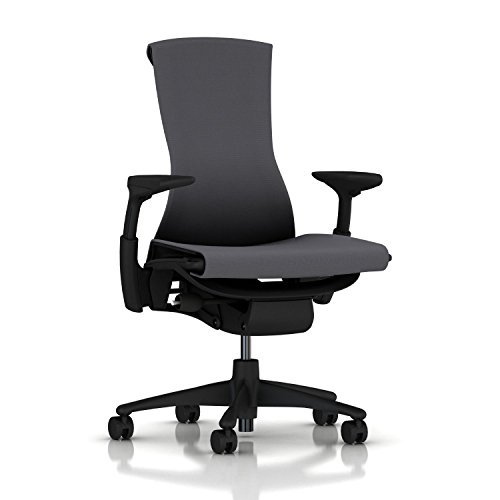
More than 20 physicians and PhDs in biomechanics and ergonomics contributed to this chair’s design, so its support is built on expert input rather than guesswork. The Backfit adjustment lets you position the backrest to match your spine’s natural curve, which matters greatly when scoliosis makes neutral posture a daily challenge. Pixelated support, a dynamic matrix that conforms to your micro-movements, distributes weight evenly across the seat and back, reducing pressure points that can aggravate discomfort. The Rhythm fabric also breathes, preventing heat buildup during long sits.
At 52 pounds, the Embody is noticeably heavier than many competitors like the CASASIO (30 pounds), so rearranging your workspace takes more effort. For someone who prioritizes physician-informed, highly adjustable spinal alignment and even pressure distribution over portability, this chair delivers a level of thoughtful engineering that few others match.
Product photos
TRALT Ergonomic Desk Chair

What We Like
- High-resilience foam resists flattening over time
- Adjustable lumbar matches spine's natural curve
- Breathable mesh back prevents heat buildup
- BIFMA-certified lift prevents sinking
Trade-offs
- No tilt lock or recline adjustment mentioned
- Armrests flip up but lack 3D or 4D adjustment
A 330-pound weight capacity and a reinforced nylon base with a metal core mean this chair is built to handle heavy daily use without cracking or wobbling. The high-resilience molded foam seat is the standout feature: unlike budget foam that flattens within months, this one bounces back consistently, so you won’t experience that “bottoming out” discomfort during long work sessions. The adjustable lumbar support lets you dial in the depth to match your lower back’s natural curve. Breathable mesh back keeps air flowing, preventing the sticky heat buildup that plagues faux leather chairs.
The main trade-off is the lack of a tilt lock or recline mechanism, which means you can’t lock the chair in a leaned-back position for changing posture throughout the day. The flip-up armrests are convenient for sliding under a desk, but they don’t offer the multi-directional adjustments found on some competitors. For someone who needs a durable, supportive seat that stays comfortable over years of use without extra frills, this chair delivers where it counts.
Product photos
ELABEST X100 Ergonomic Mesh Chair

What We Like
- 5D flip-up armrests with dense EVA foam
- 38% better airflow with Dual-Stripe AirMesh
- 3D Synchro-Tilt Lumbar with force-sensitive springs
Trade-offs
- At 43 lb, it's heavier than many mesh chairs
- At 43 lb, heavier than some mesh chairs like TRALT (28 lb)
The ELABEST X100’s 3D Synchro-Tilt Lumbar uses force-sensitive springs that auto-track your spine’s natural curvature, certified for reducing fatigue over 12-hour days. That lumbar, paired with a lockable depth adjustment, height adjustment, and rotation, actively supports movement rather than locking you in place. For anyone needing dynamic spinal support during long work sessions or gaming marathons, this chair is designed to promote better posture and circulation through active recovery.
The trade-off comes in its weight: at 43 pounds, it’s noticeably heavier than the TRALT Ergonomic Desk Chair (28 lb), so moving it between rooms takes more effort. That heft comes from a BIFMA-certified structure built to support up to 300 lbs, with a heavy-duty Grade-4 central column and a nylon base with whisper-quiet rolling casters. Owners note the chair feels planted and stable during long sessions, and the extra mass contributes to a sense of durability that lighter chairs sometimes lack.
SIHOO M18 Ergonomic Office Chair
What We Like
- Four-point support (head, back, hip, hands)
- Adjustable lumbar and headrest
- Breathable mesh backrest keeps you cool
- Tilt lock with adjustable resistance
Trade-offs
- 2D armrests limit elbow positioning
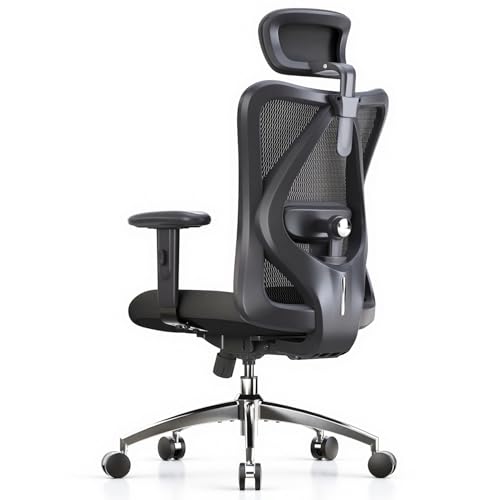
The SIHOO M18 targets four contact points, head, back, hips, and hands, so each area gets dedicated support during long sits. The adjustable lumbar and headrest let you dial in alignment, and the breathable mesh backrest keeps air moving. The seat height range fits people from 5’6″ to 6’2″, so most average-height users can find a comfortable posture without fighting the chair.
The SIHOO M18 supports up to 330 pounds and passes a 2505-pound static pressure test, so it’s built to handle heavier users without wobbling. The armrests adjust in two directions only, which means you can’t slide them in or out to fine-tune elbow placement like you can with the four-direction arms on the CAPOT Ergonomic Mesh Office Chair. For someone who needs precise arm support, that lack of depth adjustment might feel limiting.
Marsail Ergonomic Office Chair

What We Like
- Lumbar adjusts forward/backward and up/down
- 3D armrests for customized arm support
- Breathable mesh back promotes airflow
Trade-offs
- 2D headrest only tilts and height adjusts
- Armrests lack forward/backward slide adjustment
The lumbar support moves 1.18 inches forward and backward plus 2.16 inches up and down, giving you a rare degree of fine-tuning right where lower back support matters most. That kind of adjustability means you can dial in support that follows your spine’s natural curve rather than forcing your back into a preset shape. The 3D armrests add another layer of customization, letting you find the optimal arm position for relaxed shoulders during long work sessions. A 3.14-inch thick foam seat and breathable mesh back round out a package built for all-day comfort without overheating.
The headrest is a 2D design that adjusts for height and tilt but doesn’t move forward or backward, so taller users might find it doesn’t quite reach where they need it. Compared to the CAPOT Ergonomic Mesh Office Chair with its 4D flip-up arms and 400-pound capacity, the Marsail offers a different set of adjustments. For someone whose top priority is dialing in lumbar position precisely, this chair delivers that focus better than most options in this guide.
Product photos
HOLLUDLE Ergonomic Mesh Office Chair

What We Like
- 3D adjustable lumbar support targets spine
- Breathable mesh prevents overheating
- 350 lbs capacity for larger frames
- 5-year warranty for long-term peace of mind
Trade-offs
- At 43.7 lb, it is heavy to move
- No seat depth adjustment for shorter legs
The fully 3D adjustable lumbar support moves up, down, forward, backward and rotates, so you can dial in exactly where the backrest meets your spine. The breathable mesh keeps air flowing, which matters when you’re sitting for long stretches, and the 350-pound capacity gives larger bodies a sturdy option. It suits users from 5’3″ to 6’2″, making it a flexible pick for a range of heights.
The trade-off is weight: at 43.7 pounds, this chair isn’t something you’ll want to slide around the room every day. Compared to the Marsail Ergonomic Office Chair at 30.4 pounds, it’s noticeably heavier. There’s also no seat depth adjustment, so if your legs are on the shorter side, the front edge of the cushion might press behind your knees. Still, for someone who needs deep lumbar customization and doesn’t plan to move the chair often, this model delivers where it counts.
NEO CHAIR Ergonomic Office Chair
What We Like
- Breathable mesh back for airflow
- Adjustable lumbar and headrest support
- Waterfall seat reduces leg pressure
- Flip-up armrests save space
Trade-offs
- No adjustable seat depth for leg length
- Armrests flip up but don't adjust width/angle
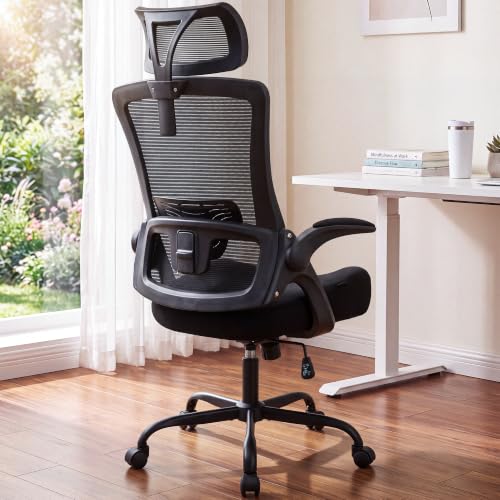
The breathable mesh backrest is the standout feature here, keeping air moving so you don’t get sticky during long work sessions. With adjustable lumbar support and a height-adjustable headrest, you can dial in the posture support that matters most for scoliosis comfort. The waterfall seat edge also helps take pressure off the backs of your legs, which makes a real difference when you’re seated for hours. This chair suits someone who prioritizes temperature regulation and wants focused lumbar and head support without a complicated setup.
Adjustability has a limitation: the flip-up armrests are handy for tucking the chair under a desk, but they don’t move in or out or pivot to match your elbows. The NEO CHAIR’s lumbar support is adjustable, while the CASASIO Ergonomic Office Chair offers 4-way lumbar adjustment. At 24.5 pounds, this chair is lighter than many other mesh office chairs, which can make it easier to reposition. For someone who needs basic ergonomic support in a lightweight, breathable package, this is a practical pick.
Product photos
GABRYLLY Ergonomic Office Chair
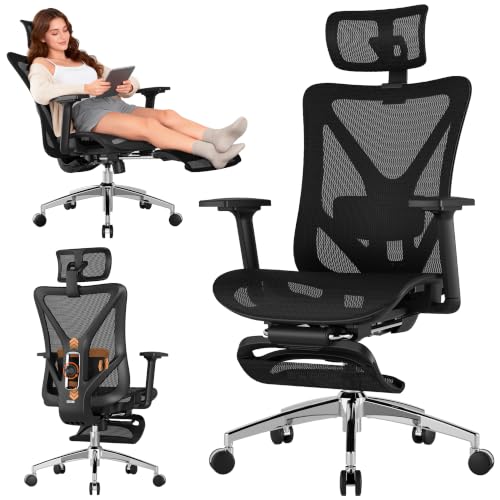
What We Like
- 2-way adjustable lumbar support
- 135° recline with lock positions
- Retractable steel footrest for leg support
- 3D adjustable armrests reduce strain
Trade-offs
- Mesh design offers less cushioning for long sits
- Footrest adds weight and complexity
A 2-way adjustable lumbar support that moves 3 inches vertically and 1.6 inches horizontally means you can dial in the exact lower back pressure point that helps with scoliosis discomfort. The 135-degree recline with three lockable positions lets you shift posture throughout the day, and the retractable steel footrest extends 18.1 inches so you can fully stretch your legs during breaks. This chair is built for someone who needs active back support and the ability to change positions frequently, all within a sturdy steel base rated for 300 pounds.
The all-mesh back is breathable and keeps you cool, but it offers less cushioning than a padded seat, which some users may miss for marathon work sessions. The footrest and reclining mechanism add some weight and complexity to the assembly, but for someone who values adjustable lumbar support and the ability to recline with leg support, this chair delivers targeted relief.
Product photos
How We Evaluated Office Chairs For Scoliosis
Our evaluation began with a deep dive into product specifications and manufacturer documentation for dozens of chairs. We then cross-referenced these details against expert ergonomic recommendations for spinal alignment and the common concerns shared by owners in long-term feedback.
The four criteria that mattered most were lumbar adjustability (direction and range of motion), headrest customization (height, depth, and angle), seat resilience and depth, and overall build quality including weight capacity and warranty. For scoliosis, the ability to dial in support at multiple points along the spine is non-negotiable.
Because this is a research-led evaluation rather than a hands-on test, we focused on what can be verified through documentation and consistent owner reports. We prioritized chairs with clear, measurable adjustment ranges and durable construction over those with vague claims.
What To Look For In Office Chairs For Scoliosis
Finding a chair that works with your spine’s unique curve starts with understanding which adjustments actually matter. Here is what to prioritize.
Look for a chair with lumbar support that moves in at least two directions (up/down and in/out). It should also have a headrest that adjusts in three dimensions. The seat should support your full thigh without pressure. And the weight capacity should exceed your needs for long-term durability.
Lumbar Support Adjustability
The lumbar support is the most critical feature for scoliosis. A fixed lumbar bump will not align with your specific curve. Look for chairs offering at least two-way adjustment (height and depth), with three-way or four-way being even better. The CASASIO and CAPOT chairs both offer exceptional lumbar customization, with the CAPOT providing eight micro-adjustment levels for precise positioning.
Headrest and Neck Support
Many chairs skimp on the headrest, offering only height adjustment. For scoliosis, you need a headrest that also moves forward and backward (depth) and tilts. This allows you to support your neck without forcing your head forward or backward, maintaining the natural curve of your upper spine. The CASASIO’s 3D adjustable headrest is a standout feature here.
Seat Comfort and Depth
A seat that is too deep will press behind your knees; one too shallow will not support your thighs. Look for a waterfall front edge to reduce pressure on your legs. The NEO CHAIR’s waterfall seat is a good example. Seat foam resilience matters too: the TRALT’s high-resilience foam resists flattening, which helps maintain consistent support over long days.
- Check that the seat depth allows two to three fingers of space between the back of your knees and the seat edge.
- Ensure the lumbar support can be positioned at the exact height of your curve’s apex.
- Verify the headrest can be adjusted to support your neck without tilting your head forward.
- Confirm the chair’s weight capacity exceeds your body weight by at least 20 percent.
- Look for a warranty of at least three years, as this indicates confidence in the chair’s durability.
The single most important rule: if you cannot adjust the lumbar support to fit your curve precisely, keep looking.
Office Chairs For Scoliosis Compared
The table below compares the ten chairs side by side, focusing on the adjustment ranges and features most relevant to scoliosis support.
| Product | Weight Capacity | Lumbar Support | Armrests | Weight |
|---|---|---|---|---|
| CASASIO Ergonomic Office Chair | 330 lbs | 4-way adjustable | Flip-up | 30.0 pounds |
| CAPOT Ergonomic Mesh Office Chair | 400 lbs | 2 inches, 8 levels | 4D Flip-up | 38.0 pounds |
| Herman Miller Embody Ergonomic Chair | N/A | Backfit Adjustment | Fully adjustable | 52.0 pounds |
| TRALT Ergonomic Desk Chair | 330 lbs | Adjustable depth | Flip-up | 28.0 pounds |
| ELABEST X100 Ergonomic Mesh Chair | 300 lbs | 3D Synchro-Tilt | 5D Flip-Up | 43.0 pounds |
| SIHOO M18 Ergonomic Office Chair | 330 lbs | Adjustable Lumbar Support | 2D | 38.0 pounds |
| Marsail Ergonomic Office Chair | 330 lbs | 1.18" in/out, 2.16" up/down | 3D | 30.4 pounds |
| HOLLUDLE Ergonomic Mesh Office Chair | 350 lbs | 3D (up/down, forward/back, rotate) | 3D | 43.7 pounds |
| NEO CHAIR Ergonomic Office Chair | N/A | Adjustable lumbar support | Flip-Up | 24.5 pounds |
| GABRYLLY Ergonomic Office Chair | 300 lbs | 2-way (3" vertical, 1.6" horizontal) | 3D | 38.7 pounds |
Frequently Asked Questions
What type of office chair is best for scoliosis?
The best office chair for scoliosis has highly adjustable lumbar support that moves in multiple directions (up, down, in, out). It also needs a headrest that adjusts in height and depth. The seat should support your thighs without pressure. Chairs like the CASASIO and CAPOT offer this level of customization.
Should I get a mesh or padded chair for scoliosis?
Both can work, but mesh backs are often preferred because they conform to your spine’s shape without creating pressure points. A mesh back also keeps you cool during long hours. The seat itself should have adequate padding, like the virgin foam in the CASASIO or the high-resilience foam in the TRALT.
How important is a headrest for scoliosis?
A headrest is very important if you experience neck or upper back tension from scoliosis. It should adjust in height, depth, and tilt so you can maintain a neutral neck position. A fixed or height-only headrest may not provide the support your specific curve needs.
Can a chair with a high weight capacity help with scoliosis?
Yes, a higher weight capacity often indicates a sturdier frame and more durable components. This stability is important for maintaining proper alignment, especially if you shift positions frequently. The CAPOT supports up to 400 pounds, and the CASASIO supports 330 pounds.
What should I do if my scoliosis causes pain while sitting?
Start by ensuring your chair’s lumbar support is positioned at the apex of your curve. Adjust your seat height so your feet rest flat on the floor. If pain persists, consider a chair with a recline feature like the GABRYLLY to change positions throughout the day, and consult a healthcare professional for personalized advice.
The Bottom Line
The CASASIO Ergonomic Office Chair is our Best Overall pick for most people with scoliosis. Its 4-way lumbar cushion and 3D headrest allow you to dial in support at the two most critical contact points. It is the strongest all-around choice for long workdays.
If your scoliosis requires extremely precise lumbar positioning, the CAPOT Ergonomic Mesh Chair with its eight micro-adjustment levels is worth the investment. For those who want physician-informed design and even weight distribution, the Herman Miller Embody offers a different approach to spinal alignment.
The single most important factor when choosing a chair for scoliosis is lumbar adjustability. No other feature matters as much. Find a chair that lets you position the lumbar support exactly where your curve needs it, and you will have solved the hardest part of the equation.
