10 Best Work Chairs For Lower Back Pain in 2026
This post contains affiliate links. As an Amazon Associate, we earn from qualifying purchases.
The SIHOO M18 Ergonomic Office Chair earns our best overall spot for its four-point ergonomic support and adjustable lumbar and headrest that target lower back pain from multiple angles. For those needing a long-lasting foam seat, the TRALT Ergonomic Desk Chair is our best durable foam pick, while the Marsail Ergonomic Office Chair offers the most adjustability for fine-tuning your fit.
Lower back pain at a desk often comes from chairs that don’t support the spine’s natural curve or allow you to shift positions throughout the day. The right chair provides adjustable lumbar support, a breathable back to reduce heat, and armrests that let your shoulders relax.
This guide is based on a careful review of specifications, manufacturer documentation, and patterns in owner feedback. We focused on the features that directly affect lower back comfort to help you find a chair that fits your body and your workspace.
Top 10 Work Chairs For Lower Back Pain in the Market
Certain content that appears on this site comes from Amazon. This content is provided "as is" and is subject to change or removal at any time.
The Best Work Chairs For Lower Back Pain, Reviewed
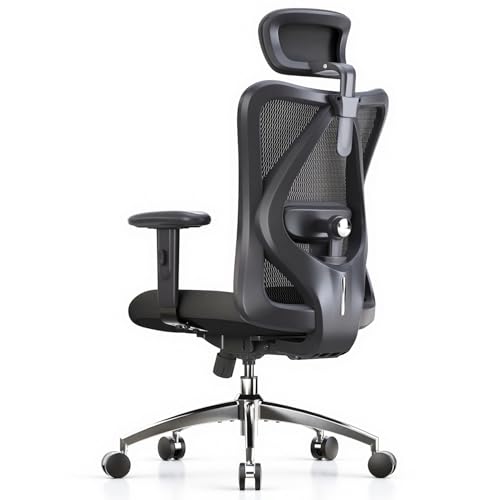
SIHOO M18 Ergonomic Office Chair
What We Like
- Four-point ergonomic support (head/back/hip/hands)
- Adjustable lumbar and headrest
- Breathable mesh back keeps you cool
- Three recline positions with tilt lock
Trade-offs
- Armrests only adjust in 2 directions, not 3D
- At 38 pounds, heavier than some mesh chairs
Supporting up to 330 pounds and fitting people from 5’6″ to 6’2″, this chair covers a broad range of body types without feeling cramped or flimsy. You get four contact points, head, back, hips, and hands, so you can tweak the headrest height, lumbar support, and back angle to match your frame. That adjustability is a real help when lower back pain makes long sitting sessions a challenge, and the breathable mesh back keeps you from overheating while you work.
The armrests adjust in two dimensions, which covers height and width for most desk work. If you need to fine-tune arm height and width independently, you might wish for more range. At 38 pounds, the chair is on the heavier side, so moving it between rooms takes a little more effort.
TRALT Ergonomic Desk Chair with Lumbar Support

What We Like
- High-resilience foam won't flatten
- Adjustable lumbar relieves lower back pressure
- Breathable mesh back prevents heat buildup
- BIFMA-certified anti-sink lift mechanism
Trade-offs
- No 4D armrests for extra adjustability
- Flip-up armrests lack width or depth adjustment
A high-density molded foam seat that resists flattening even after a year of daily use sets this chair apart from budget options that sag within months. The adjustable lumbar support lets you dial in the depth to match your spine’s natural curve, genuinely easing lower back pressure during long work sessions. It’s paired with a breathable mesh back that keeps you cool and a BIFMA-certified lift that won’t sink over time, so it’s a smart pick for anyone who needs lasting cushioning and reliable support without moving to premium price territory.
The seat depth of 17.3 inches is carefully calibrated to support your thighs while leaving the recommended 2-4 finger gap behind your knees, protecting circulation and reducing pressure. Compared to the SIHOO M18, which offers a wider cushion but doesn’t highlight the same foam durability, the TRALT focuses on long-term seat resilience and a sturdy metal-core base rated for 330 pounds. If keeping that cushioned feel for years is your priority, this chair delivers where others fade.
Product photos
Marsail Ergonomic Office Chair with Mesh Back

What We Like
- 3D adjustable armrests for custom arm support
- Lumbar adjusts 1.18" in/out and 2.16" up/down
- Breathable mesh back keeps you cool
- 3.14" thick foam seat for all-day comfort
Trade-offs
- 2D headrest adjusts only up and down and tilt
The lumbar support on this chair moves 1.18 inches forward and backward and 2.16 inches up and down, so you can dial in exactly where it hits your lower back. That kind of precision makes it a strong pick for anyone whose back pain shifts with posture or who shares a chair with a partner of different height. The 3D armrests pivot, slide, and flip up, giving you room to find a comfortable arm angle when typing or leaning back. Mesh back keeps air moving, and the 3.14-inch thick foam seat cushions long hours without sagging.
The 3D armrests move forward, backward, and swivel left or right, so you can dial in arm support for typing, reading, or leaning back without your elbows drifting off the pads. The lumbar support shifts 1.18 inches forward and backward and 2.16 inches up and down, which means you can match the curve exactly to your lower back rather than settling for a fixed bump. Reviewers note that the 2D headrest adjusts up and down and tilts, so it works well for most seated positions, though very tall users may find the range limited.
Product photos
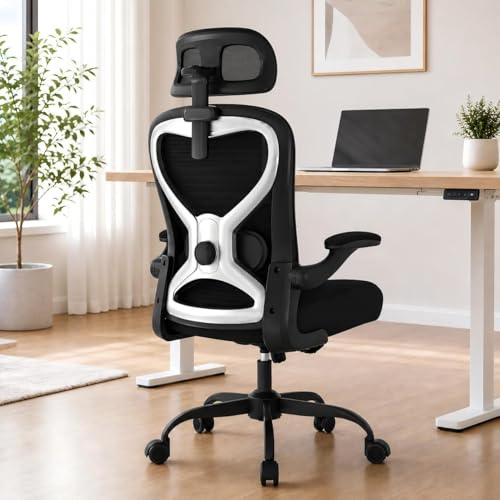
CASASIO Ergonomic Office Chair for Long Hours
What We Like
- 4-way adjustable lumbar cushion
- 3.5" virgin foam for all-day comfort
- 3D adjustable headrest for neck support
- Flip-up armrests for small spaces
Trade-offs
- At 30 pounds, not the lightest to move
- No seat depth adjustment for varied leg lengths
A 3.5-inch virgin foam seat that distributes weight evenly means you can sit for eight-plus hours without that familiar ache in your hips and thighs. That’s the kind of comfort that makes the CASASIO a natural pick for anyone logging long workdays at a desk. The contoured mesh back follows your spine, and the dual-direction adjustable lumbar cushion lets you dial in support exactly where your lower back needs it. A 3D headrest cradles your neck during typing, reading, or leaning back to think, and the tilt-and-rock function moves with your body to relieve tension and improve circulation. For someone who rarely leaves their chair before lunch, these features add up to genuine all-day relief.
A compact 20-by-20-inch seat may feel tight if you’re taller or carry more weight, and the lack of seat depth adjustment means you can’t shift your sitting position forward or back. The SIHOO M18 has a wider 27.5-inch seat and tilt lock for a more locked-in posture, while the CASASIO prioritizes cushion softness and rocking motion over adjustability. It’s a chair built for steady, extended comfort rather than quick reconfiguring, and that focus makes it ideal for long hours if the seat dimensions work for your frame.
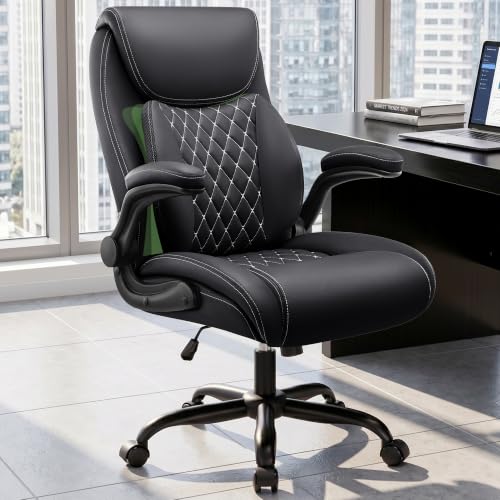
Stella Mia Office Chair with 3D Lumbar Support
What We Like
- Dual-layer 3D lumbar adapts to posture
- 350 lb weight capacity for larger users
- 90° flip-up armrests save desk space
- Tool-free assembly in 15-20 minutes
Trade-offs
- No headrest for neck support
The Stella Mia’s dual-layer lumbar system is the key reason it stands out for lower back pain relief. Unlike a fixed backrest, this independent adaptive layer actively conforms to your spine and shifts as you move, delivering targeted support throughout the day. With a 350-pound capacity and commercial-grade PU leather that resists wear and stains, it’s built for durability and easy maintenance. The 120° rocking function with adjustable tension lets you fine-tune your recline without leaving your seat, making it a strong pick for anyone who spends long hours at a desk and needs consistent lumbar comfort.
The SIHOO M18 offers 2D armrests and a headrest, but the Stella Mia focuses more on lumbar innovation than overall customization. Its compact design slides under standard desks easily, though taller users might find the seat depth limiting. If your priority is lower back relief and you value a sturdy, easy-to-clean chair over a full range of ergonomic tweaks, this is a focused and effective choice.
Product photos
MOLENTS Ergonomic Mesh Office Chair

What We Like
- Adjustable lumbar up/down and forward/backward
- 3D adjustable armrests reduce arm and shoulder strain
- Breathable mesh keeps you cool during long hours
- Three recline positions from 90° to 120°
Trade-offs
- No headrest included for upper neck support
- Assembly requires removing base leg from seat package
The MOLENTS Ergonomic Mesh Office Chair puts lower back comfort first with a lumbar support that adjusts both up and down and forward and backward, so you can dial in exactly where the support hits. That kind of tailored lower back relief is rare at this level, and it pairs with a breathable mesh back that keeps you from getting sticky during a full workday. The seat is generously sized at 19.8 inches wide with a depth of 18.9 inches, giving most body types room to shift positions. Three recline positions let you lean back from 90° to 120°, which helps take pressure off your spine when you need a quick reset. This chair suits anyone who spends long hours at a desk and wants certified comfort without the premium price tag of high-end ergonomic brands.
There’s no headrest, so if you like to fully recline and rest your neck, you’ll need to look elsewhere. The SIHOO M18 includes a headrest and supports up to 330 pounds, while the MOLENTS focuses purely on lumbar and arm support without that upper extension. Assembly also requires a bit of attention: the base leg is packed inside the seat, so you’ll need to remove it before attaching the gas lift. If you need a shorter or higher gas lift, the manufacturer will swap it when you send your order number. For someone whose main priority is lower back support and breathability, this chair delivers where it counts.
Product photos
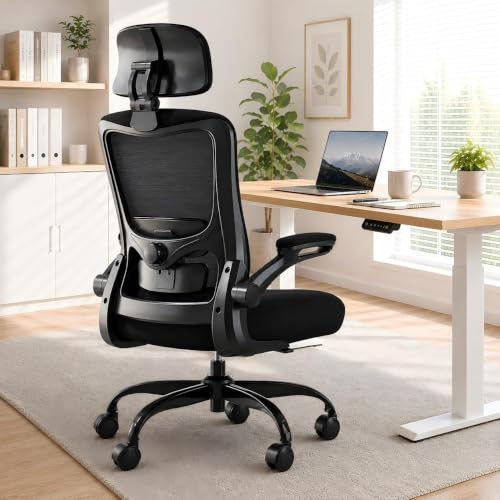
Zeonsit Ergonomic Office Chair for Lower Back Relief
What We Like
- Breathable mesh back reduces heat buildup
- Sturdy frame supports up to 330 lbs
- 5-year warranty for long-term confidence
Trade-offs
- Flip-up armrests lack depth adjustment
- No seat angle adjustment for reclining
It’s paired with a 3.5-inch virgin foam cushion that helps relieve pressure. A breathable mesh back reduces heat buildup, so it’s designed for anyone who spends hours seated and wants targeted relief without sacrificing airflow or comfort.
The flip-up armrests only go up and down. They don’t slide forward or backward, so you might not find the perfect arm position if you’re very tall or prefer a closer reach. The SIHOO M18 offers 2D armrests, but the Zeonsit gives you more lumbar adjustability and less arm customization. It’s a focused pick for lower back support, not a full ergonomic workstation.
Product photos
Herman Miller Classic Aeron Task Chair
What We Like
- Breathable Pellicle suspension keeps you cool
- Kinemat tilt allows natural body movement
- Waterfall seat edge reduces thigh pressure
- 12-year warranty with Born-On-Date sticker
Trade-offs
- At 48 pounds, it's heavy to move
- Lumbar pad is not height-adjustable
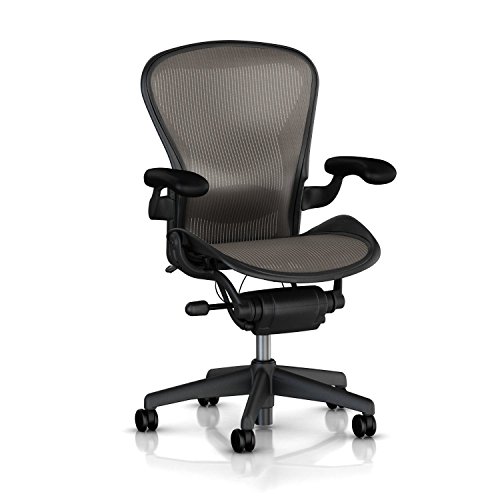
The Pellicle suspension is the standout feature here, it’s a breathable mesh that actively dissipates body heat, so you stay cool even during long work sessions. This chair is built for someone who runs warm or sits for hours and wants airflow, not sweat. The Kinemat tilt mechanism lets your whole body move naturally as you recline, which helps keep your spine aligned and reduces pressure points. The waterfall front edge also takes load off your thighs, improving circulation and keeping you more alert. It’s a premium design that prioritizes comfort through smart engineering rather than just padding.
At 48 pounds, this isn’t a chair you’ll want to slide around your room every day. The SIHOO M18 weighs 38 pounds, so the Aeron is noticeably heavier and less portable. The lumbar support comes as a pad that is described as highly adjustable, so if you need precise lower back positioning, you may find it offers the customization you need. Still, for someone who values breathability and a responsive, natural recline, the Aeron delivers a refined experience that justifies its premium status.
Product photos
Steelcase Amia Office Chair
What We Like
- Hidden LiveLumbar adapts to your movement
- 4D arm support for personalized positioning
- Extra cushioning for 8-10 hour comfort
Trade-offs
- At 54.5 lb, it's heavy to move around
- No headrest for those who need neck support
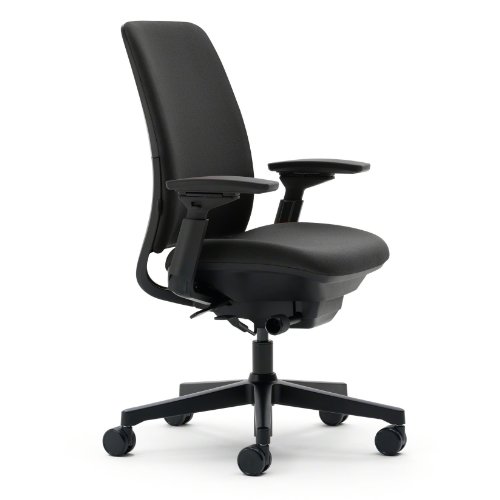
The hidden LiveLumbar system inside the backrest moves with you, so every shift in posture brings fresh lower back support without you having to adjust a knob. That dynamic response makes this a chair you can sit in for a full workday, the flexible seat edges and extra cushioning help keep pressure points happy for eight to ten hours. It’s built for someone who wants support that adapts, not just a static pad you push against.
At 54.5 pounds, the Amia is noticeably heavier than a mesh chair like the Haworth Breck (38 pounds), so moving it between rooms or under a desk takes real effort. You also don’t get a headrest, which matters if you lean back to rest your neck. But if your priority is lower back support that moves with you, this chair delivers that in a way few others do.
Haworth Breck Ergonomic Office Chair

What We Like
- Height-adjustable lumbar for personalized lower back support
- 4D armrests adapt to neck, shoulders, and arms
- Adaptive seat depth reduces pressure behind knees
- Weight-activated recline with three backstop positions
Trade-offs
- At 38.0 pounds, it's heavier to move around
- No headrest included for upper neck support
A height-adjustable lumbar support lets you fine-tune lower back positioning to match your posture, so you’re not stuck with a one-size-fits-all curve. The Breck suits anyone who wants to dial in their fit from the ground up. The seat slides forward or backward over two inches, the 4D armrests move in every direction, and the recline offers three locked positions so you can sit upright or lean back without guessing. It’s built for the person who knows exactly how they want to sit and refuses to compromise.
At 38 pounds, this chair is heavier than the TRALT (28 pounds), so moving it around may require more effort. The SIHOO M18 includes a headrest and a simpler 2D armrest, but the Breck gives you more lower-back and arm customization without a headrest.
Product photos
How We Evaluated Work Chairs For Lower Back Pain
This evaluation is based on product specifications, manufacturer documentation, expert round-ups, and patterns in owner feedback. It focuses on what makes a chair effective for supporting the lower back during long seated hours.
The three criteria that mattered most were lumbar support adjustability, seat comfort and durability, and overall ergonomic adjustability. A lumbar support that moves up and down and in and out can match your spine’s curve, while a seat that stays firm prevents pressure points. Armrests and headrest adjustability also play a role in keeping your whole body aligned.
We also considered weight capacity, build quality, and warranty length as signs of long-term value. A research-led evaluation has limits. It cannot capture how a chair feels over a full workday for every body type, but it can identify the chairs with the best chance of providing relief based on design and features.
What To Look For In Work Chairs For Lower Back Pain
The right chair for lower back pain supports your spine’s natural S-curve and lets you change positions easily. Focus on lumbar support that adjusts, a seat that stays comfortable for hours, and enough overall adjustability to fit your body.
Adjustable Lumbar Support
Look for lumbar support that moves both up and down and in and out. A fixed lumbar pad may hit the wrong spot on your back, making pain worse. Some chairs, like the Steelcase Amia, use dynamic lumbar that adapts as you move, while others offer a cushion you can position yourself.
Seat Comfort and Foam Quality
A seat that flattens after a few months won’t help your lower back. High-resilience foam, like the 3.5″ virgin foam in the CASASIO or the BIFMA-certified foam in the TRALT, holds its shape longer. A waterfall seat edge reduces pressure behind your knees, which helps you sit deeper and maintain better posture.
Overall Ergonomic Adjustability
- Armrests that adjust in height and width let your shoulders relax.
- A headrest that moves up and down and tilts supports your neck when you recline.
- Seat depth adjustment prevents pressure behind the knees for taller users.
- Recline tension and lock let you shift positions without losing support.
A chair that fits you in three key spots, lumbar, seat, and armrests, will do more for your back than any single feature.
Work Chairs For Lower Back Pain Compared
The table below compares our top picks side by side, focusing on the features that matter most for lower back pain relief.
| Product | Lumbar Support | Armrests | Weight |
|---|---|---|---|
| SIHOO M18 Ergonomic Office Chair | Adjustable Lumbar Support | 2D adjustable | 38.0 pounds |
| TRALT Ergonomic Desk Chair with Lumbar Support | Adjustable depth | Flip-up Armrests | 28.0 pounds |
| Marsail Ergonomic Office Chair with Mesh Back | 1.18" in/out, 2.16" up/down | 3D (forward/back, swivel, flip-up) | 30.4 pounds |
| CASASIO Ergonomic Office Chair for Long Hours | 4-way adjustable | Flip-up armrests | 30.0 pounds |
| Stella Mia Office Chair with 3D Lumbar Support | 3D dual-layer adaptive | 90° flip-up padded | 39.0 pounds |
| MOLENTS Ergonomic Mesh Office Chair | Adjustable Lumbar Support | 3D adjustable | 35.0 pounds |
| Zeonsit Ergonomic Office Chair for Lower Back Relief | 4-Way Adjustable | Flip-Up Arms | 28.0 pounds |
| Herman Miller Classic Aeron Task Chair | Lumbar Pad | Fully adjustable vinyl | 48.0 pounds |
| Steelcase Amia Office Chair | Hidden LiveLumbar system | 4D (height, width, pivot, depth) | 54.5 pounds |
| Haworth Breck Ergonomic Office Chair | Height-adjustable | 4D (vertical, horizontal, forward/back, pivot) | 38.0 pounds |
Frequently Asked Questions
What type of chair is best for lower back pain?
An ergonomic chair with adjustable lumbar support that moves up and down and in and out is the best choice. Look for a seat with firm, high-resilience foam and armrests that adjust to let your shoulders relax. A breathable mesh back also helps you stay comfortable during long hours.
How do I adjust my office chair for lower back pain?
Start by setting the seat height so your feet rest flat on the floor with your knees at a 90-degree angle. Then adjust the lumbar support so it fits into the curve of your lower back. Finally, set the armrests so your elbows form a 90-degree angle and your shoulders stay relaxed.
Is a mesh or foam chair better for back pain?
Both can work, but mesh backs keep you cooler and often offer more breathable lumbar support. Foam seats provide more cushioning for long hours, but the foam must be high-resilience to avoid flattening. The best choice depends on your climate and how long you sit at once.
Can a chair really fix my lower back pain?
A good chair can reduce the strain that causes lower back pain, but it is not a cure. It supports your spine’s natural curve and lets you change positions, which helps prevent pain from starting or getting worse. For persistent pain, consult a medical professional.
How much should I spend on an ergonomic chair for back pain?
The right budget depends on the features you need. Affordable chairs with good lumbar support start under the premium tier, while high-end models from brands like Herman Miller and Steelcase offer advanced ergonomics and long warranties. Focus on adjustability and build quality rather than a specific price point.
The Bottom Line
The SIHOO M18 Ergonomic Office Chair is our best overall pick for anyone needing a well-rounded ergonomic chair with adjustable lumbar and headrest for all-day desk work. Its four-point support system targets lower back pain from multiple angles without breaking the budget.
If you need a seat that stays comfortable for years, the TRALT Ergonomic Desk Chair offers high-resilience foam that won’t flatten. For those who want maximum adjustability to fine-tune every point of contact, the Marsail Ergonomic Office Chair with its 3D armrests and precise lumbar adjustments is a strong choice.
The single most important factor in choosing a chair for lower back pain is lumbar support that you can adjust to fit your spine’s curve. Everything else, seat foam, armrests, headrest, comes second to that one feature.
