10 Best Lighting For Orchids in 2026
This post contains affiliate links. As an Amazon Associate, we earn from qualifying purchases.
For orchid lovers, the SANSI 300W Full Spectrum Clip Grow Light earns our best overall spot for its full-spectrum coverage and convenient auto timer. The Barrina T1X5 Vertical Grow Light offers versatile multi-directional coverage, while the GooingTop Full Spectrum Desk Grow Light is a strong budget-friendly option. Getting the light right is the most critical factor for getting orchids to rebloom indoors.
Many homes simply don’t offer the bright, indirect light that most orchids need to thrive. Without enough light, leaves stay dark green, and new flower spikes rarely appear. This guide focuses on the specific light qualities that support healthy orchid growth, from color temperature to light intensity.
We researched specifications, manufacturer details, and patterns in owner feedback to build this guide. Our goal is to help you match a grow light to your specific orchid collection and home setup, whether you have a single plant on a desk or a larger display.
Top 10 Lighting For Orchids in the Market
Certain content that appears on this site comes from Amazon. This content is provided "as is" and is subject to change or removal at any time.
The Best Lighting For Orchids, Reviewed
SANSI 300W Full Spectrum Clip Grow Light

What We Like
- Full spectrum 380-800nm
- Auto on/off timer
- Lifetime free bulb replacement
- Energy saving 90%
Trade-offs
- 10W max per head limits coverage
- No dimming adjustment
The SANSI 300W Full Spectrum Clip Grow Light delivers 2000 lumens of light that spans the full 380-800nm range, mimicking natural sunlight to support orchids through every growth stage. Its auto on/off timer with 4, 8, or 12-hour options takes the guesswork out of daily lighting schedules, so your plants get consistent exposure even when you’re away. The clip design and lightweight 1.8-pound build make it easy to position on shelves, desks, or plant stands, bringing professional-grade spectrum to compact spaces without permanent installation.
Each head is limited to 10W, so a large orchid collection may need multiple units. Compared to the Barrina T1X5 Vertical Grow Light, which spreads 50W across five adjustable heads, this clip light focuses its output in a smaller area. The lack of dimming means you can’t fine-tune intensity for sensitive species, but for straightforward, reliable full-spectrum support, this is a smart, low-hassle pick.
Product photos
SANSI 125W Tall Standing Floor Grow Light
What We Like
- 803.46 μmol/s/m² PPFD at 1ft
- CRI≥95 full spectrum 4000K daylight
- Remote control with 0.5-hour fine-tuning
- Adjustable 75.43-86.6 inch stand
Trade-offs
- At 125W, higher electricity draw than smaller lights
- IP65 splash-proof but not fully submersible for hydroponic setups
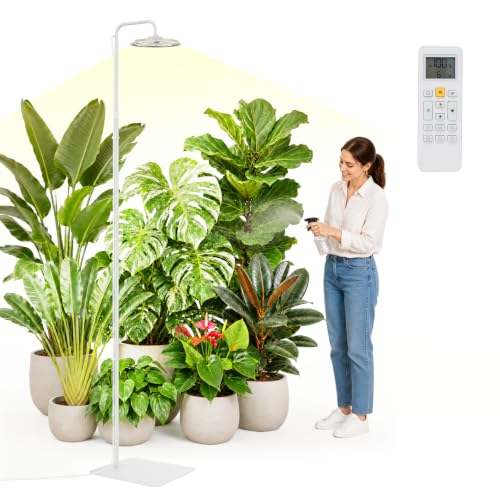
With a PPFD of 803.46 μmol/s/m² at one foot, this SANSI delivers the kind of photosynthetic punch that can push even high-light orchids like vandas and cattleyas into vigorous growth and blooming. The 4000K daylight spectrum with a CRI of 95 or higher mimics natural sunlight closely, so your plants get the full range of wavelengths they need without the harshness of some red-blue-only lights. The adjustable stand reaches from 75.43 to 86.6 inches, making it easy to position the lamp head right above tall specimens or to spread light across a collection of multiple pots. A remote control with 0.5-hour fine-tuning lets you set a custom schedule that matches your orchids’ rest and growth phases, even when you’re away.
At 125 watts, this unit draws more electricity than smaller clip or desk lights, and the tall stand is built for large plants. If your orchid setup is compact or you only have a few small phalaenopsis on a shelf, the Barrina vertical grow light might be a more space-efficient choice. But for anyone with tall, light-hungry orchids or a dedicated growing area where maximum light intensity matters, the SANSI 125W delivers the kind of output that can make a real difference in growth speed and flower quality.
Product photos
Barrina T1X5 Vertical Grow Light
What We Like
- 5 flexible heads for 360° coverage
- High PPFD for accelerated growth
- 5000K full spectrum supports all stages
- Tool-less assembly with mechanical timer
Trade-offs
- Weighted base limits portability
- No dimming control for light intensity
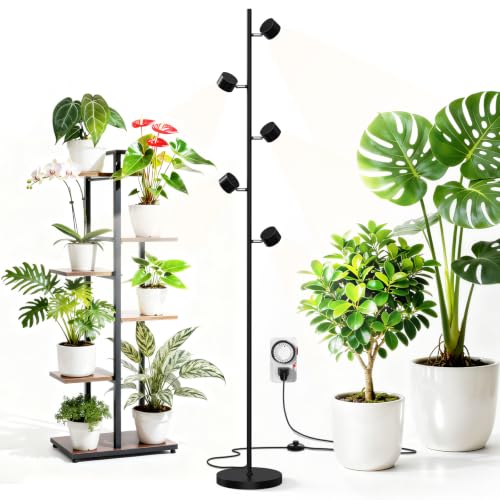
With five rotatable heads that can be angled to focus light on a single plant or spread it around, this Barrina light delivers a PPFD of 456.4 μmol/m²/s at 7.87 inches from each head. That’s enough to boost photosynthesis for indoor plants. The 5000K full spectrum and CRI 97 keep colors true, supporting growth from seedlings to flowering. It’s a practical choice for anyone who wants to light multiple plants in one spot without needing several fixtures.
The trade-off is that 50W total across five heads means each head puts out only 10W, so if you have a room full of large, high-light orchids you might need more than one unit. The mechanical timer holds its settings through power outages, a nice touch for consistency, but the weighted base, while stable, makes it less convenient to move between rooms. Compared to the SANSI 125W tall floor lamp, this Barrina gives you more directional flexibility but less raw wattage for a single plant.
GooingTop Full Spectrum Desk Grow Light
What We Like
- Full spectrum 6000K with CRI 95
- Auto-repeat timer 4/8/12 hours
- Flexible gooseneck and strong clamp
- Dimmable 50%/100% intensity
Trade-offs
- Only 10W power, best for small plants
- Clamp mount limits placement options
- No adjustable height beyond gooseneck
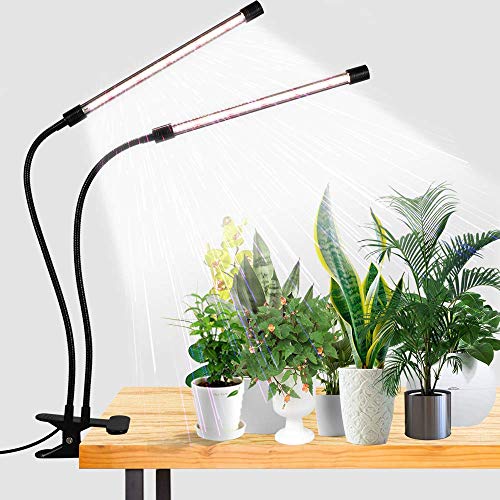
The flexible gooseneck and clamp let you position the light exactly where you need it. The built-in timer repeats your chosen 4, 8, or 12-hour cycle automatically, so you don’t have to remember to turn it on and off every day.
At 10W, this light is only enough for small plants close to the fixture, not a large multi-plant setup or taller varieties. Compared to the SANSI 300W clip grow light, which offers higher power for larger plants, the GooingTop is clearly designed for modest spaces and a tighter budget. If your plant collection fits on a single shelf and you want a simple, energy-efficient light that handles the basics well, this is a practical and affordable way to give them the spectrum they need without the extra cost or complexity.
Barrina T10 Vertical Grow Light
What We Like
- 4FT height for tall plants
- Side lighting design for wide coverage
- High CRI 96 for natural color
- Easy tool-free assembly
Trade-offs
- Fixed 5000K color temperature
- No built-in timer or dimmer
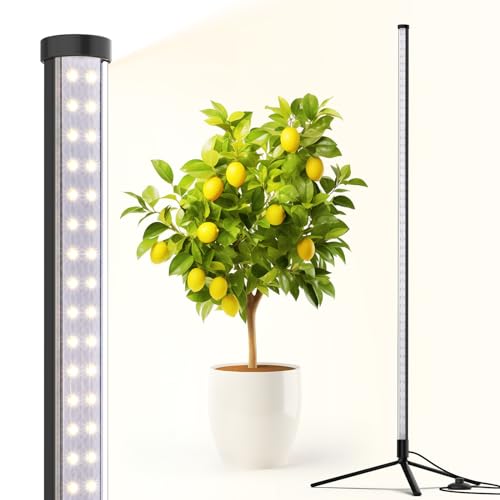
At 42 watts with high PPFD and a 5000K full spectrum that mimics natural daylight, this light delivers even, broad coverage down the full height of a tall or large potted plant. The CRI 96 rating means you’ll see true colors, which matters when you’re staging a corner of your home. For anyone with tall plants on a stand or shelf, this is a clean, purposeful solution that fits neatly into a living space.
Aumtrly Floor Grow Light Full Spectrum

What We Like
- Height adjusts from 17 to 61 inches
- Flexible gooseneck for precise aiming
- Full spectrum with 660nm red light
- 16-hour timer for long light cycles
Trade-offs
- Only one light head for wide plant spreads
With a height range of 17 to 61 inches and a flexible gooseneck, this floor lamp can reach tall plants on high shelves or low ones on a table without you having to move the plant. The 16-hour timer provides an uninterrupted light cycle, and the full spectrum includes 660nm red light that supports plant growth. It suits anyone who wants a single, adjustable light that can follow a tall plant as it grows or serve multiple plants at different heights in the same corner.
The Aumtrly floor grow light weighs just 2.2 pounds, so it’s light enough to move around but you’ll want to set it where it won’t get knocked over at full height. Its single head focuses light on one tall plant or a small vertical cluster, not a wide spread like the multi-head Barrina T1X5. For a single large indoor plant, the adjustable 17-to-61-inch stand and flexible gooseneck let you aim the light exactly where it’s needed.
Product photos
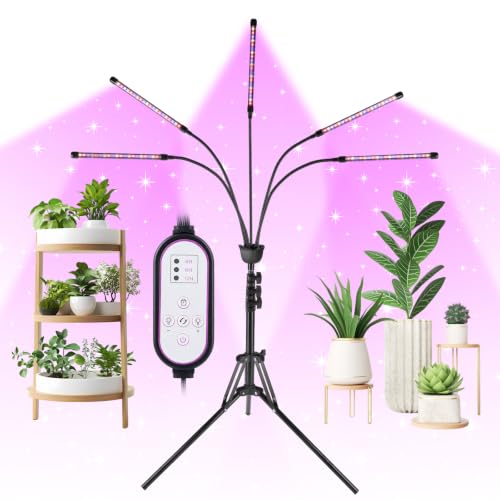
Yentbokj 5-Head Full Spectrum Tripod Grow Light
What We Like
- 5 independently adjustable heads
- Height extends from 15" to 63"
- 3 spectral modes for different growth stages
- 10 brightness levels from 10% to 100%
Trade-offs
- Tripod stand takes up floor space
- Assembly required before first use
The tripod stand extends from 15 inches to over 5 feet, so it works equally well on a tabletop or beside a tall plant stand. With three spectral modes and ten brightness levels, you can dial in a mix of red, blue, and white light that matches the growth stage of your orchids. Then set the timer for 4, 8, or 12 hours and let it run automatically.
Five heads and a full tripod take up more floor space than a single-head clip light would. If you are lighting just one or two small plants, a simpler clip-on like the SANSI 300W would take up less space. But for a collection of plants at different heights and stages, the Yentbokj’s flexibility lets you treat each plant individually without buying multiple fixtures. Assembly takes about two minutes, and the aviation-grade heat sink keeps the LEDs cool for a rated 50,000-hour life.
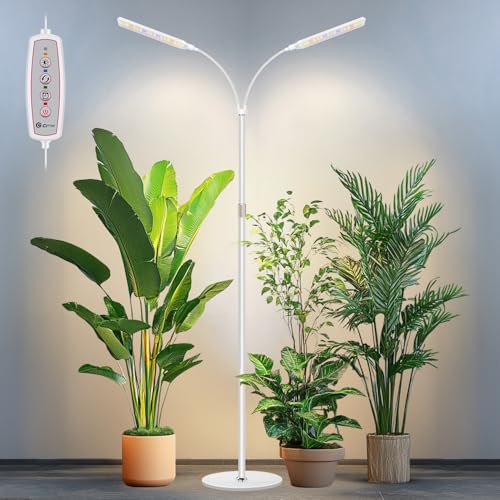
Kullsinss 2-Head Tall Floor Grow Light
What We Like
- Double-head design with 360° flexible gooseneck
- Full spectrum LEDs for all growth stages
- Upgraded smart controller with timer and dimmer
- Tool-free assembly and adjustable height
Trade-offs
- Two removable poles require splicing for height
- No remote control included
A 68.7-inch maximum height and double-head design mean this floor lamp can reach large potted plants and spread light across a wide shelf or grouping. The 114 full-spectrum LEDs include both warm and cool white plus red and blue diodes, so it supports everything from leaf growth to blooming. With three spectra modes and five dimmable levels, you can dial in the exact intensity and color your plants need without blasting them with harsh light. The 360° flexible gooseneck lets you adjust the lighting angle for comprehensive coverage around your plants.
The slim metal base keeps the look clean, but it may tip if the goosenecks are extended far or if you have a top-heavy plant. Placing a decorative book on the base helps, as the instructions suggest. In contrast to the Barrina light, which has five adjustable heads and a 6-foot height, the Kullsinss offers a different approach with its double-head design and flexible goosenecks. It’s a practical choice if you value adjustable coverage and a sleek appearance.
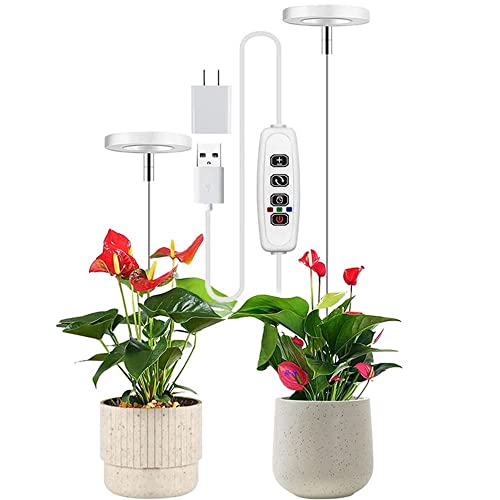
Andy's Orchids LED Grow Light
What We Like
- Compact USB-powered design
- Adjustable height flexible rod
- Sturdy acrylic and metal build
Trade-offs
- Requires a 1-2A USB adapter (not included)
- Small 3.5-inch base limits stability on wide pots
At just 360 lumens from 40 LED beads, this light won’t replace the sun for a full greenhouse, but its compact USB-powered design makes it incredibly easy to tuck into tight spots, think a single orchid on a desk, shelf, or windowsill where you just need a gentle boost. The adjustable rod lets you position the ring right over the leaves, and the warm white glow is pleasant enough for a cozy corner. It’s a perfect fit for anyone who wants a no-fuss, low-profile solution for one or two small orchids in a home office or cozy corner.
At 360 lumens, this light won’t satisfy a large plant or a collection of multiple plants; for that, you’d want a higher-output fixture. Also, the USB adapter isn’t included, so you’ll need to supply your own 1-2A block. If your plant setup is minimal and you value a neat, portable design that blends into your decor, this is a charming option.
Product photos
Kullsinss Wood Grain Grow Light

What We Like
- Faux woodgrain won't crack or peel
- Full spectrum 380-760 nm LEDs
- 5 dimmable levels and 3 spectra
- Height adjustable 10-65 inches
Trade-offs
- No base included, must insert into soil
- Single head limits coverage for multiple plants
Adjusting light intensity and color temperature is straightforward with five dimmable levels and three spectral modes: white, warm white with red, or a mix of both. This flexibility lets you fine-tune conditions for different growth stages or plant species without needing separate fixtures. The white setting works well for general viewing and low-light maintenance, while adding warm white and red encourages flowering and fruiting. The mix mode balances visibility with photosynthetic support, making it easy to switch between aesthetic display and active growth promotion. Reviewers find this range particularly useful for a mixed collection of foliage and blooming plants under one lamp.
Because this lamp has a single head, it focuses light on one tall plant or a small cluster rather than covering a wide shelf. The lack of a base means you insert the stem directly into the soil, which works for potted plants but not for tabletop setups without soil. Unlike the Barrina model with five adjustable heads, the Kullsinss is more focused and design-forward. If your plants are spread out, you might need two units; for a single statement plant, the woodgrain look and adjustable height make it a natural fit for a living room corner.
Product photos
How We Evaluated Lighting For Orchids
This guide is based on product specifications, manufacturer documentation, expert round-ups, and common patterns in owner feedback. We focused on the technical details that matter most for orchid health and the real-world experiences of other plant owners.
The most important criteria for orchid lighting include light spectrum, intensity measured in PPFD, and coverage area. Orchids benefit from full-spectrum light that mimics natural sunlight, particularly in the red and blue wavelengths. We also prioritized fixtures with adjustable timers, as consistent day-length cycles are essential for triggering blooms.
A research-led approach has limits: we cannot verify every owner’s claim or test each light in a controlled environment. However, by cross-referencing multiple sources and focusing on verifiable specs, we can offer a reliable starting point for your purchase decision.
What To Look For In Lighting For Orchids
Choosing the right grow light means understanding what your specific orchid variety needs. Light requirements vary significantly between popular types like Phalaenopsis, Cattleya, and Dendrobium.
Look for full-spectrum lights (380-800nm) with a high CRI (90+) and adjustable brightness or timer settings. Match the light’s PPFD output to your orchid type: low-light orchids need around 100-200 μmol/m²/s, while high-light varieties can handle 300-500 μmol/m²/s.
Light Spectrum and Color Temperature
Full-spectrum lights that cover both the blue (for vegetative growth) and red (for flowering) wavelengths are ideal for orchids. A color temperature around 5000K to 6500K mimics daylight and supports healthy leaf growth and bloom development. Some lights offer separate spectral modes for different growth stages, which can be useful for encouraging flower spikes.
Light Intensity and Coverage
Light intensity is measured in PPFD (Photosynthetic Photon Flux Density), which tells you how much usable light reaches the plant. A higher PPFD means more energy for photosynthesis. Consider the number of plants you have and their light needs. A single-head light may be fine for one or two orchids, while a multi-head or vertical light can cover a larger collection.
Timer and Dimming Controls
Consistent light cycles are crucial for orchid health. A built-in timer that offers 4, 8, 12, or 16-hour settings simplifies your routine. Dimming capability is also valuable because it lets you adjust intensity as your orchids move through different growth stages or as seasonal light changes.
- Check if the timer has an auto-repeat function so you don’t have to reset it daily.
- Look for lights with a “memory” feature that remembers your last settings after a power outage.
- Consider the placement: clip lights are great for shelves, while floor stands work for taller plants.
- Verify the light’s height adjustability to accommodate growing plants.
- For multi-plant setups, count the number of adjustable heads for directing light.
A good rule of thumb: the light should be close enough to the leaves (6-12 inches for most LEDs) without causing heat stress.
Lighting For Orchids Compared
The table below compares the key specs of our top ten orchid grow lights to help you see the differences at a glance.
| Product | Light Spectrum | Timer Options | Height Range |
|---|---|---|---|
| SANSI 300W Full Spectrum Clip Grow Light | Full Spectrum | 4/8/12 Hrs | N/A |
| SANSI 125W Tall Standing Floor Grow Light | Full Spectrum, 4000K | 4/8/12/16 hours | 75.43-86.6 inches |
| Barrina T1X5 Vertical Grow Light | 5000K Full Spectrum | Mechanical Timer | 6 ft |
| GooingTop Full Spectrum Desk Grow Light | Full Spectrum 6000K | 4 8 12Hrs | N/A |
| Barrina T10 Vertical Grow Light | 5000K Full Spectrum | N/A | 50.4 inches |
| Aumtrly Floor Grow Light Full Spectrum | Full Spectrum | 6/12/16H | 17-61 inches |
| Yentbokj 5-Head Full Spectrum Tripod Grow Light | Full Spectrum | 4H / 8H / 12H | 15" to 63" |
| Kullsinss 2-Head Tall Floor Grow Light | Full Spectrum | 4/8/12/16Hrs | 24 to 68.7 inches |
| Andy's Orchids LED Grow Light | Full Spectrum | N/A | 16.5-60 cm |
| Kullsinss Wood Grain Grow Light | Full Spectrum 380-760 nm | 6/12/16 hrs | 10-65 inches |
Frequently Asked Questions
How many hours of light do orchids need per day?
Most orchids need 12 to 16 hours of bright, indirect light each day. Phalaenopsis orchids do well on the lower end of that range, while high-light varieties like Cattleya may need the full 16 hours. A timer helps maintain a consistent day-night cycle.
What color light is best for orchids?
Full-spectrum light that includes both blue and red wavelengths is best for orchids. Blue light supports leaf and root growth, while red light encourages flowering. A light with a color temperature around 5000K to 6500K provides a balanced spectrum that closely mimics natural daylight.
Can I use a regular LED bulb for my orchids?
Regular LED bulbs are not ideal because they lack the specific red and blue wavelengths that plants need for photosynthesis. A full-spectrum grow light is a better choice, as it is designed to emit the right balance of light for healthy growth and blooming.
How far should a grow light be from my orchid?
The distance depends on the light’s intensity. For most LED grow lights, placing them 6 to 12 inches from the top leaves is a good starting point. Watch your orchid’s leaves: if they turn red or brown, the light is too close; if the leaves stay dark green and no new growth appears, move the light closer.
Do orchids need light while they are blooming?
Yes, orchids still need light while blooming, though they may require slightly less intense light. Continue providing 10 to 12 hours of indirect light per day during the blooming period. This helps the flowers last longer and supports the plant’s overall health.
The Bottom Line
The SANSI 300W Full Spectrum Clip Grow Light is our best overall pick for orchid owners who want a reliable, full-spectrum light with a simple timer for one or two plants. If you have a larger collection or tall varieties, the SANSI 125W Tall Standing Floor Grow Light provides higher intensity and adjustable height. For those on a budget, the GooingTop Full Spectrum Desk Grow Light offers great value with its dimmable settings and auto timer.
The most important factor in choosing orchid lighting is matching the light’s intensity and coverage to your specific plants and space. A well-chosen grow light can make the difference between a plant that simply survives and one that thrives and blooms year after year.
