10 Best Chairs For Hip Pain in 2026
This post contains affiliate links. As an Amazon Associate, we earn from qualifying purchases.
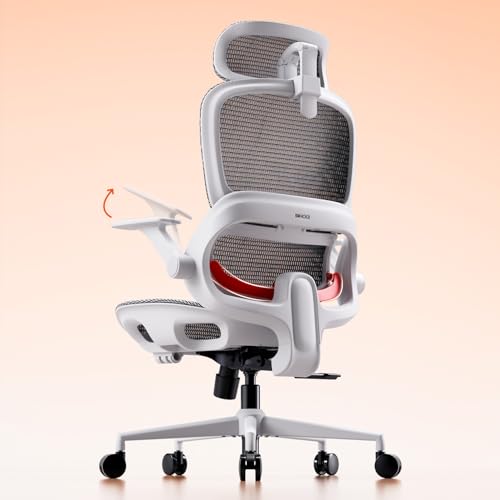
The SIHOO B100 Mesh Ergonomic Office Chair is our best overall pick for hip pain because its widened seat cushion distributes weight evenly while the adaptive lumbar support follows your spine’s natural curve. For those who need precise seat depth adjustment, the COLAMY Ergonomic Office Chair with Sliding Seat is a strong alternative. The CASASIO Ergonomic Office Chair offers the best all-day comfort seat with thick virgin foam padding.
Sitting for hours with hip pain means every detail of a chair matters, from how the seat edge hits your thighs to whether the lumbar support actually stays where you need it. Too often, standard chairs create pressure points that make discomfort worse rather than better.
This guide is built on manufacturer specifications, expert round-ups, and patterns in owner feedback. We focused on the features that directly affect hip comfort: seat cushion design, lumbar support adjustability, seat depth options, and overall build quality. Here are the ten chairs that rise to the top.
Top 10 Chairs For Hip Pain in the Market
Certain content that appears on this site comes from Amazon. This content is provided "as is" and is subject to change or removal at any time.
The Best Chairs For Hip Pain, Reviewed
SIHOO B100 Mesh Ergonomic Office Chair
What We Like
- Adaptive lumbar support follows spine curve
- Breathable full-mesh backrest
- Widened seat cushion for even weight distribution
- Three lockable recline angles
Trade-offs
- No seat depth adjustment for longer legs
- Flip-up armrests lack multi-directional adjustability
A widened seat cushion that spreads weight evenly across hips and thighs makes this chair a smart pick for anyone dealing with hip pain during long workdays. The dynamic lumbar support follows your spine’s natural curve as you shift from leaning forward to sitting upright, so your lower back stays supported without feeling rigid. With a breathable full-mesh backrest that keeps air circulating, you can sit for hours without heat buildup adding to discomfort. The seat height adjusts from 18.3 to 21.9 inches, helping you find a position that aligns your hips properly with your desk.
The trade-off here is that the armrests only flip up rather than adjust in multiple directions, and there’s no sliding seat depth to accommodate longer thighs. If you need more precise fit adjustments, the COLAMY Ergonomic Office Chair with Sliding Seat offers a sliding seat pan and 4D armrests for a more customizable setup. But for most people seeking relief from hip pain, the SIHOO B100’s combination of adaptive lumbar support, a weight-distributing cushion, and cooling mesh backrest delivers balanced comfort that’s hard to beat at this level.
COLAMY Ergonomic Office Chair with Sliding Seat
What We Like
- Sliding seat depth adjusts to leg length
- Breathable Korean mesh back
- 4D armrests for custom positioning
- BIFMA-tested for durability
Trade-offs
- At 45.4 lb, it's heavy to move
- Seat depth adjustment requires manual knob
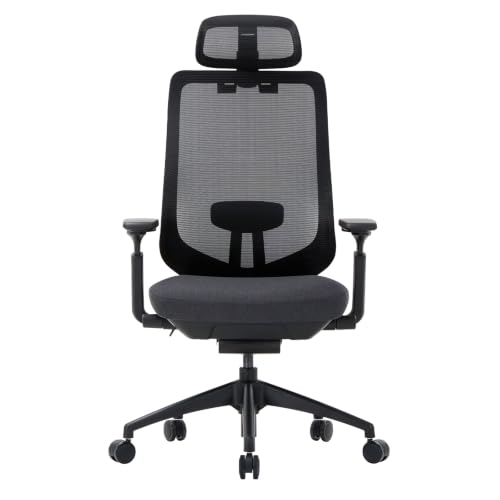
A sliding seat depth that moves from 15.75 to 17.72 inches means you can match thigh support exactly to your leg length, keeping the seat edge from pressing into the backs of your knees. That’s the key feature for anyone with hip pain, because proper thigh support helps maintain a neutral pelvis and reduces pressure on the hips. The 4D armrests let you dial in height, forward/back, side-to-side pivot, and rotation, while the lumbar support rides up and down its track. The breathable Korean mesh back follows your spine and keeps air moving, so long hours at a desk stay comfortable. This chair suits people who need precise seat depth to avoid aggravating their hips.
The trade-off is that adjusting the seat depth requires reaching for a knob under the left side of the cushion, which isn’t as quick as a lever. At 45.4 pounds, it’s heavier than the SIHOO B100 (35.5 lb), so moving it around a room takes more effort. The molded foam cushion is comfortable for full workdays, but if you prefer a softer or more cushioned seat, the mesh back and firm foam might feel less plush. For someone who needs a highly adjustable seat depth and solid lumbar support, this chair delivers where it matters most.
Product photos
CASASIO Ergonomic Office Chair with 4-Way Lumbar
What We Like
- Thick virgin foam seat for all-day comfort
- 4-way adjustable lumbar support
- 3D adjustable headrest for neck relief
- Flip-up armrests save desk space
Trade-offs
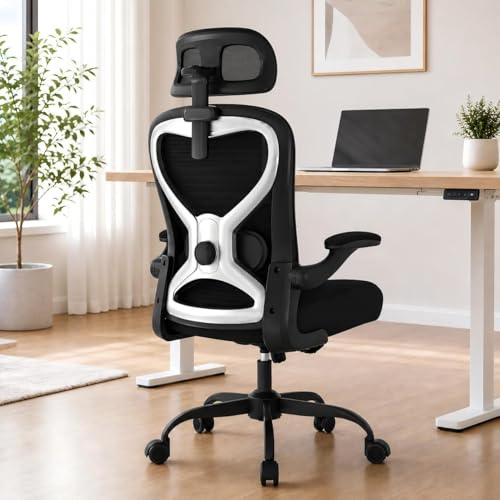
A 3.5-inch virgin foam seat cushion is the standout feature here, designed to distribute weight evenly and keep hips from aching even after a full workday. That thick padding, paired with a contoured mesh back and a 4-way adjustable lumbar cushion, makes this chair a strong candidate for anyone who needs sustained lower-back and hip support. The 3D headrest adds neck comfort during long sessions, and the flip-up armrests let you slide the chair under a desk when not in use. It’s built for someone who prioritizes soft, lasting seat comfort above all else.
If your height or leg length demands a deeper seat, that model might be worth considering. But for most people focused on hip pain relief, the CASASIO’s generous cushion and supportive back make it a practical, comfortable choice for long hours at a desk.
Product photos
Herman Miller Classic Aeron Task Chair
What We Like
- Waterfall front edge reduces thigh pressure
- Breathable Pellicle suspension keeps you cool
- Kinemat tilt allows natural body movement
- 12-year warranty with Born-On-Date sticker
Trade-offs
- At 48 lb, it is heavy to move around
- No headrest or lumbar adjustment beyond pad
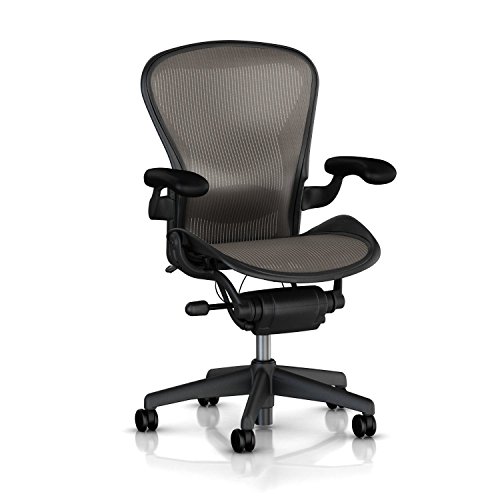
The waterfall front edge of this chair is designed to take pressure off your thighs, which directly helps keep blood circulating and reduces the discomfort that often radiates from the hips. Combined with the breathable Pellicle suspension that dissipates body heat, this chair is built for long, focused sessions without the usual aches. It suits anyone who needs a seat that actively works against pressure buildup at the front edge, especially if you spend hours at a desk and feel that pinch in your thighs or hips.
At 48 pounds, it is noticeably heavier than many mesh chairs like the SIHOO B100, so moving it between rooms takes more effort. The Classic Aeron also lacks a built-in headrest, which some users may miss for leaning back. But for those who prioritize a pressure-relieving seat edge and a durable, well-engineered frame backed by a 12-year warranty, this chair delivers on its core promise without gimmicks.
Product photos
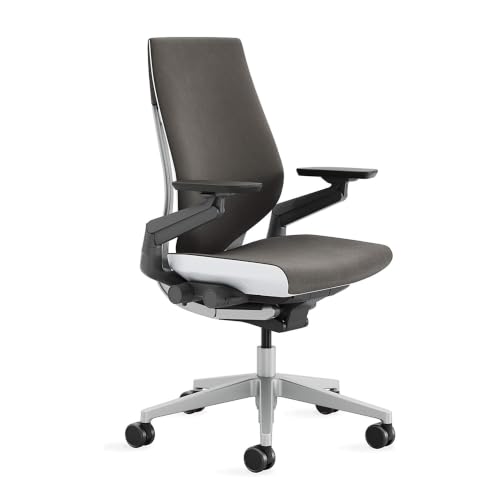
Steelcase Gesture Office Chair
What We Like
- 360-degree arms adjust to any posture
- Contoured back supports spine's natural shape
- Full recline with upright lock for variety
- Intuitive adjustments on right side
Trade-offs
- At 70 pounds, it's very heavy to move
- Carpet wheels limit use on hard floors
The Steelcase Gesture’s 360-degree arms are the standout feature for hip pain sufferers who shift positions throughout the day. Because the armrests move in every direction, you can find a comfortable arm angle when leaning back, typing, or reading, which takes pressure off your hips by letting you adjust your upper body support. This chair is designed for long sitting sessions with a contoured back that fits your spine’s natural shape, and the full recline range with three settings means you can lock in a slight tilt that eases hip pressure without feeling unstable.
Weight is a real factor here: at 70 pounds, this is a heavy chair that’s tough to reposition on carpet, so plan where you want it before assembly. Compared to the SIHOO B100 at 35.5 pounds, the Gesture is over twice as heavy, making it less practical if you frequently rearrange your workspace. The carpet-only wheels also mean it’s not ideal for hard floors unless you swap them out. For someone who values precise arm adjustment and a solid, supportive frame over portability, the Gesture delivers a tailored sitting experience that can help reduce hip discomfort.
Product photos
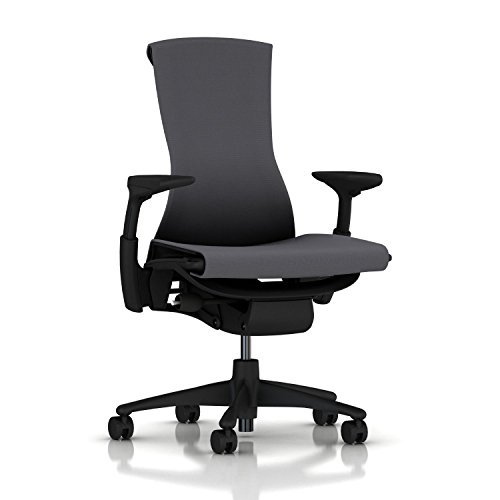
Herman Miller Embody Ergonomic Office Chair
What We Like
- Backfit adjustment matches spine's curve
- Pixelated support reduces pressure points
- Four-layer seat promotes airflow and comfort
- Fully adjustable arms and tilt limiter
Trade-offs
- At 52 lb, it's heavy to move
- No built-in headrest for neck support
A 52-pound chair with a dynamic pixelated support matrix that automatically conforms to micro-movements, distributing weight evenly to reduce pressure. Developed with input from more than 20 physicians and PhDs in biomechanics, vision, physical therapy, and ergonomics, it’s built for those who need precise, scientifically informed support for natural alignment and healthy movement. The Backfit adjustment lets you align the backrest with your spine’s natural curve, maintaining neutral posture whether you lean forward or recline.
Weight is a real factor here: at 52 lb, it’s not a chair you’ll easily slide across the room, and there’s no headrest for those who want upper neck support. Compared to the Steelcase Gesture (70 lb with a different support focus), the Embody prioritizes a breathable, conforming seat over added head or neck features. Best for anyone who values a highly engineered, pressure-relieving seat and is willing to accept a heavier, headrest-free design.
Product photos
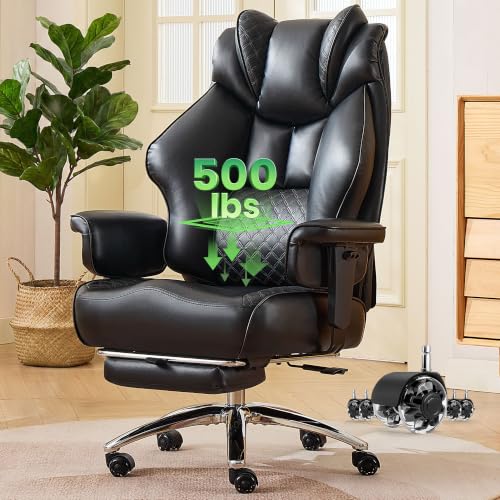
CIOMAN Big and Tall Office Chair with Footrest
What We Like
- 500 lb weight capacity
- Adjustable air-cushion lumbar support
- Built-in footrest for napping
- 3D saddle-shaped memory foam seat
Trade-offs
- At 64 lb, it's heavy to move
- No headrest included
A 500-pound weight capacity makes this chair a rare find for larger frames, it’s built to support without wobbling. The adjustable air-cushion lumbar support conforms to your spine’s natural curve, which can help ease lower back tension during long workdays. Combined with a wider seat and taller back, it offers the kind of roomy, supportive fit that many big and tall users struggle to find in standard office chairs.
Its size is a consideration: at 64 pounds, this chair isn’t one you’ll want to slide across the room every day. But for anyone who needs serious weight support and a built-in footrest for quick breaks, this chair delivers where lighter models can’t.
Product photos
NEO CHAIR High Back Mesh Office Chair

What We Like
- Breathable mesh backrest for airflow
- Adjustable lumbar support
- Flip-up armrests for flexible positioning
Trade-offs
- No headrest included for neck support
- Lacks sliding seat for deeper customization
At 24 pounds, the NEO CHAIR High Back Mesh Office Chair is light enough to slide between desks or carry to another room without straining. The breathable mesh backrest keeps air moving so you stay cool during long work sessions, and the adjustable lumbar support lets you dial in the lower-back pressure that matters most. A waterfall seat edge helps you sit comfortably for hours, and the chair’s compact build means it won’t dominate your space.
Compared to the COLAMY model at 45.4 pounds, the NEO CHAIR feels lighter and has a smaller footprint, but it lacks the sliding seat for deeper customization. The NEO CHAIR also does not include a headrest, so if you need full neck support for reclining, you may want to look elsewhere. Still, for focused desk work where lower-back comfort is the priority, this chair delivers solid adjustability and breathable comfort in a package that won’t dominate your room.
Product photos
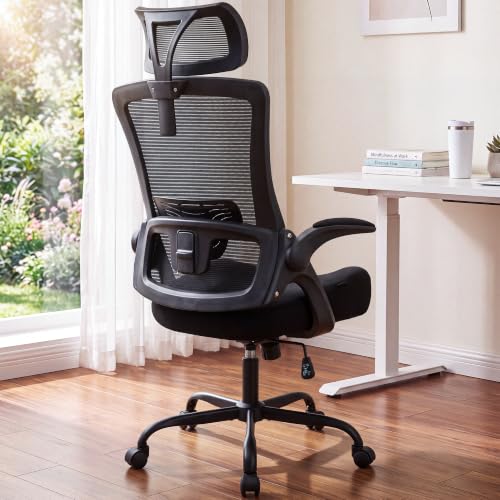
NEO CHAIR Office Chair with Adjustable Lumbar
What We Like
- Adjustable lumbar and headrest
- Breathable mesh backrest
- Flip-up armrests save space
- BIFMA-approved casters and SGS-certified gas lift
Trade-offs
- No seat depth adjustment for different leg lengths
- At 24.5 lb, lighter than some sturdier models
The NEO CHAIR Office Chair with Adjustable Lumbar puts a breathable mesh backrest and a waterfall seat cushion at the center of its design, which means your lower back gets focused support while the front edge of the seat reduces pressure behind your knees. The adjustable lumbar and headrest let you dial in the fit for your own frame, and the flip-up armrests tuck away when you need to slide the chair under a desk. For anyone who spends long hours seated and wants to ease hip discomfort, this chair offers a well-ventilated, customizable setup that encourages better posture without overwhelming your space.
One thing to keep in mind is that the seat itself does not slide forward or backward, so if your thighs are longer or shorter than average, you may not find the perfect seat depth. Compared to the COLAMY model, which adds that adjustment, the NEO CHAIR keeps things simpler and lighter at 24.5 pounds, making it easier to move around a home office. It is a practical pick for someone who values lumbar adjustability and a clean, compact profile over extra seat customization.
Product photos
Stella Mia Ergonomic Executive Desk Chair
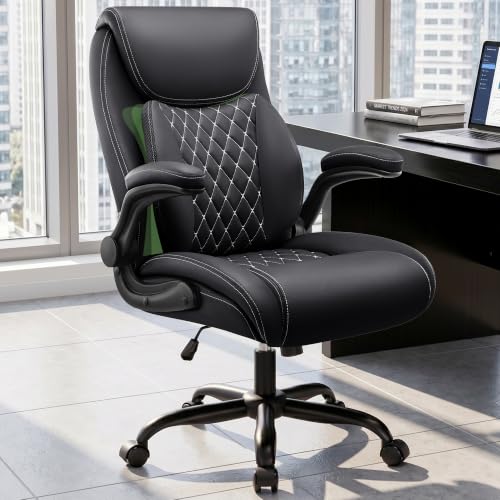
What We Like
- Dual-layer 3D lumbar adapts in real time
- 350 lbs weight capacity for larger users
- 90° flip-up armrests for space saving
- 120° rocking with adjustable tension
Trade-offs
- No headrest included for neck support
- Fixed armrests lack width or depth adjustment
The dual-layer 3D lumbar system actively conforms to your spine as you shift positions, delivering targeted lower back relief that adjusts with you throughout the day. This makes it a strong match for anyone who spends long hours seated and wants support that moves rather than a static pad. The 350-pound capacity and commercial-grade PU leather add durability for daily use, while the 120° rocking mechanism with adjustable tension lets you fine-tune your recline without leaving your chair.
One thing to note is that the PU leather, while easy to wipe clean, lacks the breathability of mesh backs found on some competitors. That could be a consideration for those in warmer environments or who tend to run hot during long work sessions. There’s also no headrest, so if you need neck support, you’ll want to look elsewhere. For those who prioritize adaptive lumbar support and a sturdy build over airflow, this chair offers focused relief at a reasonable investment.
Product photos
How We Evaluated Chairs For Hip Pain
We started by examining the technical specifications and design details that matter most for hip comfort: seat cushion materials and thickness, lumbar support adjustability, seat depth range, and weight capacity. Manufacturer documentation and expert ergonomic round-ups provided the baseline for what each chair promises.
Our criteria centered on four key areas. First, pressure distribution, how the seat cushion and front edge reduce concentrated pressure on the hips and thighs. Second, lumbar support, whether it adjusts in height, depth, or both to match your spine. Third, adjustability, seat depth, armrests, and recline options that let you customize the fit. Fourth, build quality, weight capacity, materials, and certifications like BIFMA that indicate durability.
A research-led evaluation cannot replace sitting in a chair yourself, but it does reveal which models consistently address the needs of people with hip pain. We prioritized chairs with clear design intent for pressure relief and long-term comfort.
What To Look For In Chairs For Hip Pain
Choosing a chair for hip pain means focusing on how the seat supports your body weight and how the backrest aligns your spine. These four criteria will guide you to the right fit.
Look for a chair with a pressure-relieving seat cushion, adjustable lumbar support, and a seat depth that matches your leg length. The best chairs let you customize the fit to keep your hips in a neutral, comfortable position.
Seat Cushion and Pressure Distribution
The seat is where hip pain starts or stops. A cushion that is too firm creates pressure points, while one that is too soft lets your hips sink into an awkward angle. Look for high-density foam or specialized suspension systems like the Pellicle material on the Herman Miller Aeron. A waterfall front edge, where the seat curves downward at the front, reduces pressure on the underside of your thighs, which in turn takes strain off your hip joints.
Lumbar Support Adjustability
Your lower back and hips are connected. When lumbar support is in the right spot, it helps your pelvis stay in a neutral position, reducing stress on the hip joints. The best chairs offer height-adjustable lumbar support, and some add depth adjustment for a more precise fit. The SIHOO B100’s adaptive lumbar follows your spine’s curve, while the Stella Mia uses a dual-layer 3D design that adapts in real time as you move.
Seat Depth and Leg Support
A seat that is too short leaves your thighs unsupported, forcing your hips to work harder to stabilize. A seat that is too long presses behind your knees and tilts your pelvis backward. Adjustable seat depth lets you slide the seat pan forward or back to match your leg length. The COLAMY Ergonomic Office Chair is the best pick here, with a sliding seat that adjusts precisely.
- Check that the seat depth lets you sit with your back against the lumbar support and 2-3 inches between the back of your knee and the seat edge.
- Look for a weight capacity that supports your body type, most standard chairs hold 250-300 lbs, while big and tall models go up to 500 lbs.
- Verify that armrests adjust to a height that lets your shoulders relax, which reduces strain through your hips.
- Confirm the chair’s base and casters match your floor type, carpet wheels can damage hard floors.
A good rule: if you cannot adjust the seat depth or lumbar support, the chair probably will not fit your body well enough to help with hip pain.
Chairs For Hip Pain Compared
The table below compares the key specs of all ten chairs side by side, so you can see at a glance which models offer the features that matter most for hip pain.
| Product | Weight Capacity | Back Material | Weight |
|---|---|---|---|
| SIHOO B100 Mesh Ergonomic Office Chair | 300 lbs | Full mesh | 35.5 pounds |
| COLAMY Ergonomic Office Chair with Sliding Seat | 300 lbs | Breathable Korean mesh | 45.4 pounds |
| CASASIO Ergonomic Office Chair with 4-Way Lumbar | 330 lbs | Breathable Mesh | 30.0 pounds |
| Herman Miller Classic Aeron Task Chair | N/A | Breathable Pellicle | 48.0 pounds |
| Steelcase Gesture Office Chair | N/A | N/A | 70.0 pounds |
| Herman Miller Embody Ergonomic Office Chair | N/A | N/A | 52.0 lb |
| CIOMAN Big and Tall Office Chair with Footrest | 500 lbs | N/A | 64.0 pounds |
| NEO CHAIR High Back Mesh Office Chair | N/A | Breathable Mesh | 24.0 pounds |
| NEO CHAIR Office Chair with Adjustable Lumbar | N/A | Breathable mesh backrest | 24.5 pounds |
| Stella Mia Ergonomic Executive Desk Chair | 350 lbs | N/A | 39.0 pounds |
Frequently Asked Questions
What type of chair is best for hip pain?
An ergonomic chair with a pressure-relieving seat cushion, adjustable lumbar support, and proper seat depth is best for hip pain. Look for a waterfall front edge that reduces thigh pressure and a cushion that distributes weight evenly. The SIHOO B100 and Herman Miller Aeron both address these needs well.
Is a mesh or cushioned seat better for hip pain?
It depends on your preference and body type. Mesh seats like the SIHOO B100‘s full-mesh back allow airflow and can conform to your shape, but some people need the pressure relief of thick foam like the CASASIO’s virgin foam seat. Try both if possible, or choose based on whether you tend to get hot or need more cushioning.
How important is adjustable lumbar support for hip pain?
Very important. Your lumbar spine and pelvis are connected, so poor lumbar support can tilt your pelvis and increase pressure on your hip joints. A chair with height and depth adjustable lumbar support, like the NEO CHAIR with Adjustable Lumbar, lets you find the position that keeps your hips neutral.
Can a chair with a footrest help hip pain?
Yes, if you tend to shift positions or need to raise your legs occasionally. A built-in footrest like the one on the CIOMAN Big and Tall Chair lets you change your sitting angle, which can relieve pressure on the hips. However, a footrest is not a substitute for proper seat and lumbar support.
Should I get a chair with adjustable armrests for hip pain?
Adjustable armrests help reduce shoulder and upper back tension, which can indirectly affect how you sit in the chair. When your arms are properly supported, you are less likely to lean to one side and create uneven pressure on your hips. The Steelcase Gesture’s 360-degree arms are the most adjustable option here.
The Bottom Line
The SIHOO B100 Mesh Ergonomic Office Chair is our best overall pick for hip pain because its widened seat cushion and adaptive lumbar support work together to distribute weight evenly and keep your spine aligned. It is a strong choice for anyone spending long hours at a desk who needs consistent pressure relief without overheating.
If you need precise seat depth adjustment to match your leg length, the COLAMY Ergonomic Office Chair with Sliding Seat is the better fit. For those who prioritize a thick, pressure-relieving seat cushion above all else, the CASASIO Ergonomic Office Chair delivers the best all-day comfort seat in this lineup.
The single most important factor when choosing a chair for hip pain is fit, the seat depth, lumbar position, and cushion firmness must match your body. A chair that fits well will do more for your comfort than any single feature.
