10 Best Bathroom Cleaners For Mold in 2026
This post contains affiliate links. As an Amazon Associate, we earn from qualifying purchases.
For tackling mold and mildew in the bathroom, we recommend the Scrubbing Bubbles Foaming Bleach Bathroom Cleaner as the best overall for its penetrating foam that erases stains and removes built-up soap scum. The Clorox Plus Tilex Mold and Mildew Remover is the best mold-killing spray, while the Zep Mold Stain & Mildew Stain Remover Gel is ideal for grout and caulk.
Bathrooms are naturally humid environments where mold spores find plenty of places to settle. The real challenge is finding a cleaner that kills the mold, removes the stain, and works on the specific surfaces in your bathroom without damaging them.
This guide is based on a thorough review of manufacturer specifications, expert recommendations, and patterns in owner feedback. We focused on the key criteria that matter most for eliminating mold, so you can choose the right product with confidence.
Top 10 Bathroom Cleaners For Mold in the Market

Certain content that appears on this site comes from Amazon. This content is provided "as is" and is subject to change or removal at any time.
The Best Bathroom Cleaners For Mold, Reviewed
Scrubbing Bubbles Foaming Bleach Bathroom Cleaner
What We Like
- Penetrating foam erases mold and mildew stains
- Removes built-up soap scum
- Clinging formula for vertical surfaces
- Works on sealed granite and quartz
Trade-offs
- Not a gel so it runs off grout and caulk
- Bleach smell lingers after use
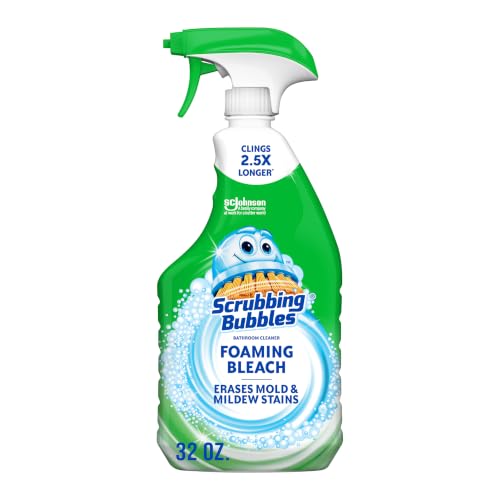
A 32-ounce bottle of foaming bleach cleaner that clings to vertical surfaces means you can spray it on shower tiles and grout without it dripping away before it gets to work. The penetrating foam thoroughly erases mold and mildew stains while also cutting through built-up soap scum, so it works as a strong all-in-one for bathrooms that see regular moisture. It’s the pick for anyone who wants a single product that handles both the organic stains and the daily grime, especially on surfaces like fiberglass, vinyl, and sealed stone that other bleach sprays might not be recommended for.
The 32-ounce spray bottle delivers a foaming bleach formula that erases mold, mildew stains, and soap scum from shower tiles, grout, tubs, countertops, and sinks in one pass. That means you don’t need separate cleaners for different bathroom surfaces. The foam clings to vertical walls and shower doors, giving them a deep clean and renewed shine without dripping. Compared to the Zep Mold Stain & Mildew Stain Remover Gel, which stays put on grout and caulk, this spray covers larger areas quickly, though the gel may be better for targeting tight joints.
Clorox Plus Tilex Mold and Mildew Remover
What We Like
- Kills 99.9% of mold and mildew
- Works indoors and outdoors
- Safe for most tubs and countertops
- Tackles mold and mildew stains
Trade-offs
- Avoid prolonged contact with metal and old porcelain
- Strong bleach odor requires ventilation
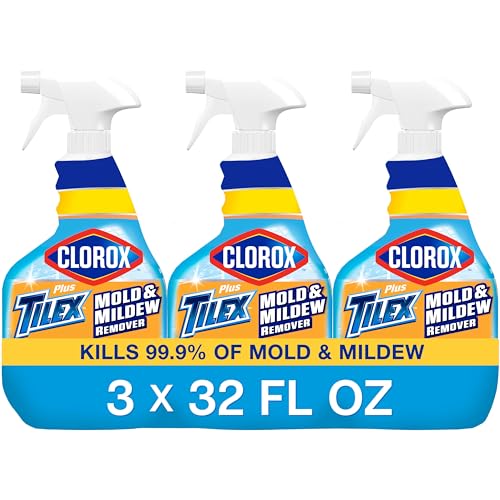
When you need a spray that truly annihilates mold and mildew at the source, the bleach formula in this Clorox Plus Tilex cleaner is the deciding factor. It kills 99.9 percent of mold and mildew on hard, nonporous surfaces, so it’s not just wiping away stains, it’s eliminating the growth itself. That makes it a natural fit for bathrooms where moisture and poor ventilation let mold take hold, especially on shower walls, sinks, and countertops. It even works outdoors on cement pools and patio furniture, which adds versatility beyond the typical bathroom cleaner.
The trade-off is that bleach, while powerful, can be harsh on certain materials. The manufacturer advises avoiding prolonged contact with metal and old porcelain, so you’ll want to rinse thoroughly after use. If you’re willing to manage that extra step, you get a mold killer that’s hard to beat.
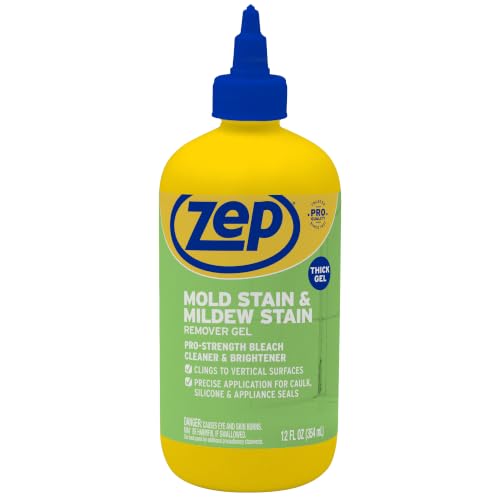
Zep Mold Stain & Mildew Stain Remover Gel
What We Like
- Thick gel clings to vertical surfaces
- Precision nozzle for tight spaces
- No heavy scrubbing needed
- Works on grout, caulk, and seals
Trade-offs
- Requires 1-2 hour wait time
A thick bleach gel that stays put on vertical grout lines and caulk beads means you can target mold stains exactly where they hide, without the mess of a runny spray. The precision long-nose nozzle reaches into dishwasher seals, refrigerator gaskets, and shower corners, making this ideal for anyone tired of scrubbing tight, awkward spots. After applying, you wait one to two hours, then wipe and rinse, no heavy elbow grease required. This gel is built for detail work on silicone, rubber, and tile, not for broad surface spraying.
The wait time is the main drawback: while a spray like Scrubbing Bubbles Foaming Bleach Bathroom Cleaner works faster on large shower walls, Zep’s gel excels where you need controlled, stubborn-stain removal without drips. If your main battle is mold in grout lines and around appliance seals, the extra patience pays off in precision. Just remember that the bleach formula means you’ll want good ventilation and to avoid mixing with other cleaners. For targeted grout and caulk duty, this gel does the job without the scrub.
Product photos
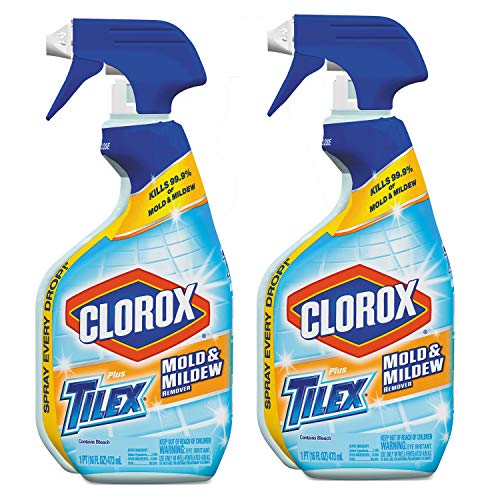
Tilex Mold & Mildew Remover
What We Like
- Kills 99.9% of household mold & mildew
- Eliminates stains before your eyes
- No scrubbing needed
- Contains Clorox bleach
Trade-offs
- Only 16 oz per bottle, smaller than some competitors
- Contains bleach which can damage colored fabrics.
Killing 99.9% of household mold and mildew without any scrubbing is the standout promise here, and Tilex delivers it with the power of Clorox bleach. For anyone who wants a truly hands-off approach to bathroom mold, this spray does the heavy lifting while you just watch stains disappear before your eyes. It’s ideal for busy households or those who dread getting on their knees to scrub grout lines and shower corners. The bleach base gives it the muscle to tackle stubborn growth quickly, making it a reliable go-to for regular maintenance between deeper cleanings.
Bleach, while effective, can be too aggressive for some surfaces like natural stone or certain colored grouts, so you’ll want to spot-test first. Compared to the Scrubbing Bubbles Foaming Bleach Bathroom Cleaner, which also uses bleach but comes in a larger 32 oz bottle, Tilex’s 16 oz size means you may need to restock sooner if you’re tackling a big bathroom. Still, for a no-scrub formula that truly lives up to its name, this is a simple, effective solution for keeping mold at bay with minimal effort.
Product photos
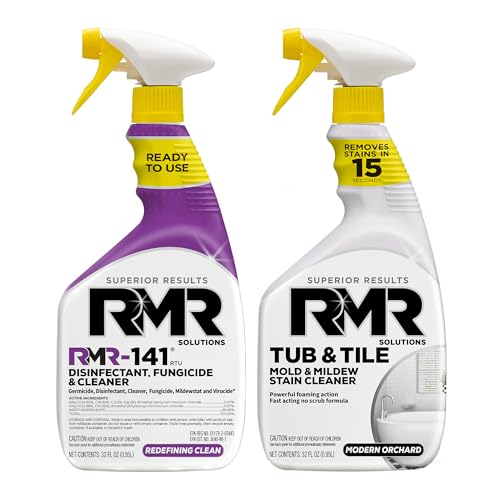
RMR Bathroom Mold Remover Bundle
What We Like
- EPA-registered disinfectant kills bacteria
- Two-step system removes stains then disinfects
- Ready-to-use foam and trigger sprayers
- Works on tile, grout, showers, sinks
Trade-offs
- Requires PPE and ventilation during use
- Two separate steps add time to cleaning
An EPA-registered disinfectant that kills bacteria and controls odors sets this two-step system apart from single-spray cleaners. You first dissolve mold and mildew stains with the Tub & Tile foam sprayer, then follow up with RMR-141 to sanitize and extend protection on showers, tubs, sinks, tile, and grout. It’s built for bathrooms that need more than a quick wipe, especially caulk lines, laundry rooms, and rentals where tough buildup and smells have settled in. The ready-to-use duo includes two specialized sprayers, so you get the right coverage for each step without mixing or measuring.
This system demands a little more effort than an all-in-one spray. You need to wear PPE, ventilate the room, and follow the label’s contact times for each step. The Scrubbing Bubbles Foaming Bleach Bathroom Cleaner handles stains in a single pass, but the RMR bundle takes longer and gives you a disinfecting step that Scrubbing Bubbles doesn’t offer. For anyone dealing with persistent mold and mildew in a bathroom that needs both stain removal and sanitization, this two-step system delivers professional-grade results.
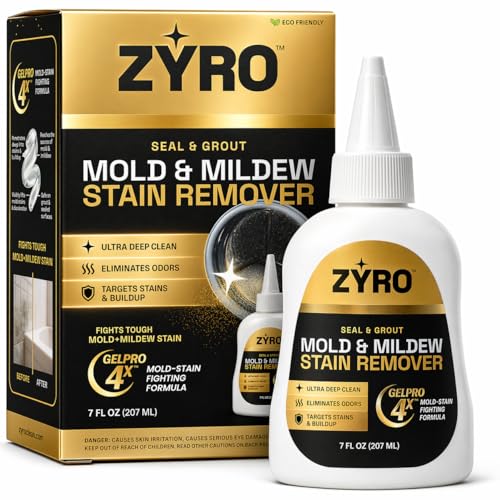
Zyro Mold Stain Remover Gel
What We Like
- Thick gel stays on vertical surfaces
- Versatile across bathroom and appliances
- Breaks down black spots in minutes
Trade-offs
- Small 7 oz bottle limits coverage to spot treatments
- Gel must sit for several minutes before wiping clean
A thick gel that stays exactly where you put it, no dripping down grout lines or pooling on caulk, makes this the go-to for tackling stubborn black spots in tight corners and crevices.
Product photos
Lysol Professional Heavy Duty Bathroom Cleaner Concentrate
What We Like
- Economical concentrate yields 32 gallons
- Kills mold, mildew, Staph, Salmonella, herpes simplex
- Non-acid, non-abrasive formula
- Fresh lime scent
Trade-offs
- Requires dilution before use
A single gallon of this concentrate makes 32 gallons of ready-to-use cleaner, so one 4-gallon case covers a massive amount of surface area without frequent trips to the store. It kills mold, mildew, Staph, Salmonella, and even herpes simplex, making it a serious option for deep-cleaning large bathrooms, basements, or rental properties. The non-acid, non-abrasive formula works on a variety of surfaces without etching or scratching, and the fresh lime scent leaves the space smelling clean rather than chemical-heavy.
This concentrated formula makes 32 gallons of solution, so a single case of four gallon jugs can handle a whole-house renovation or multiple rental units. At 36.8 pounds for the set, it’s not something you want to carry around frequently, but the value of that concentrated power is hard to beat.
Clorox Clean-Up Multi-Surface Cleaner with Bleach
What We Like
- Kills 99.9% of bacteria and viruses
- Removes 99% of allergens
- Works on multiple surfaces
- Disinfects and cleans in one step
Trade-offs
- Avoid prolonged contact with porcelain
- Not safe for unsealed surfaces or natural stone
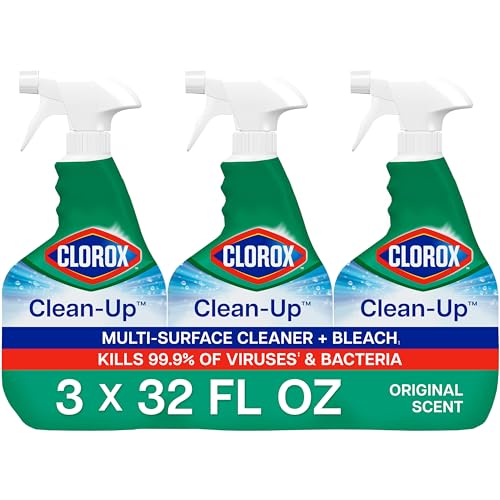
This bleach-based spray kills 99.9% of bacteria and viruses, including the COVID-19 virus, so you can disinfect shower walls, tubs, sinks, and more with confidence. It also removes 99% of allergens like dust mite matter and pet dander, which means you’re cutting down on allergy triggers while you clean. That combination of disinfection and allergen removal gives you a thorough clean on multiple surfaces.
You do need to be careful with porcelain, since prolonged contact can damage it, so it’s not a spray you can just leave on. The Scrubbing Bubbles Foaming Bleach Bathroom Cleaner is designed to erase mold and mildew stains and remove soap scum, while Clorox Clean-Up is a traditional spray that may require a bit more scrubbing on tough grout. Still, for a bleach-based cleaner that also tackles allergens and viruses, it offers strong versatility.
Lysol Power Foaming Bathroom Cleaner & Disinfectant Spray
What We Like
- Kills 99.9% of bacteria and viruses
- No scrubbing needed on soap scum and grime
- 0% bleach formula safe for septic systems
- Works on multiple bathroom surfaces
Trade-offs
- Requires 30-second dwell time for sanitization
- Not for use on unsealed grout or natural stone
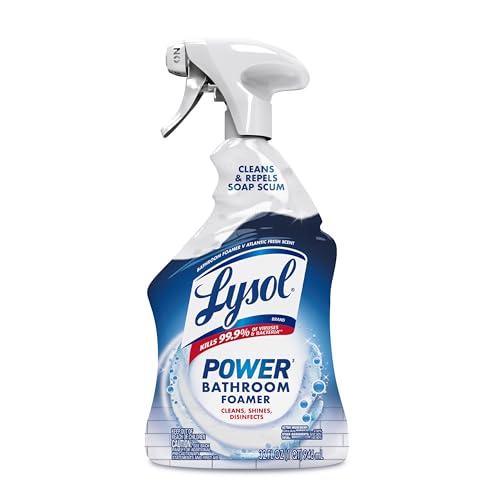
A 30-second dwell time is all it takes for this foaming spray to kill 99.9% of bathroom viruses and bacteria, making it a fast-acting option for busy households. The 0% bleach formula means you can use it regularly on glazed porcelain, ceramic tile, stainless steel, and laminate without worrying about harsh fumes or discoloration. It cuts through soap scum, limescale, and mold without scrubbing, which is a real time-saver on shower doors and tubs. This cleaner suits anyone who wants a powerful disinfectant that won’t compromise sensitive surfaces or septic systems.
The bleach-free formula means you won’t have to deal with harsh fumes or discoloration on glazed porcelain, ceramic tile, stainless steel, and laminate. For everyday bathroom upkeep and quick sanitization on non-porous surfaces, the Lysol foamer delivers reliable results without the strong bleach odor. It’s a practical choice for regular maintenance rather than heavy-duty restoration.
Product photos
Concrobium Mold Control Aerosol

What We Like
- EPA-registered for mold control
- Bleach-free and odorless formula
- Precision aerosol fogging reaches tight spaces
- Creates barrier to help prevent regrowth
Trade-offs
- Not intended for stain removal
- Not intended for use as a stain remover
The EPA-registered formula destroys existing mold at the source and leaves an invisible barrier that helps prevent regrowth. That makes it a practical choice for anyone who wants effective mold control without the harsh bleach smell or VOCs indoors. The precision aerosol fogging creates a fine mist that reaches into tight corners and behind fixtures where mold likes to hide, so you can treat problem areas without oversaturating surfaces. It works on drywall, wood, tile, grout, concrete, and fabric, though testing on an inconspicuous spot first is always smart.
This is not a stain remover, so if you are dealing with stubborn discoloration left behind by mold, you will need a separate product for that. The Scrubbing Bubbles Foaming Bleach Bathroom Cleaner uses bleach to erase stains and soap scum, while Concrobium focuses purely on killing and preventing mold with a gentler, odorless approach. For those who prioritize indoor air quality and long-term prevention over stain removal, this is a strong choice.
Product photos
How We Evaluated Bathroom Cleaners For Mold
Our research began by examining the specifications and intended uses of each product, including active ingredients, surface compatibility, and application methods. We then consulted expert round-ups and analyzed patterns in thousands of owner reviews to understand how these cleaners perform in real-world bathroom conditions.
The three criteria that mattered most were mold-killing power, surface safety, and ease of use. Mold-killing power is the primary function, so we prioritized products that are registered to kill mold and mildew. Surface safety is critical because bathrooms contain a mix of tile, grout, caulk, porcelain, and natural stone, each with different tolerances for bleach and acids. Ease of use covers everything from whether a product requires scrubbing to how long it needs to sit before it works.
By cross-referencing manufacturer claims with widespread owner experiences, we identified which cleaners consistently deliver on their promises and which have notable trade-offs.
What To Look For In Bathroom Cleaners For Mold
Choosing the right bathroom mold cleaner means understanding the type of mold you have, the surfaces you are cleaning, and the level of effort you are willing to put in. Here are the key factors to consider.
The best bathroom cleaner for mold kills the spores, removes the stain, and is safe for your specific surfaces. Focus on the active ingredient, the application method, and the dwell time required for effectiveness.
Mold-Killing Active Ingredients
The most common and effective active ingredient for killing mold is sodium hypochlorite, which is household bleach. Bleach-based cleaners like the Scrubbing Bubbles Foaming Bleach Bathroom Cleaner and Clorox Plus Tilex Mold and Mildew Remover are proven to kill mold spores on hard, non-porous surfaces. However, bleach can damage natural stone, colored grout, and some metals.
For those who prefer a bleach-free option, products like the Concrobium Mold Control Aerosol use a different technology to kill mold without harsh fumes. These are safer for a wider range of surfaces but may not remove existing stains as effectively as bleach.
Application and Dwell Time
How a cleaner is applied and how long it needs to sit are crucial for effectiveness. Foaming sprays, like the Scrubbing Bubbles, cling to vertical surfaces and penetrate mold stains. Gels, like the Zep Mold Stain & Mildew Stain Remover Gel, are designed to stay put on grout lines and caulk without running off.
Dwell time varies significantly. Some products work in minutes, while others require up to two hours to fully break down stains. If you are cleaning a large area, a faster-acting spray may be more convenient. For precision spot treatments, a longer-dwell gel can save you from scrubbing.
Surface Compatibility
Not all bathroom cleaners are safe for all surfaces. Unsealed grout, natural stone, and antique porcelain are particularly vulnerable to damage from bleach and acidic cleaners. Always check the manufacturer’s surface compatibility list before applying any product.
- Check if the cleaner is safe for your specific shower or tub material (fiberglass, acrylic, porcelain, stone).
- Verify that it can be used on sealed or unsealed grout.
- Look for warnings about metal fixtures and colored fabrics.
- Consider whether you need a product that is safe for septic systems.
- Read the label for any required personal protective equipment.
When in doubt, test any new cleaner on a small, inconspicuous area first.
Bathroom Cleaners For Mold Compared
The table below compares the key features of each top-rated bathroom mold cleaner, including their active ingredients, best uses, and notable trade-offs.
| Product | Size | Formula | Weight |
|---|---|---|---|
| Scrubbing Bubbles Foaming Bleach Bathroom Cleaner | 32 oz | Foaming bleach | 2.0 pounds |
| Clorox Plus Tilex Mold and Mildew Remover | 32 fl. oz. (3-pack) | Bleach | 6.5 pounds |
| Zep Mold Stain & Mildew Stain Remover Gel | 12 oz | Bleach gel | N/A |
| Tilex Mold & Mildew Remover | 16 fl oz (Pack of 2) | Contains Clorox Bleach | 1.0 pounds |
| RMR Bathroom Mold Remover Bundle | 2–32 Oz bottles | N/A | 4.8 pounds |
| Zyro Mold Stain Remover Gel | 7 Oz | Thick gel | N/A |
| Lysol Professional Heavy Duty Bathroom Cleaner Concentrate | 4gal (4X1gal) | Non-acid, non-abrasive | 36.8 pounds |
| Clorox Clean-Up Multi-Surface Cleaner with Bleach | 32 fl. oz., pack of 3 | Bleach | 7.4 pounds |
| Lysol Power Foaming Bathroom Cleaner & Disinfectant Spray | 32 oz | 0% Bleach | 2.5 pounds |
| Concrobium Mold Control Aerosol | 14.1 oz | Bleach-free, odorless, VOC-free | 1.0 pounds |
Frequently Asked Questions
What kills mold better, bleach or vinegar?
Bleach is more effective at killing mold on hard, non-porous surfaces like tile and glass. Vinegar can kill some mold species on porous surfaces but is less potent overall. For bathrooms, a bleach-based cleaner is generally the more reliable choice for thorough mold removal.
Can I use bathroom mold cleaner on painted walls?
Most bleach-based bathroom cleaners are not recommended for painted walls because they can strip the paint. If you have mold on painted bathroom walls, look for a cleaner specifically labeled as safe for painted surfaces, or use a diluted vinegar solution as a gentler alternative.
How long should I let mold cleaner sit before wiping?
Dwell time varies by product. Some sprays work in as little as 30 seconds, while gel-based cleaners may need up to two hours. Always follow the manufacturer’s instructions on the label for the best results. Rinsing too early can leave mold spores alive.
Is it safe to mix different mold cleaners?
Never mix mold cleaners with other cleaning products. Mixing bleach-based cleaners with ammonia or vinegar creates toxic chlorine gas. Use one product at a time and rinse the surface thoroughly before switching to another cleaner.
How do I prevent mold from coming back after cleaning?
After cleaning, keep the bathroom well-ventilated by running the exhaust fan during and after showers. Wipe down wet surfaces with a squeegee or towel. Some products, like the Concrobium Mold Control Aerosol, leave a barrier that helps prevent mold regrowth.
The Bottom Line
For most bathrooms, the Scrubbing Bubbles Foaming Bleach Bathroom Cleaner is the best overall choice. Its foaming formula clings to vertical surfaces, erases mold and mildew stains, and cuts through soap scum, making it a versatile solution for the whole bathroom. It is ideal for anyone who wants one product that works on multiple surfaces.
If you are dealing with stubborn mold in grout and caulk lines, the Zep Mold Stain & Mildew Stain Remover Gel is the right pick. Its thick gel stays where you put it, so you can treat precise areas without scrubbing. For those who prefer a bleach-free option that also helps prevent regrowth, the Concrobium Mold Control Aerosol is a solid alternative.
The single most important factor in choosing a bathroom mold cleaner is matching the product to your specific surfaces. A powerful bleach spray is useless if it damages your natural stone countertop or colored grout. Read the label, test a small area, and you will get the results you are looking for.
