10 Best Chairs For Scoliosis in 2026
This post contains affiliate links. As an Amazon Associate, we earn from qualifying purchases.
For anyone managing scoliosis, the right chair can make the difference between a productive day and one spent fighting discomfort. The CASASIO Ergonomic Office Chair earns our best overall spot thanks to its precise 4-way adjustable lumbar support and 330 lb weight capacity, offering lasting lower back relief. For those who need micro-adjustable lumbar positioning, the CAPOT Ergonomic Mesh Office Chair is a strong choice, while the physician-designed Herman Miller Embody provides premium spinal alignment.
Scoliosis means your spine curves in ways that standard office chairs simply aren’t built to accommodate. Finding a chair that supports your unique curve, rather than forcing you into a one-size-fits-all posture, is the real challenge. The wrong chair can aggravate muscle imbalances and lead to fatigue long before the workday ends.
This guide is based on a thorough review of manufacturer specifications, expert ergonomic round-ups, and patterns found in owner feedback for each model. We focused on the features that matter most for scoliosis: lumbar adjustability, spinal alignment, seat comfort, and build quality. Our goal is to help you identify the chair that best matches your body and your daily needs.
Top 10 Chairs For Scoliosis in the Market
Certain content that appears on this site comes from Amazon. This content is provided "as is" and is subject to change or removal at any time.
The Best Chairs For Scoliosis, Reviewed
CASASIO Ergonomic Office Chair
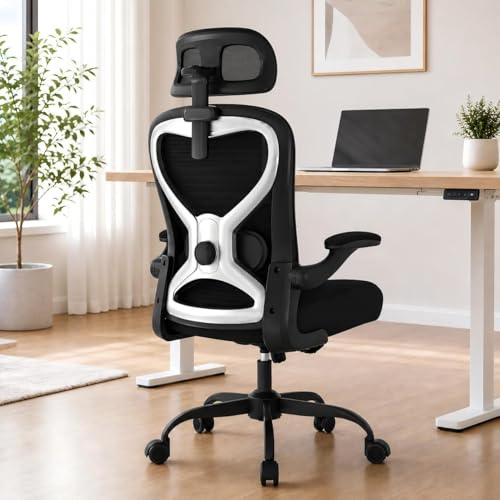
What We Like
- 4-way adjustable lumbar support
- 3D adjustable headrest for neck
- 330 lb weight capacity
- 5-year warranty and 24/7 support
Trade-offs
- Flip-up armrests lack width adjustment
- At 30 lb, less stable on carpet than heavier chairs
A 4-way adjustable lumbar cushion means you can dial in exactly the lower back support your scoliosis needs, targeting pressure points without guesswork. The 3.5-inch virgin foam seat distributes weight evenly, so hips and thighs stay comfortable through long workdays. This chair suits anyone who wants reliable spinal alignment and all-day cushioning, backed by a 5-year warranty that shows the manufacturer stands behind its build.
The flip-up armrests let you slide the chair under a desk to save space, but they don’t adjust in width, so some body types may find elbow positioning limited. The CAPOT Ergonomic Mesh Office Chair has 4D flip-up arms, while the CASASIO offers a dual-direction adjustable lumbar cushion for lower back support. If back support matters more than arm adjustability, this chair delivers a comfortable option.
CAPOT Ergonomic Mesh Office Chair

What We Like
- Micro-adjust lumbar with 8 levels
- Cooling Aerovith Mesh seat
- 400 lbs weight capacity
- 5-year warranty with free parts
Trade-offs
- At 38 lb, heavier than some mesh chairs
- Seat depth not adjustable
- Armrests flip up but don't pivot inward
A 2-inch micro-adjust lumbar that clicks through 8 levels means you can dial in support exactly where your L1-L5 spine needs it, reducing lower back pressure by 50%. It suits anyone from 5’5″ to 6’2″ who sits for 8-hour stretches, thanks to the large Aerovith Mesh seat that stays cool and cuts pelvic pressure by 20%. The backrest locks at 90, 110, or 125 degrees, so you can switch from focused typing to a relaxed lean without losing support.
At 38 pounds, this chair is noticeably heavier than the 24.5-pound SONGMICS mesh model, so moving it around a room takes more effort. The 400-pound capacity and leak-proof gas lift give it a solid, stable feel, and the 5-year warranty with free part replacements adds long-term peace of mind.
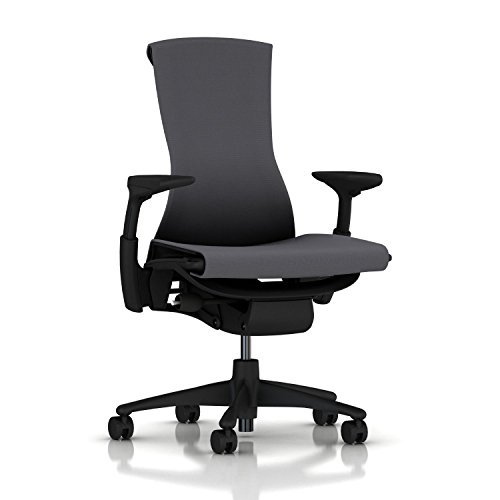
Herman Miller Embody Ergonomic Chair
What We Like
- Backfit adjustment aligns with spine's curve
- Pixelated support reduces pressure points
- Four-layer seat design promotes airflow
- Developed with over 20 health experts
Trade-offs
- At 52 lb, it is heavy to move
- No headrest included for neck support
More than 20 physicians and PhDs in biomechanics, vision, physical therapy, and ergonomics contributed to this chair’s design, so every detail serves a healthful purpose. The Backfit adjustment lets you position the backrest to match your spine’s natural curve, and the pixelated support surface automatically conforms to your micro-movements, distributing weight evenly. This encourages healthy circulation and focus, which matters greatly when you spend long hours seated. The four-layer seat also breathes, keeping you cool even during extended work sessions.
At 52 pounds, the Embody is noticeably heavier than the CAPOT mesh chair (38 lb), so rearranging your workspace takes more effort. There is also no headrest, which some users may want for full spinal alignment. If you prioritize a seat built with input from over 20 physicians and PhDs and are willing to accommodate its heft, this chair delivers exceptional support for healthy movement and pressure distribution. For those who need a lighter, headrest-equipped option, the CAPOT offers a different balance of features.
Product photos
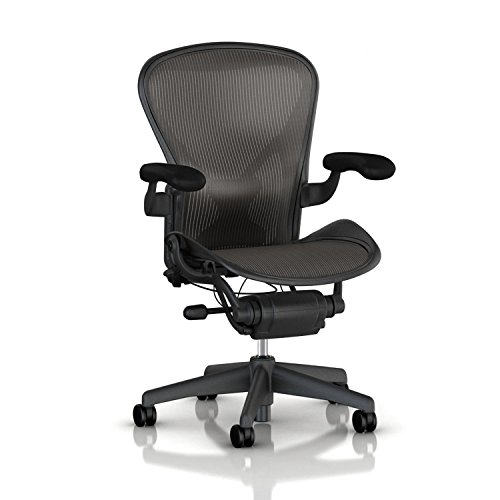
Herman Miller Classic Aeron Chair
What We Like
- Posture Fit supports spine base
- Pellicle suspension breathes and flexes
- Kinematic tilt aligns with natural motion
- Adjustable arms and lumbar
Trade-offs
- At 64 lb, it is very heavy to move
- Size B only fits 150-230 lb users
- No headrest included
The Posture Fit system supports the base of your spine directly, which is critical for anyone managing scoliosis because it encourages a healthy pelvic position and reduces slouching. The patented Pellicle suspension textile weaves two elastic materials together, so the seat breathes and flexes with your body rather than fighting it. Combined with a kinematic tilt that keeps your hips, knees and ankles aligned during recline, this chair helps you maintain alignment without constant conscious effort. It suits those who need structured, responsive support throughout long work sessions.
At 64 pounds, this is a heavy piece of furniture, moving it around a home office takes real effort. Size B is also calibrated for people 5’5″ to 6’2″ and 150 to 230 pounds, so it is not a one-size-fits-all solution. For someone who fits the range and prioritizes spinal support over extra features, this chair delivers on its core promise.
Product photos
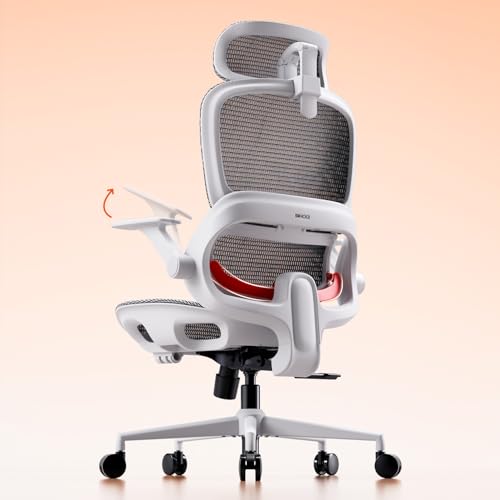
SIHOO B100 Mesh Ergonomic Chair
What We Like
- Adaptive lumbar follows natural spine curve
- Full-mesh backrest keeps air circulating
- Three lockable recline angles for breaks
- Reinforced metal base supports up to 300 lbs
Trade-offs
- Flip-up armrests lack depth or width adjustment
- No seat depth adjustment for different leg lengths
The SIHOO B100’s adaptive lumbar support moves with your spine as you shift from leaning forward to typing to sitting upright, so your lower back stays supported through every posture change during long hours at a desk. The full-mesh backrest keeps air circulating, preventing heat buildup during extended work or study sessions, and the widened seat cushion spreads weight evenly across hips and thighs for lasting comfort.
The flip-up armrests on this chair lack the depth, width, and angle adjustments found on the CAPOT mesh chair, so if you need precise arm positioning to avoid shoulder strain, you may want to look elsewhere. What the SIHOO B100 does well is adaptive lumbar support that follows your spine as you shift, plus a breathable mesh back that keeps air moving during long sessions. For someone who values spinal flexibility over arm customization, this chair delivers where it counts.
HOLLUDLE Ergonomic Mesh Office Chair

What We Like
- 3D lumbar moves up/down/forward/backward/rotates
- 2D adjustable headrest with height and angle
- Breathable mesh prevents overheating
- BIFMA and EN1335 certified durability
Trade-offs
- At 43.7 lb, heavier than some mesh chairs
- No 4D armrest adjustability like some competitors
This chair suits anyone between 5’3″ and 6’2″ who wants to fine-tune lower back positioning throughout the day, and the breathable mesh keeps you cool during long stretches at a desk. The 2D headrest and 3D armrests add further customization, so you can set up your ideal seated posture without compromise.
At 43.7 pounds, this chair is noticeably heavier than mesh options like the SONGMICS (24.5 lb), making it less convenient to move between rooms. Compared to the CAPOT chair, which offers 4D flip-up arms, the HOLLUDLE’s 3D armrests lack that extra forward/backward slide some users prefer for tight desk setups. Still, if your priority is a truly adjustable lumbar system that adapts to your spine’s unique shape, this chair delivers where others offer only basic support.
SONGMICS Ergonomic Mesh Office Chair
What We Like
- 3.5" thick seat cushion reduces hip pressure
- Adjustable foam-padded lumbar support
- Breathable mesh fabric keeps you cool
- Quick 20-30 minute assembly
Trade-offs
- Armrests flip up but lack depth adjustment
- Flip-up armrests lack depth and width adjustments
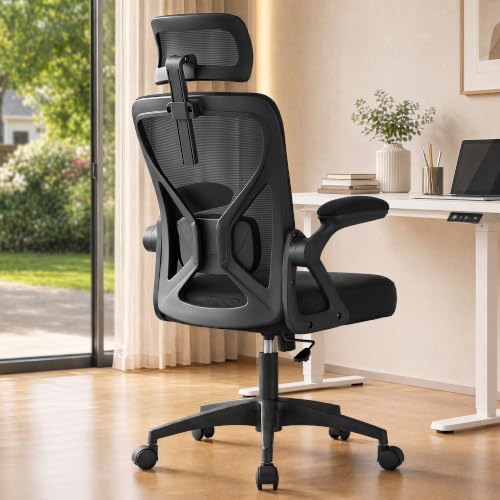
A 3.5-inch thick seat cushion with quality foam directly targets the hip pressure that can make long sitting sessions uncomfortable, especially when you’re already managing scoliosis-related discomfort. The adjustable foam-padded lumbar support and headrest work together to help keep your spine aligned, while the breathable mesh fabric promotes airflow so you don’t overheat during extended work or study. With a weight capacity of 331 pounds and a sturdy metal base, this chair offers reliable stability without a premium price tag. It makes a smart value pick for anyone who needs solid ergonomic support on a budget.
The 3.5-inch-thick seat cushion and adjustable lumbar support target the core comfort needs of anyone spending long hours at a desk. The flip-up armrests let you slide the chair under your desk to free up floor space. Assembly is straightforward, with most users getting it ready in about 20-30 minutes thanks to clear instructions and labeled parts.
Product photos
Hbada E3 Pro Ergonomic Office Chair
What We Like
- Dynamic 3-zone lumbar adapts to posture
- 4D headrest reduces neck fatigue
- 720° armrests for any arm position
- Adjustable backrest, lumbar, and seat depth
Trade-offs
- No built-in lumbar heat or massage
- Footrest adds bulk for smaller spaces
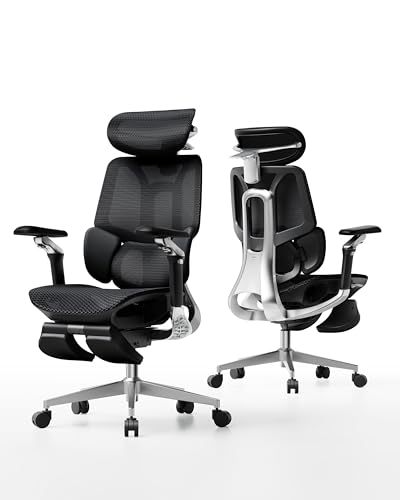
The Hbada E3 Pro’s dynamic 3-zone lumbar support uses gravity to adjust instantly as you move, with lateral wings that pivot 40°–80° to wrap your back and 60mm of vertical travel targeting the L1-L5 vertebrae. The 4D dual-axis headrest offers micrometer-level adjustments (70mm depth, 40mm height, 70° rotation), helping keep your neck relaxed and shoulders free from tension. With an adaptive recline up to 140° and a gravity-sensing mechanism that automatically adjusts tilt tension based on your body weight, this chair makes it easy to shift between focused work and rest without fiddling with levers.
The trade-off here is that the E3 Pro focuses entirely on mechanical adjustability rather than added comfort features like lumbar heat or massage, which some users with chronic back pain might appreciate. Compared to the Herman Miller Embody, which uses a pixelated back support system, the Hbada’s 3-zone floating lumbar is more directly targeted to the spine’s curve and offers a wider height range (accommodating users from 5’1″ to 6’5″). The 720° armrests with dual 360° rotation and 39° folding provide zero-blind-spot elbow support, but the included footrest adds some bulk if you’re working in a tight home office.
Steelcase Series 1 Ergonomic Chair
What We Like
- Tool-free assembly in under 2 minutes
- Weight-activated controls adjust to your body
- Optional 4D arm support for custom fit
- Flexible edges and adaptive bolstering for pressure relief
Trade-offs
- At 29.0 lb, it's lighter than many ergonomic chairs
- Headrest is optional, not included by default
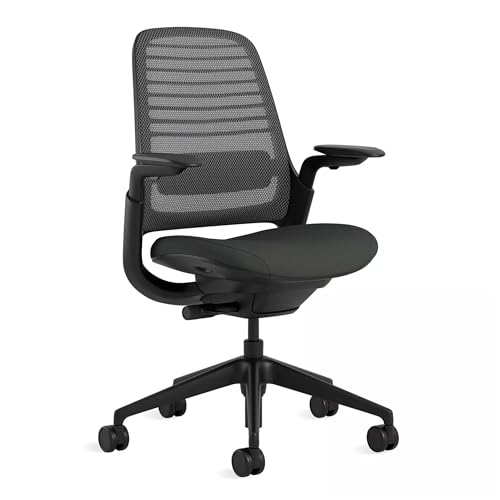
You can assemble this chair in under two minutes with no tools, so you go from box to seated comfort quickly. It includes weight-activated controls that automatically adjust to your body, plus optional 4D arm support and an adjustable headrest for extra customization. Flexible edges and adaptive bolstering in the forearm help create a pressure-free sit, making it a practical choice for those who value both ease and adjustability.
At 29 pounds, the Steelcase Series 1 is light enough to move easily between rooms, yet it still feels stable on carpet. Reviewers note that the weight-activated controls adjust automatically as you sit, so you don’t have to fiddle with levers to find a comfortable recline. For someone who wants essential ergonomics without a complicated setup, this chair assembles in under two minutes with no tools required.
Product photos
Serta Bryce Executive Office Chair
What We Like
- Patented AIR Lumbar pivots with body
- Contoured backrest with memory foam pillows
- Pocket coils in seat for support
- Adjustable seat height and tilt tension
Trade-offs
- At 40.8 lb, it's heavier for frequent moving
- 275 lb weight limit lower than some competitors
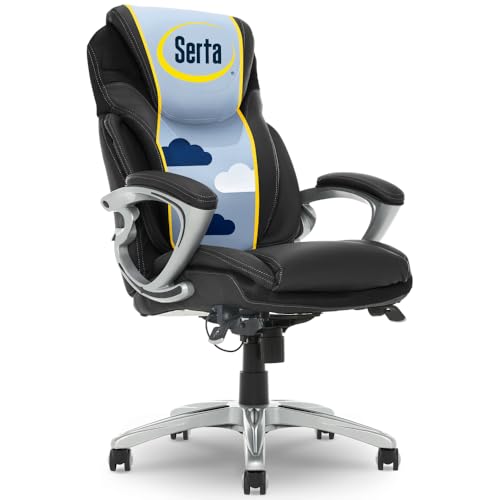
The Serta Bryce’s patented AIR Lumbar system is its standout feature for scoliosis support, it pivots and moves with your body, maintaining continuous lower-back contact through long workdays. That dynamic support, paired with a contoured backrest layered with memory foam body pillows and pocket coils in the seat, creates a cradle-like feel that encourages healthy posture without forcing you into a rigid position. It suits anyone who spends hours at a desk and needs adaptable lumbar support that responds to shifting positions, especially in a home office setting where comfort and adjustability matter most.
The bonded leather upholstery can trap heat compared to the breathable mesh found on the CAPOT chair, and the 275 lb weight capacity is lower than the 330 lb limit of the CASASIO chair. At 40.8 pounds, it’s also heavier than many mesh chairs, making it less convenient to move between rooms. Still, for those who prioritize active lumbar support that follows their movements, the Bryce’s patented system offers a level of responsiveness that static lumbar pads can’t match.
Product photos
How We Evaluated Chairs For Scoliosis
This guide was developed by analyzing technical specifications from manufacturers, studying expert recommendations from ergonomic and medical professional round-ups, and identifying consistent patterns in owner feedback across a wide range of chairs. The evaluation is research-based because the best chair for your scoliosis depends on how its adjustable features match your specific body and curve.
The most critical criterion was lumbar support adjustability. Scoliosis often creates an asymmetrical curve, so a fixed lumbar pad rarely works. We looked for chairs offering multi-directional lumbar adjustment (up, down, forward, back, or rotating) so you can target the exact spot that needs support. The second criterion was spinal alignment features, including backrest designs that follow the spine’s natural S-curve and mechanisms like the Embody’s Backfit or the Aeron’s Posture Fit.
Third, we evaluated seat comfort and pressure distribution, because sitting for hours with scoliosis can create pressure points that worsen discomfort. We looked for thick cushioning, breathable mesh, and designs that reduce hip pressure. Finally, we considered durability and warranty, since a chair that supports your spine properly should last. A longer warranty and higher weight capacity often indicate a better-built frame.
What To Look For In Chairs For Scoliosis
Choosing a chair for scoliosis means prioritizing adjustability and support over style or price. Focus on features that let you fine-tune the fit to your unique spinal curve.
Look for a chair with multi-directional lumbar support, a backrest that mirrors the spine’s natural curve, and a seat that distributes pressure evenly. Adjustable armrests and headrests add comfort but are secondary to proper lower back support.
Lumbar Support Adjustability
The single most important feature for scoliosis is lumbar support that you can move. A fixed lumbar pad will only work if it happens to hit your curve in exactly the right spot. Look for chairs that let you adjust the lumbar support up and down, in and out, and ideally forward and backward as well.
The CASASIO offers 4-way adjustment, while the CAPOT provides micro-adjustment with 8 levels. The HOLLUDLE goes further with 3D movement that includes rotation. The more directions you can adjust, the better your chance of finding a comfortable position.
Spinal Alignment and Backrest Design
A good scoliosis chair supports the entire spine, not just the lower back. Look for backrests that follow the natural S-curve of your spine. The Herman Miller Embody uses a Pixelated Support system and Backfit adjustment to align with your specific curve. The Hbada E3 Pro offers a dynamic 3-zone lumbar that adapts as you shift. Some chairs, like the SIHOO B100, use an adaptive lumbar that moves with your posture throughout the day. A backrest that encourages neutral spine alignment reduces the strain scoliosis can place on your muscles.
Seat Comfort and Pressure Distribution
Scoliosis can make you more sensitive to uneven pressure on your hips and thighs. A seat that distributes your weight evenly is essential. Look for thick cushioning, like the SONGMICS’s 3.5-inch seat cushion, or breathable mesh that conforms to your shape, like the CAPOT’s Aerovith Mesh or the Aeron’s Pellicle suspension. The Serta Bryce uses pocket coils in the seat for targeted support. Avoid seats that are too firm or too soft, as both can create pressure points that worsen discomfort over time.
- Check if the seat depth is adjustable to match your leg length.
- Verify the weight capacity matches your body size.
- Ensure the chair’s height range allows your feet to rest flat on the floor.
- Test the recline tension to see if it supports shifting positions throughout the day.
A chair that fits your body’s measurements is more important than one with the most features.
Chairs For Scoliosis Compared
The table below compares the key features of each chair, focusing on the lumbar support, seat design, and weight capacity that matter most for scoliosis.
| Product | Weight Capacity | Lumbar Support | Warranty |
|---|---|---|---|
| CASASIO Ergonomic Office Chair | 330 lbs | 4-way adjustable | 5-year |
| CAPOT Ergonomic Mesh Office Chair | 400 lbs | 2 inches, 8 levels | N/A |
| Herman Miller Embody Ergonomic Chair | N/A | Backfit Adjustment | N/A |
| Herman Miller Classic Aeron Chair | 150 to 230 lbs | Posture Fit (adjustable) | N/A |
| SIHOO B100 Mesh Ergonomic Chair | 300 lbs | Adaptive, moves with spine | N/A |
| HOLLUDLE Ergonomic Mesh Office Chair | 350 lbs | 3D adjustable | 5-year |
| SONGMICS Ergonomic Mesh Office Chair | 331 lb | adjustable foam-padded | N/A |
| Hbada E3 Pro Ergonomic Office Chair | N/A | 3-Zone Floating | 5-year |
| Steelcase Series 1 Ergonomic Chair | N/A | N/A | N/A |
| Serta Bryce Executive Office Chair | 275 lb | Patented AIR Lumbar Support | 1-year |
Frequently Asked Questions
What type of chair is best for scoliosis?
The best chair for scoliosis offers multi-directional lumbar support that you can adjust to match your spine’s specific curve. Look for a chair with a backrest that supports the natural S-curve of your spine, a seat that distributes pressure evenly, and enough adjustability to fit your body measurements. Chairs like the CASASIO with 4-way lumbar or the CAPOT with micro-adjust lumbar are strong options.
Is a mesh or cushioned seat better for scoliosis?
Both can work well, depending on your preference. Mesh seats, like those on the CAPOT or the Herman Miller Aeron, breathe well and conform to your shape, which can reduce pressure points. Cushioned seats, like the SONGMICS with its 3.5-inch thick foam, provide more padding for the hips. The key is finding a seat that distributes your weight evenly and does not create uneven pressure on one side of your body.
Do I need a headrest for scoliosis?
A headrest is not essential for scoliosis, but it can help if you experience neck strain or have a curve that extends into your upper spine. Chairs like the CASASIO and HOLLUDLE include adjustable headrests. The Herman Miller Embody and Aeron do not include headrests, which may be fine if your discomfort is primarily in your lower back. Focus on lumbar support first, then add a headrest if needed.
How important is armrest adjustability for scoliosis?
Armrest adjustability is helpful but secondary to lumbar support. Adjustable armrests let you position your arms so your shoulders are relaxed, which can reduce upper back tension. Chairs like the Hbada E3 Pro offer 720-degree armrests for full positioning. However, if a chair has excellent lumbar support but basic armrests, like the CASASIO, it may still be a good choice for scoliosis.
Can a chair help correct scoliosis?
No chair can correct scoliosis. A chair can only support your spine in a comfortable, neutral position to reduce pain and fatigue during long periods of sitting. For treatment or correction of scoliosis, you should consult a medical professional such as a doctor or physical therapist. The goal of an ergonomic chair is comfort and support, not medical correction.
The Bottom Line
For most people with scoliosis, the CASASIO Ergonomic Office Chair is the best starting point. Its 4-way adjustable lumbar support lets you target the exact area of your curve, while the 3D headrest and 330 lb weight capacity make it suitable for a wide range of body types. The five-year warranty also gives you confidence in its long-term durability.
If you need even more precise lumbar positioning, the CAPOT Ergonomic Mesh Office Chair offers eight levels of micro-adjustment and a 400 lb weight capacity, making it ideal for taller or heavier users. For those who want a chair designed with direct input from medical professionals, the Herman Miller Embody provides exceptional spinal alignment, though it comes at a premium price and lacks a headrest.
The single most important factor when choosing a chair for scoliosis is lumbar adjustability. No matter which chair you consider, make sure you can move the lumbar support to match your unique curve. That one feature will do more for your comfort than any other.
