10 Best Cook Knives in 2026
This post contains affiliate links. As an Amazon Associate, we earn from qualifying purchases.
For most home cooks, the Victorinox Fibrox Pro Chef’s Knife is the best cook knife because it combines a razor-sharp, laser-tested blade with a secure non-slip handle. Its price leaves room for other tools. If you prefer German engineering, the HENCKELS Classic offers a lightweight forged blade, while the WÜSTHOF Classic delivers premium edge retention for serious cooks.
The challenge with choosing a cook knife isn’t finding options, it’s cutting through the noise. Blade material, handle comfort, weight, and maintenance all affect how a knife performs for your specific cooking style. A knife that feels perfect for one cook may feel awkward to another.
This guide is based on manufacturer specifications, expert round-ups, and patterns in owner feedback. We’ve organized ten top knives by what they do best, so you can match the right knife to your kitchen and your hands.
Top 10 Cook Knives in the Market
Certain content that appears on this site comes from Amazon. This content is provided "as is" and is subject to change or removal at any time.
The Best Cook Knives, Reviewed
Victorinox Fibrox Pro Chef's Knife
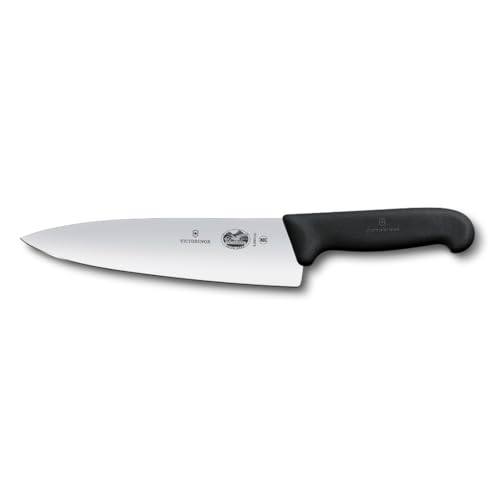
What We Like
- Non-slip TPE handle even when wet
- Laser-tested razor sharp blade
- Lightweight at only 0.1 pounds
- Dishwasher safe for easy cleaning
Trade-offs
- Blade is stamped, not forged like some competitors
A stainless steel blade that’s laser-tested for sharpness means this knife arrives ready to slice through tomatoes, herbs, and proteins with minimal effort. The ergonomic TPE handle stays grippy even when your hands are wet, which makes it a practical choice for home cooks who want reliable performance without the premium price tag. It’s lightweight enough for quick, repetitive tasks like mincing garlic or dicing onions, and the fact that it’s dishwasher safe simplifies cleanup after a busy meal prep session.
The trade-off is that the blade is stamped rather than forged, so it won’t have the same heft or balance as a fully forged knife like the WÜSTHOF Classic. That lighter weight can be a plus for some users, but if you prefer a knife that feels substantial in hand for heavy chopping through squash or bone-in cuts, this may not satisfy. Still, for everyday slicing and dicing, the Victorinox Fibrox Pro delivers sharpness and comfort that’s hard to beat at its price point.
Product photos
HENCKELS Classic Chef Knife
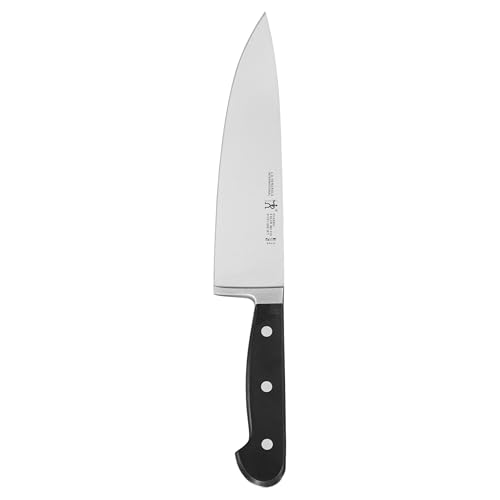
What We Like
- Ultra-sharp blade for precision cutting
- Fully forged construction for durability
- Lightweight at 0.3 pounds
Trade-offs
- 16-inch overall length takes up more drawer space
An 8-inch blade that stays sharp longer thanks to a finely honed satin finish means you can slice through tomatoes or mince herbs with barely any pressure. This German-engineered knife is fully forged from blade to handle, giving it a balanced feel that makes meal prep feel effortless. It suits home cooks who want professional-level sharpness without the weight of a heavy knife, and the triple-rivet handle keeps your grip secure even when hands are wet.
For cooks who want a nimble, low-maintenance blade that tackles everything from vegetables to boneless meats, this is a smart pick. Weighing just 0.3 pounds, it feels lightweight and easy to maneuver during long prep sessions. The fully forged construction provides durability and a balanced feel, while the traditional triple-rivet handle enables comfortable, easy cutting. Owners note that the ultra-sharp, satin-finished blade stays sharp longer than many competitors, even with minimal care. Cleanup is simple too, the stain- and rust-free blade can go in the dishwasher or be washed by hand. At 16 inches overall, it’s compact enough to store without taking up too much drawer space.
WÜSTHOF Classic Chef's Knife
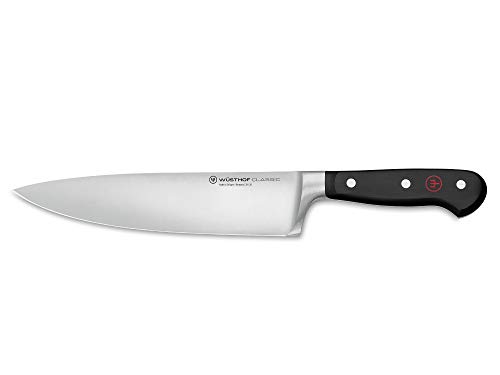
What We Like
- Forged from a single block of steel
- 20% sharper with PEtec technology
- Twice the edge retention than previous models
- Ergonomic handle resists fading and discoloration
Trade-offs
- Heavier than the Shun Sora at 0.5 pounds
- Heavier than Victorinox Fibrox Pro at 0.5 pounds
Forged from a single block of high-carbon stainless steel and tempered to 58 HRC, this blade handles everything from chopping hard vegetables to slicing raw meat. Precision Edge Technology makes it 20% sharper than earlier models, with twice the edge retention. The triple-riveted synthetic handle resists fading and discoloration even after years of daily use.
Shun Sora Chef's Knife
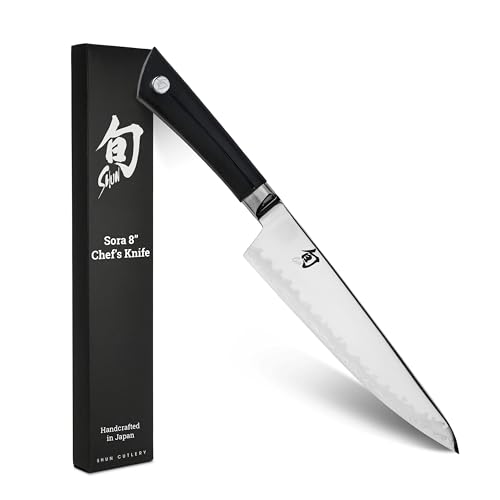
What We Like
- Razor-sharp 16-degree edge
- Lightweight at 0.4 pounds
- Full-tang textured handle for grip
- Handcrafted in Japan
Trade-offs
- Not dishwasher safe
- Narrow gyuto blade less suited for heavy chopping
A 16-degree edge is among the sharpest angles available on a production chef’s knife, so it glides through ripe tomatoes and delicate herbs with minimal effort. The San Mai construction bonds a VG10 steel core between softer 420J stainless layers, which gives the blade precision without making it prone to chipping. Weighing just 0.4 pounds, it feels light and quick in the hand, favoring cooks who prioritize speed and control over heavy-duty chopping. The textured PP/TPE handle provides a secure grip even when wet, and the full-tang design keeps the knife balanced during extended prep sessions. This knife delivers Japanese craftsmanship and razor-sharp performance at a price that appeals to cooks seeking professional quality without a premium cost.
Because of its lightweight and agile design, the Shun Sora is best suited for everyday kitchen tasks rather than heavy-duty work. For tasks like splitting large squash or cutting through bones, a sturdier knife would be more appropriate. However, for routine slicing, dicing, and mincing, this knife offers precision and responsiveness that many home cooks will appreciate. If you respect traditional Japanese knife-making and want a sharp, well-balanced blade for most kitchen tasks, this knife delivers solid performance.
Shun Classic Chef's Knife
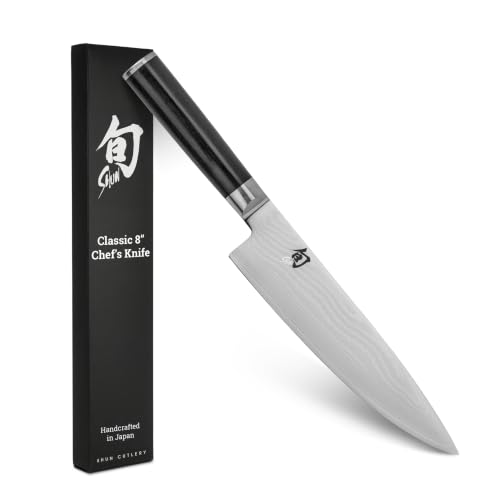
What We Like
- Razor-sharp 16-degree edge
- 68-layer Damascus cladding
- Comfortable D-shaped Pakkawood handle
- Handcrafted in Japan
Trade-offs
- Not dishwasher safe (requires hand washing)
- 0.5-pound weight feels too light for heavy chopping
The VG-MAX steel core and 68 layers of Damascus cladding give this knife a 16-degree edge that stays sharp through hours of slicing, dicing, and mincing. That precision means clean cuts through tomatoes and herbs without crushing them, so your prep work feels effortless. Handcrafted in Japan, the blade is balanced and nimble at just half a pound, making it easy to control for both delicate tasks and heavier chopping. The D-shaped Pakkawood handle fits comfortably in either hand, offering a secure grip that helps you work confidently.
This knife demands a bit more care than a dishwasher-safe model like the Victorinox Fibrox Pro. The Pakkawood handle requires hand washing and gentle storage to keep its appearance, and the Damascus layers are beautiful but need careful handling. For home cooks who value artistry and edge retention over low-maintenance convenience, the Shun Classic delivers a refined cutting experience that rewards the extra attention.
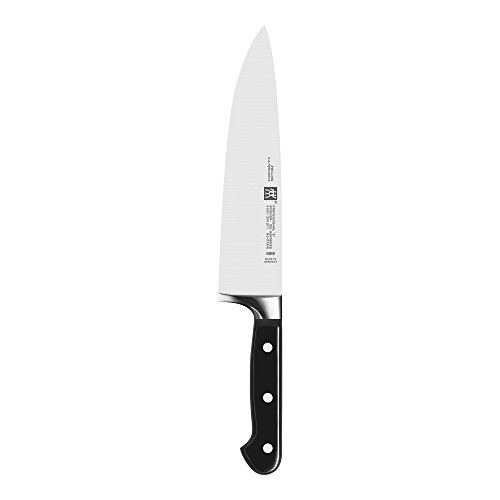
ZWILLING Professional S Chef's Knife
What We Like
- Ice-hardened FRIODUR blade for edge retention
- Precision honed with laser-controlled edge
- Full tang with three-rivet polymer handle
- Sigma forged from single piece of steel
Trade-offs
- Polymer handle lacks warmth of wood
- 15° edge angle requires careful handling
A 57 Rockwell hardness rating means this blade holds its edge far longer than typical kitchen knives, so you sharpen less and slice more. The ice-hardened FRIODUR process gives the steel superior resilience, while the 15° per side edge angle delivers precise cuts through everything from ripe tomatoes to butternut squash. This chef’s knife is suited to cooks who want professional-grade edge retention without the maintenance hassle. The special formula high carbon no stain steel resists corrosion, and the ergonomic polymer handle stays comfortable during long prep sessions. Forged from a single piece of solid steel in ZWILLING’s own German factory, it’s built to last through years of daily use.
Some cooks prefer a heavier blade that does more of the cutting work, especially when breaking down dense squash or thick cuts of meat. Still, for anyone prioritizing a long-lasting sharp edge from a brand with nearly 300 years of steel-making history, this knife delivers exactly what it promises.
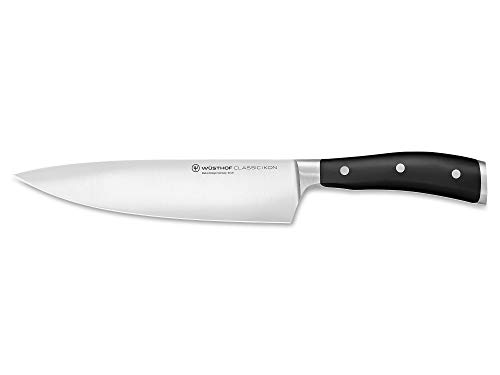
Wüsthof Classic Ikon Chef's Knife
What We Like
- Double bolster for exceptional balance
- 20% sharper with twice edge retention
- Ergonomic synthetic handle resists fading
- Forged from single block of steel
Trade-offs
- Not dishwasher safe like some competitors
- Heavier than Victorinox Fibrox Pro (0.6 vs 0.1 pounds)
The Precision Edge Technology on this 8-inch blade makes it 20% sharper with twice the edge retention compared to previous Wüsthof models, so honing is needed less often. The double bolster and ergonomic synthetic handle are designed for balance and comfort during chopping, mincing, slicing, and dicing. At 0.6 pounds, it has a substantial feel that suits dense vegetables and herbs alike.
At 0.6 pounds, this knife has a solid heft that gives it a balanced, professional feel, though it’s heavier than the Victorinox Fibrox Pro at 0.1 pounds. The double bolster contributes to that balance, and the synthetic handle won’t fade or discolor over time. If you want a sharp, ergonomic blade for regular kitchen work, this one delivers.
Product photos
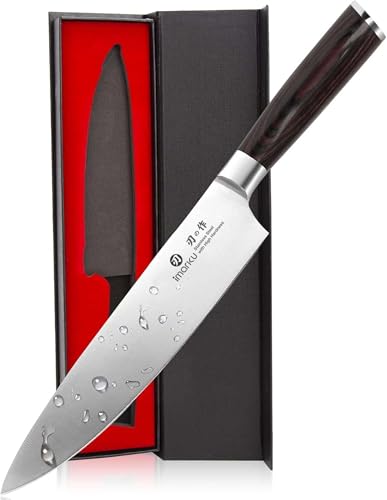
imarku Japanese Gyutou Chef Knife
What We Like
- Versatile gyutou shape for slicing, dicing, chopping
- Corrosion-resistant with 16-18% chrome
- Comfortable ergonomic Pakka handle
Trade-offs
- Lighter weight reduces momentum for heavy chopping.
The catch is that at just 0.4 pounds, it feels noticeably lighter than a forged German chef’s knife such as the WÜSTHOF Classic, which weighs 0.5 pounds. So it may not provide the same heft for rock-chopping through hard squash. Still, the imarku delivers edge retention and corrosion resistance for the budget-conscious cook who values sharpness and versatility. It’s a smart pick if you want a Japanese-style gyutou that punches above its price point.
Product photos
Mercer Culinary Millennia Chef's Knife
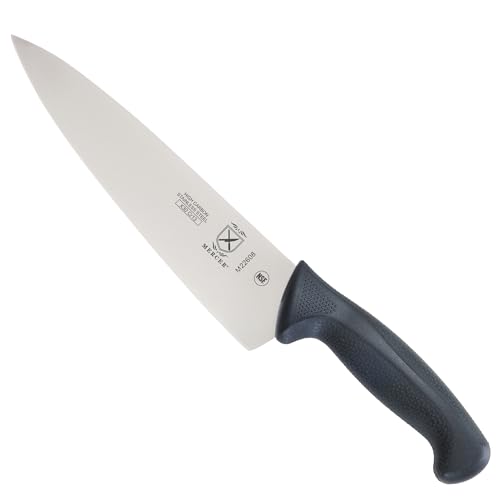
What We Like
- One-piece high-carbon Japanese steel blade
- Ergonomic non-slip handle with textured finger points
- Tang provides excellent balance
- Versatile for chopping, mincing, and dicing
Trade-offs
- Not dishwasher safe; requires hand washing
- At 0.4 pounds, lighter than forged German knives
One-piece high-carbon Japanese steel construction means the blade keeps its edge with simple maintenance, so you sharpen less and cut more. That same one-piece design runs through the handle as a full tang, giving the knife balanced weight that makes chopping and mincing feel steady. For anyone looking to upgrade from a basic blade, this combination of easy care and stable handling removes two common frustrations: a dull edge that mashes food and a knife that feels unbalanced in hand.
Weight and care are the trade-offs here. At 0.4 pounds, it’s lighter than a forged German chef’s knife such as the WÜSTHOF Classic (0.5 pounds), which some cooks prefer for heavier tasks. And while the Mercer is simple to clean, it demands hand washing, a small habit that keeps the edge and handle in good shape. For a chef’s knife that performs well for its price, this is a practical, no-fuss option.
Product photos
HOSHANHO Japanese Chef Knife

What We Like
- Ultra-sharp 13° edge per side
- High-carbon steel with 60 HRC hardness
- Ergonomic wood handle with pinch-grip bolster
- Includes elegant gift box
Trade-offs
- Hand wash only, not dishwasher safe
- At 0.8 lb, slightly heavier than some chef knives
A 13-degree edge on each side means this knife arrives with a razor-sharpness that makes slicing through tomatoes or chiffonading herbs feel effortless. The Japanese high-carbon steel (10Cr15CoMoV) hits 60 HRC, so it holds that edge longer than many softer stainless blades, and the matte finish resists corrosion. This is the pick for cooks who want professional-level sharpness right out of the box and are willing to care for a high-performance blade.
Maintenance is the main compromise: the wood handle and high-carbon steel require hand washing and occasional oiling, unlike the dishwasher-safe Victorinox Fibrox Pro. At 0.8 pounds, it has a bit more heft than the 0.4-pound Mercer Millennia, which some may find tiring during long prep sessions. But that weight also gives it a solid, balanced feel for precise cuts. If you value an ultra-sharp edge and are happy to hand-wash, this knife delivers remarkable performance for its class.
Product photos
How We Evaluated Cook Knives
We researched each knife’s construction, blade geometry, handle materials, and maintenance requirements using manufacturer documentation and expert round-ups. We also analyzed patterns in owner feedback to understand how these knives perform over months and years of regular use.
Our evaluation focused on four criteria: blade sharpness and edge retention, handle ergonomics and grip security, weight and balance for different cutting tasks, and overall value relative to construction quality. These factors determine whether a knife feels like an extension of your hand or a chore to use.
A research-led evaluation has limits, we haven’t tested these knives ourselves, and personal preference plays a major role in knife selection. What we can offer is a clear framework to help you identify which knife’s strengths align with your cooking habits.
What To Look For In Cook Knives
Choosing a cook knife means balancing blade steel, handle comfort, weight, and edge angle against your cooking style and maintenance preferences. Here’s what matters most.
Blade Material and Construction
Blade steel determines how sharp a knife gets and how long it stays that way. German stainless steel (used by WÜSTHOF and HENCKELS) offers good corrosion resistance and edge retention with a 14-20 degree edge angle. Japanese high-carbon steel (used by Shun and HOSHANHO) allows a sharper 13-16 degree edge but requires more careful maintenance. Forged blades are cut from a single piece of steel and heat-treated for durability, while stamped blades are cut from rolled steel and are lighter and more affordable.
Handle Comfort and Grip
A knife’s handle affects control and fatigue during extended use. Look for non-slip materials like the TPE on the Victorinox Fibrox Pro if your hands get wet. Full-tang construction (the blade extends through the handle) improves balance. Ergonomic shapes with textured finger points, like the Mercer Millennia, help guide your grip. Weight also matters: lighter knives (around 0.1-0.4 pounds) suit precision work, while heavier knives (0.5-0.8 pounds) provide momentum for chopping.
Edge Angle and Maintenance
The edge angle determines cutting performance and care requirements. Japanese knives with 13-16 degree edges are razor-sharp but more delicate, requiring honing and hand washing. German knives with 14-20 degree edges are more forgiving but may need sharpening more often. Consider if you are willing to hand wash your knife; dishwasher-safe options like the Victorinox Fibrox Pro and HENCKELS Classic simplify cleanup.
- Check that the knife feels balanced when you hold it at the bolster
- Confirm the blade length (8-10 inches is standard for a chef’s knife)
- Decide if you prefer a pinch grip or a handle-forward grip
- Consider storage space: longer knives (16 inches overall) need more drawer room
- Look for a knife that matches your cutting style, rock chop, push cut, or draw slice
A good rule of thumb: choose the knife that feels most natural in your hand, not the one with the flashiest specs.
Cook Knives Compared
The table below compares all ten cook knives by their key specifications, so you can see how they stack up at a glance.
| Product | Blade Material | Blade Length | Weight | Handle Material |
|---|---|---|---|---|
| Victorinox Fibrox Pro Chef's Knife | Stainless steel | 8 inches | 0.1 pounds | Thermoplastic Elastomer (TPE) |
| HENCKELS Classic Chef Knife | N/A | 8 inches | 0.3 pounds | Triple-rivet |
| WÜSTHOF Classic Chef's Knife | High-Carbon Stainless Steel | 8 inches | 8.5 oz | Synthetic, Triple-Riveted |
| Shun Sora Chef's Knife | VG10 and 420J Stainless | 8 inches | 0.4 pounds | PP/TPE polymer blend |
| Shun Classic Chef's Knife | VG-MAX with Damascus cladding | 8 inches | 0.5 pounds | D-shaped Pakkawood |
| ZWILLING Professional S Chef's Knife | High carbon no stain steel | 8 inches | 0.6 pounds | Ergonomic polymer |
| Wüsthof Classic Ikon Chef's Knife | High Carbon Stainless Steel | 8 inches | 0.6 pounds | Synthetic |
| imarku Japanese Gyutou Chef Knife | High-Carbon Stainless Steel | 8 inches | 0.4 pounds | Pakka wood |
| Mercer Culinary Millennia Chef's Knife | High-carbon Japanese steel | 8 inches | 0.4 pounds | N/A |
| HOSHANHO Japanese Chef Knife | Japanese 10Cr15CoMoV | 8 inches | 0.8 pounds | Ultra-durable wood |
Frequently Asked Questions
What is the best all-purpose cook knife for a home kitchen?
The Victorinox Fibrox Pro Chef’s Knife is the best all-purpose choice for most home cooks. It offers a sharp, laser-tested blade, a non-slip handle that stays secure when wet, and dishwasher-safe convenience, all at a price that makes it accessible. It’s lightweight at 0.1 pounds and handles slicing, dicing, and chopping with ease.
How do I choose between a German and a Japanese chef’s knife?
German knives (like WÜSTHOF and HENCKELS) typically have a heavier, more durable blade with a 14-20 degree edge that’s forgiving for heavy chopping. Japanese knives (like Shun and HOSHANHO) feature a sharper 13-16 degree edge for precise slicing but require hand washing and careful handling. Choose German for durability and ease, Japanese for precision.
What is the difference between a forged and a stamped knife?
Forged knives are cut from a single piece of steel, then heat-treated and shaped under high pressure, resulting in a heavier, more durable blade. Stamped knives are cut from rolled steel, making them lighter and more affordable. Forged knives offer better balance and edge retention, while stamped knives like the Victorinox Fibrox Pro are excellent value for everyday use.
How often should I sharpen my chef’s knife?
Home cooks should hone their knife with a honing steel before each use to maintain the edge. For sharpening, most knives need it every 2-3 months with regular use. Japanese knives with harder steel (60+ HRC) hold their edge longer but require professional sharpening or a whetstone. Dishwasher-safe knives may need more frequent sharpening due to the harsh environment.
Can I put my chef’s knife in the dishwasher?
Only if the manufacturer says it’s safe. The Victorinox Fibrox Pro and HENCKELS Classic are dishwasher safe. Most Japanese knives, including Shun and HOSHANHO, require hand washing because the high-carbon steel can rust and the wooden handles can crack. Hand washing with mild soap and drying immediately extends any knife’s life.
The Bottom Line
The Victorinox Fibrox Pro Chef’s Knife remains our best overall pick because it delivers a sharp, reliable blade with a secure grip and dishwasher-safe convenience at a price that works for almost any kitchen. It’s the knife we’d recommend to someone buying their first good chef’s knife or replacing a worn-out one.
If your budget allows for more, the WÜSTHOF Classic offers premium forged construction with twice the edge retention of previous models. The Shun Sora brings Japanese craftsmanship and a razor-sharp 16-degree edge at a more accessible price. For beginners, the Mercer Culinary Millennia provides excellent balance and an ergonomic handle without breaking the bank.
The most important factor in choosing a cook knife is how it feels in your hand. A knife that fits your grip, matches your cutting style, and suits your maintenance habits will serve you well for years. Focus on those fundamentals, and you’ll find the right blade for your kitchen.
