10 Best Desk Chairs For Lower Back in 2026
This post contains affiliate links. As an Amazon Associate, we earn from qualifying purchases.
For lasting lower back support during long workdays, the ELABEST X100 Ergonomic Mesh Office Chair leads with its 3D lumbar system that mimics the spine’s natural curve, plus 5D flip-up armrests and an extendable footrest. For fine-tuned adjustability, the Marsail Ergonomic Office Chair offers 1.18 inches of forward lumbar movement, while the CASASIO Ergonomic Office Chair uses a 4-way cushion for all-day comfort.
Lower back pain often comes from chairs that don’t match your spine’s shape or allow movement. The right chair supports the lumbar curve, breathes to keep you cool, and adjusts to your body without forcing a single posture.
This guide is based on manufacturer specifications, expert round-ups, and patterns in owner feedback across ten models. We focus on what matters most for lower back relief: lumbar adjustability, seat comfort, breathability, and build quality.
Top 10 Desk Chairs For Lower Back in the Market
Certain content that appears on this site comes from Amazon. This content is provided "as is" and is subject to change or removal at any time.
The Best Desk Chairs For Lower Back, Reviewed
ELABEST X100 Ergonomic Mesh Office Chair

What We Like
- 3D lumbar support mimics spine curvature
- 5D flip-up armrests with dense EVA foam
- 18" extendable footrest for relaxation
- Dual-Stripe AirMesh improves airflow 38%
Trade-offs
- At 43 lb, heavier for frequent moving
- Footrest adds bulk under desk
A 3D Synchro-Tilt lumbar support with force-sensitive springs actively tracks your spine’s natural curve, helping reduce fatigue during long workdays. This chair suits anyone who wants a back-friendly seat that also doubles as a gaming throne.
The trade-off is weight: at 43 pounds, it’s not a chair you’ll want to roll across the room daily. Compared to the CASASIO at 30 pounds, the ELABEST is heavier but more stable. Still, the heavy-duty Grade-4 cylinder and BIFMA-certified frame mean it’s built to hold up to 300 lbs without wobble, making it a stable choice for long hours of seating.
Marsail Ergonomic Office Chair

What We Like
- Lumbar adjusts 1.18" forward and 2.16" up/down
- 3.14" thick high-density foam seat cushion
- 3D adjustable armrests with flip-up option
- Breathable mesh back promotes airflow
Trade-offs
- Backrest recline range is 90° to 120°, not for deep reclining
A lumbar support that moves 1.18 inches forward and 2.16 inches up or down means you can dial in exactly where that lower-back pressure hits. The 3.14-inch thick high-density foam seat adds plushness without sagging, while the breathable mesh back keeps you cool during long sits. Together, these features target the core of lower-back comfort: support that adapts to you, not the other way around.
The backrest reclines from 90° to 120°, which covers most active sitting positions but won’t let you lie flat for a nap. For focused work where adjustable lumbar support matters more than a full recline, that range is plenty. The 3D armrests flip up so you can push the chair under a desk when not in use.
Product photos
CASASIO Ergonomic Office Chair
What We Like
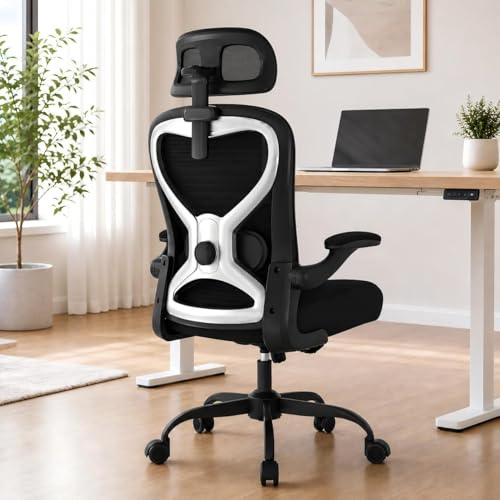
- 4-way adjustable lumbar cushion
- 3.5" virgin foam seat for all-day comfort
- 3D adjustable headrest for neck support
- Tilt & rock function with adjustable tension
Trade-offs
- Flip-up armrests lack height or width adjustment
A 3.5-inch virgin foam seat and 4-way adjustable lumbar cushion mean this chair is built to keep you comfortable through marathon work sessions. The adjustable lumbar support lets you customize lower back relief, while the ventilated mesh back keeps air flowing so you stay cool. It’s a smart pick for anyone spending 8+ hours at a desk, especially if you value a cushioned seat that won’t go flat by midday.
The trade-off comes in the armrests: they flip up to save space, but they don’t adjust in height or width like the 4D arms on the CAPOT Ergonomic Mesh Office Chair. That said, the CASASIO’s 330-pound capacity and BIFMA-tested build support daily use, and the 5-year warranty backs the purchase. If you prioritize lower back support over armrest versatility, this chair delivers where it counts.
CAPOT Ergonomic Mesh Office Chair

What We Like
- Micro-adjust lumbar with 8 levels
- Cooling Aerovith mesh seat
- Supports up to 400 lbs
Trade-offs
- At 38 lb, not easy to move often
- Seat height range 18.5-22.05 inches limits shorter users
Two inches of lumbar travel over eight distinct levels means you can dial in support exactly where your lower back needs it, not just roughly up or down. The manufacturer states this reduces lower back pressure by 50% and eases fatigue by distributing weight evenly. The breathable Aerovith mesh seat also helps, it keeps you cool during long stretches and spreads your weight to ease pelvic pressure. Reviewers note that after eight hours at a desk, the tailored fit makes a real difference in comfort.
At 38 pounds, this is not a chair you will casually roll from room to room, though the silent PU wheels glide smoothly on hard floors once it is in place. The seat height range (18.5 to 22.05 inches) also means shorter users may find the lowest setting still a bit high. Compared to the lighter Marsail Ergonomic Office Chair, the CAPOT offers a higher weight capacity, but the Marsail is easier to reposition. For someone who prioritizes lower-back customization over portability, this is the better fit.
Zeonsit Ergonomic Office Chair
What We Like
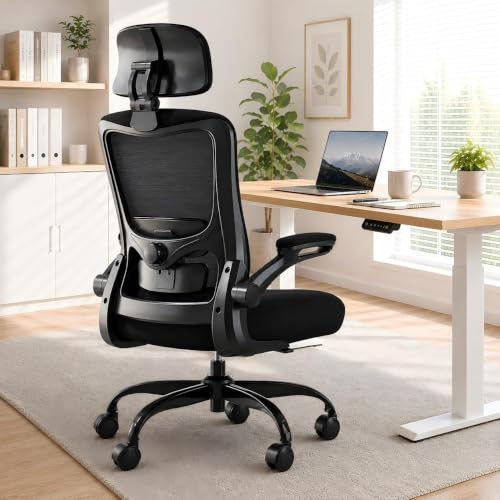
- 4-way adjustable lumbar support
- Breathable mesh back reduces heat
- 3.5-inch virgin foam cushion
- Supports up to 330 lbs
Trade-offs
- Flip-up armrests lack depth adjustment
- No forward tilt for active sitting
With a 330-pound weight capacity and a 4-way adjustable lumbar support that follows your spine’s natural curve, this chair is designed to relieve lower back pressure during long hours at a desk. The ventilated mesh back promotes airflow so you stay cool, while the thick 3.5-inch virgin foam cushion helps reduce fatigue. It’s a strong fit for anyone who needs reliable support and comfort through extended work or study sessions without overheating.
The compromise here is adjustability: the flip-up armrests provide flexible support when needed and create extra space when raised, but they lack the multi-directional control found on the ELABEST X100’s 5D arms. And if you prefer a seat that slides forward or back, this fixed-depth design may feel limiting. But for focused lower back relief at a reasonable weight capacity, the Zeonsit delivers where it counts most.
Haworth Soji Ergonomic Office Chair

What We Like
- Adjustable lumbar support
- 4D armrests for personalized fit
- Seat depth adjustment
- Greenguard Gold certified
Trade-offs
- No forward tilt feature
- At 19.8 lb, lighter than some alternatives
An adjustable lumbar support that lets you dial in exactly the right curve for your lower back is the standout feature here, so you can sit for hours without that nagging ache. The Soji also offers 4D armrests and seat depth adjustment, making it easy to tailor the chair to your body rather than forcing your body to fit the chair. It’s a thoughtful ergonomic design for anyone who spends long days at a desk and wants genuine lower back relief without sacrificing adjustability.
This model doesn’t include forward tilt, which some people use to shift posture during the day. Compared to the heavier Steelcase Amia at 54.5 lb, the Soji’s 19.8 lb frame feels noticeably lighter, so it’s easier to move around your workspace but may not feel as substantial under aggressive reclining. If you prioritize a fully customizable lumbar experience and don’t need forward tilt, this is a well-built, sustainably certified chair backed by a 12-year warranty.
Product photos
Herman Miller Classic Aeron Task Chair
What We Like
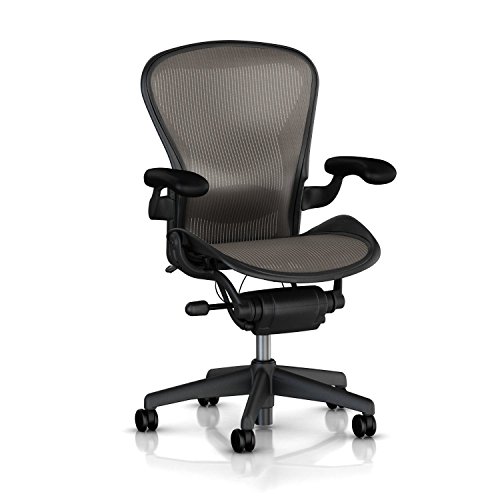
- Breathable Pellicle suspension dissipates body heat
- Kinemat tilt keeps neck to ankles natural
- Waterfall seat edge reduces thigh pressure
- 12-year Herman Miller warranty
Trade-offs
- 48.0 pounds is heavy to move around
- At 48 pounds, the chair is heavy to move frequently
The 48-pound frame of this chair signals a build meant to last, but what really sets it apart is the patented Kinemat tilt mechanism. It lets your neck, shoulders, hips, knees, and ankles pivot naturally as you recline. For anyone spending long hours at a desk, that kind of synchronized movement keeps your lower back aligned without forcing you into a single locked posture. The breathable Pellicle suspension also works hard to dissipate body heat, so you stay cool even during marathon work sessions, while the waterfall front edge takes pressure off your thighs to keep blood flowing and your focus sharp. This is a chair designed for someone who values long-term comfort and support over flashy extras.
That said, the downside is weight and adjustability. At 48 pounds, it’s not a chair you’ll want to slide around the room frequently, and the vinyl arms, while fully adjustable, lack the plush padding some users prefer. Compared to the Haworth Soji, which weighs just 19.8 pounds and offers a flexible mesh back, the Aeron feels more substantial and less portable. But its 12-year warranty and proven build quality make it a worthwhile investment for those who want a reliable, breathable seat that supports the lower back without overheating.
Product photos
Steelcase Amia Office Chair
What We Like
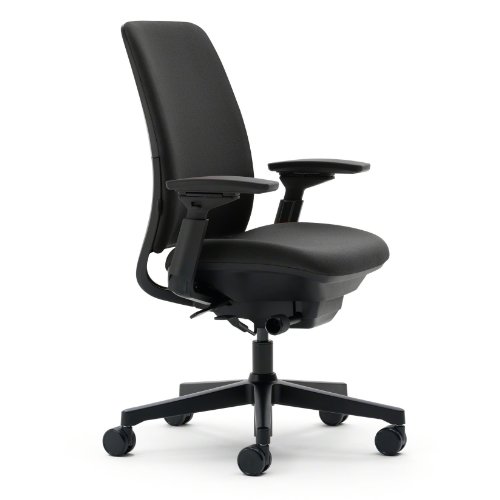
- Hidden LiveLumbar adapts to your movement
- 4D arm support for personalized fit
- Seat with flexible edges and extra cushioning
- Carbon Neutral certified sustainable option
Trade-offs
- At 54.5 pounds, it's heavy to move
- No headrest included for neck support
Weighing 54.5 pounds, this is a substantial chair that you won’t want to move around your home office frequently. Compared to the lighter Marsail Ergonomic Office Chair at 30.4 pounds, the Amia is clearly meant to stay put once placed. If you value dynamic lumbar support and a tailored fit over portability, this is a premium choice. Not ideal for those who need a lightweight chair to shift between rooms or who require a headrest for full upper-back support.
BestOffice Ergonomic Office Chair
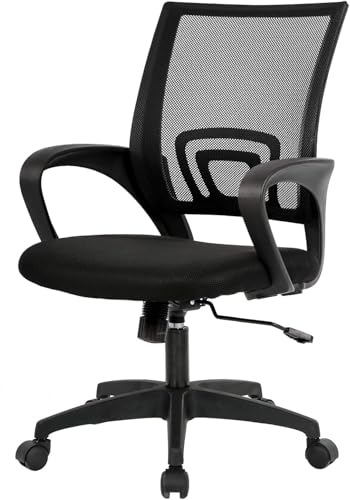
What We Like
- Breathable mesh back keeps you cool
- Quick 10-15 minute assembly
- Seat height adjusts from 17.1 to 20.3 inches
Trade-offs
- Mid-back design limits upper back coverage
- No headrest included
It’s a smart pick for anyone who wants essential ergonomic features without spending a lot, especially if you value a cool, comfortable seat over extra bells and whistles.
The 250-pound weight limit also means it’s not built for heavier users. But if your priority is solid lower back support on a budget, and you don’t need a headrest or a higher weight capacity, this chair delivers where it counts.
Product photos
TRALT Ergonomic Desk Chair

What We Like
- Adjustable lumbar matches spine curve
- High-resilience foam won't flatten quickly
- Breathable mesh back prevents heat buildup
- BIFMA-certified lift resists sinking
Trade-offs
- Armrests lack depth and width adjustment
The adjustable lumbar mechanism here isn’t a fixed plastic bump, it actually moves to match your spine’s natural curve, which makes a real difference during long sitting sessions. The high-resilience molded foam seat holds its shape far longer than budget foam, so you won’t hit a hard bottom after a few months. With a 330-pound capacity and a BIFMA-certified lift that won’t slowly sink, this chair is made to stay reliable year after year. It’s an especially smart pick if you want genuine lower back support without spending a fortune.
The high-resilience molded foam seat won’t flatten after a year, so you avoid the sagging and discomfort that plagues many chairs at this price point. The adjustable lumbar support lets you dial in the depth to match your spine’s natural curve, genuinely relieving lower back pressure during long sitting sessions. Compared to the ELABEST X100, which offers 5D armrests and a footrest, the TRALT keeps things simpler but focuses its budget on the lumbar support and durable foam where it matters most for back relief.
Product photos
How We Evaluated Desk Chairs For Lower Back
To find the best desk chairs for lower back support, we studied product specs, manufacturer documentation, and expert round-ups from ergonomic specialists. We also looked at patterns in owner feedback to understand what works in real home and office setups.
Our top criteria were lumbar adjustability (how much the support moves forward, up, and down), seat cushion density and thickness, backrest breathability, and overall adjustability like armrests and recline range. A chair that lets you dial in lumbar position and sit for hours without overheating scored highest.
This is a research-led evaluation, not a hands-on test. We rely on verified data and consistent owner reports to recommend chairs that support lower backs effectively. If you have a medical condition, consult a healthcare professional for personalized advice.
What To Look For In Desk Chairs For Lower Back
Choosing a chair for lower back relief means focusing on adjustability and support that matches your body. Here is what matters most.
Look for a chair with lumbar support that moves forward and up/down, a seat cushion at least 3 inches thick, and a breathable mesh back to prevent heat buildup during long sits.
Lumbar Adjustability
The best chairs for lower back have lumbar support that moves independently. Look for models that adjust forward (at least 1 inch) and vertically (2 inches or more). Some chairs offer micro-adjust levels, like the CAPOT with 8 settings, while others like the Steelcase Amia use a dynamic system that adapts to your movement. A fixed lumbar pad is less effective for different body types.
Seat Cushion Comfort
A thick, high-density foam cushion prevents pressure on the tailbone and lower spine. Virgin foam, like the 3.5-inch cushion in the CASASIO or Zeonsit, resists flattening over time. Seat depth adjustment is also helpful if you have longer legs, as it ensures your knees are at a 90-degree angle with support under your thighs.
Breathability and Build Quality
Mesh backs allow airflow and reduce sweat during long hours. The Herman Miller Aeron uses Pellicle suspension for maximum breathability. Weight and warranty also matter: heavier chairs (over 40 pounds) tend to be sturdier but harder to move. Look for BIFMA certification for safety and a warranty of at least 5 years for long-term value.
- Check if the lumbar support moves forward and up/down independently.
- Ensure the seat cushion is at least 3 inches thick and made of high-resilience foam.
- Confirm the backrest is breathable mesh, not solid padding.
- Look for seat height range that fits your desk and leg length.
- Verify the chair’s weight and warranty match your home setup.
A good rule: the more adjustments a chair offers for lumbar, seat, and armrests, the better it can fit your unique spine and sitting habits.
Desk Chairs For Lower Back Compared
The table below compares key features of the ten best desk chairs for lower back support, including lumbar adjustability, seat cushion type, and weight.
| Product | Weight Capacity | Lumbar Support | Armrests |
|---|---|---|---|
| ELABEST X100 Ergonomic Mesh Office Chair | 300 lbs | 3D Synchro-Tilt | 5D Flip-Up |
| Marsail Ergonomic Office Chair | 330 lbs | 1.18" forward/back, 2.16" up/down | 3D adjustable, flip-up PU-padded |
| CASASIO Ergonomic Office Chair | 330 lbs | 4-way adjustable cushion | Flip-up |
| CAPOT Ergonomic Mesh Office Chair | 400 lbs | 2 inches / 8 levels | 4D Flip-up |
| Zeonsit Ergonomic Office Chair | 330 lbs | 4-Way Adjustable | Flip-Up |
| Haworth Soji Ergonomic Office Chair | 350 lb | Adjustable | 4D adjustable |
| Herman Miller Classic Aeron Task Chair | N/A | Lumbar Pad | Fully Adj Vinyl Arms |
| Steelcase Amia Office Chair | N/A | LiveLumbar, dynamic | 4D (height, width, pivot, depth) |
| BestOffice Ergonomic Office Chair | 250 lbs | Lumbar Support | Ergonomic armrests |
| TRALT Ergonomic Desk Chair | 330 lbs | Adjustable depth | Flip-up |
Frequently Asked Questions
What type of chair is best for lower back pain?
A chair with adjustable lumbar support that moves forward and up/down is most effective. Look for a breathable mesh back, a thick foam seat, and adjustable armrests. The ELABEST X100 and Marsail models offer these features for different needs.
How much should I spend on an ergonomic desk chair?
Value varies by features. Budget-friendly options like the BestOffice provide basic lumbar support, while premium chairs like the Herman Miller Aeron offer long warranties and advanced ergonomics. Focus on adjustability and comfort over price alone.
Is mesh or foam better for lower back support?
Mesh backs are better for breathability and airflow, reducing heat buildup. Foam seats provide cushioning for the tailbone. Many top chairs combine a mesh back with a thick foam seat for the best of both worlds, like the CASASIO and Zeonsit.
Can a desk chair fix my lower back pain?
A good chair can reduce strain by supporting your lumbar curve and encouraging better posture, but it is not a medical solution. For persistent pain, consult a doctor or physical therapist. Chairs like the Steelcase Amia with dynamic lumbar help support natural movement.
How do I adjust my chair for lower back support?
Start by setting your seat height so your feet are flat on the floor and knees at 90 degrees. Then adjust the lumbar support to fit the curve of your lower spine. Armrests should let your elbows rest at 90 degrees. Most chairs have levers or knobs for these adjustments.
The Bottom Line
For most people, the ELABEST X100 Ergonomic Mesh Office Chair is the best overall choice because its 3D lumbar support adapts to your spine, and its 5D armrests and footrest add versatility for long days. It is ideal for professionals and gamers who need all-day comfort with adjustable features.
If you need precise lumbar tuning, the Marsail offers 1.18 inches of forward adjustment and a thick foam seat. For a budget-friendly option with reliable support, the BestOffice provides breathable mesh and quick assembly at an affordable price.
The single most important factor in choosing a desk chair for lower back is lumbar adjustability. A chair that lets you move the support forward and vertically to match your spine will make the biggest difference in comfort and pain relief.
