9 Best Desk Chairs For Scoliosis in 2026
This post contains affiliate links. As an Amazon Associate, we earn from qualifying purchases.
For those managing scoliosis, the right desk chair can make the difference between a productive day and one spent shifting in discomfort. The Herman Miller Classic Aeron Task Chair earns our Best Overall spot for its highly adjustable support and breathable Pellicle suspension that works with your spine’s natural curve. We also highlight the Herman Miller Embody for advanced ergonomic support and the TRALT Ergonomic Desk Chair as a durable budget option.
Scoliosis introduces unique challenges to sitting for long hours: uneven pressure on the spine, a need for precise lumbar alignment, and the risk of muscle fatigue from poor posture. A chair that allows you to fine-tune the backrest, seat height, and arm position is not a luxury, it is a necessity for comfort and long-term spinal health.
This guide is research-based, drawing on manufacturer specifications, expert ergonomic round-ups, and patterns in owner feedback. We evaluated over a dozen models on adjustability, build quality, and support for scoliosis-specific needs to help you choose with confidence.
Top 9 Desk Chairs For Scoliosis in the Market
Certain content that appears on this site comes from Amazon. This content is provided "as is" and is subject to change or removal at any time.
The Best Desk Chairs For Scoliosis, Reviewed
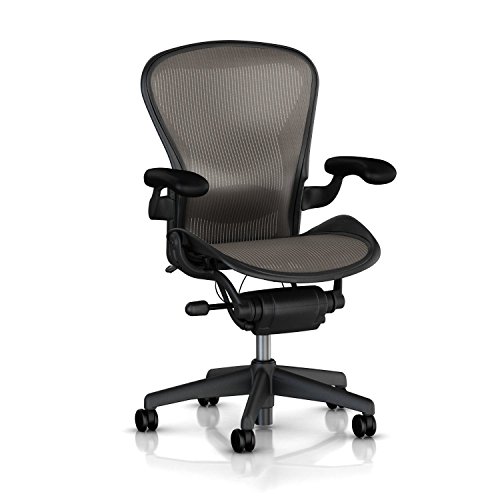
Herman Miller Classic Aeron Task Chair
What We Like
- Breathable Pellicle suspension for cooling
- Waterfall seat edge for leg circulation
- 12-year warranty for long-term peace of mind
Trade-offs
- At 48 pounds, it is heavy to move
- No headrest for upper spine support
Backed by a 12-year warranty that includes an Official Born-On-Date sticker, this chair is designed to endure years of daily use without losing its supportive feel. That long coverage reflects the confidence in its construction, making it a reliable investment for any home office setup. Owners often note that the warranty alone sets it apart from competitors that offer shorter protection periods.
The main trade-off is the weight: at 48 pounds, it’s not a chair you’ll want to move from room to room frequently. Compared to the TRALT Ergonomic Desk Chair at 28 pounds, the Aeron is significantly heavier, so it’s best set up in one dedicated spot. The vinyl arms are fully adjustable, but some may prefer a softer or more padded material. Still, for those who prioritize spinal alignment and long-term durability, the Aeron’s thoughtful design and generous warranty make it a standout choice.
Product photos
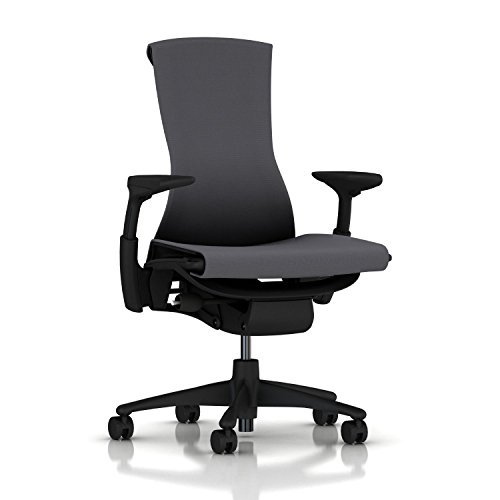
Herman Miller Embody Ergonomic Office Chair
What We Like
- Pixelated support reduces pressure points
- Backfit adjustment matches spine curve
Trade-offs
- At 52 pounds, it is heavy to move
- No headrest included for neck support
The Embody’s Pixelated Support uses a dynamic matrix of pixels in both seat and backrest to automatically conform to your micro-movements, distributing weight evenly and reducing pressure. This design, guided by over 20 physicians and PhDs in biomechanics and ergonomics, encourages healthy circulation and focus throughout the day. For someone with scoliosis who needs consistent, adaptive support, this chair’s thoughtful engineering makes it a standout option.
The main trade-off is its weight: at 52 pounds, it’s not a chair you’ll want to move from room to room, so it’s best suited for a dedicated workspace. Compared to the lighter TRALT Ergonomic Desk Chair (28 pounds), the Embody is significantly heavier but offers far more advanced spinal alignment features. It also lacks a headrest, which some users may want for full upper-body support. If your priority is a chair that actively works with your spine’s unique curves and encourages healthy movement, the Embody delivers on that promise.
Product photos
TRALT Ergonomic Desk Chair with Lumbar Support

What We Like
- High-resilience foam won't flatten
- Adjustable lumbar matches spine curve
- Breathable mesh prevents heat buildup
- BIFMA-certified anti-sink lift mechanism
Trade-offs
- No seat angle or recline tension adjustment
- Mesh back lacks padding for upper back
- Flip-up armrests are not height adjustable
A 330-pound weight capacity on a reinforced nylon base with a metal core means this chair can handle heavier users without the cracking or sinking that plagues budget options. The high-resilience molded foam seat is designed to bounce back day after day instead of flattening out within months, which directly addresses the comfort longevity that many shoppers worry about. Combined with an adjustable lumbar support that actually lets you dial in depth to match your spine’s natural curve, this chair offers genuine lower back relief for long sitting sessions. It’s a smart pick if you need durable, breathable support, especially since the mesh back keeps you cool and the anti-sink lift holds your height reliably over time.
The trade-off is that you don’t get the fine-tuning of some premium ergonomic chairs, there’s no seat angle adjustment or recline tension control, so you’re limited to a fixed tilt. The breathable mesh back keeps air moving and won’t peel like faux leather, but it lacks the padded upper back support some users might want. And while the flip-up armrests are convenient for tucking the chair away, they aren’t height adjustable, which can be a miss if you need to rest your elbows at a specific angle. Still, the high-resilience molded foam seat won’t flatten after a year, and the adjustable lumbar support genuinely relieves lower back pressure, features that many chairs at this level simply don’t deliver.
Product photos
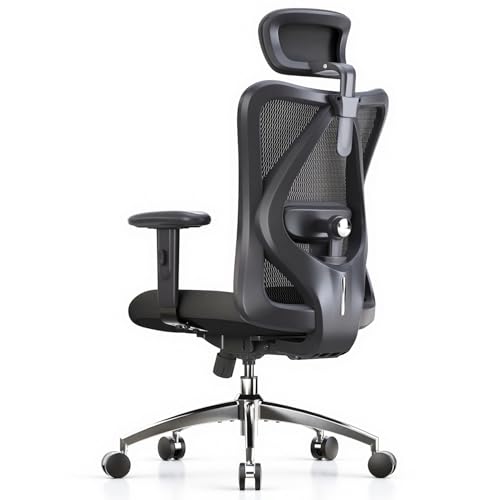
SIHOO M18 Ergonomic Office Chair
What We Like
- Adjustable lumbar support
- Breathable mesh backrest
- 4-point ergonomic support
- Reclines up to 128°
Trade-offs
- Armrests only adjust in 2 directions
- Weight capacity limited to 330 lbs
- No seat angle adjustment
The SIHOO M18 supports up to 330 pounds and adjusts to fit people from 5’6″ to 6’2″, making it a versatile option for those seeking targeted lower back relief. Its adjustable lumbar support lets you dial in the curve that matches your spine, while the breathable mesh backrest keeps you cool during long stretches at a desk.
The armrests only move in two dimensions, so you won’t get the full range of adjustment found on pricier chairs like the Herman Miller Embody. That matters if you need to fine-tune arm height and angle for precise shoulder alignment. But for the price, the SIHOO M18 delivers solid ergonomic fundamentals with a focus on lumbar support that is often overlooked in this price range. It’s a practical, no-fuss seat that puts your lower back first without overwhelming you with complex adjustments.
Marsail Ergonomic Office Chair with Mesh Back

What We Like
- 3D adjustable armrests for custom arm positions
- Adaptable lumbar support moves forward/back and up/down
- Breathable mesh back promotes airflow
- Thick high-density foam seat cushion
Trade-offs
- Mesh back offers less cushioning than padded chairs
- Headrest adjusts only 2D (up/down and tilt)
The lumbar support adjusts 1.18 inches forward and backward and 2.16 inches up and down, so you can dial in exactly where it hits your lower back. That kind of precision matters when you need to maintain proper spinal alignment through long workdays. The 3D armrests move forward, back, left, and right, and they flip up when you want to scoot closer to the desk. The 3.14-inch thick high-density foam seat provides generous cushioning, and the breathable mesh back keeps air moving so you don’t overheat. This chair is built for someone who wants to fine-tune every contact point rather than settle for a one-size-fits-all design.
The mesh back, while supportive and cool, lacks the plush padding some users prefer for leaning back during breaks. The headrest adjusts in two directions (up/down and tilt), which may not suit every user’s preference. If you value deep customization of lumbar and arm support above all else, this chair performs well where it matters most.
Product photos
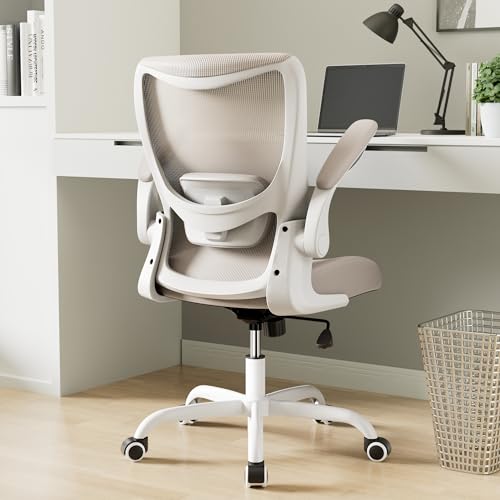
MUXX.STIL Ergonomic Desk Chair with Lumbar Support
What We Like
- Flip-up armrests for space saving
- Adjustable lumbar support cushion
- Breathable mesh backrest
- Waterfall edge seat cushion
Trade-offs
- 264 lb max capacity limits larger users
- Seat height adjustment only 3.74 inches
The flip-up armrests let you slide this chair completely under a desk when not in use, making it a smart fit for tight home offices or multipurpose rooms where every inch counts. The adjustable lumbar support cushion and S-shaped backrest work together to cradle the lower back, which can help maintain comfortable posture during long work sessions. With a breathable mesh back and a waterfall-edge seat that promotes leg circulation, it’s designed for all-day comfort without taking over your floor space.
With a 264-pound weight capacity, this chair suits average-sized users well, while the TRALT model supports 330 pounds and adds a headrest. The MUXX.STIL’s compact build and flip-up armrests make it easy to slide under a desk, freeing up floor space in a small home office.
Product photos
MINOMAC Ergonomic Mesh Office Chair with Footrest

What We Like
- 400 lb capacity on Class-3 gas lift
- Positionable lumbar support panel
- Three lockable recline angles
- 360° rotating height-adjustable armrests
Trade-offs
- Mesh back lacks cushioning for prolonged pressure points
- Footrest adds bulk when not in use
A 400 lb weight capacity on a Class-3 gas lift means this chair handles heavy-duty use without sagging or drifting down over time. The lumbar support panel slides up and down so you can dial the curve exactly where your lower back needs it. Three lockable recline angles let you sit upright for typing, lean back at 110° for reading, or kick out the built-in footrest and recline to 135° for a real break, all without leaving the chair. It’s built for full eight-hour days and taller users who need a stable, supportive base.
The mesh back breathes well but provides less cushioning for the upper spine than padded options like the SIHOO M18. For anyone needing heavy-duty support with adjustable lumbar and recline, this chair performs well where it matters most.
Product photos
CAPOT Ergonomic Mesh Office Chair

What We Like
- 8-level micro-adjust lumbar support
- Cooling Aerovith mesh seat
- Supports up to 400 lbs
Trade-offs
- No seat depth adjustment for leg length
- Headrest only fits 5'5" to 6'2" users
There is no seat depth slider to adjust for different leg lengths. Compared to the Herman Miller Classic Aeron, which offers seat angle adjustment, the CAPOT gives you more lumbar customization but less overall fit flexibility. If micro-adjust lower back support is your priority and you fall within the height range, this chair excels where it counts.
CASASIO Ergonomic Office Chair with 4-Way Lumbar
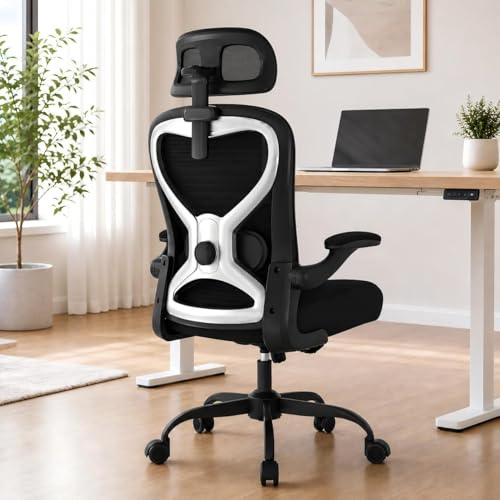
What We Like
- 4-way adjustable lumbar support
- 3.5" virgin foam seat cushion
- 3D adjustable headrest
- Flip-up armrests for tight spaces
Trade-offs
- Flip-up armrests lack depth adjustment for some desks
- No seat angle tilt adjustment for reclining preference
A 3.5-inch virgin foam seat cushion and a 4-way adjustable lumbar support make this chair a standout for anyone who spends eight or more hours seated. The foam distributes weight evenly to prevent soreness, while the contoured mesh back follows your spine and the lumbar cushion lets you dial in the exact lower-back support you need. The 3D headrest cradles your neck during focused work or reading, and the flip-up armrests slide neatly under a desk when you need to push in close.
Weight is the main drawback: at 30 pounds, it’s heavier than the TRALT Ergonomic Desk Chair (28 lb), so moving it between rooms takes a little more effort. Still, the generous cushion and customizable lumbar relief give it an edge for all-day comfort that few competitors at this price point can match.
Product photos
How We Evaluated Desk Chairs For Scoliosis
Our evaluation began with a review of product specifications and manufacturer documentation for each chair, focusing on the features that matter most for scoliosis support. We then cross-referenced these details with expert round-ups from ergonomic specialists and analyzed patterns in long-term owner feedback to understand real-world performance.
We prioritized three criteria above all others. Lumbar adjustability was the most critical factor: a chair must allow you to move the lumbar support forward, backward, up, and down to match your spine’s unique curve. Seat design came next, including waterfall edges for leg circulation and foam density that resists sagging. Build quality and warranty rounded out our assessment. A chair for scoliosis is a long-term investment that must hold up to daily use.
A research-based evaluation has limits: individual comfort is subjective. What we can offer is a clear picture of which chairs provide the adjustability and support that ergonomic research and owner experience consistently point to as essential for scoliosis.
What To Look For In Desk Chairs For Scoliosis
When shopping for a desk chair for scoliosis, focus on adjustability, support, and durability. The chair must adapt to your spine, not the other way around.
Look for a chair with adjustable lumbar support that moves in multiple directions, a seat with a waterfall edge, and a weight capacity that matches your build. Avoid chairs with fixed backrests or minimal adjustability.
Lumbar Support Adjustability
The most important feature for scoliosis is a lumbar support that you can position precisely. Look for chairs that offer both height and depth adjustment, this allows you to fill the gap between your lower back and the chair back, supporting the natural curve of your spine. The CAPOT Ergonomic Mesh Office Chair offers 8-level micro-adjust lumbar support, while the CASASIO provides 4-way adjustment. A fixed lumbar pad is rarely sufficient for scoliosis.
Seat Design and Cushioning
A seat that cuts off circulation or puts pressure on the backs of your thighs can worsen discomfort. A waterfall edge, where the front of the seat curves downward, relieves pressure on the legs. For cushioning, high-resilience foam like that in the TRALT chair resists flattening over time, while the Herman Miller Aeron’s Pellicle suspension provides a tensioned, breathable surface that conforms without foam. Consider seat depth: if you have shorter legs, a shallower seat or one with depth adjustment is ideal.
Adjustability and Range of Motion
A scoliosis-friendly chair should let you adjust seat height, armrests, and recline tension. Armrests that move in 3D (up/down, forward/back, and swivel) help you find a neutral shoulder position. Recline options allow you to shift pressure points throughout the day. The MINOMAC chair offers three lockable recline angles, while the SIHOO M18 reclines up to 128 degrees. Avoid chairs with fixed armrests or a single locked recline position.
- Check that the lumbar support moves both vertically and horizontally.
- Ensure the seat height range fits your desk and leg length.
- Verify the weight capacity accommodates your body.
- Look for a warranty that covers the frame and mechanism for several years.
A good rule of thumb: if you cannot adjust the lumbar support in at least two directions, keep looking.
Desk Chairs For Scoliosis Compared
The table below compares key specifications for each of the nine chairs we evaluated, making it easy to see which models offer the adjustability and support features most important for scoliosis.
| Product | Weight | Lumbar Support | Armrests |
|---|---|---|---|
| Herman Miller Classic Aeron Task Chair | 48.0 pounds | Lumbar Pad | Fully Adj Vinyl Arms |
| Herman Miller Embody Ergonomic Office Chair | 52.0 pounds | Backfit Adjustment | Fully adjustable |
| TRALT Ergonomic Desk Chair with Lumbar Support | 28.0 pounds | Adjustable depth | Flip-up Armrests |
| SIHOO M18 Ergonomic Office Chair | 38.0 pounds | Adjustable Lumbar Support | 2D Armrests |
| Marsail Ergonomic Office Chair with Mesh Back | 30.4 pounds | Adjustable Lumbar Support | 3D adjustable |
| MUXX.STIL Ergonomic Desk Chair with Lumbar Support | 26.4 pounds | Adjustable Lumbar Support | Flip-up 90° |
| MINOMAC Ergonomic Mesh Office Chair with Footrest | N/A | Adjustable slide panel | 360° rotating, height-adjustable |
| CAPOT Ergonomic Mesh Office Chair | 38.0 pounds | 2 inches, 8 levels | 4D Flip-up Arms |
| CASASIO Ergonomic Office Chair with 4-Way Lumbar | 30.0 pounds | 4-way adjustable | Flip-up |
Frequently Asked Questions
What is the best desk chair for scoliosis?
The Herman Miller Classic Aeron Task Chair is widely considered the best overall choice for scoliosis. It offers highly adjustable support, breathable Pellicle suspension that conforms to the spine, and a waterfall seat edge that promotes leg circulation. It also comes with a 12-year warranty.
How should I sit in a desk chair with scoliosis?
Sit with your hips pushed back against the chair so your lower back contacts the lumbar support. Keep your feet flat on the floor, knees at a 90-degree angle, and shoulders relaxed. Adjust the armrests so your elbows rest at a 90-degree angle while typing. Take breaks every 30 to 60 minutes to stand and stretch.
Is a mesh or foam seat better for scoliosis?
Both can work, but the choice depends on your needs. Mesh seats, like the Pellicle suspension on the Herman Miller Aeron, are breathable and conform to your shape without creating pressure points. High-resilience foam seats, like those in the TRALT and CASASIO chairs, offer plush cushioning that resists flattening. Avoid low-density foam that sags quickly.
What features should I look for in a chair for scoliosis?
Prioritize adjustable lumbar support that moves in multiple directions, a waterfall seat edge, adjustable armrests, and a recline function. Look for a chair with a weight capacity that matches your build and a warranty that reflects long-term durability. Avoid fixed backrests and non-adjustable armrests.
Can a desk chair help with scoliosis pain?
A well-designed desk chair can significantly reduce discomfort by supporting proper spinal alignment and reducing pressure points. It cannot correct the curvature of scoliosis, but it can make sitting for long hours more comfortable and help prevent additional muscle fatigue or strain.
The Bottom Line
For most people managing scoliosis during long desk hours, the Herman Miller Classic Aeron Task Chair is the best investment. Its combination of breathable support, extensive adjustability, and a 12-year warranty makes it a reliable choice for a permanent workstation. If your budget is tighter, the TRALT Ergonomic Desk Chair offers durable foam support and adjustable lumbar at a more accessible price point.
Those who need advanced ergonomic customization should consider the Herman Miller Embody for its pixelated pressure distribution and Backfit adjustment. For heavier users, the MINOMAC chair supports up to 400 pounds with a positionable lumbar panel and multiple recline angles.
The single most important factor in choosing a desk chair for scoliosis is lumbar adjustability. Without the ability to fine-tune the support to your spine’s unique curve, no other feature will compensate.
