9 Best Gas Fireplace Glass Cleaners in 2026
This post contains affiliate links. As an Amazon Associate, we earn from qualifying purchases.
The Quick N Brite Fireplace Glass Cleaner Kit is our best overall pick because it safely removes creosote, soot, and smoke residue without harsh chemicals, making it ideal for routine maintenance. For heavy buildup, the Sylvan Hills Fireplace Glass Cleaner offers professional-strength cleaning, while the Rutland White Off Gas Fireplace Glass Cleaner targets stubborn white mineral deposits.
Dirty fireplace glass blocks the warmth and beauty of the flames, but finding a cleaner that works without damaging the glass can be tricky. Gas fireplace owners face unique challenges like white mineral residue and the need for non-abrasive formulas that won’t micro-pit the surface.
We evaluated these cleaners based on manufacturer specifications, expert recommendations, and patterns in owner feedback to find the most effective solutions for different types of buildup and fireplace styles. This guide helps you choose the right cleaner for your specific needs, whether you own a gas, wood, or pellet stove.
Top 9 Gas Fireplace Glass Cleaners in the Market
Certain content that appears on this site comes from Amazon. This content is provided "as is" and is subject to change or removal at any time.
The Best Gas Fireplace Glass Cleaners, Reviewed
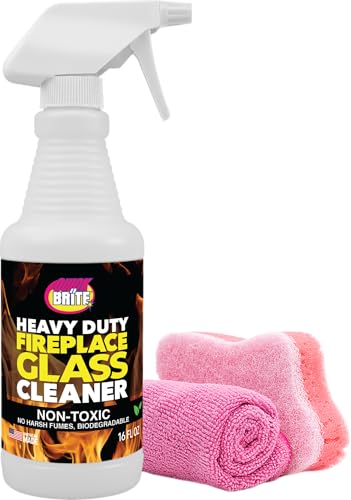
Quick N Brite Fireplace Glass Cleaner Kit
What We Like
- Removes creosote, soot, smoke residue
- Safe for all glass surfaces
- Environmentally friendly and non-toxic
Trade-offs
- Requires cool glass for application
A 16-ounce bottle with a finger sprayer means you can tackle soot, creosote, and smoke residue without having to scrub endlessly. The formula is safe for all glass surfaces, gas stove cooktops, fireplace doors, and ceramic glass, so you don’t have to worry about scratches. It’s also biodegradable and non-toxic, which makes it a great fit for homes where safety and environmental impact matter.
The biggest thing to know is that you have to let the glass cool completely before using this cleaner, so you can’t just spray it on right after the fire dies down. For really grimy spots, you might need to go over them twice. Compared to the Sylvan Hills Fireplace Glass Cleaner, which also targets tough stains, the Quick N Brite kit uses environmentally safe ingredients that are biodegradable and non-toxic. It’s a well-rounded choice for anyone who wants a reliable, all-in-one solution without harsh chemicals.
Sylvan Hills Fireplace Glass Cleaner

What We Like
- Professional-strength carbon dissolver
- Fast-acting spray & sit formula
- Streak-free, crystal-clear finish
- Multi-stove compatibility
Trade-offs
- Requires application on cool glass only
- Needs sit time before wiping
The Sylvan Hills Fireplace Glass Cleaner uses a professional-strength carbon dissolver to break through baked-on creosote and soot, restoring glass clarity without heavy scraping. Its fast-acting spray-and-sit formula does the hard work for you: apply to cool glass, let it loosen stubborn stains, and wipe away. This makes it ideal for wood, pellet, and coal stoves that see heavy use and accumulate thick deposits over time. If you want a cleaner that tackles serious buildup with minimal elbow grease, this one delivers.
The trade-off is that it requires a cool surface and a short wait time before wiping, which may slow down a quick touch-up. Compared to the Quick N Brite kit that includes a cloth and sponge for immediate wiping, Sylvan Hills asks for a little more patience. But for deeply embedded soot and creosote, the chemical action here is stronger, making it the better choice for heavy-duty maintenance rather than daily freshening.
Product photos
The Chimney Shop Stove Bright Glass Cleaner

What We Like
- Formulated for pellet stove glass
- Streak-free shine for clear viewing
- Non-abrasive, safe for ceramic glass
- Trusted by professionals
Trade-offs
- Only designed for pellet stove glass
A 16-ounce spray bottle of Stove Bright Glass Cleaner is purpose-built for pellet stove glass, so it tackles the stubborn soot and creosote that builds up on those high-temperature surfaces. The ammonia-free, non-abrasive formula restores a streak-free shine without scratching the ceramic or tempered glass, making it a reliable choice for anyone who wants a clear view of the flames after daily or weekly maintenance. It’s especially well-suited for pellet stove owners who need a cleaner that handles the unique residue from pellet burning.
Pellet stove owners get a formula that’s built for their specific needs, so there’s no guesswork about whether it will handle the soot and creosote from pellet burning. The targeted formula and professional-grade reputation make this a practical pick that gets the job done. But if you have a gas fireplace with standard glass, you might find a more versatile option like Quick N Brite Fireplace Glass Cleaner Kit, which includes a cloth and sponge for broader use.
DAGREM U Fireplace Glass Cleaner Spray

What We Like
- Includes microfiber towel and brush
- 16.9 oz bottle for multiple applications
- Helps loosen soot, smoke, and creosote
- Designed for routine wood stove maintenance
Trade-offs
- Requires cooled glass before application
- Needs abrasive-free wiping with included towel
A 16.9-ounce spray bottle means you can clean your fireplace glass several times over the burning season without running out mid-job. DAGREM U pairs that generous supply with a microfiber towel and a white cleaning brush, so you have everything you need to loosen soot, smoke film, and creosote buildup right out of the box. This kit is a smart pick for anyone who wants an effective cleaner without spending extra on separate tools. The spray helps break down stubborn dark spots on cooled glass, making routine maintenance less of a chore and leaving you with a clearer view of the flames.
You must wait until the glass is completely cool before applying, which can slow down a quick touch-up after a fire. For most homeowners looking for a practical all-in-one kit that includes the tools needed for routine maintenance, this set delivers what it promises without requiring separate purchases.
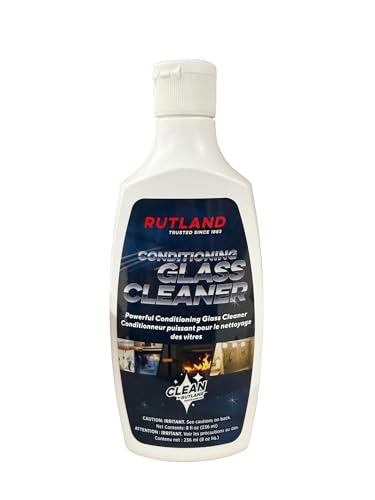
Rutland Fireplace Glass Cleaner
What We Like
- Leaves invisible silicone coating
- Micro scrubbers won't scratch glass
- Works on ceramic glass surfaces
- Quick work of soot and creosote
Trade-offs
- 8 oz bottle is smaller than many competitors
- Not ideal for those who prefer a silicone-free formula
A conditioning formula that leaves an invisible silicone coating sets this cleaner apart from standard sprays. That coating means your glass stays cleaner longer and each subsequent cleaning gets easier, a real time-saver for regular fireplace users. The micro scrubbers tackle soot and creosote without scratching the ceramic glass, so you can scrub with confidence. It’s ideal for anyone who wants less frequent cleaning and a protective barrier on their glass.
The 8 oz bottle is smaller than the 16 oz options from Quick N Brite or Sylvan Hills. If you have a large or heavily soiled fireplace, you may go through it faster. But the conditioning effect means you won’t need to clean as often, balancing out the smaller volume. For those who prioritize long-term ease over raw quantity, this Rutland cleaner delivers real value.
MEECO'S RED DEVIL Wood Stove Glass Cleaner

What We Like
- Two 16-ounce bottles included
- Removes baked-on creosote and soot
- Streak-free finish with trigger spray
Trade-offs
Two 16-ounce bottles in one pack mean you can clean multiple fireplaces or keep a spare on hand without reordering. The ready-to-use trigger spray makes it simple to tackle baked-on creosote, soot, and smoke residue on wood, pellet, and coal stoves as well as fireplace inserts. For anyone who burns solid fuel regularly, this value pack delivers dependable cleaning power at a practical per-bottle cost.
If your primary fireplace runs on gas, you’ll want to look at Rutland White Off Gas Fireplace Glass Cleaner instead. But for wood, pellet, or coal stove owners who clean often, the two-bottle pack and streak-free formula make it a smart, straightforward choice.
Rutland White Off Gas Fireplace Glass Cleaner

What We Like
- Removes white residue from gas fireplace glass
- Non-scratching formula won't micro-pit glass
- Ammonia-free, safe for ceramic glass
Trade-offs
- Only 8 oz, smaller than many competitors' 16 oz bottles
- Cream requires hand application and buffing
An ammonia-free cream specially formulated to lift white residue from gas log fireplace doors, this cleaner targets the exact buildup that standard soot removers often miss. The non-scratching formula means you can scrub without worrying about micro-pitting the glass, which keeps your fireplace doors looking clear longer. It’s also safe for cooktops, stainless steel, and fiberglass, making it a versatile option if you want one cleaner for multiple surfaces around the hearth.
The 8-ounce size is half the volume of many competitors’ 16-ounce bottles. And because it’s a cream rather than a spray, you’ll need to apply and buff by hand, which takes a bit more elbow grease. But if white residue is your main frustration, this targeted formula gets the job done without the harsh chemicals that can damage ceramic glass.
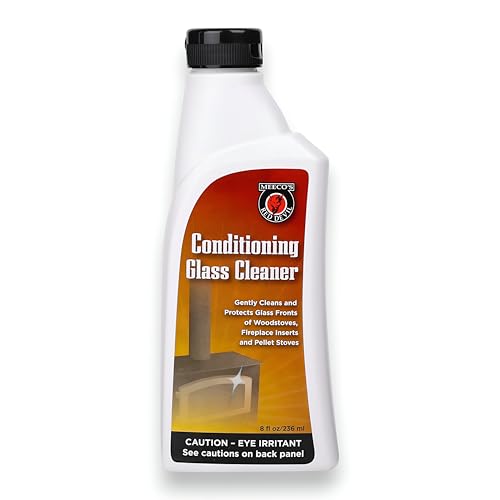
MEECO'S RED DEVIL Conditioning Glass Cleaner
What We Like
- Leaves protective silicone layer against soot
- Non-scratch cream formula for delicate glass
- Gently removes soot, smoke, and creosote
- Trusted quality since 1937
Trade-offs
- Requires buffing for heavy buildup
The silicone layer it leaves behind is the standout feature here, it creates an invisible coating that repels future soot and creosote, so each cleaning gets easier over time. That makes this an especially smart pick if you use your fireplace often and want to cut down on scrubbing. The non-scratch cream formula is gentle on delicate ceramic and glass surfaces, so you won’t worry about damaging the door while tackling stubborn residue.
For heavy buildup, you’ll need to repeat the buffing step to restore clarity, so it’s less of a quick spray-and-wipe solution. But if protecting the glass and reducing future cleaning effort matters more than bottle size, this conditioning cleaner is a reliable choice.
Speedy White Hearth & Stove Cleaner

What We Like
- Works on glass, brick, and stone
- Biodegradable formula
- Also cleans carpet and clothing stains
- Large 22 oz bottle
Trade-offs
- Not safe for decorative brass, aluminum, or slate
- Requires you to supply your own cloth
A 22-ounce trigger spray bottle means you get plenty of cleaner for multiple cleanings without running out halfway through the job. This multi-surface formula tackles smoke-stained glass, brick, and stone hearths, so you can refresh the whole fireplace area in one go. It also handles grease, vinyl, plastics, carpet, and clothing stains, making it a versatile helper beyond just the hearth. The biodegradable formula is a nice bonus for anyone mindful of what they spray around their home.
Compared to Quick N Brite’s kit, which comes with a cloth and sponge but only 16 ounces, Speedy White gives you more cleaner and broader surface compatibility, though you’ll have to supply your own cloth. If your hearth includes brass or slate accents, this cleaner won’t work on them, but for glass, brick, stone, and even clothing stains, it’s a practical all-in-one solution.
How We Evaluated Gas Fireplace Glass Cleaners
This evaluation is based on manufacturer documentation, expert round-ups from hearth and home professionals, and consistent patterns in owner feedback across thousands of reviews. We analyzed what real users report about each product’s effectiveness, ease of use, and compatibility with different glass types.
We focused on four criteria that matter most for this category. First, cleaning power against the specific residues common to gas fireplaces: soot, creosote, smoke film, and white mineral deposits. Second, glass safety, since abrasive formulas can cause permanent micro-pitting that clouds the view. Third, ease of use, including whether the product requires scrubbing, buffing, or extended sit time. Fourth, value, considering bottle size, included accessories, and whether the formula conditions the glass to reduce future buildup.
A research-led evaluation has limits: we cannot replicate every user’s exact buildup conditions, fireplace type, or cleaning frequency. What we can do is identify the products that consistently satisfy owners with similar needs, and highlight the trade-offs that matter most when making a purchase.
What To Look For In Gas Fireplace Glass Cleaners
Choosing the right cleaner means matching the formula to your specific residue type, glass surface, and cleaning routine. The wrong product can leave streaks, damage the glass, or fail to remove tough buildup entirely.
Look for a cleaner that targets your specific residue type (soot, creosote, or white mineral deposits), is safe for your glass surface (ceramic or tempered), and matches your preferred cleaning style (spray-and-wipe or spray-and-sit).
Residue Type
Gas fireplaces produce different residue than wood or pellet stoves. White mineral deposits from gas combustion require a specialized formula like the Rutland White Off, which uses a non-scratching cream that won’t micro-pit the glass. For heavy black soot and creosote from wood or pellet stoves, a professional-strength carbon dissolver like the Sylvan Hills cleaner is more effective.
Glass Safety and Compatibility
Most fireplace glass is ceramic or tempered, both of which are sensitive to abrasive cleaners. Look for formulas labeled non-abrasive, non-scratching, or safe for ceramic glass. Avoid household glass cleaners with ammonia, which can damage the glass over time. Products like the Rutland Fireplace Glass Cleaner use micro scrubbers that are gentle on the surface while still lifting tough residue.
Application Method
Cleaners fall into two categories: spray-and-wipe and spray-and-sit. Spray-and-wipe products like the Quick N Brite kit work well for light to moderate buildup and quick maintenance. Spray-and-sit formulas like the Sylvan Hills require a few minutes to dissolve heavy carbon before wiping, which reduces scrubbing but adds time to the process. Consider your cleaning frequency and patience level when choosing.
- Check whether the cleaner requires cool glass before application (most do).
- Confirm the bottle size matches your cleaning frequency and fireplace type.
- Look for included accessories like microfiber towels or brushes for better value.
- Verify the formula is safe for your specific glass type (ceramic vs. Tempered).
- Consider a conditioning formula if you want to reduce future buildup between cleanings.
For routine maintenance, a spray-and-wipe cleaner with a microfiber cloth is usually all you need.
Gas Fireplace Glass Cleaners Compared
The table below compares all nine cleaners side by side, including their best use case, key features, and important trade-offs to help you narrow down your choice.
| Product | Size | Surface | Formula |
|---|---|---|---|
| Quick N Brite Fireplace Glass Cleaner Kit | 16 oz | Cool glass only | Biodegradable, non-toxic |
| Sylvan Hills Fireplace Glass Cleaner | 16 oz | Cool glass | Spray & Sit |
| The Chimney Shop Stove Bright Glass Cleaner | 16 oz | Pellet stove glass | Ammonia-free, non-abrasive |
| DAGREM U Fireplace Glass Cleaner Spray | 16.9 fl oz | Cooled fireplace glass | N/A |
| Rutland Fireplace Glass Cleaner | 8 oz | Ceramic glass | Conditioning cleaner |
| MEECO'S RED DEVIL Wood Stove Glass Cleaner | 16 fl oz each | Glass surfaces | N/A |
| Rutland White Off Gas Fireplace Glass Cleaner | 8 Fl Oz | Cooktops, stainless steel, fiberglass | Cream |
| MEECO'S RED DEVIL Conditioning Glass Cleaner | 8 fl oz | Ceramic and glass | Non-scratch cream |
| Speedy White Hearth & Stove Cleaner | 22 oz | Glass, brick, stone, vinyl, plastic | Biodegradable |
Frequently Asked Questions
Can I use regular glass cleaner on my fireplace glass?
No. Standard household glass cleaners often contain ammonia or other chemicals that can damage ceramic fireplace glass over time. They also lack the cleaning power needed to remove soot, creosote, and white mineral deposits. Always use a cleaner specifically formulated for fireplace glass.
How often should I clean my gas fireplace glass?
It depends on how frequently you use the fireplace and the type of fuel you burn. Many homeowners clean the glass every one to two weeks during heavy use, or every month during lighter use. A conditioning cleaner can help extend the time between cleanings by reducing future buildup.
What causes white residue on gas fireplace glass?
White residue is typically caused by mineral deposits from the combustion process in gas fireplaces. Unlike soot from wood stoves, this residue requires a specialized cleaner like the Rutland White Off that targets mineral buildup without scratching the glass.
Do I need to let the glass cool completely before cleaning?
Yes. Most fireplace glass cleaners require the glass to be completely cool before application. Applying cleaner to hot glass can cause streaking, uneven cleaning, and potential damage to the glass surface. Always check the manufacturer’s instructions for your specific product.
Can I use a fireplace glass cleaner on my wood stove or pellet stove?
Many fireplace glass cleaners are compatible with wood, pellet, and coal stoves, but not all. The Chimney Shop Stove Bright Glass Cleaner is specifically formulated for pellet stove glass, while the Sylvan Hills and MEECO’S RED DEVIL cleaners work across multiple stove types. Check the product label to confirm compatibility with your specific appliance.
The Bottom Line
For most homeowners, the Quick N Brite Fireplace Glass Cleaner Kit is the best overall choice. It safely removes tough residue without harsh chemicals, so it works well for routine maintenance on gas, wood, and pellet stoves. If you face heavy soot and creosote buildup from frequent wood or pellet stove use, the Sylvan Hills Fireplace Glass Cleaner offers professional-strength cleaning that minimizes scrubbing.
For those battling white mineral deposits specific to gas fireplaces, the Rutland White Off Gas Fireplace Glass Cleaner is the targeted solution. Budget-conscious shoppers will appreciate the DAGREM U Fireplace Glass Cleaner Spray, which includes a microfiber towel and brush for a complete cleaning kit at a great value.
The single most important factor in choosing a fireplace glass cleaner is matching the formula to your specific residue type. A cleaner that works perfectly for wood stove soot may not touch white gas fireplace deposits, and vice versa. Know what you’re cleaning, and choose accordingly.
