10 Best Office Chairs For Back And Hip Pain in 2026
This post contains affiliate links. As an Amazon Associate, we earn from qualifying purchases.
The CASASIO Ergonomic Office Chair is our best overall pick for back and hip pain because its 3.5-inch virgin foam seat and 3D adjustable headrest provide lasting support without a premium price tag. For those who need top-tier ergonomics, the Herman Miller Classic Aeron Task Chair offers patented Kinemat tilt, while the Steelcase Amia delivers dynamic LiveLumbar support for pressure-free sitting.
Back and hip pain from sitting comes down to two things: pressure points at the seat and a lack of lumbar curve support. A chair that lets you adjust the seat height, back angle, and lumbar depth makes a real difference in how your spine and hips align over an eight-hour day.
We evaluated these chairs by analyzing specifications, manufacturer documentation, expert ergonomic round-ups, and patterns in owner feedback. This guide covers 10 models across budget, premium, and specialty categories so you can match the right support to your body and workspace.
Top 10 Office Chairs For Back And Hip Pain in the Market
Certain content that appears on this site comes from Amazon. This content is provided "as is" and is subject to change or removal at any time.
The Best Office Chairs For Back And Hip Pain, Reviewed
CASASIO Ergonomic Office Chair
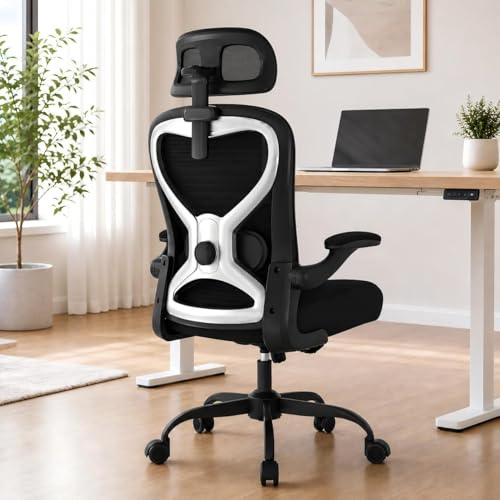
What We Like
- 3.5-inch virgin foam seat
- 3D adjustable headrest
- Tilt and rock with adjustable tension
Trade-offs
- Flip-up armrests lack depth or width adjustment
- At 30 pounds, lighter than some heavy-duty chairs
A 3.5-inch virgin foam seat that distributes weight evenly means you can sit for eight-plus hours without that familiar ache in your hips and thighs. This chair is built for someone who needs all-day comfort right out of the box, with a 330-pound weight capacity and a reinforced metal base that feels solid without being overly heavy.
The trade-off here is the flip-up armrests: they tuck neatly under a desk to save space, but they don’t offer the depth or width adjustments you get on a chair like the Steelcase Amia. If you need to dial in arm position precisely, that could be a limitation. Still, the CASASIO gives you a 3D adjustable headrest, a breathable mesh back, and a gentle rocking motion with adjustable tension, all for a more accessible price point. It’s a well-rounded pick that puts comfort first where it matters most.
Herman Miller Classic Aeron Task Chair
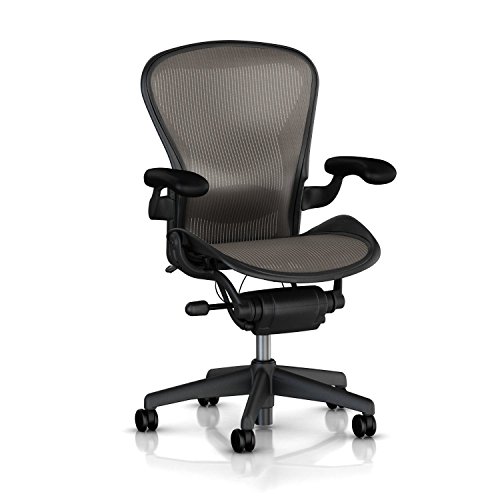
What We Like
- Patented Kinemat tilt for natural pivot
- Breathable Pellicle suspension dissipates heat
- Waterfall seat edge relieves thigh pressure
- 12-year Herman Miller warranty
Trade-offs
- At 48 lb, it is heavy to move
- No headrest or adjustable lumbar depth listed
The patented Kinemat tilt mechanism lets your neck, shoulders, hips, knees, and ankles pivot naturally, so your body moves with the chair rather than fighting it. That fluid motion, paired with the breathable Pellicle suspension that dissipates heat, makes long hours at a desk far less punishing on your back and hips. The waterfall front edge also takes pressure off your thighs, keeping circulation going and helping you stay alert. This is a chair built for someone who spends entire days seated and refuses to compromise on support or durability, backed by a 12-year warranty that signals confidence in its construction.
At 48 pounds, this is not a chair you will casually reposition. The vinyl arms and fixed lumbar pad (no depth adjustment listed) mean it is less customizable than some alternatives. Compared to the Steelcase Amia, which offers four points of adjustability and a fabric seat, the Aeron delivers a more specialized ergonomic experience through its suspension and tilt engineering, but it asks you to accept a heavier frame and fewer tweakable parts. If you prioritize a cool, supportive seat that moves with you over a lighter, more adjustable design, this premium chair is worth the extra investment.
Product photos
Steelcase Amia Office Chair
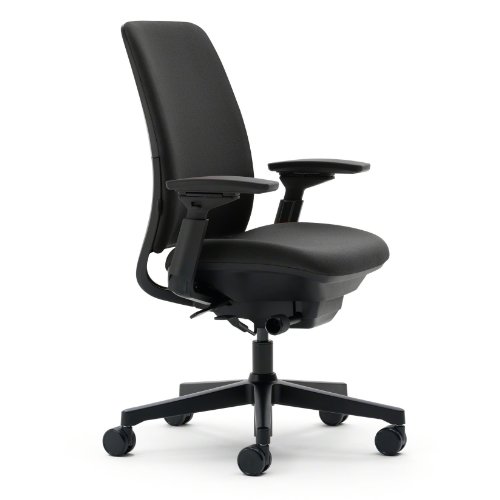
What We Like
- LiveLumbar adjusts to your movement
- Extra cushioning for pressure-free sitting
- 4D arm support for personalized fit
- Carbon Neutral certified
Trade-offs
- At 54.5 lb, it's heavy to move around
- No headrest for neck support
The Steelcase Amia’s hidden LiveLumbar system moves with you, offering dynamic lower back support that adapts as you shift throughout the day, a real plus if back pain keeps you from settling in. With extra cushioning and flexible seat edges, it’s built to keep pressure off your hips during long sits, making it a thoughtful choice for anyone who spends 8-10 hours at a desk. The 4D armrests let you dial in height, width, pivot, and depth, so your shoulders can relax while you work.
That said, the Amia is a hefty chair at 54.5 pounds, so rearranging your home office setup takes some effort. It also lacks a headrest, which means taller users or those who like to lean back fully won’t get neck support. Compared to the lighter Haworth Soji (19.8 lb), the Amia is a more stationary piece, better suited for a dedicated workstation than a chair you’d move between rooms. For focused, all-day comfort with smart lumbar support, it’s a premium pick that delivers where it counts.
BestOffice Ergonomic Office Chair
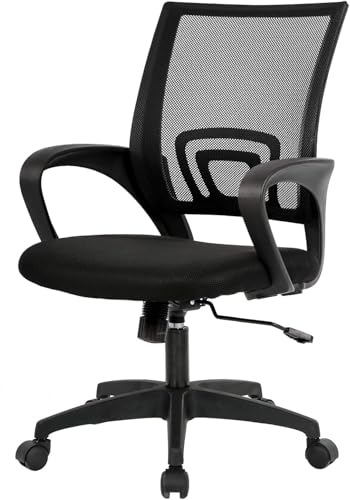
What We Like
- Breathable mesh back keeps you cool
- Supports up to 250 lbs
- Quick 10-15 minute assembly
Trade-offs
- Mid-back design lacks head and upper back support
- No seat depth or tilt adjustment for hip positioning
The trade-off is a mid-back design that stops short of the shoulders, so it won’t help with upper back or neck pain. Compared to the CASASIO Ergonomic Office Chair with its 4-way lumbar and higher weight limit, the BestOffice lacks the adjustability and cushioning that hip pain sufferers often need. It’s a smart pick for light-duty home office use, but not for all-day comfort or serious postural issues.
Product photos
TRALT Ergonomic Desk Chair

What We Like
- High-resilience foam won't flatten
- Adjustable lumbar depth for spine curve
- Breathable mesh back prevents heat buildup
- BIFMA-certified anti-sink lift mechanism
Trade-offs
- No tilt lock or rocking function
- Mesh back lacks padding for leaning back comfortably
A 330-pound weight capacity with a metal-core base means this chair handles heavier builds without the cracking or wobble that plagues budget plastic bases. The high-resilience molded foam seat is designed to hold its shape far longer than cheaper foam, so you won’t feel the seat bottoming out after months of daily use. For anyone dealing with lower back pain, the adjustable lumbar mechanism lets you dial in depth to match your spine’s natural curve, offering genuine pressure relief during long sitting sessions. The breathable mesh back keeps air moving, so you stay cool and never deal with peeling faux leather.
This chair keeps things simple: there’s no tilt lock or rocking feature, so if you like to recline or rock while you work, you’ll miss that flexibility. Compared to the CASASIO Ergonomic Office Chair, which offers a 3.5-inch cushion and tilt-and-rock functionality, the TRALT focuses on sturdy, long-lasting lumbar support at a more accessible price point. That makes it a smart pick for value-conscious shoppers who prioritize back health over extra adjustments.
Product photos
Fizzin Mesh Office Chair
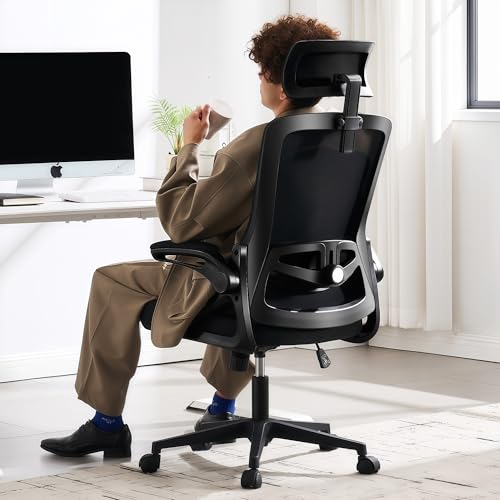
What We Like
- Adjustable lumbar support for back pain relief
- Adjustable lumbar support 1" forward/back, 3.15" up/down
Trade-offs
- Armrests only adjust 90° up, not 4D
- Lumbar adjusts only 1 inch forward/backward
The armrests only flip up 90 degrees instead of offering the full 4D adjustability found on the CAPOT Ergonomic Mesh Office Chair, which also has a 400-pound capacity. That means less flexibility for positioning your arms, but the Fizzin focuses its adjustability on the lumbar and headrest instead. If you want targeted back support and a high weight limit over complex armrests, this chair covers the essentials well.
Cloomey Big and Tall Office Chair

What We Like
- Inflatable lumbar support for custom fit
- 500 lb weight capacity for larger users
- Extra wide seat for comfort
- Upgraded rubber wheels protect floors
Trade-offs
- At 45 lb, heavy to move around
- Inflatable lumbar requires manual adjustment
- No headrest included for neck support
A 500 lb weight capacity means this chair is built for larger frames without sacrificing stability. The inflatable lumbar support lets you dial in the exact amount of lower back pressure you need, which is a real advantage if you deal with back pain from long sitting hours. The extra wide seat and padded armrest cushions add to the wrap-around comfort, making it a strong option for anyone who wants a supportive, roomy chair that feels more like a hug than a perch.
At 45 pounds, this chair is heavier than some alternatives, which can make repositioning it across a room a chore. If you prefer a lighter chair or a back support that doesn’t require manual inflation, you might want to consider other options. But for heavy-duty support and a customizable lumbar curve, this chair delivers.
CAPOT Ergonomic Mesh Office Chair

What We Like
- Micro-adjust lumbar with 8 levels
- Cooling Aerovith mesh seat
- 5-year warranty with free parts
Trade-offs
- Heavy at 38 pounds to move
- No seat depth adjustment for shorter users
For those who require precise lower back support during long workdays, the CAPOT Ergonomic Mesh Office Chair provides a solution that keeps you cool. The lumbar support offers 2 inches of adjustment across 8 levels, targeting the L1-L5 spine region to reduce lower back pressure by 50%. This targeted relief is paired with an enlarged seat cushion made from exclusive Aerovith Mesh, which enhances support by 30% and cuts pelvic pressure by 20%. Reviewers note the breathable design helps maintain comfort during extended sitting sessions, making it a practical choice for focused desk work.
Weight is the trade-off here: at 38 pounds, it’s not a chair you’ll want to slide around the room daily. Compared to the lighter Haworth Soji (19.8 pounds), the CAPOT is a more permanent fixture in your workspace. That heft comes from a stainless steel base rated for 400 pounds and a leak-proof gas lift, which reviewers say feels solid under you. For someone who values pinpoint lumbar adjustability and long-haul comfort over portability, this is a durable choice.
COLAMY High Back Executive Chair
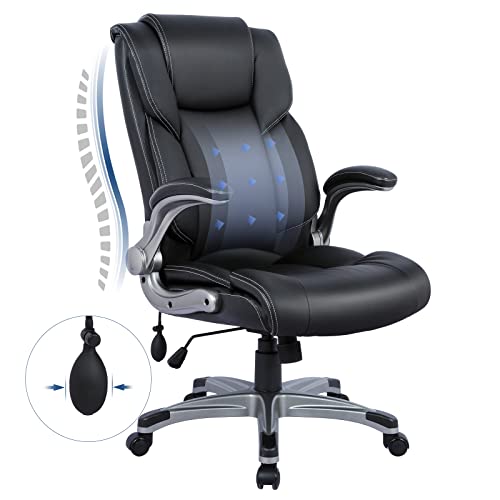
What We Like
- Customizable inflatable lumbar support
- Space-saving flip-up armrests
- Synchro tilt with lock for relaxation
Trade-offs
- Heavier than many alternatives at 38.6 lbs
The built-in inflatable lumbar airbag sets this chair apart from fixed-pad designs, letting you dial in exactly the lower-back pressure you need. That targeted support can make a real difference during long work sessions, especially if you struggle with back fatigue. Combined with a high back that cradles your neck and shoulders, the COLAMY offers a cocoon-like feel that prioritizes comfort. It’s a strong pick if you want plush leather upholstery and the ability to fine-tune your lumbar fit without buying extra cushions.
At 38.6 pounds, this chair is noticeably heavier than the CASASIO mesh chair (30 lbs), so moving it around the room takes more effort. The flip-up arms are clever for tucking under a desk, and the inflatable lumbar support lets you dial in exactly the pressure you need. For someone who values adjustable back support and a premium look over portability, this chair delivers a comfortable, personalized seat.
Product photos
Haworth Soji Ergonomic Office Chair

What We Like
- Fully assembled out of the box
- 4D adjustable armrests for custom fit
- Flexible mesh back promotes airflow
- 12-year warranty backs durability
Trade-offs
- No forward tilt for active sitting
- Mesh back offers less cushioning for hips
Weighing just 19.8 pounds, the Soji is easy to move from desk to desk or tuck away when not in use. Its flexible mesh back breathes to keep you cool during long sessions, while the 4D armrests let you dial in support exactly where you need it. For someone who values a nimble, adjustable seat that arrives fully assembled and ready to roll, this chair delivers convenience without skimping on ergonomic essentials.
The Soji skips forward tilt, so if you need that active-sitting feature for shifting pressure off your lower back, you’ll want to look elsewhere. Its mesh back breathes well to keep you cool during long hours, but the lack of padding means those with hip discomfort might find a cushioned seat more comfortable. If you value a lightweight, adjustable chair with a 12-year warranty and don’t mind a plastic base, this is a smart, sustainable choice.
Product photos
How We Evaluated Office Chairs For Back And Hip Pain
Our evaluation is research-based. We studied manufacturer specifications, expert ergonomic round-ups from physical therapy and workplace health sources, and common themes in owner feedback across hundreds of reviews. No chair was physically tested by our team.
We focused on four criteria that matter most for back and hip pain: seat cushion density and thickness, lumbar adjustability (depth, height, or inflation), armrest adjustability, and weight capacity. A chair that fails on any of these can shift pressure to the hips or lower back over time.
A research-led evaluation has limits. Owner experiences vary widely by body type, sitting posture, and desk setup. We present the data so you can match a chair’s adjustability range to your own height, weight, and pain points.
What To Look For In Office Chairs For Back And Hip Pain
Choosing a chair for back and hip pain means looking beyond the price tag. The right seat cushion, lumbar support, and adjustability features determine whether you feel relief or discomfort after a long day.
Focus on seat foam density and thickness, adjustable lumbar depth and height, armrest adjustability, and weight capacity. These four features directly affect how your spine and hips align during prolonged sitting.
Seat Cushion And Hip Support
The seat cushion is the first line of defense against hip pain. Look for high-resilience foam at least three inches thick. Thinner foam compresses quickly, transferring pressure to the sit bones and hips. Virgin foam, like the 3.5-inch foam in the CASASIO, holds its shape longer than recycled foam.
Lumbar Support Adjustability
A fixed lumbar bump helps some people but can worsen pain if it hits the wrong spot. The best chairs offer adjustable lumbar depth (forward and backward) and height (up and down). Inflatable lumbar support, found on the Cloomey Big and Tall, lets you fine-tune the curve. Micro-adjust lumbar with multiple levels, like the CAPOT’s eight-level system, gives precise control.
Armrest And Tilt Adjustability
Armrests that adjust in four directions (height, width, depth, and pivot) let you keep your shoulders relaxed and elbows at 90 degrees, reducing upper back strain that can radiate to the hips. Tilt and rock functions with adjustable tension allow you to shift positions throughout the day, which reduces static pressure on the hips.
- Check whether the seat depth is appropriate for your thigh length (two to three inches between the back of your knee and the seat edge).
- Confirm the weight capacity matches or exceeds your body weight.
- Measure the seat height range against your desk height to ensure your feet rest flat on the floor.
- Look for a waterfall seat edge to reduce pressure behind the knees.
A good rule of thumb: if you cannot adjust at least the lumbar depth and seat height, the chair is unlikely to relieve back and hip pain for long sitting sessions.
Office Chairs For Back And Hip Pain Compared
The table below compares all 10 chairs across the key features that affect back and hip pain relief, including cushion type, lumbar adjustability, and weight capacity.
| Product | Weight Capacity | Lumbar Support | Weight |
|---|---|---|---|
| CASASIO Ergonomic Office Chair | 330 lbs | 4-Way Adjustable | 30.0 pounds |
| Herman Miller Classic Aeron Task Chair | N/A | Lumbar Pad | 48.0 pounds |
| Steelcase Amia Office Chair | N/A | LiveLumbar system | 54.5 pounds |
| BestOffice Ergonomic Office Chair | 250 lbs | Lumbar Support | 19.0 pounds |
| TRALT Ergonomic Desk Chair | 330 lbs | Adjustable depth mechanism | 28.0 pounds |
| Fizzin Mesh Office Chair | 400 lbs | Adjustable Lumbar Support | 25.4 pounds |
| Cloomey Big and Tall Office Chair | 500 lbs | Inflatable airbag | 45.0 pounds |
| CAPOT Ergonomic Mesh Office Chair | 400 lbs | Adjustable Lumbar | 38.0 pounds |
| COLAMY High Back Executive Chair | 300 lbs | Inflatable airbag | 38.6 pounds |
| Haworth Soji Ergonomic Office Chair | 350 lb | Lumbar Support | 19.8 pounds |
Frequently Asked Questions
What type of office chair is best for back and hip pain?
A chair with a thick, high-density foam seat cushion and adjustable lumbar support is best for back and hip pain. Look for models that let you change the lumbar depth and height, and choose a seat with a waterfall front edge to reduce pressure on your thighs and hips.
Is a mesh or cushioned seat better for hip pain?
A cushioned seat with high-resilience foam is generally better for hip pain because it distributes pressure more evenly than mesh. Mesh seats offer breathability but can create pressure points on the sit bones over long periods. If you prefer mesh, look for one with a thick foam layer beneath.
How important are adjustable armrests for back pain?
Adjustable armrests are very important for back pain. They allow you to keep your shoulders relaxed and elbows at a 90-degree angle, which reduces strain on your upper back and neck. Four-way adjustable armrests (height, width, depth, pivot) offer the best fit.
Can a heavy-duty chair help with hip pain for larger users?
Yes, a heavy-duty chair with a higher weight capacity often has a wider, thicker seat cushion and a sturdier frame. This provides better support and prevents the seat from sagging, which can worsen hip pain. The Cloomey Big and Tall chair supports up to 500 pounds and includes inflatable lumbar support.
What is the difference between synchro tilt and tilt lock for hip pain?
Synchro tilt lets the seat and backrest move together as you lean back, keeping your hips in a natural position. Tilt lock lets you lock the chair at a specific recline angle. Both help reduce static pressure on the hips by allowing you to change positions throughout the day.
The Bottom Line
The CASASIO Ergonomic Office Chair is the best overall choice for most people dealing with back and hip pain. Its thick virgin foam seat and 3D adjustable headrest provide the cushioning and support needed for long workdays, all at a price that won’t strain your budget.
If your pain requires more advanced ergonomics, the Herman Miller Classic Aeron Task Chair offers patented tilt technology and breathable suspension, while the Steelcase Amia delivers dynamic lumbar support that moves with you. Both are worth paying more for if you sit for eight or more hours daily.
The single most important factor in choosing a chair for back and hip pain is seat cushion quality. No amount of lumbar adjustment or armrest flexibility will compensate for a seat that compresses and transfers pressure to your hips after an hour. Start there, then layer in the adjustability your body needs.
