10 Best Office Chairs For Back Support And Posture in 2026
This post contains affiliate links. As an Amazon Associate, we earn from qualifying purchases.
The TRALT Ergonomic Office Chair earns our Best Overall pick for its adjustable lumbar support that follows the spine’s natural curve and a high-resilience foam seat that won’t flatten over time. For precise lower back positioning, the Marsail Ergonomic Office Chair offers four-way lumbar adjustment, while the Steelcase Amia provides dynamic LiveLumbar support that moves with you.
Sitting for hours in a chair that doesn’t support your lower back can lead to slouching, discomfort, and fatigue. The right chair for back support and posture keeps your spine aligned, distributes weight evenly, and lets you adjust key contact points to fit your body.
This guide is based on a review of specifications, manufacturer documentation, expert round-ups, and patterns in owner feedback. We focused on lumbar support adjustability, seat comfort, build quality, and range of ergonomic features to help you find the chair that fits your workspace and your body.
Top 10 Office Chairs For Back Support And Posture in the Market
Certain content that appears on this site comes from Amazon. This content is provided "as is" and is subject to change or removal at any time.
The Best Office Chairs For Back Support And Posture, Reviewed
TRALT Ergonomic Office Chair

What We Like
- Adjustable lumbar support for spinal curve
- High-resilience foam seat won't flatten
- Breathable mesh back prevents heat buildup
- BIFMA-certified anti-sink lift mechanism
Trade-offs
- Flip-up armrests lack 3D or 4D adjustability
- Mesh backrest lacks privacy for open office settings
An adjustable lumbar support that lets you dial in the depth to match your spine’s natural curve is the feature that sets this chair apart for back health. Combined with a high-resilience molded foam seat that won’t flatten after a year, you get lasting lower back relief and cushioning that doesn’t bottom out during long workdays. The breathable mesh back keeps air flowing so you stay cool, and the BIFMA-certified lift holds your height setting reliably without sinking. This combination of features makes it a strong option for anyone wanting genuine posture support without jumping to premium price tags.
The 330-pound capacity metal-core base keeps the chair stable even during active shifts in posture, so you’re not worrying about a crack or wobble. The high-resilience molded foam seat won’t flatten after a year, which means the cushioning stays supportive rather than letting you sink into the frame. Flip-up armrests let you tuck the chair under a desk when not in use, though they lack the 2D adjustability found on the SIHOO M18 for fine-tuning arm position.
Product photos
SIHOO M18 Ergonomic Office Chair
What We Like
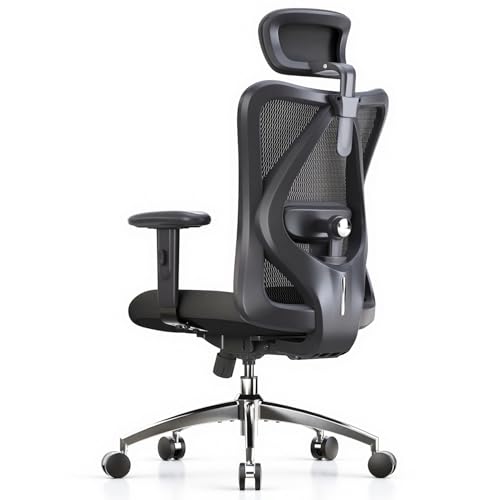
- Four-point support for head, back, hips, hands
- Adjustable lumbar and headrest
- Breathable mesh back keeps you cool
- Reclines through three lockable angles
Trade-offs
- 2D armrests limit positioning options
- At 38 pounds, it's on the heavier side
- Seat cushion not adjustable for depth
A 330-pound weight capacity and four separate support points, head, back, hips, and hands, mean this chair is built to keep you aligned through long workdays. The adjustable lumbar and headrest let you dial in fit for most people between 5’6″ and 6’2″, while the breathable mesh back prevents that sticky feeling during hours of sitting. It’s a practical choice for anyone who needs structured ergonomic support without stepping into premium price territory.
The trade-off comes in adjustability: the 2D armrests only move up-down and pivot, so you can’t slide them in or out to fine-tune elbow position. Still, the SIHOO’s three recline angles (108°, 118°, and 128°) and tilt tension control let you shift from focused typing to leaning back on a break. That makes it a solid workhorse for home offices where comfort and support matter most.
Marsail Ergonomic Office Chair

What We Like
- Precise 4-way lumbar adjustment
- Breathable mesh backrest
- Thick high-density foam seat
Trade-offs
- No seat depth adjustment for taller users
- Armrests lack width adjustment
A lumbar support that moves 1.18″ forward and back and 2.16″ up and down means you can dial in exactly where the curve hits your spine, for short or tall users. That kind of adjustability is rare at this level, and it makes the Marsail a strong match for anyone whose back pain comes from a mismatched chair back. The breathable mesh keeps air moving so you don’t end up sweaty on long days, and the 3.14″ thick foam seat cushions without bottoming out.
The Marsail’s 3D armrests move forward or back and swivel left or right to support your elbows while typing, a clear upgrade from the SIHOO M18’s 2D armrests. It’s a thoughtful design for the price, especially if you value a custom fit over a one-size-fits-all approach.
Product photos
CASASIO Ergonomic Office Chair
What We Like
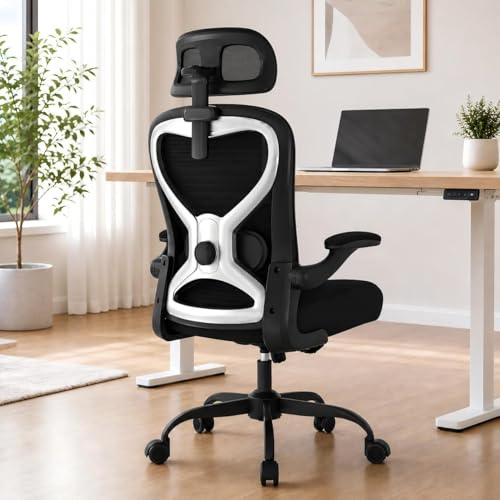
- 4-way adjustable lumbar support
- 3.5" virgin foam seat cushion
- 3D adjustable headrest for neck
- Flip-up armrests for small spaces
Trade-offs
- At 30 lb, heavier than the Nexthro chair (28.9 lb)
A 3.5-inch virgin foam seat cushion and a 4-way adjustable lumbar support make this chair a strong ally for anyone who spends eight or more hours at a desk. The foam distributes weight evenly to prevent soreness, while the contoured mesh back follows your spine and lets you dial in lower-back support precisely. The 3D headrest cradles your neck whether you are reading, typing, or leaning back, and the flip-up armrests let you tuck the chair under a shallow desk when you need extra floor space. This is the chair for long workdays where comfort has to last from morning until night.
The trade-off is weight: at 30 pounds, it is heavier than the Nexthro Ergonomic Office Chair (28.9 lb), so moving it between rooms takes a little more effort. Still, the combination of a thick, resilient seat and targeted lumbar customization gives it an edge for marathon sitting sessions, especially in compact home offices where every inch of adjustability counts.
CAPOT Ergonomic Mesh Office Chair

What We Like
- Micro-adjust lumbar with 8 levels
- 400 lb weight capacity
- Cooling Aerovith Mesh seat
- 5-year warranty with free parts
Trade-offs
- No seat angle adjustment for reclining
- Armrests flip up but lack depth adjustment
Two inches of lumbar movement across eight distinct levels let you dial in support exactly where your lower back needs it most. According to the manufacturer, this reduces pressure by 50%. That kind of precision is rare at this price point, and it makes the CAPOT a smart choice for anyone who spends eight-plus hours at a desk and wants to avoid that familiar ache. The 400-pound steel base and breathable Aerovith mesh seat add real staying power, while the headrest and backrest lock into three positions so you can shift from focused typing to a quick lean-back without losing alignment.
The seat cushion measures 19.3 inches deep by 20 inches wide, which may feel snug for some users, and there is no independent seat pan tilt when reclining. Compared to the SIHOO M18, which has a 21-inch wide cushion, the CAPOT offers a more compact seat but provides eight levels of lumbar adjustment for fine-tuning.
Nexthro Ergonomic Office Chair
What We Like
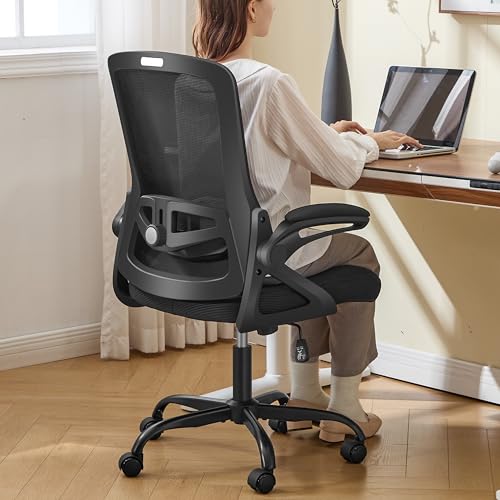
- Extra-wide seat for even weight distribution
- 400 lb weight capacity for sturdy support
- Adjustable lumbar support for natural posture
- Thick high-density foam cushion prevents sagging
Trade-offs
- No headrest for upper back or neck support
- Flip-up armrests lack depth or width adjustment
With a 400-pound weight capacity, this chair easily supports larger body types, and the 20.9-inch-wide seat gives you plenty of room to shift positions without feeling cramped. The adjustable lumbar support moves both forward and up-and-down, so you can dial in the curve that matches your lower back. It’s a practical choice for taller folks up to 6’3″ who want a stable, roomy seat that won’t sag over time.
You give up a headrest and multi-directional armrests here. While the flip-up armrests save space when tucking the chair away, they don’t adjust in width or depth the way the TRALT’s arms do. That means you may not find the perfect elbow angle for typing. Still, if your main concern is a supportive, wide seat that won’t sag under heavier builds, this chair delivers where it counts.
Product photos
Herman Miller Classic Aeron Task Chair
What We Like
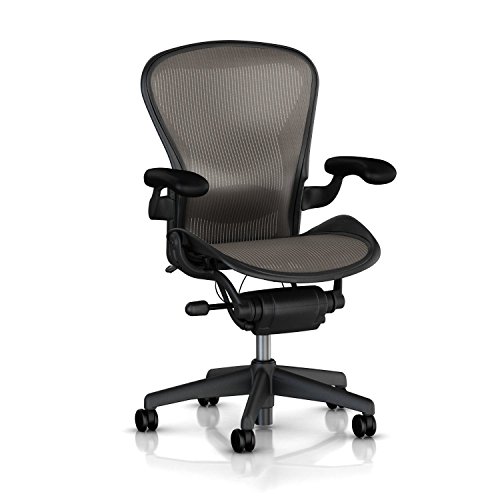
- Breathable Pellicle suspension dissipates body heat
- Kinemat tilt mechanism allows natural body movement
- Waterfall seat edge reduces thigh pressure
- 12-year Herman Miller warranty
Trade-offs
- At 48 pounds, it is heavy to move
- No headrest included for neck support
The breathable Pellicle suspension is the defining feature here, it dissipates body heat that builds up while you work, keeping you cool and comfortable even during long sessions. The Kinemat tilt mechanism lets your neck, shoulders, hips, knees, and ankles pivot naturally, so your posture stays aligned without you having to think about it. This chair is ideal for anyone who spends hours at a desk and wants a supportive, airy seat that adapts to their movement rather than locking them into one position.
Weight is a factor: at 48 pounds, this chair is noticeably heavier than something like the SIHOO M18 (38 pounds), so moving it around the room takes more effort. The 17-inch seat depth is also shorter than some options, which could be a consideration for taller users who prefer more thigh support. If you value a breathable, naturally moving seat with a long warranty and don’t mind a heavier build, this is a premium choice for back support and posture.
Product photos
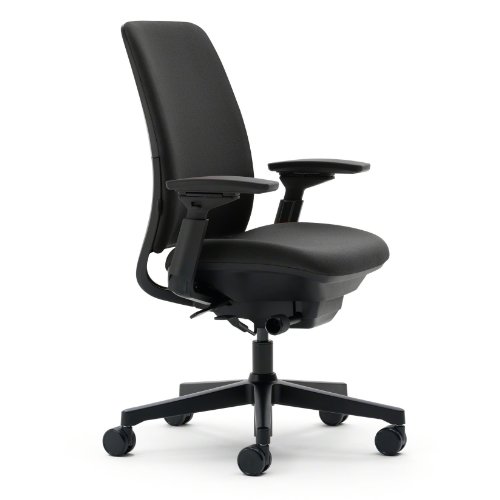
Steelcase Amia Office Chair
What We Like
- Hidden LiveLumbar adapts to movement
- 4D arm support for personalized fit
- Full recline range with lock
Trade-offs
- At 54.5 lb, moving it is a workout
- Lacks a tilt lock for rocking preference
The Steelcase Amia’s hidden LiveLumbar system automatically adjusts to your every shift, so you get continuous lower back support without fiddling with knobs or straps. That dynamic response makes it a standout for anyone who spends 8-10 hours at a desk, the flexible seat edges and extra cushioning keep pressure off your legs, while the 4D armrests let you dial in height, width, pivot, and depth. It’s built for sustained comfort, not just a quick sit.
Heft is a consideration: at 54.5 pounds, this chair is heavy to move around, so it’s best parked in one spot. Compared to the lighter SIHOO M18, the Amia offers 4D arm adjustability and a hidden LiveLumbar system that adapts to movement, but it does not include a headrest. If you want a chair that molds to your back as you move and don’t mind the weight, this is a premium ergonomic pick.
Haworth Breck Ergonomic Office Chair

What We Like
- Height-adjustable lumbar for tailored support
- 4D armrests for full upper-body positioning
- Adaptive seat depth reduces knee pressure
- Weight-activated recline with three lock positions
Trade-offs
- At 38.0 lb, it's heavier than the TRALT (28 lb)
- Heavy 38-pound weight makes room-to-room moves a chore
The Haworth Breck’s 4D armrests adjust vertically, horizontally, forward/backward, and pivot, letting you position arm and shoulder support exactly where needed. Combined with a height-adjustable lumbar and over two inches of adaptive seat depth, you can fine-tune the fit to your body and desk setup. It’s ideal for anyone who has struggled with one-size-fits-all chairs and wants to address both lower back comfort and thigh pressure during long workdays.
At 38 pounds, the Breck is heavy enough that you’ll think twice before moving it to another room, but that weight comes with a rock-solid feel that keeps the chair planted during active reclining. The three-zoned GeoStretch system gives you a responsive, weight-activated recline with a 3-position backstop, so you can lock in an upright posture or let the chair rock back as you lean. For arm support, the 4D armrests move vertically, horizontally, forward and back, and even pivot inward and outward, letting you dial in exactly where your elbows rest. The seat also slides forward or backward over 2 inches, which helps take pressure off the backs of your thighs during long sessions.
Product photos
Haworth Fern Ergonomic Office Chair

What We Like
- Patented Wave Suspension cradles spine
- Breathable mesh finish for airflow
- Pneumatic seat height adjustment
- 12-year warranty for long-term use
Trade-offs
- At 65 lb, it's heavy to move
- Plastic base instead of metal for durability
A 350-pound weight capacity and 12-year warranty set this chair apart for those who need lasting support. The patented Wave Suspension mimics the human body, cradling your spine as you shift throughout the day. Breathable mesh keeps air moving, so you stay cool during long hours at a desk. Pneumatic seat height adjustment lets you dial in the perfect position, making it a strong fit for anyone prioritizing back comfort and airflow.
The Fern’s 65-pound weight makes it a tank compared to many competitors, the Marsail, for instance, tips the scales at just 30.4 pounds. That heft gives it a planted, stable feel on any floor, but it also means you won’t want to slide it across the room every time you vacuum. The plastic base is standard here, and while some might wish for metal, the chair is built to handle daily use without wobble. For someone who values breathable mesh support and doesn’t need to relocate their chair often, this is a sturdy, long-term companion.
Product photos
How We Evaluated Office Chairs For Back Support And Posture
Our evaluation began with a close look at manufacturer specifications and expert round-ups to understand what makes an office chair effective for back support and posture. We then cross-referenced those findings with patterns in owner feedback to see what holds up in real use.
The most important criteria were lumbar support adjustability, meaning how precisely you can position it. Seat comfort and cushioning, including foam density and thickness, also mattered, along with overall ergonomic adjustability such as armrests, headrest, and seat depth. Build quality, covering weight capacity, warranty, and certification, was key too.
A research-led evaluation has limits: we cannot replicate years of daily use in a single review. Instead, we rely on documented features, expert consensus, and the collective experience of many owners to identify the chairs most likely to support good posture over time.
What To Look For In Office Chairs For Back Support And Posture
Choosing the right chair for back support and posture comes down to how well it fits your body and allows you to make precise adjustments. Focus on lumbar support, seat comfort, and overall adjustability.
Look for a chair with adjustable lumbar support that matches the curve of your lower back. The seat cushion should stay supportive after hours of sitting. Also, enough adjustability in armrests and seat depth is needed to fit your frame.
Lumbar Support Adjustability
The most critical feature for back support is a lumbar support that you can move up, down, forward, or backward to fit your spine’s natural curve. Fixed lumbar pads often miss the mark. Chairs like the Marsail and CAPOT offer four-way or micro-adjust lumbar support, while the Steelcase Amia uses a hidden LiveLumbar that adapts as you shift. Without adjustability, the support may hit too high or too low, encouraging slouching.
Seat Comfort and Cushioning
A seat that goes flat after a few weeks won’t support your posture. Look for high-density foam or a suspension system like the Herman Miller Aeron’s Pellicle, which distributes weight and dissipates heat. The CASASIO uses 3.5-inch virgin foam, while the TRALT features high-resilience foam that resists flattening. Seat depth adjustment is also valuable for taller users to avoid pressure behind the knees.
Overall Ergonomic Adjustability
Beyond lumbar support, adjustability in armrests, headrest, and seat height lets you tailor the chair to your body. Four-dimensional armrests (height, width, depth, angle) give the most flexibility, as seen on the Haworth Breck and Steelcase Amia. A headrest supports the neck during reclining, and a weight-activated recline mechanism, like on the Haworth Breck, encourages natural movement. The more points of adjustment, the easier it is to maintain good posture.
- Check that the lumbar support moves independently of the backrest.
- Ensure the seat cushion is thick enough (at least 3 inches) for long hours.
- Verify armrests adjust in at least two directions to support your elbows at 90 degrees.
- Look for a weight capacity that comfortably exceeds your body weight.
- Confirm the chair’s height range matches your desk and leg length.
A chair that fits you at every contact point is the single best investment for better posture.
Office Chairs For Back Support And Posture Compared
The table below compares key features of each chair, including lumbar support type, seat cushion material, and weight capacity, to help you find the right fit for your workspace.
| Product | Lumbar Support | Seat Material | Backrest Material |
|---|---|---|---|
| TRALT Ergonomic Office Chair | Adjustable depth | High-resilience molded foam | Breathable mesh |
| SIHOO M18 Ergonomic Office Chair | Adjustable | Wide Cushion | Breathable mesh |
| Marsail Ergonomic Office Chair | 1.18" forward/back, 2.16" up/down | 3.14" high-density foam | Mesh |
| CASASIO Ergonomic Office Chair | 4-way adjustable | 3.5" virgin foam | Contoured mesh |
| CAPOT Ergonomic Mesh Office Chair | 2 in, 8 levels | Aerovith Mesh | Mesh |
| Nexthro Ergonomic Office Chair | 1" forward/back, 3.15" up/down | 3.2" thick high-density foam | Mesh |
| Herman Miller Classic Aeron Task Chair | Lumbar Pad | Pellicle suspension | Pellicle suspension |
| Steelcase Amia Office Chair | LiveLumbar system | Extra cushioning | N/A |
| Haworth Breck Ergonomic Office Chair | Height-adjustable | N/A | N/A |
| Haworth Fern Ergonomic Office Chair | Lumbar support | N/A | Breathable Mesh |
Frequently Asked Questions
What is the best office chair for lower back pain?
The best chair for lower back pain offers adjustable lumbar support that you can position precisely. The TRALT Ergonomic Office Chair provides lumbar support designed for the spinal curve, while the Marsail offers four-way lumbar adjustment for targeted relief.
How much should I spend on an ergonomic office chair?
Budget varies widely. Affordable chairs with good lumbar support start around the mid-range, while premium models with advanced adjustability and longer warranties cost more. Focus on getting adjustable lumbar support and a durable seat cushion rather than a specific price point.
Is a mesh or cushioned seat better for back support?
Both can work well. Mesh seats, like those on the Haworth Fern or SIHOO M18, breathe better and prevent heat buildup. Cushioned seats, like the CASASIO’s 3.5-inch virgin foam, offer more pressure relief. Choose based on your preference for airflow versus plushness.
What is the difference between 2D, 3D, and 4D armrests?
2D armrests adjust in height and sometimes width. 3D armrests add depth adjustment, and 4D armrests also allow angle pivoting. More dimensions let you position your arms to keep shoulders relaxed, which supports better posture.
Can an office chair really improve my posture?
Yes, a well-adjusted chair with proper lumbar support encourages your spine to maintain its natural curve. It prevents slouching by supporting your lower back and allowing you to sit with your feet flat and knees at 90 degrees. No chair can fix posture alone, but it is a critical tool.
The Bottom Line
For most people, the TRALT Ergonomic Office Chair offers the best balance of adjustable lumbar support, durable foam cushioning, and breathable mesh back for full workdays. It is our top recommendation for anyone seeking reliable back support without a premium price tag.
If your needs are more specific, the Marsail Ergonomic Office Chair gives you precise four-way lumbar adjustment for lower back strain, while the Steelcase Amia delivers dynamic LiveLumbar support that adapts to your movement. The Haworth Breck is ideal if you want maximum adjustability in armrests and seat depth.
The single most important factor in choosing a chair for back support and posture is adjustable lumbar support that fits your spine. No other feature matters as much if your lower back isn’t properly supported.
