10 Best Office Chairs For Herniated Lumbar Disc in 2026
This post contains affiliate links. As an Amazon Associate, we earn from qualifying purchases.
For a herniated lumbar disc, the ELABEST X100 Ergonomic Mesh Office Chair leads our guide with its dynamic 3D lumbar that auto-tracks your movement, plus a 5D armrest and built-in footrest for pressure-free breaks. The Marsail offers the most adjustable lumbar support, while the MINOMAC handles heavier body types on a reinforced frame. This is a research-based guide to finding real spinal relief in a desk chair.
Sitting with a herniated disc means every degree of recline, every inch of lumbar curve, and every armrest angle either helps or hurts. The wrong chair can aggravate the disc; the right one supports natural spinal alignment and lets you shift positions throughout the day. You need active lumbar support that moves with you, not a static pad that pushes in one spot.
We evaluated 10 chairs by comparing manufacturer specifications, BIFMA certifications, expert ergonomic round-ups, and patterns in owner feedback for those managing disc issues. This guide focuses on what actually matters for your spine: adjustability, support range, and long-session comfort.
Top 10 Office Chairs For Herniated Lumbar Disc in the Market
Certain content that appears on this site comes from Amazon. This content is provided "as is" and is subject to change or removal at any time.
The Best Office Chairs For Herniated Lumbar Disc, Reviewed
ELABEST X100 Ergonomic Mesh Office Chair

What We Like
- Dynamic 3D lumbar with spring-loaded auto-tracking
- 5D flip-up armrests with denser EVA foam
- 18-inch extendable footrest with 2-position angle
- BIFMA-certified heavy-duty support up to 300 lbs
Trade-offs
- At 43 lb, it is heavier than several mesh chairs
The 3D Synchro-Tilt Lumbar support uses force-sensitive springs to auto-track your spine’s movement, so the chair adjusts as you shift without needing to stop and tweak a knob. It was developed with California-based orthopedic specialists, and the 17-point micro-adjustment system lets you fine-tune everything from headrest height to armrest rotation while seated. For anyone who spends long hours at a desk and wants a chair that adapts to their body, this is a well-engineered option.
At 43 pounds, this chair is noticeably heavier than the Marsail (30.4 lb) or the Zeonsit (28 lb), so moving it between rooms takes more effort. The flip-up armrests use 27% denser EVA foam padding that the brand says achieves zero-pressure contact, which some users may find firmer than plush padding. Still, the combination of active lumbar tracking, a lockable recline, and an extendable footrest makes this a complete package for someone who needs serious back support. It also lets you shift into a relaxed position without leaving the chair.
Marsail Ergonomic Office Chair

What We Like
- Lumbar adjusts 1.18" forward/backward and 2.16" up/down
- 3.14" thick high-density foam seat cushion
- 3D armrests with flip-up function
- Breathable mesh backrest promotes airflow
Trade-offs
- No footrest included for full recline breaks
- Heavier than the Haworth Soji at 30.4 lb
The lumbar support on this chair moves 1.18 inches forward and backward and 2.16 inches up and down, so you can dial in exactly where the pad hits your lower back. That kind of precision matters when you’re dealing with a herniated disc because even a small misalignment can turn a workday into a pain session. The 3.14-inch thick high-density foam seat doubles down on comfort, and the breathable mesh back keeps you from overheating during long sits. It’s a thoughtful setup for anyone who needs to tweak their support throughout the day without fighting a stiff mechanism.
At 30.4 pounds, this chair is heavier than the Haworth Soji at 19.8 pounds, so moving it around the room takes a bit more effort. The 3D armrests flip up to let you slide it under a desk, which helps reclaim floor space when it’s not in use. For someone who values adjustable lumbar support over portability, this Marsail delivers where it counts.
Product photos
MINOMAC Ergonomic Mesh Office Chair

What We Like
- Sliding lumbar panel targets your curve
- 400 lb capacity on reinforced frame
- Three lockable recline angles plus footrest
- 360° rotating, height-adjustable armrests
Trade-offs
- Mesh back offers less cushioning than padded chairs
- Footrest adds bulk under the seat when stored
A 400-pound weight capacity on a Class-3 gas lift means this chair supports taller and heavier users without sagging or wobbling through a full workday. The sliding lumbar panel lets you position the curve exactly where your lower back needs it, so it doesn’t push below your lumbar area. Three lockable recline angles let you sit upright for typing, lean back at 110 degrees for reading, or recline to 135 degrees and pull out the footrest to take pressure off your legs. This is a chair built for big frames and long hours, with adjustability that helps you find a comfortable position without fighting the chair.
The trade-off is that the mesh back, while breathable, provides less plush cushioning than padded chairs like the Steelcase Amia, so you may want a seat cushion if you prefer a softer feel. The built-in coat hanger is a clever touch for keeping a jacket or headset off the floor, but the footrest adds some bulk under the seat when not in use. For someone who needs a sturdy, adjustable chair that can handle a heavy frame and still support the lumbar area, this is a practical, heavy-duty option.
Product photos
CASASIO Ergonomic Office Chair
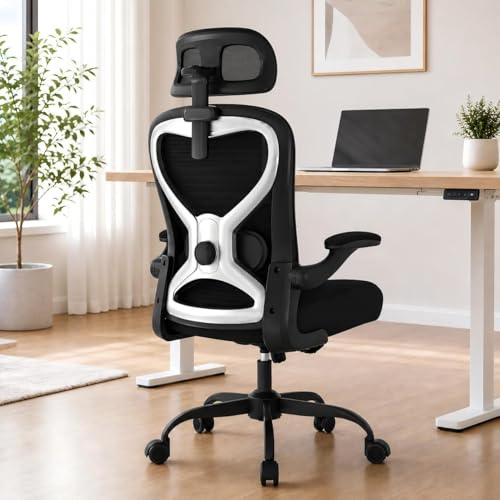
What We Like
- 4-way adjustable lumbar support
- 3.5" thick virgin foam seat
- 3D adjustable headrest for neck
- Tilt & rock with adjustable tension
Trade-offs
- Flip-up armrests lack depth adjustment
- No footrest included for leg elevation
A 3.5-inch virgin foam seat cushion that distributes weight evenly is the first thing that catches your attention here, it means hips and thighs stay comfortable even after eight hours of sitting. That thick padding, paired with a contoured mesh back that follows your spine, makes this chair a natural fit for anyone who needs to work long days without constant readjustment. The dual-direction adjustable lumbar cushion lets you dial in lower-back support precisely, while the 3D headrest cradles your neck and head during focused work, reading, or relaxation. It’s a setup that prioritizes sustained comfort over flashy extras, and for someone who sits all day, that focus matters.
The 330-pound weight capacity and BIFMA stress-test certification mean this chair is built for daily use, backed by a five-year warranty and 90-day returns. The flip-up armrests let you slide it under a desk to save space, but they only adjust up and down, no depth or width tweaks for custom shoulder support. The gentle rocking motion with adjustable tension can ease tension and improve circulation, a subtle perk during long hours.
MOLENTS Ergonomic Mesh Office Chair

What We Like
- Adjustable lumbar support in two directions
- Breathable mesh for long sitting sessions
- 3D armrests reduce shoulder strain
- BIFMA X5.1 certified for durability
Trade-offs
- No headrest for upper back or neck
- 35-pound weight makes it harder to move
A BIFMA X5.1 certification means this chair has passed rigorous durability and safety tests, a rare assurance in this price tier. The lumbar support adjusts both up and down and forward and backward, so you can dial in pressure exactly where a herniated disc needs it most. Breathable mesh keeps you cool during long work sessions, and the 3D armrests let you position your arms to reduce strain on your upper back. It’s a solid, well-built option for someone who needs reliable lower back support without breaking the bank.
A missing headrest is a drawback for some people with disc issues who want to lean back between tasks. The seat depth is 18.9 inches. Compared to the CASASIO Ergonomic Office Chair, which also carries BIFMA testing and adds a thicker cushion, the MOLENTS leans into adjustability and breathability instead. If you prioritize lumbar customization and a cool seat over extra padding or a headrest, this chair delivers where it counts.
Product photos
Steelcase Amia Office Chair
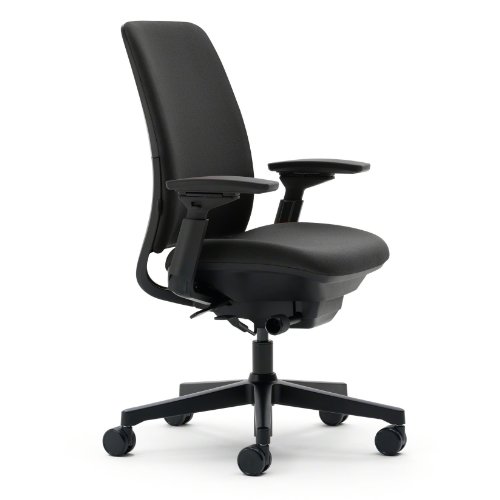
What We Like
- Hidden LiveLumbar adapts to movement
- 4D arm support for custom fit
- Carbon Neutral certified
- Flexible seat edges reduce pressure
Trade-offs
- At 54.5 lb, it's heavy to move
- No headrest for neck support
The hidden LiveLumbar system is the key feature here, it adjusts to your every shift, so your lower back gets continuous support without you having to fiddle with a knob. That makes this chair especially suited for anyone who spends long hours seated and needs the lumbar to move with them, not fight against them. The 4D armrests let you dial in height, width, pivot, and depth, which is a level of adjustability most chairs in this guide don’t offer. And the flexible seat edges help keep your legs comfortable even after eight hours.
At 54.5 pounds, the Amia is noticeably heavier than the Marsail Ergonomic Office Chair (30.4 lb), so it is not a chair you will want to slide around the room often. There is also no headrest, which might matter if you like to lean back fully. But if your priority is responsive lumbar support that works with your body rather than locking you into one position, the Amia delivers that in a well-built, sustainably-minded package.
Haworth Soji Ergonomic Office Chair

What We Like
- 4D armrests for personalized support
- Adjustable lumbar support included
- Seat depth adjustment for proper fit
- 12-year warranty for long-term peace of mind
Trade-offs
- No forward tilt for active sitting
- Lacks a headrest for neck support
A flexible mesh back that moves with you, plus adjustable lumbar support and seat depth, means this chair can be dialed in to support your lower back exactly where you need it. The 4D armrests let you position your arms to avoid hunching, and the back lock keeps you from leaning too far back when you need to stay focused. It’s a thoughtfully designed chair that prioritizes spinal alignment without sacrificing comfort.
The Soji skips forward tilt, so if you rely on that feature for active sitting, this chair won’t deliver it. At 19.8 pounds, it’s light enough to slide across a carpet without straining your back, but that weight also means it can shift under sudden movements. The mesh back keeps air moving freely, which helps during long work sessions, though it lacks the cushioned feel some people prefer.
Product photos
Zeonsit Ergonomic Office Chair
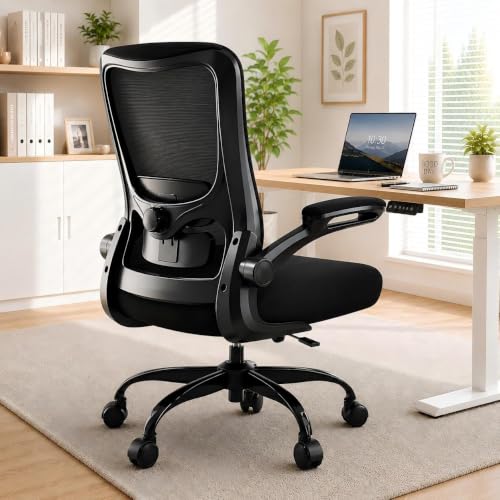
What We Like
- 4-way adjustable lumbar support
- Breathable mesh back reduces heat
- Supports up to 330 lbs
- 5-year warranty for peace of mind
Trade-offs
- Flip-up armrests lack depth adjustment
- At 28 lbs, it's lighter but less stable
A 4-way adjustable lumbar support lets you dial in exactly where and how much pressure hits your lower back, which is a real advantage when you’re dealing with a herniated disc. The breathable mesh back keeps air moving so you don’t overheat during long stretches at the desk, and the 3.5-inch foam cushion offers enough padding to take the edge off a hard seat pan. This chair is built for heavier users too, with a 330-pound capacity and a sturdy frame backed by a five-year warranty. So it’s a practical pick for anyone who needs reliable support without breaking the bank.
The Zeonsit Ergonomic Office Chair supports up to 330 lbs and comes with a 5-year warranty, so it’s built for long-term reliability. The flip-up armrests let you create extra space when you raise them, which is handy for tucking the chair away. For someone who needs solid lumbar customization and doesn’t require armrest micromanagement, this is a smart, comfortable choice.
Herman Miller Embody Ergonomic Chair
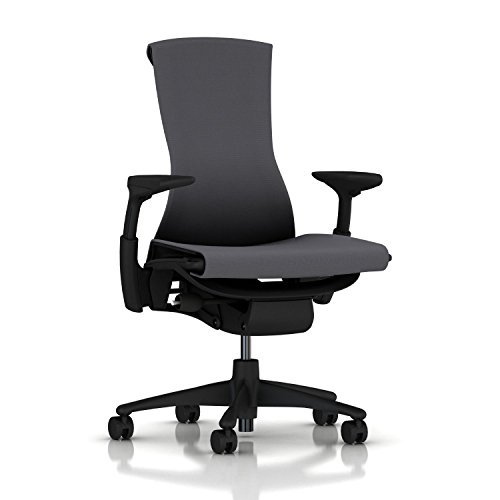
What We Like
- Designed with over 20 physicians and PhDs
- Pixelated Support for even weight distribution
- Backfit adjustment aligns with spine's curve
- Four-layer seat for airflow and comfort
Trade-offs
- At 52 lb, it's heavy to move around
- No headrest included for neck support
The Embody’s development involved more than twenty physicians and PhDs in biomechanics, vision, physical therapy, and ergonomics, so its design is grounded in serious science. The Backfit adjustment lets you align the backrest with your spine’s natural curve, maintaining neutral posture whether you lean forward or recline. Pixelated Support uses a dynamic matrix of pixels in the seat and back to conform to your micro-movements and distribute weight evenly, which reduces pressure and encourages movement for healthy circulation and focus. Four support layers in the seat are designed for airflow, keeping you cool and comfortable as you sit.
At 52 pounds, the Embody is not something you will want to slide across the room daily. Compared to the Steelcase Amia (54.5 lb), it is similarly substantial, but lighter options like the Marsail Ergonomic Office Chair (30.4 lb) are available. The Embody also does not include a headrest. If your priority is a chair developed with physician and PhD expertise, with adjustable features that support natural alignment and healthy movement, this chair delivers. Just be ready for its heft and the premium investment it commands.
Product photos
Haworth Fern Ergonomic Office Chair

What We Like
- Patented Wave Suspension cradles spine
- Pneumatic seat height and depth adjustment
- Padded 4D armrests for personalized fit
- BIFMA Level 3 Certified for sustainability
Trade-offs
- At 65 lb, it is heavy to move
- No headrest included for neck support
With a 350-pound weight capacity and patented Wave Suspension that cradles your spine as you move, this chair distributes weight naturally throughout the day. The breathable mesh finish keeps air moving, so you stay cool during long work sessions. Seat depth adjustment and padded 4D armrests let you dial in the fit that takes pressure off your lumbar area. It arrives fully assembled, which saves you the hassle of wrestling with instructions. For anyone seeking responsive support and customizability, this is a thoughtful choice for home or office.
At 65 pounds, moving this chair between rooms takes real effort compared to lighter picks like the Marsail Ergonomic Office Chair at just over 30 pounds. There is also no headrest, so if you need upper neck support, you will have to look elsewhere. That said, the 12-year warranty backs the Fern for the long haul, and the BIFMA Level 3 certification speaks to its environmental and build standards. For someone who prioritizes breathable lumbar support and is willing to accept a heavier, headrest-free design, this chair delivers where it matters most.
Product photos
How We Evaluated Office Chairs For Herniated Lumbar Disc
This guide is built on research. We reviewed manufacturer specifications for lumbar adjustability, seat dimensions, weight capacity, and certifications. We analyzed expert ergonomic round-ups and patterns in owner feedback from people managing herniated discs to understand which features provide real relief.
Three criteria mattered most. First, lumbar adjustability, the ability to move support forward, backward, up, and down to target your specific curve. Second, seat cushion quality and thickness, since pressure on the lower spine travels through the seat base. Third, recline and tilt options that let you change position without losing lumbar contact.
A research-led evaluation has limits. We cannot report how a chair feels after eight hours of use, and individual body types respond differently to the same lumbar curve. What we can do is identify the chairs with the widest range of adjustability, strongest certifications, and most consistent positive feedback from disc-related owners.
What To Look For In Office Chairs For Herniated Lumbar Disc
The right chair for a herniated disc must let you dial in lumbar position precisely, support your weight without sagging, and allow posture changes throughout the day. Focus on adjustability range, seat cushion density, and recline mechanics.
Look for lumbar support that moves forward/backward AND up/down. A thick, high-density foam seat (3+ inches) reduces pressure on the lower spine. A lockable recline lets you shift weight without losing lumbar contact.
Adjustable Lumbar Support Range
The lumbar support must move in at least two directions, forward/backward and up/down, to hit the exact spot your disc needs. A static lumbar pad that only moves up and down cannot provide the targeted pressure relief required for a herniated disc. The Marsail adjusts 1.18 inches forward and 2.16 inches vertically, giving you fine control over the curve depth.
Seat Cushion Thickness and Density
A thin or low-density seat cushion lets your pelvis tilt backward, which flattens the lumbar curve and aggravates the disc. Look for at least 3 inches of high-density foam or virgin foam. The CASASIO uses 3.5-inch virgin foam, while the Marsail offers 3.14-inch high-density foam. Firmer foam maintains support over long sessions without bottoming out.
Recline and Tilt Mechanics
Static sitting loads the disc unevenly. A chair that reclines while keeping the lumbar support engaged lets you shift your weight throughout the day. Look for lockable recline angles and adjustable tilt tension. The MINOMAC offers three lockable recline positions plus a footrest, letting you take pressure off the spine during breaks.
- Confirm the lumbar support adjusts forward/backward, not just up/down.
- Check seat cushion thickness, aim for 3 inches or more of dense foam.
- Test that the recline mechanism keeps lumbar contact as you lean back.
- Look for armrests that adjust in height and width to keep shoulders relaxed.
- Verify weight capacity exceeds your body weight by at least 50 pounds for stability.
A chair with forward lumbar adjustment of at least 1 inch and a seat cushion over 3 inches thick is your safest starting point for a herniated disc.
Office Chairs For Herniated Lumbar Disc Compared
The table below compares all 10 chairs across the features that matter most for herniated disc support: lumbar adjustability, seat cushion thickness, weight capacity, and recline options.
| Product | Lumbar support | Armrest type | Recline |
|---|---|---|---|
| ELABEST X100 Ergonomic Mesh Office Chair | 3D Synchro-Tilt | 5D Flip-Up | 3-stage |
| Marsail Ergonomic Office Chair | 1.18" fwd/back, 2.16" up/down | 3D, flip-up PU-padded | 90° to 120° |
| MINOMAC Ergonomic Mesh Office Chair | Sliding panel | 360° rotating, height-adjustable | 3 lockable positions |
| CASASIO Ergonomic Office Chair | 4-way adjustable | Flip-up | Tilt & Rock |
| MOLENTS Ergonomic Mesh Office Chair | Up/down & forward/backward | 3D | 90°-120° |
| Steelcase Amia Office Chair | LiveLumbar dynamic system | 4D (height, width, pivot, depth) | Full range, locks upright |
| Haworth Soji Ergonomic Office Chair | Yes | 4D | Back Lock |
| Zeonsit Ergonomic Office Chair | 4-Way Adjustable | Flip-Up | Tilt & Rock |
| Herman Miller Embody Ergonomic Chair | N/A | Fully adjustable | tilt limiter |
| Haworth Fern Ergonomic Office Chair | Yes | Padded 4D | back stop |
Frequently Asked Questions
What type of office chair is best for a herniated lumbar disc?
A chair with adjustable lumbar support that moves forward and backward, not just up and down. You also want a thick, high-density foam seat cushion, lockable recline angles, and armrests that adjust to keep your shoulders relaxed. Mesh backrests help reduce heat during long sessions.
How much lumbar adjustment do I need for a herniated disc?
Look for lumbar support that adjusts at least 1 inch forward and 2 inches vertically. The more range you have, the better you can target the specific curve of your spine. Chairs with 4-way lumbar adjustment give you the most precise fit.
Is a mesh back or padded back better for a herniated disc?
Mesh backs provide better airflow and can conform to your spine without creating pressure points. Padded backs offer more cushioning but may not contour as precisely. The best choice depends on whether you prioritize breathability or softness against your back.
Can a reclining chair help a herniated disc?
Yes, reclining reduces pressure on the spinal discs by distributing your weight across a larger surface. Look for a chair with lockable recline positions so you can change posture without losing lumbar support. A footrest can help maintain proper leg position while reclined.
Should I get a chair with a headrest for a herniated disc?
A headrest can help if you recline frequently, as it supports the neck and upper spine in a relaxed position. However, many chairs with excellent lumbar support do not include headrests. Prioritize lumbar adjustability and seat cushion quality over a headrest if you must choose.
The Bottom Line
The ELABEST X100 Ergonomic Mesh Office Chair is our Best Overall pick for anyone managing a herniated lumbar disc. Its dynamic 3D lumbar support tracks your movement as you shift, and the built-in footrest with two-position angle lets you recline with proper leg support. This is the chair that gives you active spinal support without forcing you to choose between adjustability and break-time comfort.
If your budget is tighter or you need the most precise lumbar control, the Marsail Ergonomic Office Chair offers 1.18 inches of forward adjustment and 2.16 inches of vertical range. Heavier users should look at the MINOMAC, which supports up to 400 pounds on a reinforced frame with three lockable recline angles. For marathon workdays, the CASASIO provides 3.5 inches of virgin foam cushioning with 4-way lumbar support.
The single most important factor for a herniated disc is lumbar support that you can position exactly where you need it, forward, backward, up, and down. Everything else, from armrests to headrests, comes second to that precise fit.
