10 Best Office Chairs For Low Back Pain in 2026
This post contains affiliate links. As an Amazon Associate, we earn from qualifying purchases.
The Marsail Ergonomic Office Chair wins as the best overall for low back pain thanks to its adaptable lumbar support that moves 1.18 inches forward and back. It also has a fully adjustable headrest and 3D armrests. For those wanting even more targeted support, the CASASIO Ergonomic Office Chair offers a 4-way adjustable lumbar cushion, while the BestOffice Ergonomic Office Chair delivers solid lumbar relief on a budget.
Sitting for hours with low back pain means every adjustment matters. The wrong chair can aggravate your spine, while the right one provides targeted support that lets you work comfortably. Lumbar adjustability, seat cushion quality, and overall ergonomic fit become non-negotiable features.
This guide is research-based, drawing on manufacturer specifications, expert ergonomic round-ups, and patterns in owner feedback. We break down the ten best options to help you match a chair to your specific pain points and workspace needs.
Top 10 Office Chairs For Low Back Pain in the Market
Certain content that appears on this site comes from Amazon. This content is provided "as is" and is subject to change or removal at any time.
The Best Office Chairs For Low Back Pain, Reviewed
Marsail Ergonomic Office Chair

What We Like
- Fully adjustable 2D headrest and 3D armrests
- Adaptable lumbar support moves 1.18" forward/back
- Breathable mesh back promotes airflow
- 330 lbs weight capacity with wide seat
Trade-offs
- At 30.4 pounds, it is heavier for frequent moving
- Thinner seat cushion than some rivals
A 330-pound weight capacity and a 3.14-inch thick high-density foam seat mean this chair supports heavier builds and long sitting sessions without bottoming out. The lumbar support adjusts 1.18 inches forward and back and 2.16 inches up and down, so you can dial in exactly the lower back pressure that helps with low back pain. The breathable mesh back keeps air moving, reducing sweat during those marathon workdays. For anyone seeking a customizable, supportive seat that won’t sag, this is a thoughtful pick.
The trade-off is weight: at 30.4 pounds, it is heavier than the CASASIO chair’s 30.0 pounds, making it a bit less convenient to slide around or lift. The mesh back offers great airflow but lacks the plush feel of a padded chair, which some users might miss. Still, the combination of adjustable lumbar, armrests, and headrest gives you more ergonomic fine-tuning than many competitors. That makes it a strong fit for those who want to tailor their chair to their exact body and pain points.
Product photos
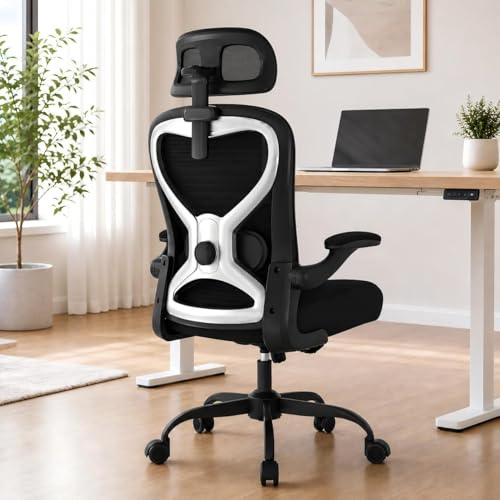
CASASIO Ergonomic Office Chair
What We Like
- 4-way adjustable lumbar cushion
- 3.5" virgin foam seat
- Supports up to 330 lbs
- 5-year warranty & 90-day returns
Trade-offs
- Flip-up armrests lack depth adjustment
- No seat height range specified for shorter users
A 4-way adjustable lumbar cushion lets you dial in support exactly where your back needs it most, a feature that sets this chair apart for anyone dealing with low back pain. The 3.5-inch virgin foam seat distributes weight evenly, so hips and thighs stay comfortable through long workdays. With a 330-pound weight capacity and a reinforced metal base, it’s built to handle daily use without wobbling. The 5-year warranty and 90-day return policy add peace of mind, making it a reliable choice for home offices or shared workspaces.
Compared to the Steelcase Gesture with its 360-degree arms, this chair is less customizable for those who need precise arm positioning. Still, for the price point, the CASASIO delivers focused lumbar support and all-day comfort that rivals chairs costing much more. It’s a practical pick if lower back relief is your top priority and you don’t need every bell and whistle.
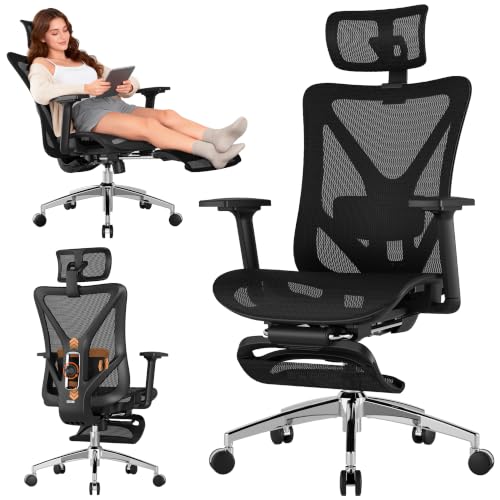
GABRYLLY Ergonomic Office Chair
What We Like
- 2-way adjustable lumbar support
- 135° recline with lockable positions
- Retractable steel footrest extends 18.1"
- 3D adjustable armrests and headrest
Trade-offs
- Heavy at 38.7 lbs, less portable
A 135-degree recline with three lockable positions means you can lean way back for a real break without the chair tipping over. The 2-way adjustable lumbar support moves both vertically and horizontally to target your lower back exactly where it needs help, and the retractable steel footrest extends 18.1 inches so you can fully stretch out. This chair is built for people who want to transition from focused work to a restorative nap without leaving their desk, and the heavy-duty steel base keeps everything stable even when you’re reclined.
At 38.7 pounds, this chair is heavy enough that you won’t want to move it around the room often, it’s built to stay put. The all-mesh back keeps air flowing, so you stay cool even during long work sessions. If you want a chair that reclines 135 degrees and offers adjustable lumbar support, the weight is a fair trade for stability.
Product photos
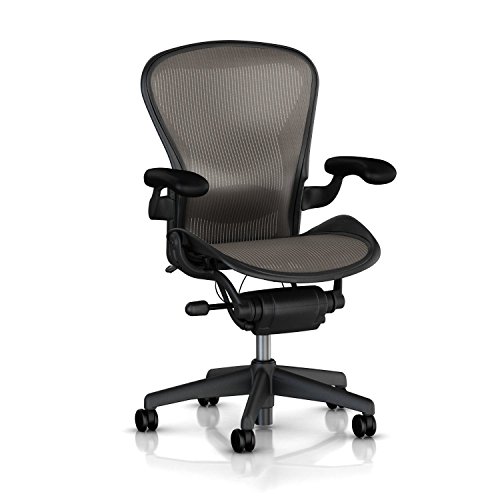
Herman Miller Classic Aeron Task Chair
What We Like
- Breathable Pellicle suspension keeps you cool
- Kinemat tilt for natural body movement
- Waterfall seat edge reduces thigh pressure
- 12-year warranty with Born-On-Date sticker
Trade-offs
- At 48 pounds, it's heavy to move
- Weighs 48 pounds, making it less portable than lighter models
The Pellicle suspension on this chair is a breathable mesh that actively dissipates body heat, so you stay cool even during long work sessions. Combined with the Kinemat tilt mechanism that lets your neck, shoulders, hips, knees, and ankles pivot naturally, it supports a healthy posture that can ease lower back strain. This makes it a strong choice for anyone who runs warm or spends hours seated and wants a chair that moves with them rather than fighting their body.
At 48 pounds, the Herman Miller Classic Aeron Task Chair is heavier than some alternatives like the CASASIO Ergonomic Office Chair, so moving it around your workspace will take more effort. Its patented Kinemat tilt mechanism lets your neck, shoulders, hips, knees, and ankles pivot naturally, and the breathable Pellicle suspension dissipates body heat to keep you cool. If you prioritize cooling support and natural motion over extra adjustments, this classic design delivers on its core promise.
Product photos
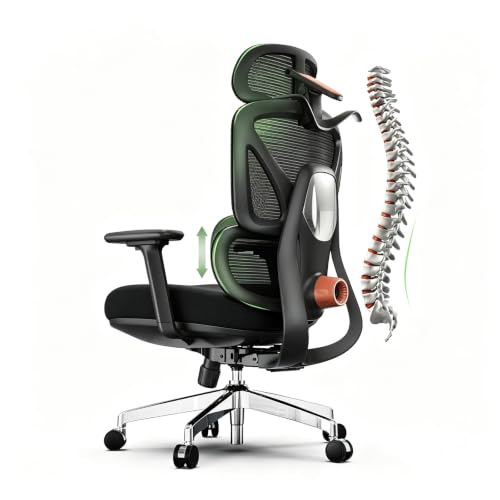
Ergoa Ergonomic Mesh Office Chair
What We Like
- 8-position lumbar and 9-position backrest adjustments
- 4D soft-padded armrests reduce shoulder soreness
- Removable 11-position 3D headrest
- Adaptive recline maintains spinal alignment
Trade-offs
- Weighs 48 pounds, making it less portable
- No cushion for users who prefer padded seats
An 8-position adjustable lumbar support paired with a 9-position backrest gives you the kind of personalized spinal alignment most chairs reserve for models costing twice as much. That dual-adjustment system lets you dial in exactly where the support hits your lower back. The lumbar automatically tracks with you as you recline from 90 to 135 degrees. For anyone who spends long days at a desk and needs their chair to adapt to shifting postures rather than the other way around, this is a thoughtful setup that puts control firmly in your hands.
Weighing 48 pounds, the Ergoa is heavier than some alternatives, so moving it between rooms takes a bit more effort. The 4D armrests and removable 11-position headrest add real flexibility for different tasks and body types. Best for someone who prioritizes precise lumbar and back support over a lighter frame.
Product photos
Steelcase Amia Office Chair
What We Like
- LiveLumbar adjusts to your movement
- 4D arm support for personalized fit
- Full recline range with lock
- Carbon Neutral certified option
Trade-offs
- At 54.5 lb, it's heavy to move
- No headrest for neck support
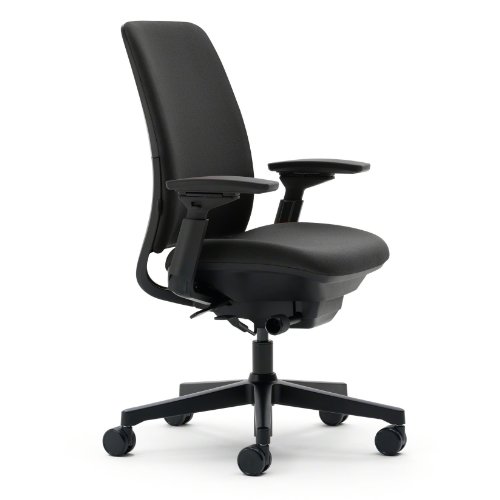
The LiveLumbar system adjusts to your movement, providing dynamic lower back support without needing to manually adjust a lever. That makes this chair a strong option for anyone who spends long hours seated and wants continuous lumbar support. The extra cushioning and flexible seat edges help ensure pressure-free sitting for 8 to 10 hours. Four points of arm adjustability (height, width, pivot, and depth) let you dial in the perfect position for typing or mousing, while the full recline range locks upright when you need to stay focused.
At 54.5 pounds, the Amia is a beast to slide across a carpet or rearrange your home office layout. It also lacks a headrest, so if you lean back to rest your neck, you’ll need to add one separately or look elsewhere. Compared to the CASASIO chair at 30 pounds, the Steelcase is far more substantial, but its hidden LiveLumbar system adjusts to your movement for dynamic lower back support. For someone whose primary concern is lower back support and who doesn’t plan to move the chair often, this is a durable, long-term choice.
Steelcase Gesture Office Chair
What We Like
- 360-degree arms adjust to any posture
- Contoured back supports natural spine shape
- Intuitive adjustments on right side
- Full recline with three lock settings
Trade-offs
- At 70 lb, it is very heavy to move
- Wheels designed only for carpet floors
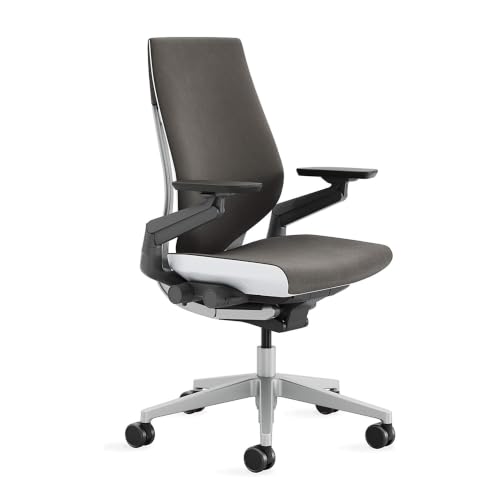
The Steelcase Gesture’s 360-degree arms are the standout feature here, they move in every direction, so you can rest your elbows while typing, leaning back, or reaching for a file. That kind of adjustability, paired with a contoured back that follows your spine’s natural curve, makes this chair a strong pick for anyone who shifts positions often during the workday. It’s built for long hours at a desk, with intuitive controls on the right side that let you tweak the fit without fumbling.
At 70 pounds, this is not a chair you’ll want to slide across the room on a whim. If you need to move it between desks or rooms frequently, the lighter CASASIO chair (30 lb) is easier to reposition. The Gesture comes with carpet wheels, so if your home office has hard floors, you may need to consider a floor mat or different casters. For someone who wants a fully adjustable, heavy-duty chair that stays put, it delivers exceptional comfort and support.
Product photos
Haworth Fern Ergonomic Office Chair

What We Like
- Patented Wave Suspension cradles spine
- Pneumatic seat height adjustment
- Breathable mesh finish
- 12-year warranty
Trade-offs
- At 65 lb, it's heavy to move
- No headrest for neck support
The patented Wave Suspension cradles your spine and distributes weight as you move, so your back gets continuous support throughout the day. The breathable mesh finish keeps air moving, preventing the sticky heat that can make long sitting sessions uncomfortable. With a 350 lb weight capacity and a 12-year warranty, this chair is built for dependable daily use. It’s a smart fit for anyone who wants a supportive seat that adapts to their natural movement.
At 65 lb, it’s not a chair you’ll want to drag from room to room. Compared to the Steelcase Gesture at 70 lb, the Fern is lighter, so it’s easier to move if needed. The plastic base is standard for this model. For those who value breathability and spine-cradling support over portability, this chair delivers where it counts.
Product photos
BestOffice Ergonomic Office Chair
What We Like
- Breathable mesh back keeps you cool
- Curved mid-back with lumbar support
- Adjustable seat height for custom fit
- Quick 10-15 minute assembly
Trade-offs
- Mid-back design offers no head support
- Fixed armrests lack adjustability
- 250 lb weight limit is lower than some
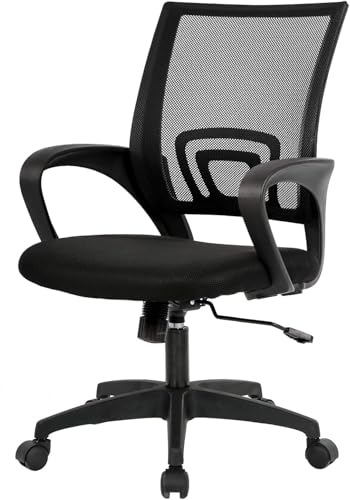
A curved mid-back with built-in lumbar support targets the lower back directly, so you can sit for hours without that familiar ache. The breathable mesh back keeps air moving, which helps you stay cool even on long workdays. You can set it up in about 10 to 15 minutes, so you’re not stuck wrestling with tools before you can start using it.
This is a mid-back chair, so there’s no headrest for neck support, and the armrests are fixed rather than adjustable. Compared to the Marsail Ergonomic Office Chair, which offers a high back and 3D armrests, the BestOffice is more basic but also more affordable. For someone focused solely on low back pain relief and a straightforward design, it delivers exactly what it promises without extra frills.
Product photos
TRALT Ergonomic Desk Chair

What We Like
- High-resilience foam won't flatten
- Adjustable lumbar matches spine curve
- Breathable mesh back prevents heat buildup
- Metal core base supports 330 lbs
Trade-offs
- No tilt or recline mechanism mentioned
- No tilt or recline mechanism for leaning back
The high-density molded foam seat is the standout feature here, designed to resist flattening and sagging long after cheaper chairs start to bottom out. That means consistent cushioning and pressure relief for your lower back during long workdays, especially when paired with the adjustable lumbar support that lets you dial in the depth to match your spine’s natural curve. This chair suits anyone who spends hours seated and wants a seat that stays comfortable month after month, without the dreaded sinking feeling.
The seat depth is fixed at 17.3 inches, and the chair lacks a tilt or recline function, so it won’t suit anyone who needs to recline or shift positions throughout the day. Compared to the CASASIO chair, which includes a tilt-and-rock motion, the TRALT focuses on foam longevity over adjustability. It’s a reasonable choice if a resilient seat and breathable mesh back are your top priorities, but not if you need a chair that reclines or accommodates longer legs.
Product photos
How We Evaluated Office Chairs For Low Back Pain
Our evaluation began with a close look at manufacturer specifications and expert ergonomic recommendations for chairs designed to relieve lower back discomfort. We analyzed lumbar support systems, adjustment ranges, seat materials, and weight capacities across dozens of models to understand what separates a helpful chair from a generic one.
Four criteria mattered most. Lumbar adjustability came first: chairs with multi-position or dynamic lumbar support allow you to match the curve of your spine precisely. Seat cushion quality was second, since a sagging or too-soft seat can throw off your posture. Breathability ranked third because heat buildup makes long hours harder to tolerate. Weight capacity and overall build quality rounded out the list, ensuring the chair supports your body reliably over time.
A research-led evaluation has honest limits. Instead, we synthesized what ergonomic experts recommend, what specifications reveal about adjustability and materials, and what patterns emerge in thousands of owner experiences. This approach gives you a clear, informed starting point for your own decision.
What To Look For In Office Chairs For Low Back Pain
Choosing a chair for low back pain means focusing on how it supports your spine through a full workday. The right chair lets you adjust the lumbar support, seat height, and armrests to fit your body, not the other way around.
Look for a chair with adjustable lumbar support that moves in and out as well as up and down. Also consider a seat cushion that holds its shape over time, and breathable materials that keep you cool during long hours.
Adjustable Lumbar Support
The single most important feature for low back pain is lumbar support that you can position precisely. Basic chairs offer a fixed lumbar bump that may hit too high or too low for your spine. Better chairs let you adjust the lumbar support vertically and, critically, in depth. The Marsail moves its lumbar support 1.18 inches forward and back, while the CASASIO uses a 4-way adjustable cushion. Dynamic systems like the Steelcase Amia’s LiveLumbar actually move with you as you shift positions.
Seat Cushion Quality and Durability
A seat cushion that flattens after a few months will let your pelvis tilt backward, straining your lower back. Look for high-density foam or resilient materials that maintain their shape. The TRALT chair uses high-resilience foam designed not to flatten, while the CASASIO features 3.5 inches of virgin foam. Mesh suspension seats, like the Herman Miller Aeron’s Pellicle, offer a different approach by cradling you without foam at all.
Breathability and Temperature Control
Heat buildup on your back and seat makes long hours uncomfortable and can lead to fidgeting that aggravates your back. Mesh backrests allow air to circulate freely. The Haworth Fern uses a patented Wave Suspension with breathable mesh, and the Ergoa chair combines an 8-position lumbar with a fully mesh back. Pellicle suspension, found on the Herman Miller Aeron, eliminates foam entirely for maximum airflow.
Weight Capacity and Build Quality
A chair that feels unstable or creaks under your weight will cause you to sit tensely, worsening back pain. Check the stated weight capacity and the overall build materials. The Marsail, CASASIO, and TRALT all support up to 330 pounds. Steelcase chairs like the Amia and Gesture are built with commercial-grade components and come with long warranties. Heavier chairs often indicate sturdier construction but are harder to move.
- Confirm the lumbar support adjusts both vertically and in depth, not just in one direction.
- Check the seat cushion material: high-resilience foam or suspension mesh for longevity.
- Verify the weight capacity matches your needs with some margin.
- Consider the armrest adjustability: 3D or 4D arms help you maintain neutral shoulder posture.
- Look at the warranty length as a signal of expected durability.
A chair that fits your spine today and still fits it a year from now is worth paying more for.
Office Chairs For Low Back Pain Compared
The table below compares the key specifications and support features of our top picks for low back pain, making it easy to see which chair matches your needs.
| Product | Weight Capacity | Lumbar Support | Seat Cushion |
|---|---|---|---|
| Marsail Ergonomic Office Chair | 330 lbs | 1.18" forward/back, 2.16" up/down | 3.14" high-density foam |
| CASASIO Ergonomic Office Chair | 330 lbs | 4-way adjustable | 3.5" virgin foam |
| GABRYLLY Ergonomic Office Chair | 300 lbs | 2-way adjustable | N/A |
| Herman Miller Classic Aeron Task Chair | N/A | Adjustable lumbar pad | N/A |
| Ergoa Ergonomic Mesh Office Chair | 400lbs | 8-position adjustable (2.36" travel) | N/A |
| Steelcase Amia Office Chair | N/A | LiveLumbar dynamic system | Extra cushioning, flexible edges |
| Steelcase Gesture Office Chair | N/A | N/A | N/A |
| Haworth Fern Ergonomic Office Chair | 350 lb | Lumbar support | N/A |
| BestOffice Ergonomic Office Chair | 250 lbs | Yes | N/A |
| TRALT Ergonomic Desk Chair | 330 lbs | Adjustable depth | High-density molded foam |
Frequently Asked Questions
How should I sit in an office chair to reduce low back pain?
Sit with your hips all the way back against the chair’s backrest. Adjust the seat height so your feet rest flat on the floor with your knees at a 90-degree angle. Position the lumbar support to fit the natural curve of your lower spine, and keep your shoulders relaxed with your forearms parallel to the floor.
Is a mesh or padded office chair better for back pain?
Both can work well, but the choice depends on your comfort preference. Mesh chairs keep you cool and provide firm, even support that encourages good posture. Padded chairs offer more cushioning, but the foam must be high-density to avoid sagging. Many people with back pain prefer mesh for its consistent support and breathability.
What is the difference between 2-way and 4-way lumbar support?
2-way lumbar support adjusts up and down to match the height of your spine’s curve. 4-way lumbar support adds forward and backward depth adjustment, letting you increase or decrease how much the support pushes into your back. For low back pain, depth adjustment is often more important than height adjustment.
Can an office chair really help with lower back pain?
Yes, a well-designed chair with proper lumbar support can significantly reduce lower back pain by maintaining your spine’s natural curve and preventing slouching. It works best when combined with regular movement, standing breaks, and proper desk setup. A chair alone cannot fix all back pain, but it is a critical foundation.
How much should I spend on an office chair for back pain?
Focus on value rather than a specific price. A chair with adjustable lumbar support, a durable seat cushion, and a weight capacity that fits you will cost more than a basic model but can last for years. Budget-friendly options like the BestOffice chair offer solid lumbar support, while premium chairs from Steelcase and Herman Miller come with longer warranties and commercial-grade build quality.
The Bottom Line
The Marsail Ergonomic Office Chair is our best overall pick for low back pain. Its lumbar support adjusts forward and back to match your spine, its headrest and armrests are fully adjustable, and its breathable mesh back keeps you comfortable through long hours. It suits anyone who needs targeted, customizable support without jumping to premium pricing.
If your back pain demands even more precise lumbar positioning, the CASASIO Ergonomic Office Chair offers a 4-way adjustable cushion and a thick foam seat. For those on a tighter budget, the BestOffice Ergonomic Office Chair provides a breathable mesh back with curved lumbar support at an accessible price point.
The single most important factor in choosing a chair for low back pain is lumbar adjustability. A chair that lets you fine-tune where and how firmly it supports your lower spine will serve you better than any other feature, regardless of budget.
