10 Best Office Chairs For Lower Back Problems in 2026
This post contains affiliate links. As an Amazon Associate, we earn from qualifying purchases.
For lower back problems, the TRALT Ergonomic Office Chair with Lumbar Support stands out as the best overall thanks to its adjustable lumbar support that targets the lower back directly. Other strong contenders include the SIHOO M18 for its adjustable lumbar and breathable design, and the Steelcase Amia for dynamic support that moves with you.
The challenge with lower back pain is finding a chair that supports your spine’s natural curve without creating pressure points or heat buildup. A chair that works for one person may aggravate another’s condition, so adjustability and support quality matter more than brand name.
This guide is based on a thorough analysis of manufacturer specifications, expert round-ups, and patterns in owner feedback. We break down the key features that actually help with lower back problems so you can find the right fit for your body and your workspace.
Top 10 Office Chairs For Lower Back Problems in the Market
Certain content that appears on this site comes from Amazon. This content is provided "as is" and is subject to change or removal at any time.
The Best Office Chairs For Lower Back Problems, Reviewed
TRALT Ergonomic Office Chair with Lumbar Support

What We Like
- Adjustable lumbar support targets lower back
- High-resilience foam seat won't flatten
- Breathable mesh back prevents heat buildup
- BIFMA-certified lift prevents sinking
Trade-offs
- No seat depth adjustment for taller users
- Flip-up armrests lack width or angle adjustment
The high-resilience molded foam seat won’t flatten after a year, so you won’t experience the bottoming-out discomfort common at this price point. You can dial in the adjustable lumbar depth to match your spine’s natural curve, which relieves lower back pressure during long sitting sessions. The breathable mesh back promotes continuous airflow to keep you cool, and the BIFMA-certified lift holds its height reliably without sudden drops.
The 17.3-inch seat depth fits users from about 5’4″ to 6’2″, allowing your feet to rest flat on the floor for proper posture. Taller users may find the fixed depth slightly snug after a full day. The flip-up armrests make it easy to tuck the chair away, though they only flip up and down without width or angle adjustment. For consistent lower back support and a seat that holds up over time, this chair delivers what it promises.
Product photos
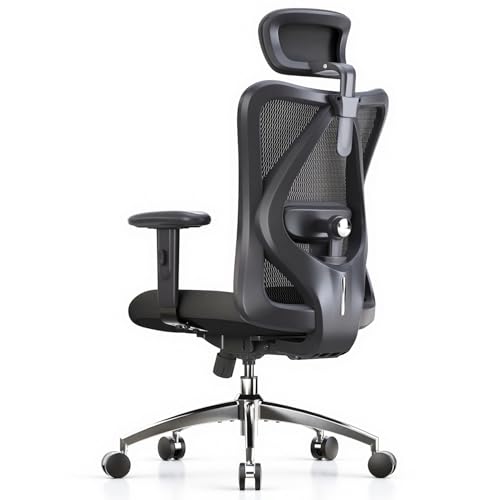
SIHOO M18 Ergonomic Office Chair
What We Like
- Adjustable lumbar and headrest support
- Breathable mesh backrest keeps you cool
- Three recline angles for varied tasks
- Supports up to 330 lbs
Trade-offs
- 2D armrests limit positioning options
- Only three recline lock positions
- At 38 pounds, not lightweight to move
With adjustable lumbar support that moves with you and a breathable mesh backrest, this chair is built for people who need targeted lower back relief during long workdays. The four-point support system, head, back, hips, and hands, helps you find a comfortable position for typing or leaning back on a break. It suits users between 5’6″ and 6’2″ and supports up to 330 lbs, giving it a sturdy feel.
The armrests adjust in two directions, but not the three or four you’d find on a chair like the Marsail Ergonomic Mesh Office Chair, which offers 3D armrests for finer adjustments. If you spend hours with your elbows at a specific angle, you may wish for more range. Still, the M18’s adjustable lumbar support and easy assembly make it a practical pick for anyone whose primary concern is back support.
Marsail Ergonomic Mesh Office Chair

What We Like
- Breathable mesh backrest promotes airflow
- 3D adjustable armrests for custom positioning
- Adaptable lumbar support matches your shape
- Wide seat with thick foam for comfort
Trade-offs
- At 30.4 lb, it's heavier than some mesh chairs
- No tilt lock or seat angle adjustment mentioned
The Marsail’s mesh backrest molds to your spine while keeping air moving, so you stay cool even during long work sessions. Its lumbar support adjusts both forward/backward and up/down, letting you dial in exactly where you need pressure against your lower back. The 3.14-inch thick high-density foam seat and 3D armrests add to the comfort, making this a chair that supports you through an entire day without feeling stuffy or rigid.
The Marsail’s mesh backrest molds to your spine while keeping air moving, so you stay cool even during long work sessions. Its lumbar support adjusts both forward/backward and up/down, letting you dial in exactly where you need pressure against your lower back. The 3.14-inch thick high-density foam seat and 3D armrests add to the comfort, making this a chair that supports you through an entire day without feeling stuffy or rigid.
Product photos
HOLLUDLE Ergonomic Mesh Office Chair

What We Like
- Fully 3D adjustable lumbar support
- 350 lbs weight capacity
- 5-year warranty included
- Breathable mesh backrest
Trade-offs
- At 43.7 lb, heavier than some mesh chairs
- 2D headrest limits neck angle options
The 3D adjustable lumbar support on this chair moves up, down, forward, backward, and rotates to match your spine’s natural curve, so you can dial in exactly where pressure needs to be relieved. The breathable mesh back keeps air moving during long work sessions, and the 5-year warranty adds peace of mind for daily use.
The trade-off is weight: at 43.7 lb, it’s heavier than the TRALT (28 lb), so moving it between rooms takes more effort. The headrest adjusts in height and angle, which may not suit everyone’s neck preference. If you prioritize lumbar fine-tuning over portability and don’t mind the extra heft, this chair delivers where it counts most for lower back issues.
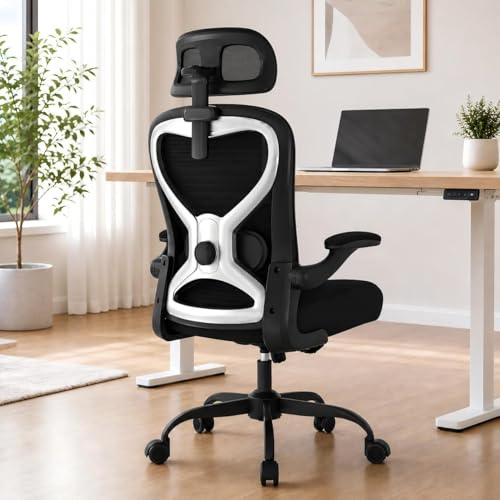
CASASIO Ergonomic Office Chair
What We Like
- Dual-direction adjustable lumbar cushion
- Contoured mesh back aligns with spine
- 3D adjustable headrest for neck support
- Reinforced metal base supports 330 lbs
Trade-offs
- Flip-up armrests lack depth or width adjustment
- No tilt lock for fixed sitting positions
The dual-direction adjustable lumbar cushion lets you move support up and down to target your lower back, while the contoured mesh back follows your spine’s natural curve. The 3.5-inch virgin foam seat distributes weight evenly to prevent soreness during long workdays. This chair suits anyone who spends eight-plus hours seated and wants targeted lumbar relief without sacrificing comfort in the hips and thighs.
The trade-off comes with the flip-up armrests: they tuck neatly under a desk but offer no width or depth adjustment, so they may not suit those who need to fine-tune arm positioning. For lower back comfort, however, the dual-direction lumbar cushion and breathable mesh back make this a focused choice for buyers who value spinal alignment above all else.
CAPOT Ergonomic Mesh Office Chair

What We Like
- Micro-adjust lumbar with 8 levels
- Cools with Aerovith mesh seat
- Supports up to 400 lbs
- 5-year free parts warranty
Trade-offs
- Headrest only fits 5'5" to 6'2"
- Armrests lack width adjustment
A 2-inch, 8-level micro-adjust lumbar support lets you dial in exactly the L1-L5 curve that your lower back needs, lessening lower back pressure by 50%. That precision makes the CAPOT a smart pick for anyone who spends eight-plus hours at a desk and wants to reduce back pain. The breathable Aerovith mesh seat keeps you cool, the backrest locks at three angles, and the whole chair holds up to 400 pounds, so it’s built for bigger frames too.
At 38 pounds, this chair is noticeably heavier than the Marsail (30.4 lb), so relocating it from one room to another takes more effort. For lower back relief first and everything else second, it’s a strong fit.
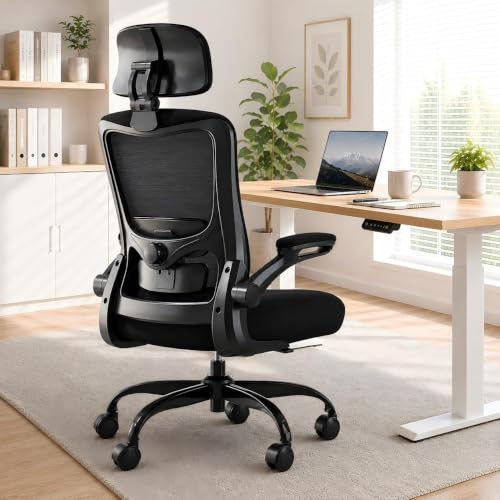
Zeonsit Ergonomic Office Chair
What We Like
- 4-way adjustable lumbar support
- Breathable mesh back reduces heat
- 3.5-inch virgin foam cushion
- Flip-up armrests for flexibility
Trade-offs
- No seat depth adjustment for taller users
- Flip-up arms lack 3D adjustability
A 4-way adjustable lumbar support that follows your spine’s natural curve is the standout feature here, directly targeting lower back pressure during long workdays. The breathable mesh back keeps air moving to prevent heat buildup, while the 3.5-inch virgin foam cushion helps relieve pressure on your hips and tailbone. People who need personalized lower back support and value a cool, comfortable seat for extended hours at a desk will find this chair a good match.
A compact build may feel snug for broader builds, and there’s no seat depth adjustment to accommodate taller users. Compared to the SIHOO M18, which offers a 21-inch seat width and 2D armrests, the Zeonsit prioritizes lumbar customization over overall spaciousness. Best for those who need precise lower back support and don’t mind a more compact seat.
Haworth Soji Ergonomic Office Chair

What We Like
- Flexible mesh back adapts to movement
- 4D armrests for personalized positioning
- Seat depth adjustment supports varied leg lengths
- 12-year warranty reflects long-term durability
Trade-offs
- No forward tilt for active sitting
- Mesh back offers less cushioning than padded chairs
The Soji’s flexible mesh back provides support that adapts as you shift, helping maintain comfort during long hours at a desk. With adjustable lumbar support, seat depth, and 4D armrests, you can fine-tune the fit to reduce strain. The 12-year warranty backs the chair’s durability, making it a reliable choice for daily use.
This model does not include forward tilt, a feature some users prefer for leaning into tasks. If that matters to you, the Steelcase Amia offers four points of adjustability and a fabric seat, though it is heavier at 54.5 pounds. For those who want a flexible mesh back and extensive adjustability without the extra weight, the Soji arrives fully assembled and ready to use.
Product photos
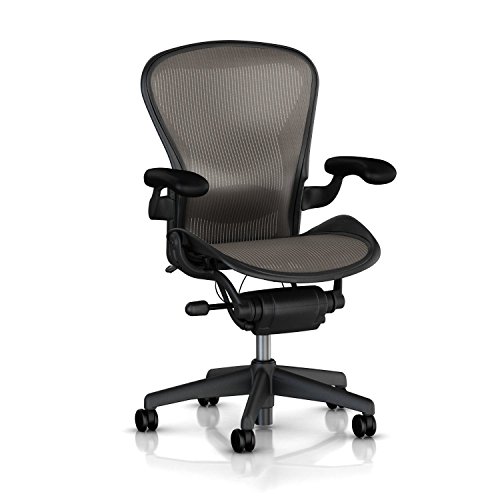
Herman Miller Classic Aeron Task Chair
What We Like
- Breathable Pellicle suspension dissipates body heat
- Kinemat tilt keeps natural pivot
- Waterfall front reduces thigh pressure
- 12-year Herman Miller warranty
Trade-offs
- At 48 pounds, heavy to move
- No headrest for neck support
The Pellicle suspension on this chair actively dissipates body heat, so you stay cool and comfortable even during long work sessions. That breathable mesh, paired with the waterfall front edge that takes pressure off your thighs, makes it a strong option for anyone dealing with lower back issues who also wants to avoid heat buildup. The Kinemat tilt mechanism lets your neck, shoulders, hips, knees, and ankles pivot naturally, encouraging movement without forcing you out of your work flow. It’s a premium design that prioritizes airflow and ergonomic alignment over plush padding.
Weighing 48 pounds, this is a heavy chair, so repositioning it or changing your setup frequently takes more effort. Compared to the Haworth Soji at just 19.8 pounds, the Aeron is noticeably less portable. The lack of a headrest also means it’s best for task-focused sitting rather than reclined lounging. For someone who values breathability, a natural range of motion, and a long 12-year warranty, this chair delivers where it counts.
Product photos
Steelcase Amia Office Chair
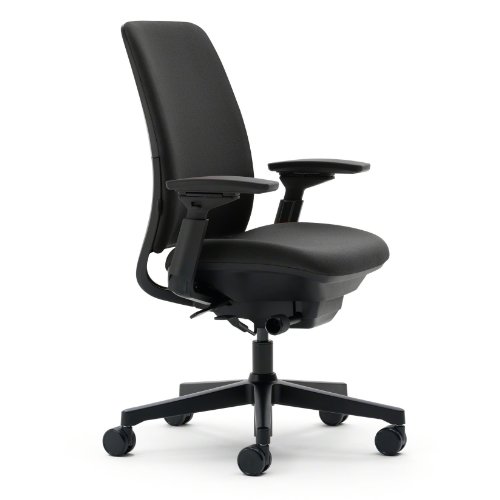
What We Like
- LiveLumbar dynamic lower back support
- 4D adjustable armrests for custom fit
- Extra cushioning for 8-10 hour comfort
- Carbon Neutral certified sustainable option
Trade-offs
- At 54.5 lb, it's heavy to move
- No headrest included for neck support
The Steelcase Amia’s hidden LiveLumbar system adjusts continuously as you shift, so your lower back gets tailored support whether you are leaning forward to type or reclining to think. With extra cushioning and flexible seat edges, it is built to keep you comfortable through full workdays without pressure points. This chair suits anyone who wants a refined, ergonomic seat that adapts to movement rather than locking you into one position.
That said, the Amia is a heavy chair at 54.5 pounds, so rearranging your setup takes more effort than with lighter picks like the Haworth Soji (19.8 lb). It also lacks a headrest, which the TRALT Ergonomic Chair includes for those who want neck support during breaks. If you prioritize a sleek, dynamic lumbar system and don’t mind the weight or the absence of a headrest, the Amia delivers lasting comfort for focused work.
Product photos
How We Evaluated Office Chairs For Lower Back Problems
Our evaluation focused on the features that directly impact lower back comfort during long sitting sessions. We studied manufacturer specifications, reviewed expert round-ups from ergonomic specialists, and analyzed patterns in owner feedback to understand what works and what doesn’t.
The four criteria that mattered most were lumbar support adjustability, seat comfort and durability, breathability to prevent heat discomfort, and overall build quality backed by certifications and warranties. Each chair was assessed on how well its design supports the lower back’s natural lordotic curve.
This is a research-led evaluation, not a hands-on test. We do not claim personal testing experience. Our recommendations are based on what the data and expert consensus indicate will best serve someone with lower back concerns.
What To Look For In Office Chairs For Lower Back Problems
Choosing a chair for lower back problems means focusing on adjustability, support, and comfort features that work for your specific body.
Look for a chair with adjustable lumbar support that targets the lower back, a seat cushion that maintains its shape, and a breathable backrest to keep you comfortable all day.
Lumbar Support Adjustability
The most critical feature for lower back problems is lumbar support that you can adjust to fit your spine. Look for chairs that offer height adjustment for the lumbar pad, as well as depth adjustment so the support can press into your lower back at the right amount. Some chairs offer 3D or 4-way lumbar adjustment, which allows you to fine-tune both the position and the pressure. The best options let you move the support up and down and in and out to match your specific curve.
Seat Comfort and Durability
A seat that flattens out after a few months will do nothing for your lower back. High-resilience foam or a suspension system like Pellicle maintains its shape and support over time. Seat depth adjustment is also important: if the seat is too long, it can press behind your knees; too short, and you lose thigh support. Look for a waterfall front edge that reduces pressure on the backs of your thighs.
Breathability and Temperature Control
Lower back pain can be aggravated by heat and moisture buildup. A breathable mesh backrest or a Pellicle suspension allows air to circulate, keeping your back cool and dry. This is especially important if you sit for long hours or work in a warm environment. Chairs with solid foam backs or leather upholstery tend to trap heat, which can make discomfort worse.
Build Quality and Warranty
A chair that wobbles or sinks after a few months is not going to support your lower back properly. Look for BIFMA certification, which indicates the chair meets industry standards for safety and durability. A longer warranty, such as 5 or 12 years, is a good sign that the manufacturer stands behind the product. Reinforced metal bases and high weight capacities also indicate a chair built to last.
- Check that the lumbar support can be adjusted in height and depth to match your spine.
- Make sure the seat cushion uses high-resilience foam or a suspension system.
- Confirm the chair has a breathable backrest, either mesh or Pellicle.
- Look for a warranty of at least 3 years, with 5 or 12 years being even better.
- Verify the chair’s weight capacity accommodates your body type.
The best chair for your lower back is the one that lets you adjust the lumbar support to exactly where you need it.
Office Chairs For Lower Back Problems Compared
The table below compares the ten chairs side by side, highlighting the lumbar support type, adjustability features, and key specs that matter most for lower back problems.
| Product | Weight Capacity | Lumbar Support | Armrests |
|---|---|---|---|
| TRALT Ergonomic Office Chair with Lumbar Support | 330 lbs | Adjustable depth | Flip-up |
| SIHOO M18 Ergonomic Office Chair | 330 lbs | Adjustable | 2D |
| Marsail Ergonomic Mesh Office Chair | 330 lbs | Adjustable 1.18" forward/backward, 2.16" up/down | 3D adjustable, flip-up |
| HOLLUDLE Ergonomic Mesh Office Chair | 350 lbs | 3D adjustable (up/down, forward/backward, rotate) | 3D (height, front/back, rotation) |
| CASASIO Ergonomic Office Chair | 330 lbs | 4-Way Adjustable | Flip-Up |
| CAPOT Ergonomic Mesh Office Chair | 400 lbs | 2 in / 8 levels | 4D Flip-up |
| Zeonsit Ergonomic Office Chair | 330 lbs | 4-Way Adjustable | Flip-Up |
| Haworth Soji Ergonomic Office Chair | 350 lb | Yes | 4D armrests |
| Herman Miller Classic Aeron Task Chair | N/A | Lumbar Pad | Fully adjustable vinyl |
| Steelcase Amia Office Chair | N/A | LiveLumbar dynamic system | 4D (height, width, pivot, depth) |
Frequently Asked Questions
What type of lumbar support is best for lower back pain?
Adjustable lumbar support that can move up and down and in and out is generally best. This lets you position the support exactly where your lower back curves inward. Chairs with 3D or 4-way lumbar adjustment offer the most customization.
Is a mesh back or padded back better for lower back problems?
Mesh backs are often better because they breathe and keep you cool, which can reduce discomfort during long sits. However, some people prefer the feel of a padded back. The key is that the lumbar support itself is adjustable, regardless of the back material.
How important is seat depth for lower back issues?
Seat depth is very important. If the seat is too long, it can press behind your knees and cause you to slouch, which strains the lower back. If it is too short, you lose thigh support. A chair with adjustable seat depth helps you find the right position.
Can a headrest help with lower back pain?
A headrest can help indirectly by allowing you to lean back and relax your upper body, which reduces overall spinal tension. However, the primary focus for lower back pain should be on adjustable lumbar support. A headrest is a secondary feature.
What weight capacity should I look for in a chair for lower back problems?
Look for a weight capacity that exceeds your body weight by at least 50 pounds. This ensures the chair’s mechanisms and base will hold up over time. Chairs with higher weight capacities, such as 330 or 400 pounds, often have sturdier frames and better support.
The Bottom Line
For most people with lower back problems, the TRALT Ergonomic Office Chair with Lumbar Support offers the best balance of adjustable support, comfort, and value. Its targeted lumbar support and breathable mesh back make it a reliable choice for all-day sitting without breaking the bank.
If you need more specific features, consider the SIHOO M18 for its adjustable lumbar and breathable design, or the Steelcase Amia if you want dynamic lumbar support that moves with you. The Herman Miller Aeron is ideal for warm environments thanks to its Pellicle suspension.
The single most important factor in choosing a chair for lower back problems is adjustable lumbar support that fits your spine. No other feature matters as much. Start there, and you will find a chair that helps you sit comfortably and work productively.
