10 Best Office Chairs in 2026
This post contains affiliate links. As an Amazon Associate, we earn from qualifying purchases.
The CASASIO Ergonomic Office Chair earns our best overall spot because it balances essential ergonomic features like a 3D adjustable headrest and tilt control with a compact, flip-up armrest design ideal for smaller home offices. For those needing extensive lumbar customization, the MOLENTS Ergonomic Mesh Office Chair offers exceptional adjustability, while the CAPOT Ergonomic Mesh Office Chair provides heavy-duty support for larger users.
Choosing the right office chair for a home workspace means balancing comfort, support, and footprint. You need a chair that fits your body and your room, not just one that looks good in a catalog. The wrong chair can lead to back pain and fatigue, making it hard to focus.
This guide is based on a careful analysis of specifications, manufacturer details, and patterns found in expert reviews and owner feedback. We’ve focused on the features that matter most for long hours at a desk, from lumbar support to build quality, to help you find the right chair for your space and budget.
Top 10 Office Chairs in the Market
Certain content that appears on this site comes from Amazon. This content is provided "as is" and is subject to change or removal at any time.
The Best Office Chairs, Reviewed
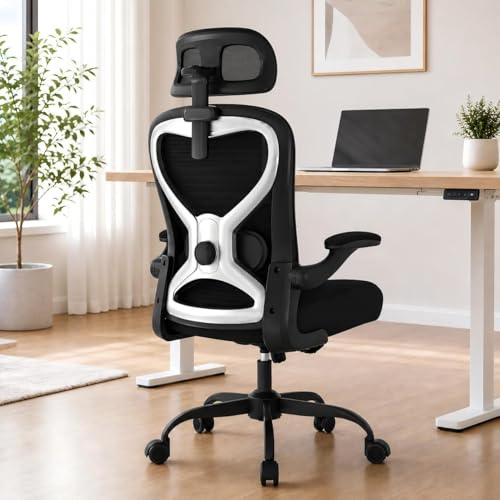
CASASIO Ergonomic Office Chair
What We Like
- 3D adjustable headrest for neck support
- Flip-up armrests for compact storage
- Tilt and rock with adjustable tension
Trade-offs
- Flip-up armrests lack width adjustment
- No seat width adjustment for wider users
A 330-pound weight capacity means this chair comfortably supports a wide range of body types, while the 3.5-inch virgin foam seat cushion distributes weight evenly to prevent soreness during long workdays. This chair suits home office users who want a balance of comfort, adjustability, and durability without stepping into premium price territory.
The flip-up armrests let you tuck the chair neatly under a desk, but they lack the width or depth adjustments found on some competitors. Still, the CASASIO’s thoughtful lumbar and head support, plus the gentle rocking motion, give it an edge for all-day comfort that many competitors at this level lack.
MOLENTS Ergonomic Mesh Office Chair

What We Like
- Adjustable lumbar support up/down and forward/backward
- 3D adjustable armrests reduce shoulder strain
- Breathable mesh keeps you cool all day
- Three recline positions from 90° to 120°
Trade-offs
- At 35 pounds, it's heavier than some mesh chairs
- Seat depth is fixed at 18.9 inches
A backrest that reclines from 90° to 120° with three lockable positions means you can shift from focused work to a quick stretch without leaving your seat. The MOLENTS Ergonomic Mesh Office Chair offers lumbar support that moves both up and down and forward and backward, plus 3D armrests that let you dial in arm and shoulder positioning. The breathable mesh back keeps air moving, so long hours at a desk don’t turn into a sweaty ordeal. It’s a smart pick for anyone who wants to fine-tune their chair to their body rather than the other way around.
The trade-off is weight: at 35 pounds, this chair is noticeably heavier than the Haworth Soji (19.8 pounds). Moving it between rooms or adjusting its position on a hardwood floor takes a bit more effort. The seat depth is also fixed at 18.9 inches, which may feel snug for taller users who prefer a deeper pan. Still, for the level of adjustability packed into this mid-range chair, those are reasonable compromises. If you prioritize personalized support over portability, the MOLENTS delivers where it counts.
Product photos
CAPOT Ergonomic Mesh Office Chair

What We Like
- 400 lb capacity with steel base
- Micro-adjust lumbar with 8 levels
- Cooling Aerovith mesh seat
- 5-year warranty with free parts
Trade-offs
- At 38 lb, not easy to move often
- Headrest only fits 5'5" to 6'2" users
A stainless steel base that supports up to 400 pounds means this chair stays planted even during long shifts, so you won’t worry about tipping or wear over time. The micro-adjust lumbar gives you 2 inches of travel across 8 levels to target the L1-L5 spine area, which can cut lower back pressure by 50% according to the manufacturer. The enlarged Aerovith mesh seat keeps you cool and reduces pelvic pressure by 20%, making it a solid fit for anyone who sits eight-plus hours daily.
At 38 pounds, this isn’t a chair you’ll want to scoot around the room frequently, and the headrest only adjusts for heights between 5’5″ and 6’2″. Compared to the lighter Haworth Soji (19.8 lb), the CAPOT is noticeably more substantial, but that heft comes with the reassurance of a BIFMA-certified frame. If you’re over 6’2″ or need a chair that glides across the room effortlessly, the Soji might suit you better.
Haworth Soji Ergonomic Office Chair

What We Like
- Arrives fully assembled
- 4D adjustable armrests
- 12-year warranty
- GREENGUARD Gold certified
Trade-offs
- No forward tilt adjustment
- Only hard casters included
The Haworth Soji arrives fully assembled, so you can sit down and get comfortable the moment it shows up, no wrestling with Allen wrenches or confusing instructions. Its 4D armrests and seat depth adjustment let you dial in the fit that supports your posture through long workdays, while the flexible mesh back keeps you cool and focused. This chair is ideal for anyone who wants premium ergonomics without the typical assembly headache, backed by a 12-year warranty that speaks to its build quality.
One thing to consider is that this model skips forward tilt, a feature some users rely on for active sitting or leaning into detailed tasks. The included hard casters are designed for carpet use, so if you have hardwood floors, you may need to consider alternative casters. The Soji is best for those who prefer a static, upright posture and don’t require forward tilt.
Product photos
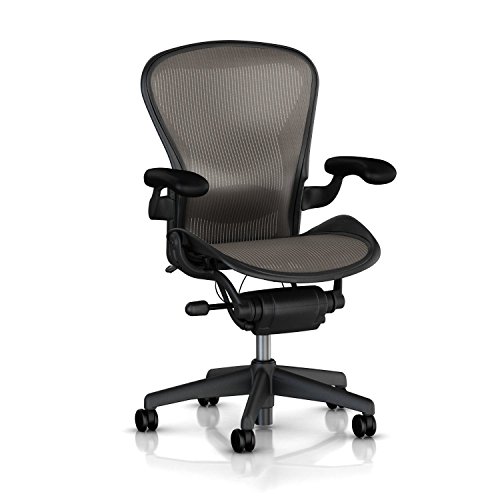
Herman Miller Classic Aeron Task Chair
What We Like
- Patented Kinemat tilt for natural movement
- Breathable Pellicle suspension keeps you cool
- Waterfall seat edge reduces thigh pressure
- 12-year Herman Miller warranty
Trade-offs
- At 48 lb, it's heavy to move around
A 12-year warranty and a patented Kinemat tilt mechanism that lets your neck, shoulders, hips, knees, and ankles pivot naturally make this chair a long-term investment in comfort. The breathable Pellicle suspension dissipates body heat while you work, and the waterfall front edge of the seat takes pressure off your thighs to keep blood circulating. This design suits anyone who spends hours at a desk and wants lasting support without feeling stuck in one position.
The Classic Aeron weighs 48 pounds, making it noticeably heavier than the Haworth Soji at 19.8 pounds, so you’ll think twice before sliding it across the room or carrying it upstairs. That heft comes from the dense engineering and materials behind its 12-year warranty, which owners say delivers lasting support. If you value durability over portability, this chair rewards that choice.
Product photos
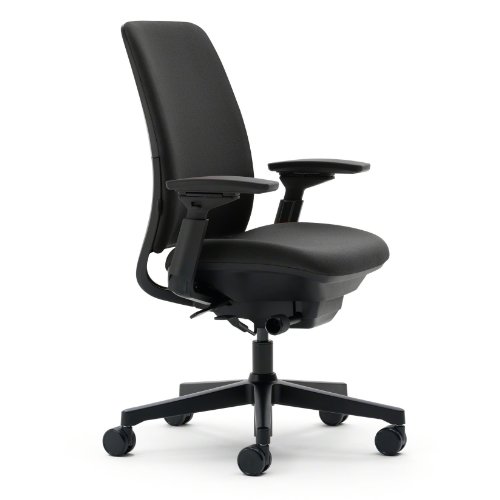
Steelcase Amia Office Chair
What We Like
- Hidden LiveLumbar adjusts to your movement
- 4D arm support for personalized fit
- Full recline range with lockable upright position
- Carbon Neutral certified sustainable option
Trade-offs
- At 54.5 lb, it's heavy to move
- No headrest included for neck support
The Steelcase Amia’s hidden LiveLumbar system adjusts to your movement, providing dynamic lower back support. Extra seat cushioning and flexible seat edges help ensure pressure-free sitting for eight to ten hours. With 4D arm adjustments for height, width, pivot, and depth, you can dial in a custom fit that keeps your shoulders relaxed and wrists straight. It’s a chair designed for people who spend long hours at a desk and want consistent, pressure-free comfort.
At 54.5 pounds, the Amia is a solid, stationary piece, ideal if you want a chair that stays put. For those who need something lighter to move around, the Haworth Soji weighs 19.8 pounds and has a mesh back. But if lower back support and a sturdy, adjustable seat are your priorities, the Amia delivers where it counts.
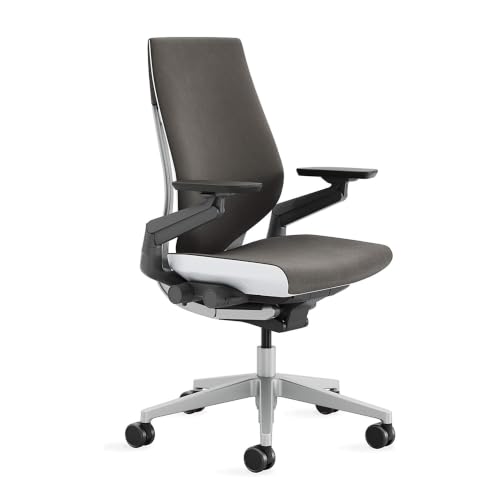
Steelcase Gesture Office Chair
What We Like
- 360-degree arm mobility
- Contoured back supports natural spine shape
- Intuitive adjustments on right side
- Full recline range with upright lock
Trade-offs
- At 70 pounds, it's heavy to move
- Designed for carpet floors only
The 360-degree arms on the Steelcase Gesture let you move freely in any posture, so you can reach your keyboard, mouse, or phone without shifting your body. This chair is built for people who spend extended periods at a desk and want a precise fit. The contoured back follows your spine’s natural curve, and all adjustments are within arm’s reach on the right side. It’s a premium choice for anyone who values intuitive ergonomics over flashy extras.
At 70 pounds, this chair is heavy enough that you’ll think twice before moving it across the room. The wheels are designed for carpet, so if your floors are hard, you’ll likely want to swap them out. By comparison, the MOLENTS mesh chair weighs 35 pounds, making it much easier to reposition.
Product photos
Haworth Breck Ergonomic Office Chair

What We Like
- Height-adjustable lumbar for personalized fit
- 4D armrests for dynamic support
- Adaptive seat depth reduces thigh pressure
- Three-zoned recline with backstop control
Trade-offs
- No headrest included for neck support
- Weighs 38 pounds, heavier than some mesh models
A seat that slides forward or backward over two inches lets you align the chair to your leg length, while the height-adjustable lumbar support lets you fine-tune lower-back pressure to match your posture. That combination means you can set the chair to your body rather than forcing a fixed seat position, which helps avoid lower-back discomfort during extended sitting.
Weight is a factor here: at 38 pounds, the Breck is heavier than some mesh chairs listed in the guide, so moving it between rooms or adjusting its position on a hardwood floor takes more effort. It also lacks a headrest, which some other models include, so if you lean back frequently to rest your neck, you might miss that support. But if precise lumbar fit and a fully adjustable seat are your priorities, this chair delivers where it counts.
Product photos
Humanscale Freedom Office Chair with Headrest
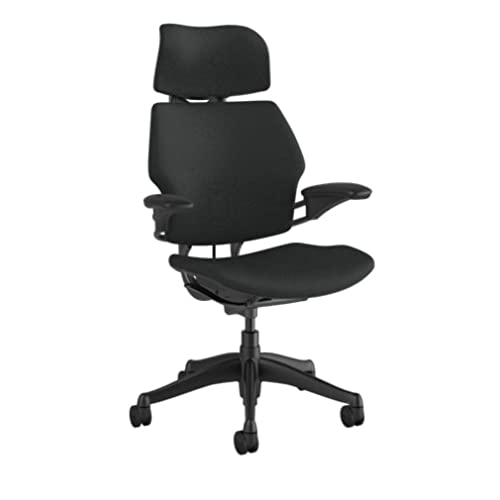
What We Like
- Backrest auto-adapts to spine during recline
- Near-constant eye level while reclining
- Contoured cushions reduce concentrated pressure
- Includes headrest for added support
Trade-offs
- Heavier than the MOLENTS mesh chair at 35 lb
- Armrests lack 4D adjustability
The responsive backrest on this chair automatically adjusts to your spine as you lean back, so you don’t have to fiddle with levers or knobs to find the right recline tension. That means a smoother, more natural motion when you’re typing upright or kicking back to think. It’s a great fit for anyone who spends long stretches at a desk and wants the chair to do the work of keeping you comfortable. This is especially true if you prefer a recline that keeps your eye level nearly constant and opens up the angle between your torso and legs for better circulation. The contoured cushions also help spread your weight more evenly, which can make a big difference during marathon work sessions.
The main drawback is that this chair is designed for comfort, not for tucking into a tight space or moving around frequently. But if your priority is a chair that intuitively supports your body as you move, the Freedom delivers a level of automatic recline comfort that few others match.
Product photos
Herman Miller Embody Ergonomic Office Chair
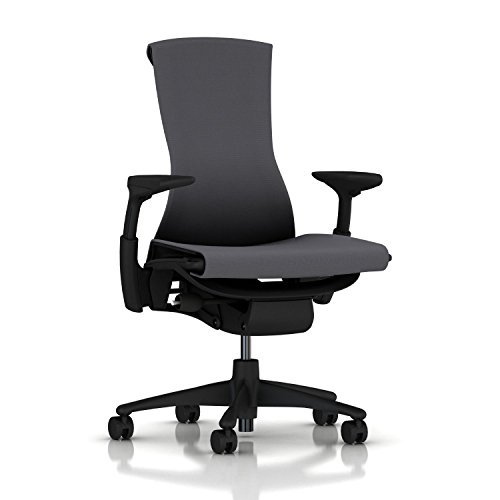
What We Like
- Pixelated support matrix for even weight distribution
- Backfit adjustment aligns with spine's natural curve
- Four-layer seat designed for airflow and cooling
- Developed with input from 20+ ergonomics experts
Trade-offs
- At 52.0 pounds, it's heavy to move around
- No headrest for those who need neck support
The Embody’s pixelated support surface, a dynamic matrix that conforms to your micro-movements, distributes weight evenly across the seat and back, reducing pressure points and encouraging healthy circulation. Developed with input from over twenty physicians and PhDs in biomechanics and ergonomics, this chair is made for anyone who spends long stretches at a desk and wants their spine to stay naturally aligned. The Backfit adjustment lets you position the backrest to match your spine’s curve, and once set, it adapts automatically as you shift from leaning forward to reclining.
That said, the Embody is a heavy piece of furniture at 52 pounds, so it’s not the easiest to slide around on carpet or reposition frequently. If you prefer a lighter, more breathable mesh back, the Haworth Soji weighs under 20 pounds and offers a flexible mesh back with lumbar support. But for those who prioritize spine-aligned support and a seat that breathes with you through its four-layer design, the Embody delivers a level of ergonomic sophistication that’s hard to match.
Product photos
How We Evaluated Office Chairs
Our evaluation began with a deep dive into the specifications and manufacturer documentation for each chair. We looked at materials, weight capacity, adjustment ranges, and warranty terms to understand what each model offers straight from the source. This gave us a clear baseline for comparing features across different price points.
We then focused on the four criteria that matter most for a home office chair: ergonomic adjustability (lumbar support, armrests, seat depth), build quality and durability (frame materials, weight capacity, warranty), comfort for long sessions (seat cushion, mesh breathability), and practical fit for a home setting (weight, footprint, assembly requirements). Owner feedback patterns helped us confirm which features truly make a difference in daily use.
A research-led evaluation has its limits. We haven’t spent weeks sitting in each chair ourselves, but by cross-referencing expert consensus with real-world owner reports, we can identify the chairs that consistently perform well. This approach helps you narrow down your options based on what other careful shoppers and professionals have found.
What To Look For In Office Chairs
Finding the right office chair means understanding how its features match your body and your work habits. Focus on adjustability, support, and build quality before considering aesthetics.
Prioritize chairs with adjustable lumbar support, armrests, and seat depth. A breathable mesh back can keep you cool, while a sturdy base and long warranty indicate lasting quality.
Ergonomic Adjustability
The best chairs let you fine-tune the fit. Look for adjustable lumbar support that moves up and down and, ideally, in and out to match the curve of your spine. Armrests that adjust in height, width, depth, and angle (4D) can reduce shoulder strain. A seat that slides forward and back (adjustable seat depth) ensures proper thigh support without pressure behind the knees.
Build Quality and Warranty
A chair is an investment. A steel base and a high weight capacity (like the CAPOT’s 400-pound limit) signal durability. A longer warranty, such as the 12-year coverage from Haworth or Herman Miller, suggests the manufacturer stands behind its product. Heavier chairs often use more durable materials, but consider if you’ll need to move the chair frequently.
Comfort and Breathability
For all-day sitting, the seat material matters. Mesh backs allow airflow and prevent heat buildup, while a well-cushioned seat (or a mesh suspension like Herman Miller’s Pellicle) should distribute weight evenly. A waterfall seat edge reduces pressure on the back of your thighs, improving circulation during long work sessions.
- Check if the headrest height range fits your torso length.
- Confirm the seat width and depth accommodate your body size.
- See if the armrests can be tucked under your desk when not in use.
- Verify the chair’s weight and whether it has casters suitable for your floor type.
A good rule of thumb: the more adjustments a chair offers, the more likely you are to find a comfortable, supportive position.
Office Chairs Compared
The table below compares the key specs and features of our top picks, making it easy to see which chair best fits your needs.
| Product | Armrests | Warranty | Weight |
|---|---|---|---|
| CASASIO Ergonomic Office Chair | Flip-up | 5-year | 30.0 pounds |
| MOLENTS Ergonomic Mesh Office Chair | 3D adjustable | N/A | 35.0 pounds |
| CAPOT Ergonomic Mesh Office Chair | 4D Flip-up | 5-year parts | 38.0 pounds |
| Haworth Soji Ergonomic Office Chair | 4D adjustable | 12-year | 19.8 pounds |
| Herman Miller Classic Aeron Task Chair | Fully Adj Vinyl Arms | 12-year | 48.0 pounds |
| Steelcase Amia Office Chair | 4D (height, width, pivot, depth) | N/A | 54.5 pounds |
| Steelcase Gesture Office Chair | 360-degree arms | N/A | 70.0 pounds |
| Haworth Breck Ergonomic Office Chair | 4D (vertical, horizontal, forward/back, pivot) | N/A | 38.0 pounds |
| Humanscale Freedom Office Chair with Headrest | Standard Height Adjustable Duron Arms | N/A | 38.0 pounds |
| Herman Miller Embody Ergonomic Office Chair | Fully Adjustable Arms | N/A | 52.0 pounds |
Frequently Asked Questions
What is the most important feature in an office chair?
Adjustable lumbar support is the most critical feature. It allows you to position the chair’s backrest to support the natural curve of your lower spine, which helps prevent slouching and reduces back pain during long hours of sitting.
How much should I spend on an office chair?
Investing in a quality chair is a long-term purchase for your health and comfort. While budget-friendly options exist, spending more on a chair with better adjustability, materials, and a longer warranty often provides better value over time.
Is a mesh or cushioned office chair better?
Mesh chairs are generally more breathable and keep you cooler, making them ideal for warm environments or long workdays. Cushioned chairs can offer a plusher feel, but they may retain heat and wear down faster. Your choice depends on your climate and comfort preference.
How do I know if an office chair will fit me?
Check the chair’s specifications for seat height range, seat depth, and seat width. The chair should allow you to sit with your feet flat on the floor, knees at a 90-degree angle, and a few inches of space between the back of your knees and the seat edge.
Do I need a headrest on my office chair?
A headrest is beneficial if you tend to lean back while thinking or on calls, as it supports your neck and reduces strain. However, many ergonomic chairs omit the headrest to encourage an upright working posture. It’s a personal preference based on your work style.
The Bottom Line
For most home office workers, the CASASIO Ergonomic Office Chair provides the best all-around value. Its combination of a 3D adjustable headrest, tilt control, and space-saving flip-up armrests makes it a smart choice for those who need comfort without sacrificing floor space.
If your priority is extensive lumbar and armrest adjustability for long, focused workdays, the MOLENTS Ergonomic Mesh Office Chair is a strong contender. For larger users or anyone needing a durable build, the CAPOT Ergonomic Mesh Office Chair offers exceptional support and a generous warranty.
The single most important factor in choosing an office chair is finding one that fits your body. Focus on adjustability, especially lumbar support, and don’t underestimate the value of a solid warranty. A chair that fits well will serve you comfortably for years.
