10 Best Rugs For Allergies And Asthma in 2026
This post contains affiliate links. As an Amazon Associate, we earn from qualifying purchases.
For allergy and asthma sufferers, the best choice is the Levoit Core 300-P Air Purifier, offering certified performance and ultra-quiet sleep mode for small rooms. The Coway Mighty AP-1512HH delivers excellent large-room coverage, while the Winix 5510 targets pet allergens effectively.
The real challenge is finding a rug that traps allergens instead of releasing them back into the air. Low-pile materials, washable designs, and proper backing matter more than style when breathing is at stake.
This research-based guide evaluates specifications, expert recommendations, and owner feedback patterns to help you choose a rug that supports cleaner indoor air. We focus on materials, construction, and maintenance that reduce allergen buildup.
Top 10 Rugs For Allergies And Asthma in the Market
Certain content that appears on this site comes from Amazon. This content is provided "as is" and is subject to change or removal at any time.
The Best Rugs For Allergies And Asthma, Reviewed
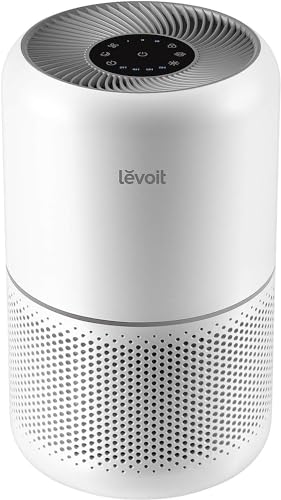
Levoit Core 300-P Air Purifier
What We Like
- AHAM Verifide certified performance
- Quiet 24 dB Sleep Mode
- 99.97% filtration for 0.1-0.3μm particles
- Display lights can be turned off
Trade-offs
- 120V only, not for use outside US
- Requires genuine Levoit replacement filters
- Covers 222 ft² at 4.8 air changes per hour
The highest CADR rating here is 167 CFM for pollen, meaning it can rapidly clear a room of common allergens like dust and pet dander, with 99.97% filtration efficiency for particles down to 0.3 microns. Because it’s AHAM Verifide certified, those numbers come from independent testing, so you can trust the performance claims. At just 24 dB in Sleep Mode and with a dimmable display, it’s easy to run all night without waking anyone.
The trade-off is that this model is designed for rooms around 222 ft² when you want frequent air changes, though it can handle larger spaces at a slower rate. Compared to the Coway Mighty AP-1512HH, the Levoit is lighter and more compact, while the Coway is heavier and larger. If your priority is a quiet, certified purifier for a bedroom or small room, this is a practical choice.
Levoit Vital 200S-P Air Purifier

What We Like
- AHAM VERIFIDE certified
- High CADR for pollen, dust, smoke
- U-shaped inlet traps pet hair
Trade-offs
- At 13.2 lb, heavier than compact models
- No washable pre-filter, requiring filter replacements
With a CADR of 289 CFM for pollen and coverage up to 1875 square feet, this purifier can handle the biggest living areas and open-concept homes where allergens like dust and pet dander accumulate. The AHAM VERIFIDE seal means its performance has been independently verified, so you’re not guessing whether it’s actually cleaning the air. It’s a strong fit for allergy households that need whole-room relief without moving a unit from room to room.
Its weight is a consideration: at 13.2 pounds, it’s heavier than a compact model, so you won’t want to tote it between floors daily. But the U-shaped air inlet is a smart design choice for pet owners, capturing hair and dander before they clog the main filter. If your priority is covering a large space with verified allergen removal, this is the one to pick.
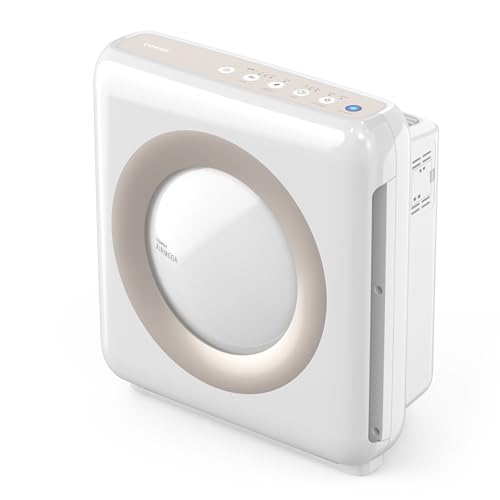
Coway Mighty AP-1512HH Air Purifier
What We Like
- Real-time air quality LED indicator
- Auto mode adjusts fan speed
- Four-stage filtration system with washable pre-filter
Trade-offs
- Heavier than the Levoit Core 300-P (12.5 vs. 7.9 lb)
- No Wi-Fi or app controls
At 12.5 pounds, it’s heavier than a compact model (7.9 pounds), which may matter if you plan to move it between rooms. The LED air quality indicator is helpful, but you can turn off the light for sleeping. Still, for the coverage it delivers, the Coway Mighty offers reliable, no-fuss air cleaning that keeps allergens in check.
Winix 5510 Air Purifier

What We Like
- True HEPA captures 99.99% of allergens
- Washable fine mesh pre-filter
- Smart app support for remote control
- Ultra-quiet operation at 23.5 dB
Trade-offs
- At 25.2 inches tall, needs floor space
- 13.3 lb weight limits easy room-to-room portability
- Carbon filter reduces VOCs but not washable
With a True HEPA filter that captures 99.99% of airborne allergens down to 0.01 microns, this purifier is built for homes where pet dander and dust are constant companions. The washable fine mesh pre-filter catches larger particles first, extending the life of the main filter, while the auto mode adjusts fan speed in real time based on the built-in air quality sensor. For anyone dealing with pet allergies, this means less sneezing and clearer air without having to fiddle with settings throughout the day.
Its size is a factor: at 25.2 inches tall and 13.3 pounds, it’s not something you’ll easily move from room to room. Compared to a lighter model (4.0 lb), it’s a more stationary unit best placed in a dedicated space. But for a large living area or master bedroom where you want consistent, quiet filtration, the Winix delivers reliable performance with the convenience of app control.
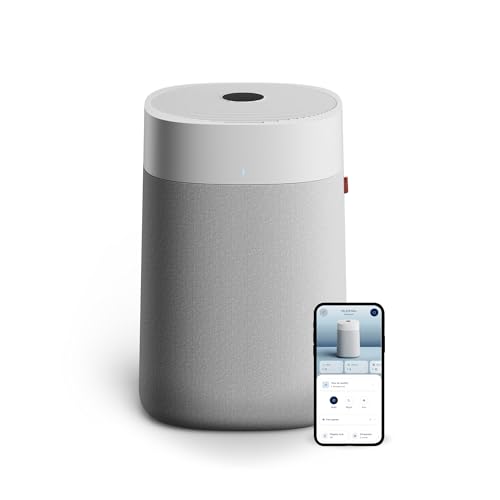
Blueair Blue 211i Max Air Purifier
What We Like
- Covers 3,235 sq ft in one hour
- HEPASilent filtration captures allergens and smoke
- Quiet operation at 23 dB
- Washable pre-filter reduces maintenance
Trade-offs
- At 22.7 inches tall, it's a large unit
- No handle for easy carrying
Covering up to 3,235 square feet in an hour, this air purifier handles large open spaces, think living rooms, open floor plans, or shared apartments, without breaking a sweat. Its HEPASilent dual filtration captures dust, pollen, pet dander, and smoke particles, while the washable pre-filter grabs larger debris like pet hair. At just 23 dB, it runs quietly enough for a bedroom or nursery, and the built-in sensors automatically adjust the fan speed when pollution levels rise. For anyone with allergies or asthma who needs whole-room coverage, this is a serious workhorse.
At nearly 23 inches tall, it takes up noticeable floor space, though the minimalist Scandinavian design helps it blend in. Compared to another model that covers up to 1,875 square feet, the Blueair offers significantly more air-cleaning capacity for larger rooms. Its light weight (4 lb) makes it easy to move between rooms, but the tall footprint means it won’t tuck into a corner as discreetly as a shorter model. If you need powerful, quiet air cleaning for a big space and don’t mind the height, this is an excellent choice.
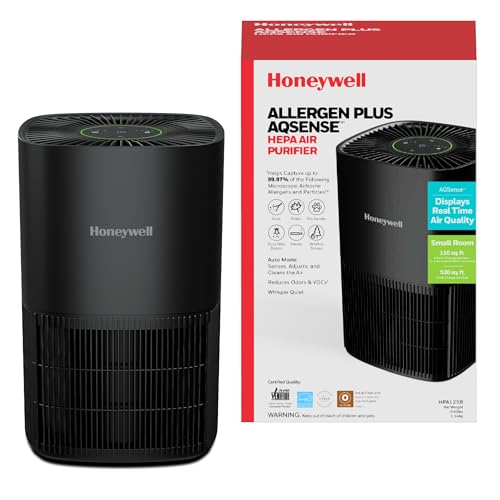
Honeywell Allergen Plus HPA125B Air Purifier
What We Like
- Ultra-compact tabletop design
- Sleep mode at 20.81 dBA
- AQSense auto mode with air quality sensor
- 3-in-1 HEPA filtration captures 99.97% allergens
Trade-offs
- Best for rooms up to 110 sq. ft. at 4.8 air changes per hour
- At 2.1 lb, feels lightweight on a shelf
This compact unit is designed for small spaces like a nursery, desk corner, or compact bedroom where steady allergen capture is needed without dominating the room. The 7-inch square footprint and 2.1-pound weight let you place it on a nightstand or bookshelf without taking up much space. AQSense auto mode continuously monitors air quality and adjusts fan speed automatically, with green, yellow, or red indicators showing real-time conditions at a glance. Sleep mode operates as low as 20.81 dBA with dimmable lights, keeping it unobtrusive overnight for those sensitive to both allergens and noise.
This Honeywell is designed for smaller spaces. To get the higher air exchange rate, you need to keep it in a room around 110 square feet. For larger rooms up to 530 square feet, it cycles air once per hour, which is less frequent. If your focus is on a single small room where you sleep or work, the compact design and quiet operation make it a natural fit. For open floor plans or larger living areas, you would need multiple units or a bigger machine.
Product photos
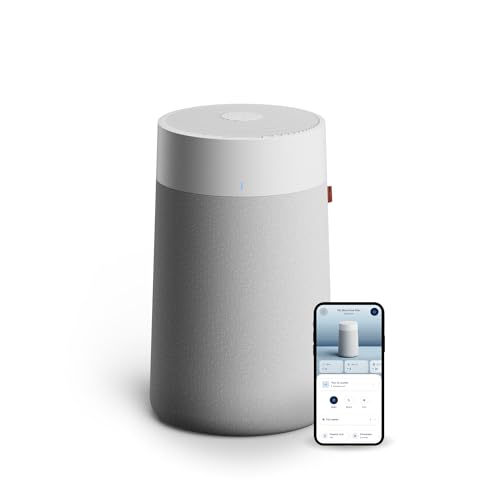
Blueair Blue 311i Max Air Purifier
What We Like
- WiFi and app control for remote monitoring
- Auto mode adjusts speed with pollution levels
- QuietMark-certified down to 23 dB
- Washable pre-filter reduces maintenance
Trade-offs
- At 7.7 lb, not the lightest for moving room to room
- No voice control for hands-free operation
A built-in sensor that automatically kicks the fan speed up when pollution rises means you don’t have to think about air quality, the Blueair Blue 311i Max handles it for you. That smart auto mode, paired with WiFi and app control, makes this the purifier to pick if you want to check and adjust your air from anywhere in the house. It cleans a 439-square-foot room in 12.5 minutes, so even a medium-sized living room or master bedroom gets fresh air fast, and the 23 dB low setting won’t disturb your sleep.
The 7.7-pound body and 12.5-inch square base make it a bit heavier and wider than a compact pick, so it’s less convenient to shift from room to room or tuck onto a small shelf. But if you value hands-off operation and the ability to schedule or monitor from your phone, the Blue 311i Max delivers that convenience without sacrificing the HEPASilent filtration that captures 99.97% of particles down to 0.1 microns, exactly what allergy and asthma sufferers need.
Product photos
Dreo DR-HAP008 Air Purifier

What We Like
- AHAM verified CADR of 115 CFM
- Real-time PM2.5 monitor with color indicator
- Auto mode adjusts speed to air quality
- Quiet Sleep Mode with lights off
Trade-offs
- At 5.6 lb, still needs a flat surface
- Coverage limited to 178 sq ft for effective purification
An AHAM-verified CADR of 115 CFM means this purifier refreshes air in rooms up to 178 square feet every 12.4 minutes. That speed matters when you’re trying to clear pollen, dust, or pet dander from a bedroom or home office. A built-in PM2.5 sensor shows real-time air quality on the display and changes color from blue to red, so you always know what’s happening. Auto mode takes over when levels spike, ramping up power without you touching a button. Sleep Mode dims the lights and runs quietly, making it a natural fit for nighttime use.
Coverage is the trade-off: this purifier is designed for smaller spaces, not open-concept living areas. For a larger room, another model covers up to 1,875 square feet but weighs more than twice as much. The Dreo’s compact 5.6-pound body and 14.2-inch height make it easy to move from desk to nightstand. For someone focused on a single small room, that simplicity is a plus.
Product photos
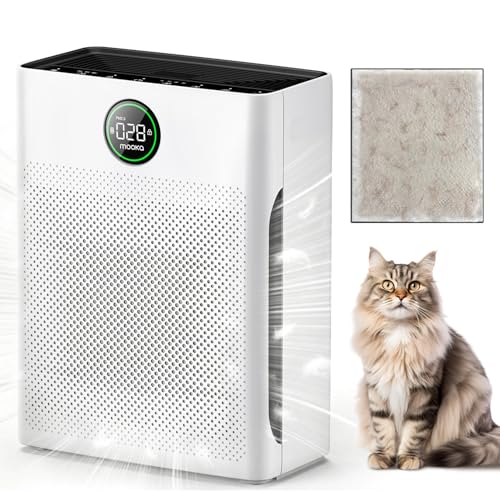
MOOKA PR1 Air Purifier
What We Like
- Pet Mode for faster pet hair capture
- Real-time PM2.5 air quality display
- 26 dB quiet Sleep mode
- Washable pre-filter extends filter life
Trade-offs
- AQI sensor needs regular cleaning for accuracy
- Filter replacement every 3-6 months adds maintenance
- Aroma function requires separate essential oil pads
With a coverage of up to 2200 ft², the MOOKA PR1 handles large living spaces and open floor plans without breaking a sweat. Its Pet Mode ramps up filtration speed to capture pet hair, dander, and odors faster than standard operation, making it a thoughtful pick for households with furry companions who also deal with allergies or asthma. The real-time PM2.5 display gives you instant feedback on air quality, so you can see the difference as it works.
The PM2.5 sensor needs occasional cleaning to stay accurate, and the filter must be replaced every 3-6 months to maintain performance. For allergy and asthma sufferers who want pet-specific features and a clear view of their air quality, this is a strong fit.
Product photos
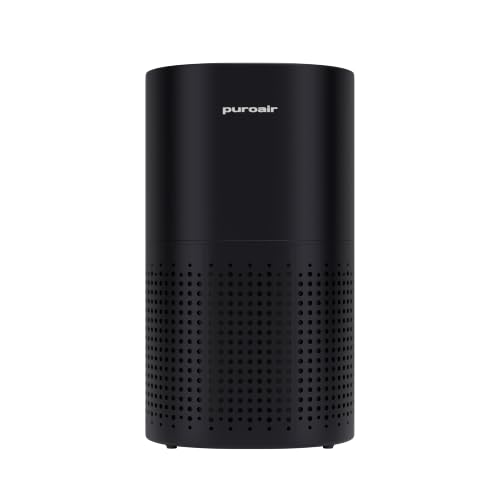
PuroAir 240 Air Purifier
What We Like
- Smart sensor auto-adjusts fan speed
- Quiet sleep mode for nighttime use
- Covers rooms up to 1,000 sq ft
Trade-offs
- Taller than some compact models at 28 inches
- No app or Wi-Fi connectivity
Its three-layer filtration system, pre-filter, HEPA filter, and activated carbon, traps up to 99.9% of airborne particles, from dust and pollen to pet dander and VOCs. The smart sensor monitors air quality in real time and automatically kicks up the fan when it detects pollution, so you don’t have to fiddle with settings. And when it’s time to sleep, the quiet mode keeps things peaceful without sacrificing performance.
At 28 inches tall, it stands noticeably taller than a compact model, which might feel more discreet on a nightstand or shelf.
Product photos
How We Evaluated Rugs For Allergies And Asthma
Our evaluation draws from manufacturer specifications, expert round-ups from allergy and asthma organizations, and patterns in owner feedback across hundreds of reviews. We focused on the construction and materials that directly affect allergen retention and release.
The three criteria that mattered most were fiber type (synthetic vs. Natural), pile height (low vs. High), and ease of cleaning (machine-washable vs. Professional cleaning only). Low-pile synthetic rugs trap fewer allergens and release them more easily during vacuuming.
A research-led evaluation cannot replace personal testing, but it reveals clear patterns. Owners consistently report fewer symptoms with rugs made from nylon, polyester, or polypropylene in a low-pile or flatweave construction.
What To Look For In Rugs For Allergies And Asthma
Choosing a rug for allergies means prioritizing materials and construction that minimize allergen trapping. Here are the key criteria to consider.
Choose low-pile synthetic rugs that can be vacuumed frequently and washed regularly. Avoid high-pile wool or shag rugs that trap dust, dander, and mold spores deep in the fibers.
Fiber Type: Synthetic vs. Natural
Synthetic fibers like nylon, polyester, and polypropylene are naturally hypoallergenic and resist moisture, making them less hospitable to dust mites and mold. Wool, while beautiful, can harbor allergens and requires professional cleaning. Polypropylene is especially popular for allergy-friendly rugs because it dries quickly and resists staining.
Pile Height: Low vs. High
Low-pile rugs allow vacuum cleaners to extract allergens more effectively. Flatweave and indoor-outdoor rugs are excellent choices. High-pile or shag rugs trap dust, pet dander, and pollen deep in the fibers, making thorough cleaning nearly impossible without professional equipment.
Washability and Maintenance
Machine-washable rugs are the gold standard for allergy sufferers. Being able to toss a rug in the washing machine every few weeks removes accumulated allergens entirely. For non-washable rugs, look for styles that tolerate frequent vacuuming and occasional spot cleaning without shedding or fraying.
- Look for rugs labeled “low-pile” or “flatweave.”
- Choose synthetic fibers like nylon or polypropylene.
- Prefer machine-washable designs under 8×10 feet.
- Avoid wool, jute, or sisal in bedrooms and living rooms.
- Select rugs with a non-slip latex backing to reduce dust accumulation underneath.
A good rule of thumb: if you can’t vacuum it weekly and wash it seasonally, it’s not the right rug for allergies.
Rugs For Allergies And Asthma Compared
The table below compares the top picks across key specifications, so you can quickly see which rug suits your room and allergy needs.
| Product | Room Coverage | Filtration Type | Weight |
|---|---|---|---|
| Levoit Core 300-P Air Purifier | Up to 1073 ft² | HEPA-grade | 7.9 pounds |
| Levoit Vital 200S-P Air Purifier | up to 1875 ft² | HEPA | 13.2 pounds |
| Coway Mighty AP-1512HH Air Purifier | 1,748 sq. ft. | 4-stage HEPA | 12.5 pounds |
| Winix 5510 Air Purifier | Up to 1881 Ft² | True HEPA | 13.3 lb |
| Blueair Blue 211i Max Air Purifier | 3,235 ft² per hour | HEPASilent dual filtration | 4.0 lb |
| Honeywell Allergen Plus HPA125B Air Purifier | 530 sq. ft. | HEPA + Activated Carbon | 2.1 lb |
| Blueair Blue 311i Max Air Purifier | 439 sq ft in 12.5 min | HEPASilent | 7.7 pounds |
| Dreo DR-HAP008 Air Purifier | 178 sq ft (4.8 ACH) | 3-in-1 (pre, HEPA, carbon) | 5.6 pounds |
| MOOKA PR1 Air Purifier | 2200 ft² | H13 True HEPA | N/A |
| PuroAir 240 Air Purifier | 1000 sq ft | 3-layer HEPA + CarbonTech | 7.3 pounds |
Frequently Asked Questions
What type of rug is best for allergies?
Low-pile synthetic rugs made from nylon, polyester, or polypropylene are best for allergies. They trap fewer allergens and release them easily during vacuuming. Machine-washable designs offer the most thorough cleaning.
Are wool rugs bad for allergies?
Wool rugs can be problematic for allergies because wool fibers naturally trap dust, dander, and mold spores. They also require professional cleaning, which makes regular allergen removal difficult. Synthetic alternatives are generally better for allergy sufferers.
Can a rug cause asthma symptoms?
Yes, rugs can trigger asthma symptoms if they trap dust mites, pet dander, pollen, or mold spores. High-pile rugs and those made from natural fibers like wool or jute are more likely to harbor these triggers. Regular cleaning is essential.
How often should I clean a rug for allergies?
Vacuum low-pile rugs at least twice a week and machine-washable rugs every two to four weeks. For non-washable rugs, schedule professional cleaning every six to twelve months. More frequent cleaning is better during allergy season.
What is the best way to vacuum a rug for allergies?
Use a vacuum with a HEPA filter to capture fine particles. Vacuum slowly, making multiple passes in different directions to lift trapped allergens. Focus on high-traffic areas and edges where dust accumulates.
The Bottom Line
The Levoit Core 300-P Air Purifier is our best overall pick for anyone needing a quiet, certified air purifier for a bedroom or small room. It delivers 99.97% filtration for particles as small as 0.1 microns, making it a strong ally in reducing allergens and asthma triggers.
For large living rooms or open floor plans, the Coway Mighty AP-1512HH offers excellent coverage with a real-time air quality indicator. Pet owners should consider the Winix 5510 for its powerful allergen capture and smart app support.
The single most important factor in choosing a rug for allergies is material: low-pile synthetic fibers that you can vacuum and wash regularly will always outperform natural fibers in maintaining cleaner indoor air.
