10 Best Self Watering Planters in 2026
This post contains affiliate links. As an Amazon Associate, we earn from qualifying purchases.
The Fielda Self Watering Pots with Indicator earn the Best Overall spot thanks to their transparent water level window and absorbent cotton wick system that delivers even moisture. For those who need a coordinated set, the KUGAZ Self Watering Pots Multi-Size Set is our Best Multi-Size pick, while the QRRICA Self Watering Planters with Indicator offer the Best Lightweight Design for easy rearranging.
The real challenge with self-watering planters is finding one that balances a visible water reservoir with healthy root aeration. Many planters hide the water level or lack drainage, leading to guesswork or root rot. We focused on designs that solve both problems.
This guide is based on a thorough review of manufacturer specifications, expert gardening round-ups, and patterns in owner feedback. We evaluated each planter for reservoir visibility, watering system type, durability, and size variety to help you choose with confidence.
Top 10 Self Watering Planters in the Market
Certain content that appears on this site comes from Amazon. This content is provided "as is" and is subject to change or removal at any time.
The Best Self Watering Planters, Reviewed
Fielda Self Watering Pots with Indicator

What We Like
- Transparent water level window with markings
- Absorbent cotton wick system for even moisture
- Detachable tray with drainage holes
- Durable plastic resists sun, rain, humidity
Trade-offs
- Usable planting depth smaller than planter height
- Only three sizes in the set
You can see at a glance how much water is left thanks to the transparent window with measurement markings, which helps prevent both overwatering and underwatering. The absorbent cotton wick system pulls water from the detachable bottom tray, keeping soil evenly moist for up to 7-10 days, a real help during vacations or busy weeks. The high-temperature-resistant plastic stands up to harsh sunlight, rain, and indoor humidity without cracking or fading, and the detachable tray with drainage holes supports healthy root development.
The built-in reservoir reduces the usable planting depth, so the actual space for soil and roots is less than the overall planter height. That means you should measure your current pot or root ball before ordering, especially if you plan to use the largest 12-inch size for a deep-rooted plant. Compared to the KUGAZ Self Watering Pots Multi-Size Set, which also offers three sizes, the Fielda includes a transparent water level window and detachable tray; the KUGAZ set includes drainage holes and a reservoir as well. For most home gardeners, the Fielda’s design supports low-maintenance watering.
KUGAZ Self Watering Pots Multi-Size Set
What We Like
- Three sizes for varied plants
- Visible water level indicator
- Drainage holes prevent root rot
- Stackable and space-saving design
Trade-offs
- Larger size needs sturdy support
- 12-inch pot requires a sturdy support surface
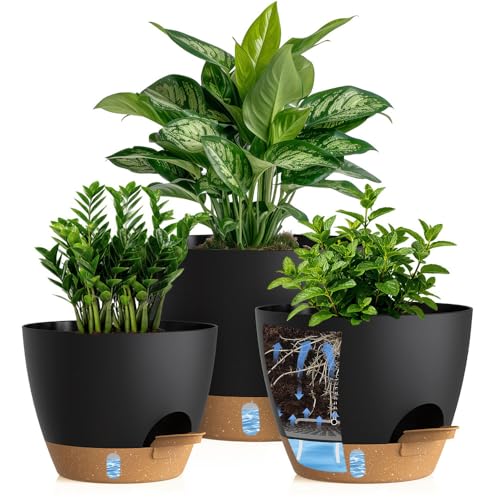
This three-pot set gives you 12, 10, and 8 inch planters, so you can match a monstera, fiddle leaf fig, or ZZ plant with the right container. The visible water level window takes the guesswork out of watering, and the wick system delivers moisture straight to the roots. Drainage holes keep soil from getting soggy, which is a lifesaver for anyone who tends to over-love their plants. The lightweight plastic and stackable design make it easy to rearrange your indoor garden without breaking your back.
Plastic is practical and easy to clean, but it won’t mimic the weight or texture of natural materials. If you prefer a single larger planter, the Lechuza Classico LS measures 11 inches wide and 10.2 inches tall, though it is sold individually. For a set that waters multiple plants with a wick system and visible water level window, this option keeps care straightforward.
Product photos
QRRICA Self Watering Planters with Indicator
What We Like
- Lightweight recyclable plastic
- Clear water level window
- Detachable saucer and drainage holes
Trade-offs
- Plastic lacks the weight of stone or terracotta
- No wheels for moving larger planters
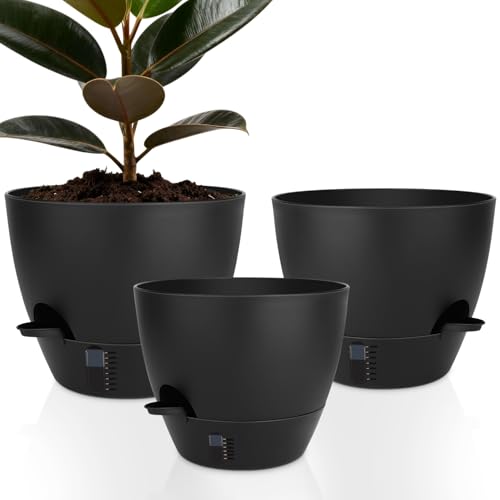
At 2.9 pounds total for the set, these planters are easy to move when rearranging a room or bringing plants inside before cold weather. The three sizes (9, 10, and 12 inches) work for a range of houseplants like snake plants, monstera, aloe vera, ZZ plants, African violets, and succulents. The clear water level window shows when to refill, so watering is straightforward. For anyone who wants self-watering convenience without the weight of ceramic or glazed pots, this set offers a practical, lightweight option with a clean matte finish.
The plastic construction, while sturdy and recyclable, does not have the weight or feel of stone or terracotta planters. If you prefer a high-gloss finish, the Lechuza Classico LS offers that look but weighs 4.6 pounds and costs more. For a lightweight set that is easy to handle and keeps plants healthy with its separate reservoir and mesh drainage, the QRRICA is a practical choice.
Product photos
Dexceder Self Watering Planter with Wheels
What We Like
- Removable inner pot with hidden handles
- Four wheels for easy mobility
- Water level indicator prevents overwatering
- UV and frost resistant durable plastic
Trade-offs
- At 10.1 lb, heavier than many self-watering planters
- Requires floor space, not for shelves
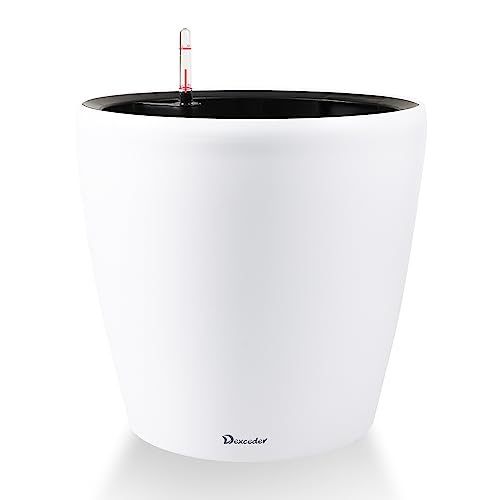
With a 17.5-inch diameter and a water reservoir that can last over three weeks, this planter is built for those who want to care for large, thirsty plants without constant attention. The inner pot lifts out easily thanks to hidden handles, making repotting or swapping plants simple, while the four wheels let you roll even a fully loaded planter across a patio or sunroom floor. The water level indicator takes the guesswork out of watering, and the matte finish resists fading, rusting, and peeling, so it stays looking fresh season after season. This is a practical choice for anyone with tall or bushy indoor plants or a container garden that needs a reliable, low-maintenance watering system.
Compared to the lighter, more compact Fielda self-watering pots, the Dexceder demands floor space and a bit more muscle when repositioning. But if you have a large ficus, a dwarf citrus tree, or a collection of ferns that drink heavily, the generous capacity and long water supply make the extra heft worthwhile. It’s a sturdy, thoughtfully designed solution for plants that outgrow smaller self-watering systems.
Product photos
Bloem Ariana Self Watering Planter 2-Pack
What We Like
- Weatherproof and UV-resistant for outdoor use
- Built-in self-watering grid for low-maintenance care
- BPA-free and fade-resistant plastic
- American-made in Florida
Trade-offs
- No water level indicator to check reservoir
- No built-in water level indicator for reservoir monitoring
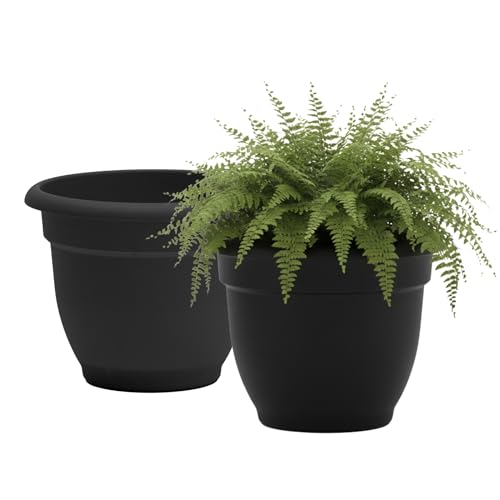
A 6-gallon soil capacity gives this planter room for thirsty plants like peace lilies and ferns, while the self-watering grid stores excess water for on-demand root absorption. The weatherproof, UV-resistant plastic holds up to full sun and rain without fading or cracking, making it a reliable choice for patios and decks. Bloem has been making planters in Florida for over 15 years, and this BPA-free construction feels solid without being heavy.
The Bloem Ariana Self Watering Planter 2-Pack uses a built-in grid to collect and reserve excess water. That way roots can absorb moisture on demand, ideal for busy plant parents who want low-maintenance care for houseplants, succulents, and herbs. Its transitional rolled rim design brings effortless style to indoor or outdoor spaces, and the weatherproof, UV-resistant, BPA-free plastic keeps it durable and fade-resistant year-round. With a 6-gallon soil capacity and punch-out drainage for outdoor flowers, this planter adapts to your needs, though the 3.9-pound weight may feel light for large plants.
Product photos
Lechuza Classico LS Self Watering Planter
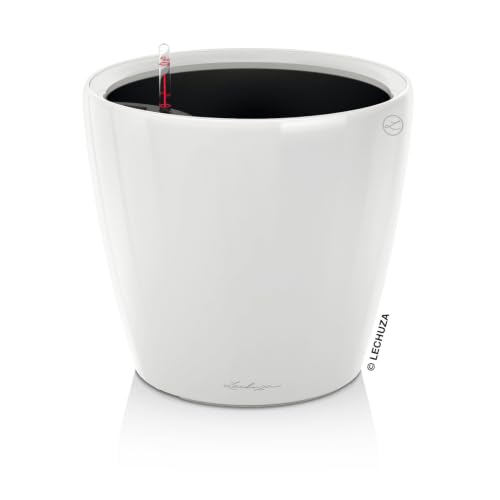
What We Like
- UV and frost resistant poly-resin
- Removable planter liner for easy cleaning
- Clear water level indicator
- High-gloss, shockproof finish
Trade-offs
- 7-liter capacity limits large plants
- Initial weeks require top watering
- Internal system reduces planting space
A clear water level indicator and a 7-liter capacity let you check moisture at a glance and reduce watering frequency, which suits plant owners who want a low-maintenance setup. The high-gloss poly-resin body resists UV rays and frost, so it can be used indoors or outdoors without damage. This planter offers a polished look and durable self-watering system for medium-sized houseplants.
The trade-off is the smaller planting space: the internal self-watering mechanism takes up room, so a 7-liter capacity limits you to medium-sized houseplants like pothos or peace lilies. Compared to the Fielda Self Watering Pots, which weigh 2.6 pounds, the Lechuza is heavier at 4.6 pounds and made of poly-resin. If you need to water a large fiddle-leaf fig or a grouping of plants, the Garvee 16″ Tall Planter Set gives you more volume, but it is made of different materials and does not share the same UV and frost resistance.
Bluepro Self Watering Pots 18-Pack
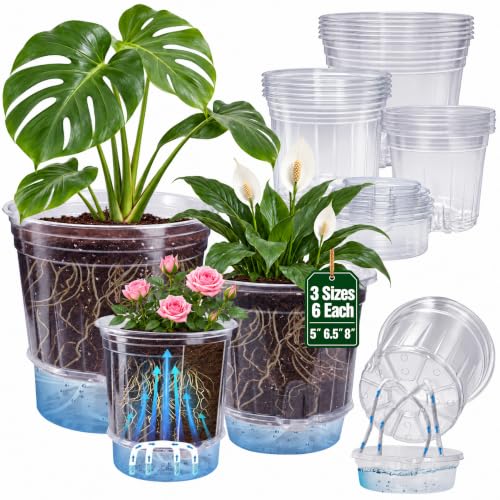
What We Like
- Three sizes for varied stages
- Clear walls show roots and water
- Wick system waters up to 7 days
- Flexible walls ease transplanting
Trade-offs
- No water level indicator included
- No built-in water level indicator
Seeing roots and water levels without lifting the pot is the standout advantage here. The clear plastic walls let you monitor root development, soil moisture, and how much water remains in the reservoir at a glance. This 18-pack includes three sizes (5, 6.5, and 8 inches) so you can start seeds, propagate cuttings, or repot houseplants through multiple growth stages. The wick-based system draws water from the bottom tray, keeping soil consistently moist for up to seven days under normal conditions. For anyone who loves checking on their plants’ health or wants to avoid guesswork, this design makes care more intuitive.
A missing feature here is the built-in water level indicator that you get with the Fielda Self Watering Pots. You’ll need to peek through the clear walls or lift the inner pot to check the reservoir. The pots are flexible and reusable, but they’re best suited for indoor use or as nursery pots inside decorative containers. If you prefer a more decorative look with a visible water gauge, the Fielda model offers that convenience in larger sizes. For propagation, seedlings, and keeping an eye on root health, this set delivers unmatched visibility and value.
Product photos
Montresor Hanging Self Watering Planters
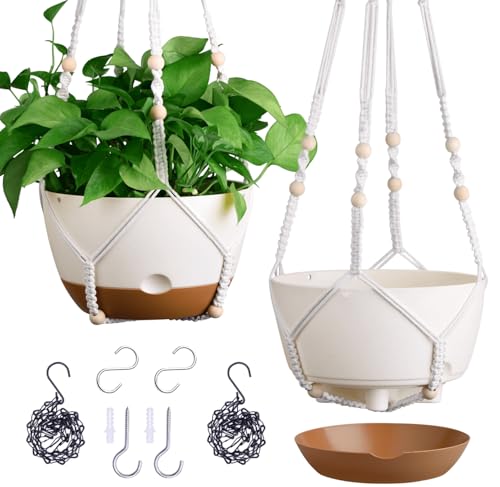
What We Like
- Self-watering with removable saucer
- Two hanger styles: metal and bohemian
- Ventilation and drainage design
- Set of two 10-inch planters
Trade-offs
- No water level indicator
- Hanging only, not for floor or shelf
The set includes two 10-inch hanging planters, each with a recessed reservoir that keeps soil consistently moist, reducing the need for frequent watering. The sturdy plastic construction resists fading and cracking outdoors, and the included S-hooks make installation simple. The planters are suitable for a range of plants, from bright flowers to ferns and succulents, and the design includes ventilation and drainage for healthy root growth.
The biggest difference between this set and some other self-watering planters is the lack of a water level indicator, so you’ll need to get a feel for when the reservoir needs refilling. On the plus side, you get two types of hangers: a sturdy metal hook that stands up to wind and rain, and a bohemian-style hanger that adds a decorative touch indoors. That kind of flexibility is rare in hanging planters, and it means you can swap looks or move pots between rooms without buying extra hardware.
Vandorelle Self Watering Pots 8-Pack
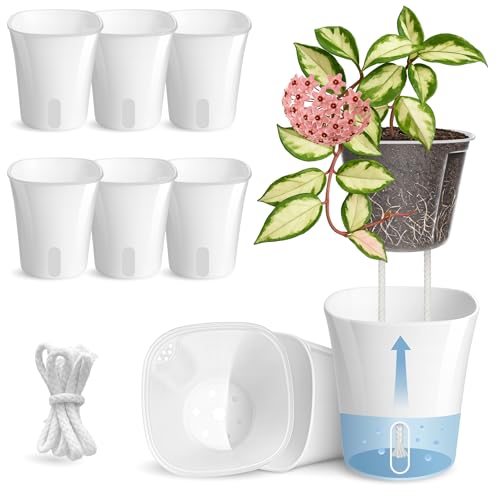
What We Like
- Clear inner pot for root monitoring
- Top refill without disassembly
- Wick system for consistent moisture
- Includes extra 3ft wick cord
Trade-offs
- Small 4" size limits larger plants
- Semi-transparent inner cup, not fully clear
Each pot measures just 3.76 inches wide, making this set purpose-built for tiny root systems like cuttings, seedlings, and compact growers such as African violets or herbs. The clear inner cup lets you watch root development without disturbing the plant, while the wick system draws water from the built-in reservoir as needed, so you don’t have to guess when to water. For anyone starting a propagation station or tending a windowsill herb garden, these pots keep moisture consistent without the fuss of daily checks.
Size is the main limitation here: at only 4 inches tall, these won’t accommodate a mature pothos or a bushy basil plant. Compared to the Fielda Self Watering Pots with Indicator, which offer 8-inch and larger options, the Vandorelle set is strictly for small-scale setups. But if your focus is on cuttings, seedlings, or compact indoor plants, the eight-pack gives you plenty of pots to build a tidy, self-watering collection without taking up much shelf space.
Product photos
Garvee 16" Tall Planter Set
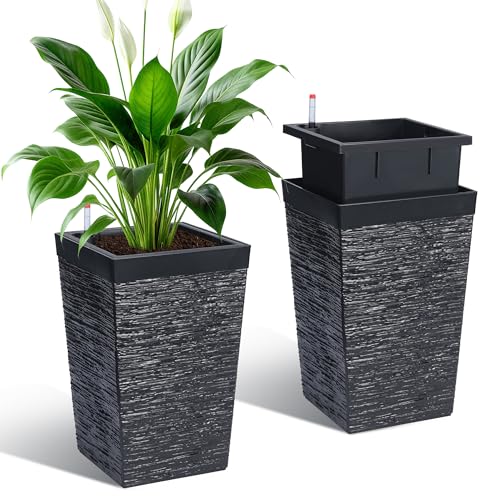
What We Like
- Water level monitor for easy checking
- Automatic watering system reduces root rot
- Faux stone finish for stylish look
- Weather-resistant against sun, frost, rain
Trade-offs
- 11.2" width limits very large plants
- Only available in black or white
A built-in water level monitor means you can see exactly how much water remains without guessing or digging into the soil, which helps prevent both over- and under-watering. This set of two 15.7-inch tall planters works well for front porch or patio displays where you want consistent moisture for your plants without daily attention. The faux stone finish gives them a more polished look than basic plastic pots, while the automatic watering system activates when the reservoir runs low to keep roots healthy.
Weight is the main trade-off: each planter weighs 11.5 pounds, so moving them around once filled with soil and a plant takes some effort. Compared to the Bloem Ariana 2-Pack (3.9 lb total for two planters), these are substantially heavier per planter, which is worth considering if you like to rearrange your porch often. The 11.2-inch width also limits you to plants that fit comfortably in that opening, so very broad specimens may not work. For anyone wanting tall, self-watering planters with a clean look and easy water monitoring, this set delivers on its design promise.
Product photos
How We Evaluated Self Watering Planters
Our research began with a deep dive into the technical specs of each planter: reservoir capacity, wick or grid system design, drainage features, and material composition. We cross-referenced this data with expert recommendations from gardening publications and online communities that focus on houseplant care.
The four criteria that mattered most were water level visibility, watering system reliability, material durability, and size options. A clear water level indicator prevents overwatering, the most common cause of plant death. The wick or grid system must deliver moisture evenly without waterlogging roots. Durable materials like UV-resistant plastic or poly-resin ensure the planter lasts season after season. Finally, a range of sizes accommodates everything from small succulents to large floor plants.
This evaluation synthesizes reliable information from manufacturer claims, expert consensus, and consistent owner experiences reported across multiple sources. This approach gives you a clear, evidence-based starting point for your own purchase.
What To Look For In Self Watering Planters
Choosing the right self-watering planter means understanding how the system works and what your specific plant needs. Here are the key features to consider.
Look for a planter with a visible water level indicator, a reliable wick or grid watering system, and drainage holes to prevent root rot. Match the planter size to your plant’s root depth and your available space.
Water Level Indicator
A clear water level window or gauge is the single most useful feature on a self-watering planter. It tells you exactly when to refill, eliminating the guesswork that leads to overwatering or underwatering. Some planters, like the Bloem Ariana, omit this feature, which means you have to check the reservoir manually by lifting the inner pot. For most home gardeners, a visible indicator is worth paying more for.
Watering System Type
Self-watering planters use either a wick system or a grid/plate system. Wick systems, like the cotton wicks in the Fielda and Bluepro planters, draw water upward into the soil through capillary action. Grid systems use a perforated plate that separates the soil from the reservoir, allowing roots to reach down for water. Both work well, but wick systems tend to be more forgiving for beginners because they deliver moisture more gradually.
Material and Durability
The planter material affects weight, durability, and appearance. Plastic planters like the QRRICA are lightweight and easy to move but lack the heft of stone or terracotta. Poly-resin planters like the Lechuza Classico LS offer a high-gloss, shockproof finish that resists UV and frost. For outdoor use, look for UV-resistant and weatherproof materials like the Bloem Ariana’s fade-resistant plastic.
- Check that the planter has drainage holes in the inner pot, not just the outer reservoir.
- Measure the usable planting depth, not just the total planter height.
- For floor planters, verify that the base is wide enough to prevent tipping.
- If you plan to move the planter, look for wheels or a lightweight design.
A planter with a visible water level indicator and drainage holes will save you from the two biggest mistakes new plant owners make.
Self Watering Planters Compared
The table below compares the key specs and features of our top self-watering planter picks side by side.
| Product | Material | Drainage Holes | Dimensions |
|---|---|---|---|
| Fielda Self Watering Pots with Indicator | High-temperature-resistant plastic | Yes | 8.0 x 8.0 x 8.0 in |
| KUGAZ Self Watering Pots Multi-Size Set | Plastic | Yes | 12.0 x 12.0 x 10.0 in |
| QRRICA Self Watering Planters with Indicator | Recyclable plastic | Mesh holes + deep reservoir | 7.5 x 12.0 x 12.0 in |
| Dexceder Self Watering Planter with Wheels | PP plastic with matte finish | N/A | 17.5 x 17.5 x 16.7 in |
| Bloem Ariana Self Watering Planter 2-Pack | Weatherproof, UV-resistant, BPA-free plastic | Punch-out drainage | 17.8 x 17.8 x 16.2 in |
| Lechuza Classico LS Self Watering Planter | Poly-resin | Drainage holes in inner pot | 11.0 x 11.0 x 10.2 in |
| Bluepro Self Watering Pots 18-Pack | Clear Plastic | Multiple Openings | 5.9 x 8.7 x 8.1 in |
| Montresor Hanging Self Watering Planters | Sturdy plastic | Yes | 10.0 x 10.0 x 6.0 in |
| Vandorelle Self Watering Pots 8-Pack | Plastic with clear inner cup | Drainage Holes | 3.8 x 3.8 x 4.7 in |
| Garvee 16" Tall Planter Set | Plastic with faux stone finish | Yes | 11.2 x 11.2 x 15.7 in |
Frequently Asked Questions
How do self watering planters work?
Self-watering planters use a reservoir at the bottom that holds water, which is then drawn up into the soil through a wick or a perforated grid. This allows the plant to take up moisture as needed, reducing the frequency of watering and helping prevent both overwatering and underwatering.
Can I use a self watering planter for any plant?
Most houseplants thrive in self-watering planters, but plants that need very dry soil between waterings, such as cacti and succulents, may not do well. The constant moisture from the reservoir can lead to root rot for these plants. Check your plant’s specific moisture needs before choosing a self-watering system.
How often do I need to refill the reservoir?
Refill frequency depends on the plant size, room temperature, humidity, and the reservoir capacity. Many planters can go one to two weeks between refills. A visible water level indicator makes it easy to check the reservoir without disturbing the plant.
Do self watering planters cause root rot?
Self-watering planters can cause root rot if the soil stays too wet or if the planter lacks drainage holes. Look for a design with a removable inner pot and drainage holes, which allows excess water to drain away from the roots. A wick system that draws water upward rather than soaking the soil from below is also safer for most plants.
What size self watering planter should I buy?
Match the planter size to the root ball of your plant. The planter should be about one to two inches wider in diameter than the current pot. For tall plants, choose a planter with a wide enough base to prevent tipping, and check the usable planting depth, not just the overall height.
The Bottom Line
For most home gardeners, the Fielda Self Watering Pots with Indicator are the best choice. Their transparent water level window and absorbent cotton wick system take the guesswork out of watering, while the durable plastic holds up to sun, rain, and humidity. This set works well for a wide range of common houseplants.
If your needs are more specific, one of our award picks may suit you better. The KUGAZ Self Watering Pots Multi-Size Set offers three coordinated sizes for a living room or bedroom plant collection. For large floor plants, the Dexceder Self Watering Planter with Wheels makes moving heavy pots easy. Budget-conscious shoppers will appreciate the Bluepro Self Watering Pots 18-Pack, which provides excellent value for starting multiple cuttings or small plants.
The single most important factor in choosing a self-watering planter is a visible water level indicator. Without it, you lose the main convenience of the system: knowing at a glance when to refill. Start with that feature, then match the size and style to your space and your plant’s needs.
