10 Best Task Chairs For Your Back in 2026
This post contains affiliate links. As an Amazon Associate, we earn from qualifying purchases.
For reliable back support during long workdays, the SIHOO M18 Ergonomic Office Chair stands out with four-point ergonomic support for your head, back, hips, and hands, plus adjustable lumbar and a breathable mesh backrest. The Steelcase Leap offers customizable lower back firmness, while the Marsail Ergonomic Office Chair provides precise 4-way lumbar adjustment for targeted relief.
Sitting for hours puts constant pressure on your spine, and a task chair that lacks proper lumbar support can lead to discomfort and poor posture. The right chair works with your body, not against it, supporting the natural curve of your lower back and encouraging healthy alignment.
This guide is based on research into specifications, manufacturer documentation, and patterns in owner feedback. We highlight the key features that matter most for back health, so you can choose a chair that fits your body and your work habits.
Top 10 Task Chairs For Your Back in the Market
Certain content that appears on this site comes from Amazon. This content is provided "as is" and is subject to change or removal at any time.
The Best Task Chairs For Your Back, Reviewed
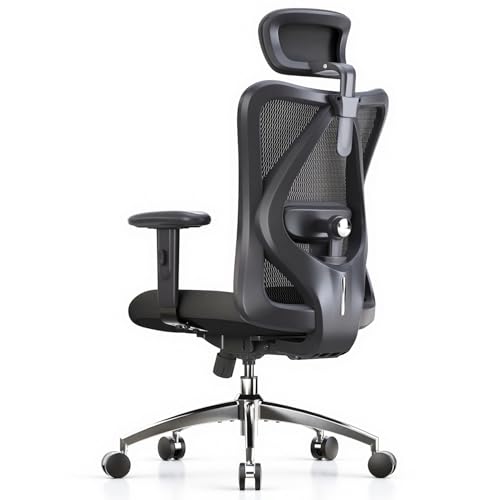
SIHOO M18 Ergonomic Office Chair
What We Like
- Four-point ergonomic support (head/back/hip/hands)
- Adjustable lumbar support and headrest
- Breathable mesh backrest keeps you cool
- Reclines through three lockable angles
Trade-offs
- 2D armrests limit adjustability compared to 3D models
- Weight at 38 pounds makes it harder to move
- Only three recline positions, not infinite lock
A 330-pound weight capacity and a height range of 5’6″ to 6’2″ mean this chair comfortably supports a wide variety of body types while you work. Four points of ergonomic contact, head, back, hips, and hands, provide support during long sits, and the adjustable lumbar support lets you customize the fit. The breathable mesh backrest keeps air moving so you stay cool even through afternoon video calls, and the seat height, headrest, and back support all adjust to match your needs.
The trade-off comes in the armrests. They adjust in two dimensions (height and width) but not depth or angle, so if you need to tuck the chair under a desk or shift your elbow position frequently, you may find them limiting.
Marsail Ergonomic Office Chair

What We Like
- Precise 4-way lumbar adjustment
- 3.14" thick high-density foam seat
- 3D adjustable armrests with flip-up
- Breathable mesh backrest
Trade-offs
- Heavier than some mesh chairs at 30.4 lb
- No seat glide or depth adjustment
- Headrest only adjusts 2D (up/down + tilt)
A 1.18-inch forward/back and 2.16-inch up/down lumbar range means you can dial in support exactly where your back needs it most. That kind of precision is rare at this level, making it a strong match for anyone whose lower back demands more than a one-size-fits-all curve. The 3.14-inch thick foam seat cushions long hours without bottoming out, while the breathable mesh back keeps air flowing to prevent overheating. Flexible 3D armrests move forward, back, and swivel side to side, then flip up to slide the chair under a desk when you’re done.
The trade-off comes in weight: at 30.4 pounds, it’s heavier than the NEO CHAIR (24.5 lb), so moving it between rooms takes a bit more effort. There’s also no seat glide or depth adjustment, which the Steelcase Amia offers for those who want to shift the seat forward independently of the back. If you prioritize a fully customizable lumbar fit and a plush cushion over ultralight mobility or advanced seat mechanics, the Marsail delivers where it counts for daily desk work.
Product photos
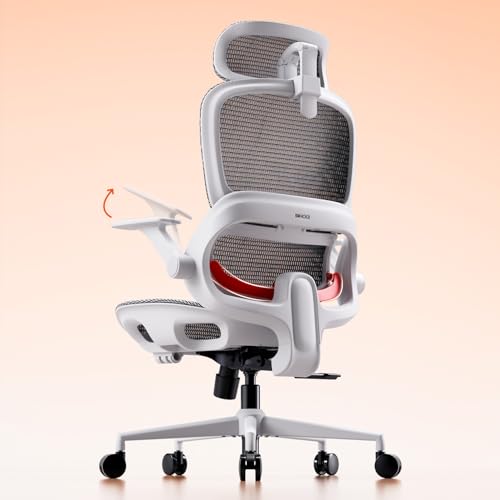
SIHOO B100 Mesh Ergonomic Office Chair
What We Like
- Adaptive lumbar moves with your spine
- Full-mesh backrest keeps air circulating
- Widened seat cushion spreads weight evenly
- Quiet casters and smooth tilt control
Trade-offs
- Armrests lack width or height adjustment.
- No seat depth adjustment for taller users.
A full-mesh backrest that breathes as you work is the standout feature here, keeping air circulating to prevent overheating during long hours at your desk. The adaptive lumbar support follows your natural spine curve whether you lean forward to focus or sit upright in a meeting, making it a smart fit for anyone who shifts posture throughout the day. With a seat height range from 18.3 to 21.9 inches and a widened cushion that spreads weight evenly across hips and thighs, this chair delivers balanced comfort for full shifts or late-night sessions. It also reclines into three lockable angles, so you can reset and refresh without leaving your seat.
The SIHOO B100 weighs 35.5 pounds, so it’s light enough to slide across a room when you rearrange your home office, yet its reinforced metal base and SGS-certified Class 4 gas lift support up to 300 pounds. The flip-up armrests let you tuck the chair completely under a desk, freeing up floor space when it’s not in use. For someone who wants breathable mesh that keeps air moving during long work sessions and dynamic lumbar support that follows your spine as you shift, this chair delivers focused comfort without extra complexity.
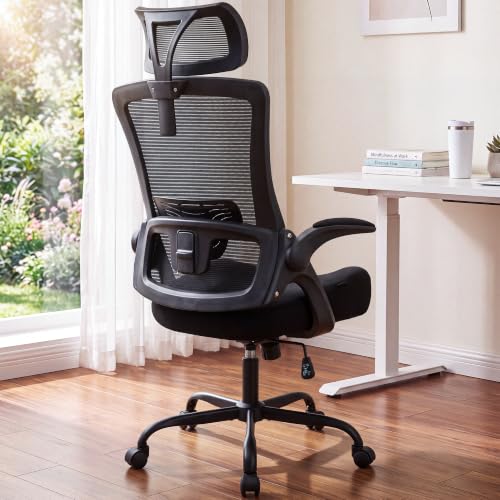
NEO CHAIR Office Chair
What We Like
- Breathable mesh back for airflow
- Flip-up armrests save space
- Waterfall seat reduces leg pressure
- Adjustable lumbar and headrest
Trade-offs
- Flip-up armrests lack width adjustment
- Flip-up armrests do not adjust in width or height
Weighing 24.5 pounds, this chair is easy to roll around your home office or tuck away when not in use. The breathable mesh back keeps air circulating during long workdays, while the waterfall seat cushion takes pressure off your thighs. With an adjustable headrest and lumbar support, you can dial in a comfortable posture without wrestling with heavy hardware. It’s a smart pick if you value easy mobility and a clean, uncluttered workspace.
Product photos
MOLENTS Ergonomic Office Chair

What We Like
- BIFMA X5.1 certified for durability
- Adjustable lumbar support up/down and forward/backward
- 3D adjustable armrests reduce strain
- Breathable mesh material for long hours
Trade-offs
- No headrest included for neck support
- Assembly requires removing base leg from seat bag
BIFMA X5.1 certification means this chair has passed independent tests for durability and safety in daily use, so you can trust it to hold up over time. The lumbar support adjusts both up and down and forward and backward, letting you fine-tune the lower back support to match your spine. With 3D adjustable armrests and a breathable mesh back that prevents overheating, it delivers customizable comfort for long work sessions.
The trade-off is that this chair lacks a headrest, so if you need neck support during breaks, you might want a different model. Assembly requires an extra step: the base leg is packed inside the seat cushion, so you have to remove it before starting. Compared to the SIHOO M18, which includes a headrest and 2D armrests, the MOLENTS offers 3D armrests and BIFMA certification but no head support. For someone who values lower back and arm comfort over neck support, this is a breathable, certified option with solid adjustability.
Product photos
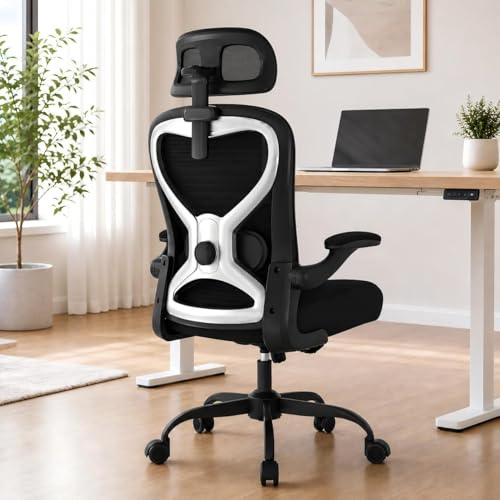
CASASIO Ergonomic Office Chair
What We Like
- 4-way adjustable lumbar cushion
- 3D adjustable headrest for neck support
- 3.5" virgin foam seat for all-day comfort
- Flip-up armrests for compact storage
Trade-offs
- No seat depth adjustment for taller users
- Flip-up armrests lack width or pivot adjustment
- No tilt lock for fixed upright posture
A 3.5-inch virgin foam seat that distributes weight evenly means you can sit for eight-plus hours without that familiar ache in your hips and thighs. That thick cushion, paired with a contoured mesh back and a dual-direction adjustable lumbar cushion, makes this chair a natural fit for anyone who spends their workday planted at a desk. The 3D headrest cradles your neck during typing, reading, or leaning back to think, and the flip-up armrests let you slide the chair completely under your desk when you need floor space. It’s built for long stretches of focused work, with a reinforced metal base that supports up to 330 pounds and a gentle tilt-and-rock motion that keeps your blood moving without breaking concentration.
You don’t get seat depth adjustment, so if you’re on the taller side, the fixed pan might not give your thighs the full support they need. And while the flip-up armrests are great for tucking the chair away, they don’t adjust in width or pivot, which limits how you position your arms during the day. Compared to the SIHOO M18, which offers 2D armrests, the CASASIO focuses more on plush cushioning and flexible rocking than on locking you into one posture. That makes it ideal for people who shift positions often and value sink-in comfort over rigid ergonomic adjustability.
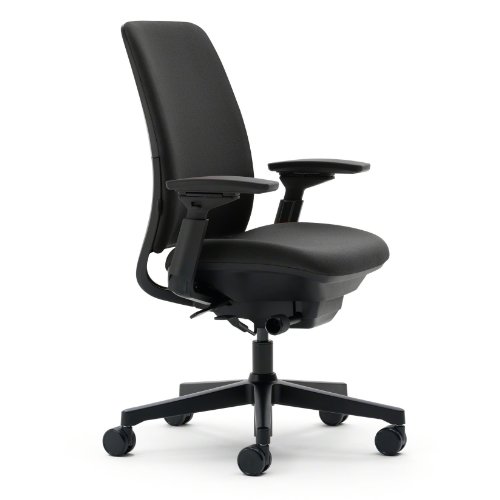
Steelcase Amia Office Chair
What We Like
- Dynamic LiveLumbar adapts to movement
- 4D adjustable arm support
- Extra cushioning for 8-10 hour sitting
- Carbon Neutral certified option
Trade-offs
- At 54.5 lb, it's heavy to move
- No headrest included
The hidden LiveLumbar system in this chair moves with you, offering dynamic lower back support that responds to every shift in posture. That means your spine gets consistent, pressure-free support when leaning forward to type or reclining to think. With extra cushioning and flexible seat edges, it’s designed to keep you comfortable through a full workday of eight to ten hours. The 4D armrests adjust in height, width, pivot, and depth, so you can dial in exactly the arm position that feels natural for your shoulders and wrists. This chair suits anyone who spends long hours at a desk and wants lumbar support that doesn’t stay static.
At 54.5 pounds, this is a heavy chair, so moving it between rooms or repositioning it on a hard floor takes real effort. Compared to the Marsail Ergonomic Office Chair at 30.4 pounds, the Amia is nearly twice as heavy, which matters if you frequently rearrange your workspace. It also lacks a headrest, so anyone needing neck support for reclining will want to look elsewhere. But for those who prioritize a responsive, dynamic lumbar system and a seat built for all-day comfort, the Amia delivers where it counts.
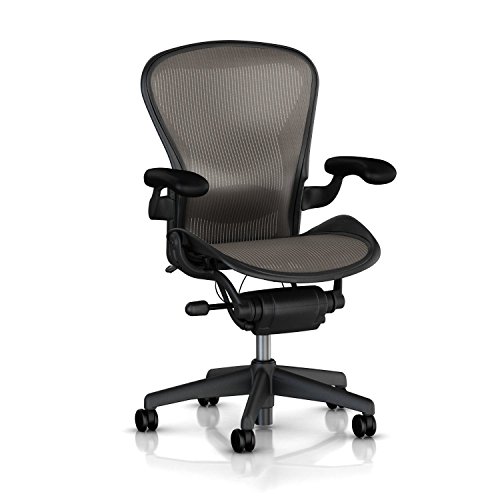
Herman Miller Classic Aeron Task Chair
What We Like
- Breathable Pellicle suspension keeps you cool
- Kinemat tilt follows natural body movement
- Waterfall seat edge reduces thigh pressure
- 12-year warranty with Born-On-Date sticker
Trade-offs
- At 48 pounds, it is heavy to move
- No headrest for users who need neck support
The patented Kinemat tilt mechanism lets your neck, shoulders, hips, knees, and ankles pivot naturally as you recline, so your whole body moves in sync rather than fighting the chair. The unique breathable Pellicle suspension dissipates the body heat that builds up while you work, keeping you cool and comfortable even during long sessions. That waterfall front edge takes pressure off your thighs, helping blood circulate so you stay alert and focused. This model works well for anyone who runs warm or spends hours seated and wants a design that works with their body rather than against it.
The 48-pound weight means this is a chair you set up once and leave in place, not something you’ll casually slide across the room. For breathability and natural movement, the Aeron’s Pellicle suspension and Kinemat tilt mechanism are hard to beat, and the 12-year warranty with an official Born-On-Date sticker gives long-term confidence in your investment.
Product photos
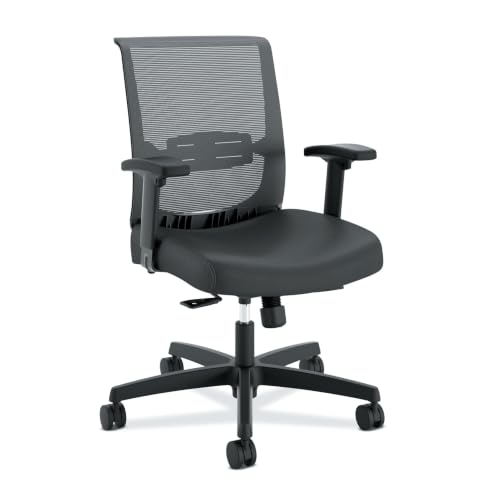
HON Convergence Ergonomic Office Chair
What We Like
- Seat glide for personalized positioning
- Breathable mesh back promotes airflow
- Adjustable lumbar support encourages alignment
- Height adjustable arms for custom fit
Trade-offs
- 41.0 lb makes it harder to move
- No headrest for neck support
A 3-inch contoured vinyl cushion and seat glide let you shift your sitting position forward or back, so you can find the spot that keeps your lower back supported during long computer sessions. The breathable mesh back encourages airflow while you work, and the adjustable lumbar support helps maintain natural alignment. This model works well for anyone who spends long stretches at a desk and wants the flexibility to fine-tune their seating depth without losing back support.
For those who value seat glide adjustability over extras such as a headrest, the HON Convergence delivers a focused ergonomic experience. Its breathable mesh back promotes airflow, while the adjustable lumbar support encourages proper alignment during extended computer work. The three-inch contoured vinyl cushion helps reduce pressure concentration, supporting tasks like studying, scheduling, and documentation. Height-adjustable arms and an advanced tilt recline allow movement throughout the day, adapting to different users and desk layouts. With a 275-pound weight capacity and hard casters for dependable mobility, this chair is built for everyday workplace demands, backed by the HON Full Warranty for long-term ownership confidence.
Product photos
Steelcase Leap Office Chair

What We Like
- Customizable lower back firmness dial
- Natural Glide System keeps posture in check
- 3D LiveBack contours to spine shape
- 70+ years of seating expertise
Trade-offs
- No headrest included for neck support
- No headrest for neck support.
The Steelcase Leap’s lower back firmness dial lets you dial in exactly the lumbar pressure you need, while the Natural Glide System moves the seat forward as you recline so you never lose contact with your work surface. This chair is built for anyone who spends long hours at a desk and wants a tailored fit that adapts to every shift in posture. The 3D LiveBack technology follows the natural curve of your spine, offering support whether you lean in or sit upright.
The Steelcase Leap’s 22-pound weight makes it stable on carpet but less portable than a mesh chair like the SIHOO M18, which weighs 38 pounds. It also lacks a headrest, so anyone needing neck support for reclining may want to look elsewhere. For those who prioritize a fully customizable lumbar experience and a seat that moves with them, the Leap is a premium choice that justifies its higher investment.
Product photos
How We Evaluated Task Chairs For Your Back
To build this guide, we examined technical specifications, manufacturer claims, and expert round-ups alongside common themes in owner feedback. We focused on the features that directly affect spinal support and comfort during extended sitting.
The most important criteria were lumbar support adjustability, seat comfort and cushioning, overall ergonomic adjustability (armrests, headrest, recline), and build quality as indicated by certifications like BIFMA X5.1. A chair that lets you fine-tune the lumbar curve and seat position is more likely to keep your back comfortable.
A research-led evaluation cannot replace personal testing, but it can highlight the chairs that consistently earn praise for their back-friendly design. We prioritized models with clear, adjustable features that accommodate different body types and sitting preferences.
What To Look For In Task Chairs For Your Back
Choosing a task chair for your back means focusing on adjustability and support where it matters most. The right chair will let you customize the lumbar curve, seat depth, and arm position to fit your unique body.
Look for a chair with adjustable lumbar support that moves up and down, and ideally in and out, to match the natural curve of your lower spine. Seat depth adjustment and 3D or 4D armrests add further comfort for long sessions.
Adjustable Lumbar Support
The single most important feature for back health is lumbar support that you can position precisely. Look for chairs that offer both height and depth adjustment, allowing you to press the support firmly into the curve of your lower back. Some models, like the Steelcase Leap, even let you dial in the firmness of the lumbar pad.
Seat Comfort and Cushioning
A supportive back starts with a stable, comfortable seat. High-density foam cushions that are at least three inches thick tend to hold their shape and prevent pressure points over long hours. A waterfall seat edge reduces pressure behind your knees, which helps maintain good posture.
Overall Ergonomic Adjustability
Beyond lumbar support, the best chairs let you adjust the armrests (height, width, and pivot), headrest (height and tilt), and recline tension. These adjustments help you find a neutral sitting position where your joints are aligned and your muscles can relax. 3D or 4D armrests are a significant upgrade over basic 2D models.
- Check that the lumbar support moves up and down and in and out.
- Confirm the seat depth is adjustable so your knees are at a 90-degree angle.
- Look for armrests that adjust in height and width to support your elbows.
- Test that the recline mechanism locks in multiple positions.
- Verify the headrest, if included, adjusts to support your neck.
A chair that lets you adjust the lumbar, seat, and arms is worth paying more for, as it directly impacts your long-term comfort and spinal health.
Task Chairs For Your Back Compared
The table below compares the key back-support features of our top ten picks, helping you see at a glance which chair matches your needs.
| Product | Weight Capacity | Armrest Type | Backrest Material |
|---|---|---|---|
| SIHOO M18 Ergonomic Office Chair | 330 lbs | 2D | Breathable Mesh |
| Marsail Ergonomic Office Chair | 330 lbs | 3D adjustable, flip-up | Mesh |
| SIHOO B100 Mesh Ergonomic Office Chair | 300 lbs | Flip-up | Full mesh |
| NEO CHAIR Office Chair | N/A | Flip-up | Breathable mesh |
| MOLENTS Ergonomic Office Chair | N/A | 3D adjustable | Mesh |
| CASASIO Ergonomic Office Chair | 330 lbs | Flip-up | Breathable mesh |
| Steelcase Amia Office Chair | N/A | 4D | N/A |
| Herman Miller Classic Aeron Task Chair | N/A | Fully Adj Vinyl Arms | N/A |
| HON Convergence Ergonomic Office Chair | 275 lb | Height adjustable | Breathable mesh |
| Steelcase Leap Office Chair | N/A | N/A | N/A |
Frequently Asked Questions
What is the best task chair for lower back pain?
The SIHOO M18 Ergonomic Office Chair is our Best Overall pick for its four-point support system and adjustable lumbar. For those who need even more precise lower back support, the Marsail Ergonomic Office Chair offers 4-way lumbar adjustment.
How important is a headrest for back support?
A headrest helps keep your neck and upper spine aligned, which supports overall posture. It is not essential for lower back health, but it can reduce strain during long hours. Chairs like the CASASIO Ergonomic Office Chair include a 3D adjustable headrest for this purpose.
Should I get a chair with adjustable armrests?
Yes, adjustable armrests allow you to support your elbows at a 90-degree angle, which reduces shoulder tension and helps you maintain a neutral spine. 3D or 4D armrests are best, as they adjust in height, width, and pivot.
What does BIFMA certification mean for a task chair?
BIFMA X5.1 certification means the chair has passed industry-standard tests for durability, stability, and safety. It is a reliable indicator of long-term build quality, as seen with the MOLENTS Ergonomic Office Chair.
How much lumbar adjustment do I really need?
At minimum, you need lumbar support that moves up and down to match your spine’s natural curve. Chairs with additional forward/backward depth adjustment, like the Steelcase Leap, offer a more customized fit for different body shapes.
The Bottom Line
For most people, the SIHOO M18 Ergonomic Office Chair delivers the best balance of back support, adjustability, and value. Its four-point ergonomic system and adjustable lumbar make it a reliable choice for anyone from 5’6″ to 6’2″ who spends long hours at a desk.
If you need more precise lumbar control, the Marsail Ergonomic Office Chair offers 4-way adjustment and a thick foam seat. For those who want premium adaptive support and are willing to invest more, the Steelcase Leap provides customizable lumbar firmness and a seat that glides naturally.
The single most important factor in choosing a task chair for your back is adjustable lumbar support that fits your spine. Prioritize this feature, and you will find a chair that keeps you comfortable and supported through the longest workdays.
