10 Best Under Sink Filters in 2026
This post contains affiliate links. As an Amazon Associate, we earn from qualifying purchases.
For households wanting the purest tap water without sacrificing counter space, the Waterdrop G3P600 Tankless RO System leads our list with its 8-stage filtration, 600 GPD capacity, and a smart LED faucet that tracks TDS and filter life. The APEC Water ROES-50 is our pick for a certified 5-stage system, while the Aquasana Claryum 3-Stage Max Flow wins for high flow rates that keep minerals intact.
The challenge with under sink filters is balancing filtration power with the physical constraints of your cabinet. You need a system that fits the available space, works with your water source, and targets the specific contaminants in your supply without demanding constant maintenance.
This guide is based on a thorough review of manufacturer specifications, certifications, and patterns in owner feedback. We break down the ten best options by their strengths, so you can match a filter to your home’s needs and your cabinet’s dimensions.
Top 10 Under Sink Water Filters in the Market
Certain content that appears on this site comes from Amazon. This content is provided "as is" and is subject to change or removal at any time.
The Best Under Sink Water Filters, Reviewed
Waterdrop G3P600 Tankless RO System

What We Like
- 8-stage filtration reduces wide range of contaminants
- 600 GPD high capacity with fast 8-second cup fill
- 2:1 low drain ratio saves water
- Smart LED faucet with TDS and filter life display
Trade-offs
- Requires under-sink electrical outlet
- At 32 lb, heavier than many under-sink filters
With 600 gallons of daily capacity and an 8-second fill time for an 8-ounce cup, this tankless reverse osmosis system delivers filtered water fast enough for busy kitchens. It’s a fit for households that want high-volume purified water without a bulky storage tank cluttering the cabinet, and the smart faucet keeps you informed of water quality and filter life at a glance.
The trade-off is that this system needs under-sink electricity, so it won’t work in cabinets without an outlet. It’s also heavier than many alternatives, like the Aquasana Claryum 3-Stage Max Flow, which weighs only 8.3 pounds and requires no power. But if you have the space and a nearby outlet, the Waterdrop’s combination of speed, certification depth, and low waste water ratio makes it a compelling choice for those serious about water purity.
APEC Water ROES-50 RO System
What We Like
- NSF/ANSI 372 & 58 certified
- DIY-friendly quick-connect fittings
- Includes faucet, tank, and filters
Trade-offs
- 50 GPD slower than tankless systems
- At 24.9 lb, heavy for some cabinets
- Requires space for tank under sink
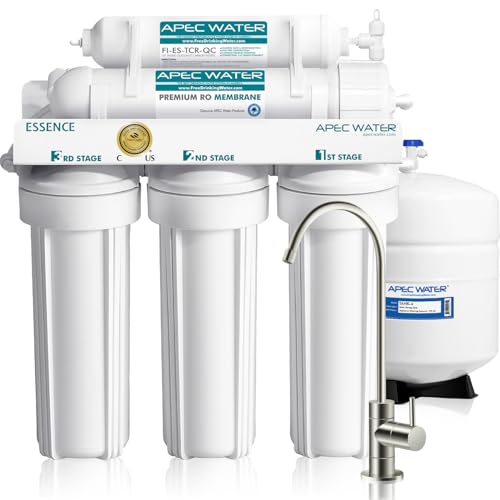
A 50-gallon-per-day output means this system delivers a steady supply of purified water for drinking and cooking, but it won’t keep up with heavy simultaneous use like a tankless model might. The five-stage filtration removes arsenic, chlorine, lead, fluoride, heavy metals, and 1000+ impurities, earning NSF/ANSI 372 and 58 certifications for both material safety and performance. That makes it a strong choice for anyone who wants proven, thorough contaminant reduction without a complicated setup. The quick-connect fittings and color-coded tubing are genuinely DIY-friendly, so you can install it yourself in an afternoon.
The storage tank is the main consideration here. At 24.9 pounds and with a 15.5-inch length, the system plus tank takes up noticeable under-sink real estate, and the 50 GPD membrane is slower than some tankless alternatives. But for a typical household focused on drinking water quality, the proven filtration and straightforward maintenance make this a reliable workhorse that doesn’t overcomplicate things.
Aquasana Claryum 3-Stage Max Flow
What We Like
- 0.72 GPM flow rate
- Retains beneficial minerals
- DIY installation kit included
Trade-offs
- Requires 15.85 inches of under-sink clearance
- Does not reduce TDS
- Weighs 8.3 pounds
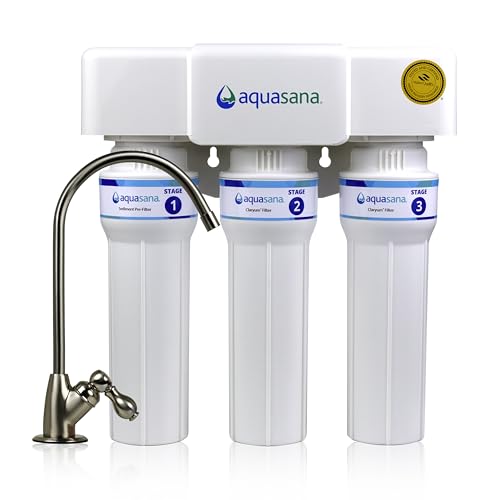
The catch is that it won’t reduce total dissolved solids (TDS), so if you’re after water with very low TDS, a reverse osmosis system like the APEC Water ROES-50 would be a better fit. And at 8.3 pounds with a 15.85-inch clearance requirement, you’ll need to check your under-sink space before buying. But for high-flow filtration that’s easy to install yourself and costs under ten cents per gallon, this system offers strong value.
CuZn UC-200 Under Sink Filter
What We Like
- 5-year filter life saves frequent replacements
- 3-stage filtration with KDF-55 and carbon
- NSF/ANSI 42 & 372 certified components
- Simple inline DIY installation, no drilling
Trade-offs
- Does not reduce TDS, only RO systems do
- Requires cabinet clearance for 15-inch height
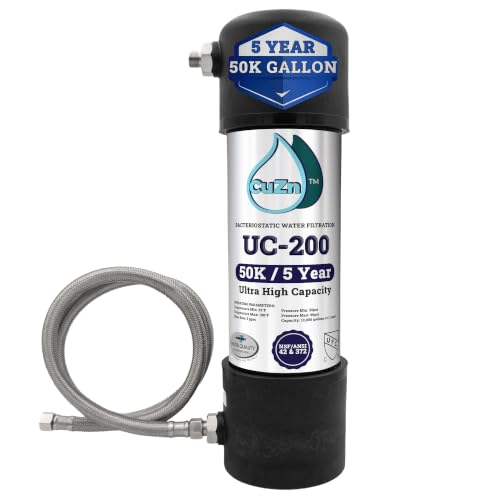
A five-year filter life is the standout feature here, with the CuZn UC-200 letting you install it and forget about replacements for years. Its three-stage filtration uses sediment membranes, KDF-55, and coconut shell carbon to cut down lead, chlorine, PFAS, and PFOS while keeping beneficial minerals in your water. For anyone who wants clean, great-tasting tap water without the hassle of frequent filter swaps, this is a wonderfully low-maintenance choice.
The UC-200 is a filtration system, not a reverse osmosis one, so it won’t reduce total dissolved solids (TDS). If removing dissolved minerals or heavy metals like arsenic matters to you, you’ll want an RO system such as the APEC Water ROES-50 instead. At 15 inches tall, it stands taller than some under-sink filters, so measure your cabinet space before buying. But for straightforward, long-lasting contaminant reduction, this filter delivers exceptional value.
GE Dual Stage Under Sink System

What We Like
- Tool-free twist and lock filter replacement
- Reduces lead, chlorine taste and odor
- Includes filter change indicator
- Easy push-to-connect installation
Trade-offs
- Filters need replacement every 6 months
- No NSF certification listed for the system
Push-to-connect fittings and a twist-and-lock filter design mean this system can go from box to running in under an hour with no special tools. The dual-stage filtration tackles lead, chlorine taste, and other common impurities, while the filter change indicator takes the guesswork out of maintenance. For a renter or first-time buyer who wants clean water without a plumber visit, the simplicity here is hard to beat.
The filters require swapping every six months, so ongoing cost and effort are higher than some long-life alternatives like the CuZn UC-200. For buyers who want NSF certification, the Aquasana Claryum offers that third-party verification. Still, for anyone who values a quick, DIY-friendly setup, this GE system provides straightforward installation.
Product photos
iSpring CU-A4 4-Stage UF System
What We Like
- 0.01μm ultrafiltration retains healthy minerals
- Twist-on/twist-off filters for quick changes
- Includes brushed nickel faucet
Trade-offs
- Does not reduce TDS (not RO)
- Filter life varies 6-12 months by water quality
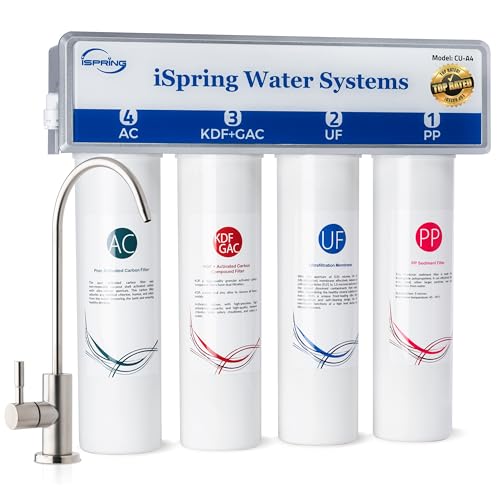
The 0.01-micron ultrafiltration membrane catches particles like sediment and larger contaminants while letting beneficial minerals pass through. This means you get cleaner water without stripping out the natural mineral content. At 4.4 pounds, the system is light enough to handle easily during installation, and the twist-on/twist-off filter cartridges let you swap filters without disconnecting any hoses, a convenience that makes maintenance straightforward for anyone, whether you own or rent.
This system removes up to 99% of chlorine, lead, and other contaminants while retaining beneficial minerals, but it is not a reverse osmosis system and does not lower TDS. If you need to reduce dissolved minerals, consider an RO system like the APEC Water ROES-50. For everyday filtration that keeps the water’s natural mineral profile, the CU-A4 delivers effective performance with easy maintenance.
APEC Water RO-90 RO System

What We Like
- High 90 GPD capacity
- NSF certified for safety
- Removes 99% of impurities
- 100% US-made filters
Trade-offs
- Heavy at 25 pounds
- Takes up under-sink space
A 90-gallon-per-day output means this system can keep up with a busy household, delivering plenty of purified water for drinking and cooking without waiting on the tank to refill. With five stages of filtration and NSF certification for both lead-free materials and contaminant reduction, it’s built for those who want thorough, reliable performance from a US-assembled unit. The large capacity filters also mean fewer replacements over time, cutting down on maintenance hassle.
The APEC Water RO-90 weighs 25 pounds and measures 16 inches long, so it takes up more under-sink space than compact options like the CuZn UC-200. But for anyone who prioritizes high output and deep filtration from a trusted brand, this system delivers the capacity and reliable performance.
Product photos
iSpring RO500AK Tankless RO
What We Like
- Alkaline remineralization for better taste
- Tankless design saves under-sink space
Trade-offs
- Requires access to electricity
- Weighs 21 pounds, heavier than many tankless systems
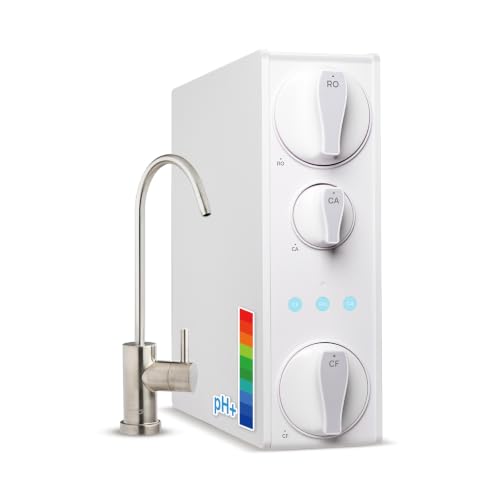
With a 2:1 pure-to-waste ratio, this system can save up to 400% more water than traditional reverse osmosis units, which is a big deal if you’re trying to cut down on water waste. It also includes alkaline remineralization that adds beneficial minerals back into the water for a smoother, fresher taste. For a busy kitchen where you want efficient filtration and better flavor, this setup delivers without taking up much space.
This system needs electricity, which means you’ll need an outlet under your sink. At 21 pounds, it’s heavier than a simpler filter like the CuZn UC-200, so make sure your cabinet floor can support it. Still, for a tankless RO that delivers high output and better-tasting water without a storage tank, the iSpring RO500AK offers a compelling package.
Product photos
Waterdrop 10UA Direct Connect
What We Like
- Twist-and-lock design for quick install
- 1.33 GPM fast flow rate
- 12-month filter lifespan
- Reduces lead, chlorine, PFOA/PFOS
Trade-offs
- Only for municipal cold water, not well water
- Requires 3/8" feed valve connection
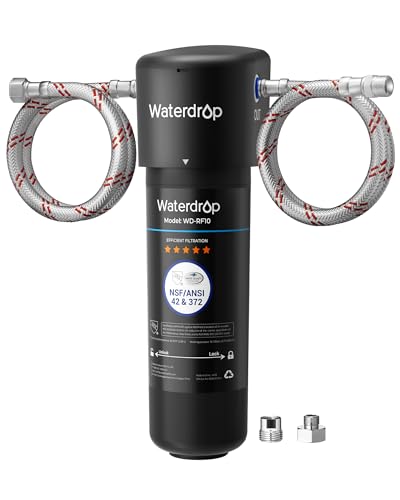
A 12-month filter lifespan means you only swap the cartridge once a year, which keeps maintenance minimal and predictable. This direct-connect system twists right onto your existing 3/8″ sink valve, so there’s no drilling or extra hardware, installation takes about three minutes. It’s an ideal pick for renters or anyone who wants clean drinking water without a permanent under-sink setup. The 1.33 GPM flow rate delivers water fast enough to fill a glass or a pot without the trickle you get from some budget filters.
This filter is designed strictly for municipal tap water, so if your home runs on well water, it won’t work. For those on a city water supply who want a long-lasting, low-maintenance filter, this is a practical option.
Product photos
Frizzlife SK99 Under Sink Water Filter
What We Like
- 0.5 micron filtration catches more contaminants
- Fast 3-second cup fill time
- Easy 15-minute DIY installation
- Green design replaces only core filters
Trade-offs
- Does not reduce TDS (total dissolved solids)
- Replacement filters sold separately (M3001, M3002, M3003, M3005)
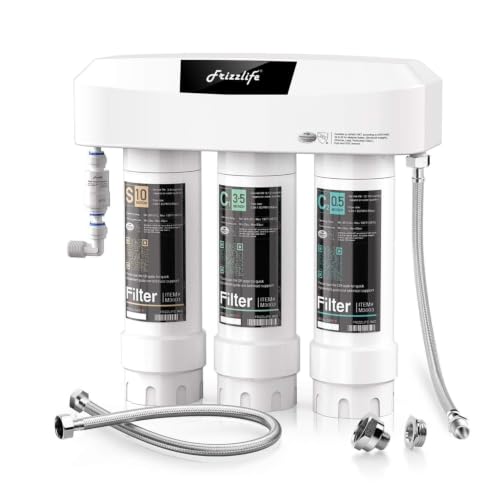
A 0.5 micron filtration rating means this system catches lead, chlorine, and particulates you’d rather not drink, while the 8-layer filter leaves beneficial minerals in and removes bad taste and odor. The flow fills a cup in 3 seconds, so you won’t wait long for a glass of water. Installation takes under 15 minutes with no plumber needed, making it an easy weekend upgrade for any kitchen.
The SK99 does not reduce TDS, so if you’re after demineralized water you might consider a reverse osmosis system. But for those who want fast flow, a small footprint, and certified contaminant reduction without the waste and complexity of RO, this is a practical choice. The twist-in filter design makes swapping cartridges quick, and replacing only the core cuts down on waste.
Product photos
How We Evaluated Under Sink Water Filters
Our evaluation started with the technical specifications and certification data from each manufacturer. We looked for systems that hold recognized NSF/ANSI standards, as these provide independent verification of contaminant reduction claims. We also examined flow rates, filter life, and installation requirements to understand real-world performance.
The four criteria that mattered most were filtration effectiveness, which covers what contaminants each system targets and at what micron level. Physical footprint, height, depth, and whether a storage tank is needed, also played a big role. Ease of installation and maintenance, including tool-free designs, quick-connect fittings, and replacement intervals, was another key factor. Water waste, specifically the drain ratio for RO systems, rounded out the list. For tankless models, electrical requirements were also a key factor.
This guide draws on specifications, expert round-ups, and patterns in owner feedback from multiple sources. This approach helps you narrow the field to the systems most likely to perform well in your home.
What To Look For In Under Sink Water Filters
Choosing the right under sink filter means matching the system to your water quality, cabinet space, and maintenance preferences. The most important factors are filtration type, certified contaminant reduction, physical dimensions, and filter replacement cost and frequency.
An under sink filter must fit your cabinet, target your water’s specific contaminants, and match your willingness to change cartridges. Focus on NSF certifications, filter life, and whether the system requires electricity or a storage tank.
Filtration Type and Contaminant Reduction
The two main categories are reverse osmosis (RO) and non-RO filtration. RO systems, like the Waterdrop G3P600 and APEC ROES-50, reduce the broadest range of contaminants including lead, arsenic, fluoride, and total dissolved solids (TDS). Non-RO filters, such as the Aquasana Claryum and CuZn UC-200, use carbon and other media to reduce chlorine, sediment, and certain heavy metals while retaining beneficial minerals. If TDS reduction is important to you, only an RO system will deliver it.
Physical Dimensions and Cabinet Clearance
Under sink cabinets vary widely in depth and height. Tankless RO systems save space by eliminating the storage tank, but they are often heavier and require an electrical outlet. Systems with a tank, like the APEC ROES-50, need enough room for both the filter housing and the tank. Always measure your cabinet’s height, width, and depth before purchasing. The Aquasana Claryum, for example, needs 15.85 inches of clearance, while the CuZn UC-200 requires 15 inches.
Filter Life and Replacement Cost
Longer filter life means fewer purchases and less maintenance. The CuZn UC-200 offers a 5-year filter life, making it a true set-and-forget option. Most other systems require cartridge changes every 6 to 12 months. Factor in the cost of replacement filters over time, as some budget-friendly systems have more expensive cartridges. Systems with twist-and-lock or tool-free designs, like the GE Dual Stage and Waterdrop 10UA, make the swap quick and mess-free.
- Measure your under-sink cabinet height, depth, and width before choosing a system.
- Check if your water source is municipal or well water, as some filters are not rated for well water.
- Confirm whether an electrical outlet is available under the sink for tankless RO systems.
- Look for NSF/ANSI certifications for the specific contaminants you want to reduce.
- Calculate the annual cost of replacement filters, not just the upfront price.
A system that is easy to install and maintain is far more likely to deliver clean water consistently than one that requires complex plumbing or frequent cartridge changes.
Under Sink Water Filters Compared
The table below compares the ten under sink filters across key specs including filtration stages, flow rate, filter life, and installation requirements.
| Product | Filtration Stages | Certifications | Dimensions | Weight |
|---|---|---|---|---|
| Waterdrop G3P600 Tankless RO System | 8-stage | NSF/ANSI 42, 53, 58, 372 | L 18.1 inches, W 5.7 inches, H 17.8 inches | 32.0 pounds |
| APEC Water ROES-50 RO System | 5-Stage | NSF/ANSI 372 & 58 | L 15.5 x W 5.2 x H 17.0 in | 24.9 pounds |
| Aquasana Claryum 3-Stage Max Flow | 3-Stage | NSF 42, 53 & 401 | 12.0 x 4.2 x 12.8 inches | 8.3 pounds |
| CuZn UC-200 Under Sink Filter | 3-stage | NSF/ANSI 42 & 372 | 4.5 x 4.5 x 15 inches | N/A |
| GE Dual Stage Under Sink System | Dual Stage | N/A | L 1.0 inches, W 1.0 inches, H 1.0 inches | 4.0 pounds |
| iSpring CU-A4 4-Stage UF System | 4-stage ultrafiltration | N/A | 10.5 x 4.5 x 12.5 inches | 4.4 pounds |
| APEC Water RO-90 RO System | 5-Stage | NSF 372 & 58 | 16.0 x 5.2 x 17.5 inches | 25.0 pounds |
| iSpring RO500AK Tankless RO | 0.0001 micron RO | NSF/ANSI 58 | 17.5 x 5.2 x 16.2 in | 21.0 pounds |
| Waterdrop 10UA Direct Connect | N/A | NSF/ANSI 42 | 3.6 x 3.6 x 12.3 in | 2.9 pounds |
| Frizzlife SK99 Under Sink Water Filter | 8 layers | NSF/ANSI 53&42&372 | L 15.0 inches, W 5.0 inches, H 14.0 inches | 0.7 pounds |
Frequently Asked Questions
What is the difference between RO and non-RO under sink filters?
Reverse osmosis (RO) systems use a membrane to remove a wide range of contaminants including TDS, fluoride, and arsenic. Non-RO filters use carbon and other media to reduce chlorine, sediment, and some heavy metals, but they do not reduce TDS. RO systems produce the purest water but are larger and may require electricity.
How much under-sink space do I need for a filter?
It depends on the system. Tankless RO systems need clearance for the unit but no storage tank, while traditional RO systems require space for both the filter housing and a tank. Non-RO filters like the CuZn UC-200 need about 15 inches of height. Always measure your cabinet before buying.
Do under sink filters remove beneficial minerals?
Non-RO filters and ultrafiltration systems typically retain beneficial minerals like calcium and magnesium. RO systems remove nearly all dissolved solids, including minerals, though some models like the iSpring RO500AK add an alkaline remineralization stage to improve taste and restore some minerals.
How often do I need to change the filters?
Filter life varies by system and water quality. The CuZn UC-200 lasts up to 5 years, while most other systems require replacement every 6 to 12 months. Some models have filter change indicators to remind you. Check the manufacturer’s recommendation based on your local water conditions.
Can I install an under sink filter myself?
Many under sink filters are designed for DIY installation with quick-connect fittings and twist-on cartridges. The GE Dual Stage and Waterdrop 10UA are particularly easy to install without tools. If you are not comfortable working under the sink, you can hire a plumber for the initial setup.
The Bottom Line
For most households, the Waterdrop G3P600 Tankless RO System is the best overall under sink filter. It combines comprehensive 8-stage filtration with a high 600 GPD flow rate and a smart faucet that takes the guesswork out of filter changes. It is ideal for homes with an electrical outlet under the sink and enough cabinet space for its 32-pound unit.
If your cabinet lacks an outlet or you prefer a certified, DIY-friendly system with a storage tank, the APEC Water ROES-50 is a strong choice with NSF/ANSI 58 certification. For those who want fast flow without removing minerals, the Aquasana Claryum 3-Stage Max Flow delivers 0.72 GPM and retains beneficial minerals. Budget-conscious shoppers on municipal water should consider the Waterdrop 10UA Direct Connect for its year-long filter life and simple installation.
The single most important factor in choosing an under sink filter is matching the system to your cabinet dimensions and water quality. Measure your space, check your water source, and pick the filtration type that targets your specific contaminants. That approach will lead you to the right filter every time.
