10 Best Under-sink Filtration in 2026
This post contains affiliate links. As an Amazon Associate, we earn from qualifying purchases.
The best overall under-sink water filtration system is the Waterdrop G3P600 Tankless Reverse Osmosis System, which saves 70% of under-sink space with its tankless design while delivering an efficient 2:1 pure-to-drain ratio. For a certified 5-stage RO system with a traditional tank, the APEC Water ROES-50 earns the award for Best 5-Stage RO System, and the Aquasana Claryum 3-Stage Max Flow Filter wins for high-flow non-RO filtration.
The biggest challenge with under-sink filtration is fitting a powerful system into the cramped, dark cabinet beneath your kitchen sink. You need to balance contaminant reduction, flow rate, filter lifespan, and physical dimensions without sacrificing all your storage space.
This guide is built from manufacturer specifications, NSF certification data, expert round-ups, and patterns in owner feedback across dozens of models. We focused on the factors that matter most for real kitchens: space requirements, installation complexity, contaminant reduction, and ongoing maintenance costs.
Top 10 Under-Sink Water Filtration Systems in the Market
Certain content that appears on this site comes from Amazon. This content is provided "as is" and is subject to change or removal at any time.
The Best Under-Sink Water Filtration Systems, Reviewed
Waterdrop G3P600 Tankless Reverse Osmosis System

What We Like
- 2:1 low drain ratio saves water
- Tankless design saves 70% under-sink space
- 8-stage filtration reduces many contaminants
Trade-offs
- Requires under-sink electricity
- Weighs 32 pounds, heavier than some alternatives
- Cabinet must be larger than 18.1" x 5.7" x 17.8"
With 600 gallons of filtered water per day and a 2:1 pure-to-drain ratio, this system delivers plenty of clean water while wasting far less than traditional RO units. It’s an ideal choice for households that want high-output, low-waste reverse osmosis without the bulky storage tank.
The trade-off is that this system needs an electrical outlet under the sink, which not every cabinet has, and at 32 pounds it’s heavier than simpler filter setups like the Aquasana Claryum 3-Stage. But if you want thorough purification and a faucet that shows TDS and filter life at a glance, the Waterdrop G3P600 delivers a lot of capability in a compact package.
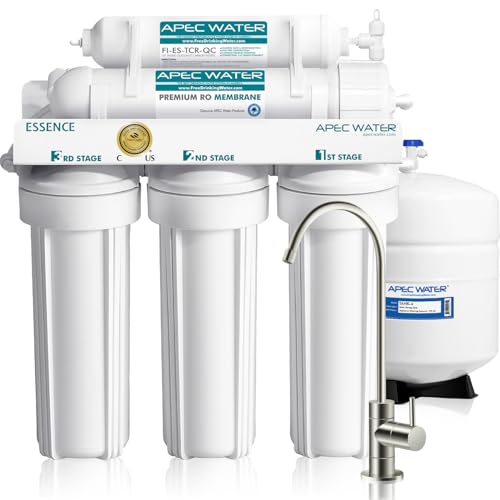
APEC Water ROES-50 Reverse Osmosis System
What We Like
- 5-stage filtration removes 1000+ impurities
- NSF/ANSI 58 certified for performance
- DIY-friendly with quick-connect fittings
- Includes everything for installation
Trade-offs
- At 24.9 lbs, heavier than some alternatives
- 50 GPD flow is slower than tankless systems
- Filter changes needed every 6-24 months
Certified to NSF/ANSI 58, the five-stage filtration removes arsenic, lead, fluoride, and over 1,000 other impurities, so your tap water rivals bottled quality. The package includes a brushed nickel faucet, a storage tank, and an installation kit, so you have everything needed for a complete setup. Color-coded tubing with quick-connect fittings make installation straightforward for a confident DIYer.
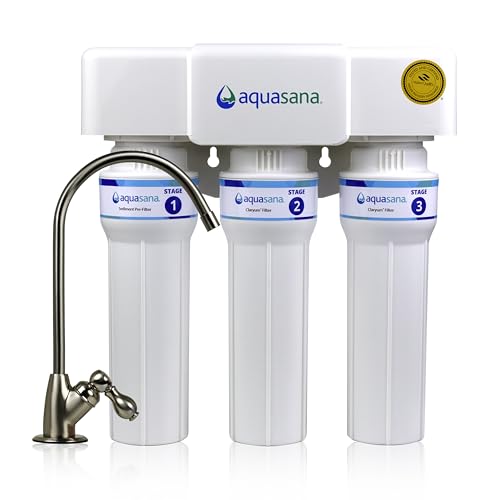
Aquasana Claryum 3-Stage Max Flow Filter
What We Like
- WQA certified to NSF 42, 53 & 401
- Reduces 78 contaminants including lead and PFAS
- Max-flow output of 0.72 GPM
- Retains beneficial minerals
Trade-offs
- Requires 15.85 inches of under-sink clearance
- Does not reduce TDS
- Weighs 8.3 pounds
One trade-off is that it doesn’t reduce total dissolved solids (TDS), so if you’re aiming for the purest possible water, a reverse osmosis system like the Waterdrop G3P600 would be a better fit. You’ll also need at least 15.85 inches of clearance under the sink, which could be tight in smaller cabinets. For most homes, though, this filter offers strong contaminant reduction at a practical size and speed.
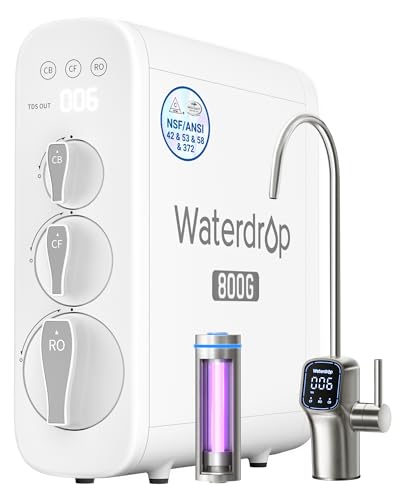
Waterdrop G3P800 Tankless Reverse Osmosis System
What We Like
- 800 GPD capacity for big families
- 3:1 pure to drain ratio saves water
- NSF/ANSI 42, 53, 58, 372 certified
- Smart faucet with TDS and LED indicator
Trade-offs
- At 33.7 lb, heavier than many under-sink systems
- Requires under-sink space 18.1 inches deep
An 800 gallons-per-day output means this system can keep up with a large household’s drinking and cooking needs without ever running out of purified water. The 10-stage filtration is certified by NSF/ANSI standards 42, 53, 58, and 372, so you get proven reduction of chlorine, lead, fluoride, PFAS, and other contaminants. The 3:1 pure-to-drain ratio also cuts down on wastewater compared to older RO units, making it a more efficient choice for daily use. For families who want high volume and verified performance, this is a strong contender.
Its weight is a factor: at 33.7 pounds, the G3P800 is noticeably heavier than many under-sink filters, so installation may require a sturdy cabinet floor or extra support. Compared to the lighter iSpring RO500AK (21 pounds), it’s a more substantial unit to mount. If you have the room and need the capacity, the extra heft is a fair price for the output.
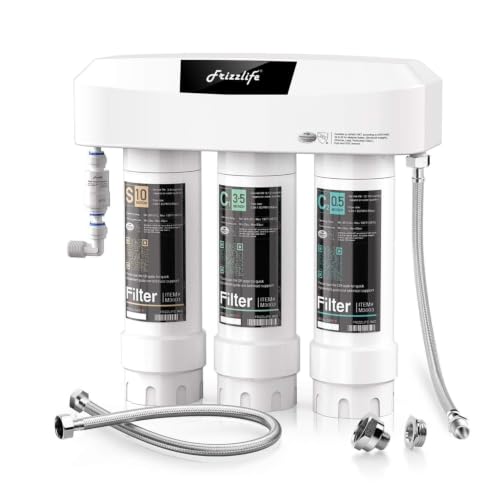
Frizzlife SK99 Under Sink Water Filter
What We Like
- 0.5 micron filtration traps fine particles
- Twist-in design for easy filter swaps
- Compact size fits under most sinks
Trade-offs
- Does not reduce TDS or dissolved solids
- Replacement filters required every 6-12 months
- Cannot serve refrigerator without separate ice maker kit
With 0.5 micron filtration accuracy, this system catches particles at a level that is almost 10 times finer than some other brands. That means you get noticeably cleaner water without the waste or complexity of reverse osmosis. The eight-layer cartridge reduces lead, chlorine, chloramine, and PFOA/PFOS while leaving beneficial minerals in your water, making it a smart fit for anyone who wants high-performance filtration without a tank or drain line. Installation takes under fifteen minutes thanks to the twist-in design, and since you only replace the inner core, there’s less plastic heading to the landfill over time.
This filter doesn’t remove total dissolved solids, so if you want the purest water, a reverse osmosis system like the Waterdrop G3P600 would be a better match. But that means dealing with a larger, heavier unit, slower flow, and more complicated installation. For most households focused on taste, odor, and common contaminants, the SK99 delivers fast flow, filling a cup in about three seconds, and fits neatly into a compact cabinet space.
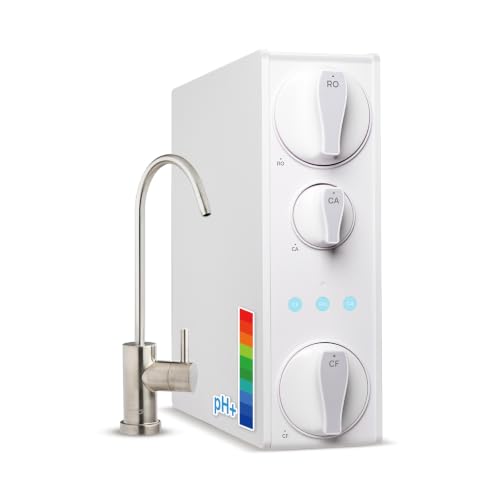
iSpring RO500AK Tankless Alkaline RO System
What We Like
- NSF/ANSI 58 complete system certification
- Alkaline remineralization for better taste
- Tankless design saves under-sink space
- 2:1 low drain ratio saves water
Trade-offs
- Requires access to electricity for operation
- 21.0 lb weight requires sturdy cabinet support
A full 8-ounce cup fills in about 10 seconds, which means you can keep up with a busy household without waiting around. The alkaline remineralization stage adds back beneficial minerals, so the water tastes smoother and fresher than what you get from standard RO systems. And because the entire unit is NSF/ANSI 58 certified, you have independent verification that it actually performs as claimed.
This tankless system needs to be plugged in, so you’ll need an outlet under your sink. It weighs 21.0 pounds, which is manageable for most installations. If you want the convenience of tankless with the added benefit of alkaline water and don’t mind the power cord, this is a well-rounded pick.
Product photos
3M Aqua-Pure AP-DWS1000 Under Sink System

What We Like
- Reduces microplastics, lead, VOCs, MTBE
- Auto shut-off at 625 gallons
- Sanitary Quick Change cartridge design
Trade-offs
- Not a reverse osmosis system
- Heavier than many under-sink filters at 5.0 pounds
A 625-gallon capacity with automatic shut-off means you never have to guess when it’s time for a new cartridge. The system handles the reminder for you. This dual-stage carbon-block filter tackles a wide range of contaminants including microplastics, lead, chlorine taste and odor, VOCs, and MTBE, making it a strong fit if you want broad reduction without the complexity of reverse osmosis.
Product photos
iSpring RCC7AK Alkaline 6-Stage RO System
What We Like
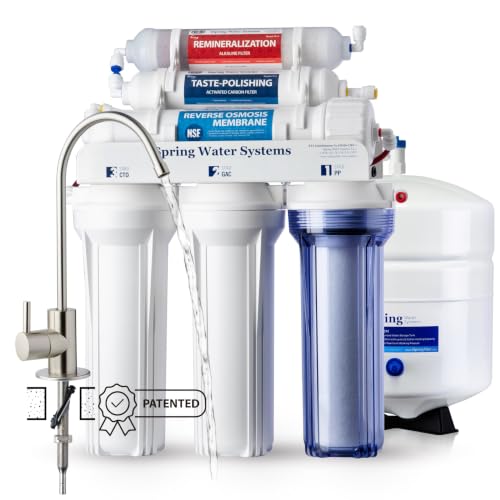
- Patented top-mounted design for easy installation
- NSF 58 certified for entire system
- Mineral boost stage adds healthy pH
- Transparent first-stage housing shows buildup
Trade-offs
- Weighs 27.6 lb, heavy for some cabinets
The iSpring RCC7AK is an NSF 58 certified 6-stage reverse osmosis system that adds a remineralization stage for balanced pH and essential minerals. Its patented top-mounted fastener lets you install the faucet entirely from above, skipping the usual under-sink contortions. This is a great fit for anyone who wants the purity of RO with the taste of spring water and values a straightforward, DIY-friendly setup.
The entire system is certified to NSF/ANSI 58 standards, so you can trust it reduces TDS by 93-98% and removes over 1,000 contaminants including lead, fluoride, and PFAS. That certification covers the whole filtration system, not just a single stage like some other brands. The mineral boost stage adds back essential minerals for a balanced pH, turning filtered water into something closer to spring water. Owners appreciate the transparent first-stage housing that lets you see when it’s time for a change, and the lifetime technical support based in Atlanta gives peace of mind long after installation.
Product photos
CuZn UC-200 Under Sink Water Filter
What We Like
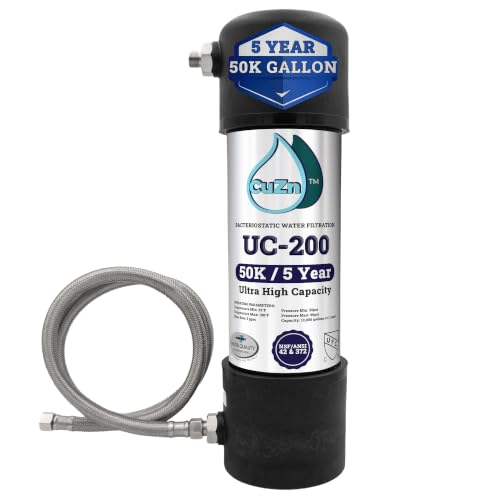
- 5-year filter life saves frequent replacements
- 3-stage filtration retains beneficial minerals
- NSF/ANSI 42 & 372 certified components
- Simple inline DIY installation
Trade-offs
- Does not reduce TDS (only RO does)
- Not for those needing TDS reduction
A five-year filter life means you can install this under your sink and practically forget about it for half a decade, no more wrestling with cartridges every six months. The three-stage filtration uses KDF-55 and coconut shell carbon to reduce lead, chlorine, and PFAS while keeping beneficial minerals in your water, so it tastes crisp without stripping everything out. That long service interval makes it a standout for anyone who wants clean drinking water with minimal maintenance.
Like any non-RO filter, this one won’t lower total dissolved solids, so if you want the purest water, a reverse osmosis system would be a better fit. But for everyday drinking and cooking, the UC-200 delivers effective filtration without the complexity that RO systems require. Its inline design and included parts make installation straightforward.
Product photos
Express Water RO5DX 5-Stage RO System

What We Like
- Reduces up to 99.99% of impurities
- No electricity required for operation
Trade-offs
- 50 GPD is slower than tankless systems
- 31 pounds is heavy for under-sink installation
It’s a smart pick if you’re installing under a sink where a hidden leak could cause real damage, and the fact that no electricity is needed simplifies placement and keeps your utility bill unchanged.
At 50 GPD, this system fills a glass more slowly than a tankless design like the Waterdrop G3P600, so you’ll want the included storage tank for convenient access. The 31-pound weight makes it heavier than some alternatives, which could make mounting inside a tight cabinet a bit more of a workout. If you prioritize leak protection and don’t mind a traditional tank setup, this is a well-rounded system that delivers reliable filtration without the need for power.
Product photos
How We Evaluated Under-Sink Water Filtration Systems
We started by reviewing technical specifications and certification data from each manufacturer, cross-referencing NSF/ANSI standards for contaminant reduction claims.
Four criteria guided our evaluation. Physical footprint and clearance requirements were critical since under-sink cabinets vary wildly in size. Filtration effectiveness came next, measured by the number of stages, micron ratings, and specific contaminants reduced. Flow rate and system capacity determined whether a system could keep up with a busy household. Finally, we weighed installation difficulty and long-term maintenance costs, including filter replacement frequency and whether electricity was required.
The honest limit of a research-led evaluation is that we cannot simulate years of real-world use or test every water chemistry scenario.
What To Look For In Under-Sink Water Filtration Systems
Choosing the right system means matching your water quality needs to your cabinet’s physical constraints and your household’s flow demands.
Look for NSF/ANSI certifications matching the contaminants you want to reduce. Measure your cabinet’s clearance carefully. Then decide between reverse osmosis (for TDS reduction) and non-RO filtration (for taste and common contaminants without mineral removal).
Filtration Type and Contaminant Reduction
Reverse osmosis systems remove total dissolved solids (TDS), heavy metals, and up to 99% of impurities, but they waste some water and require more space. Non-RO filters like the CuZn UC-200 retain beneficial minerals and reduce chlorine, lead, and sediment without the complexity of RO. Check which NSF standards each system meets: NSF 42 covers taste and odor, NSF 53 covers health-related contaminants, and NSF 58 covers reverse osmosis performance.
Physical Dimensions and Cabinet Clearance
Measure your under-sink cabinet’s height, width, and depth before shopping. Tankless RO systems like the Waterdrop G3P600 require at least 18.1 inches of depth, while traditional tank systems need room for both the filter housing and a storage tank. The Aquasana Claryum needs 15.85 inches of clearance. Also check whether you have an electrical outlet available if the system requires power.
Flow Rate and Capacity
Flow rate determines how fast water fills your glass or pot. Non-RO systems like the Aquasana Claryum deliver up to 0.72 GPM for quick filling. Traditional RO systems typically produce 50 GPD, while tankless RO systems can reach 800 GPD for large families. Higher flow rates often mean larger filter housings and more frequent replacement.
- Measure your cabinet’s interior dimensions before buying
- Check for an available electrical outlet if considering a tankless RO system
- Verify which contaminants are common in your local water supply
- Consider how many people in your household will use the filtered water daily
- Factor in filter replacement costs and frequency over the system’s lifetime
A good rule of thumb: if your water tastes fine but has hard minerals, a non-RO filter may be all you need; if you want near-distilled purity, go with reverse osmosis.
Under-Sink Water Filtration Systems Compared
The table below compares the key specifications and features of our top ten under-sink water filtration systems to help you find the right fit for your kitchen.
| Product | Filtration Stages | Capacity/Flow Rate | Certifications | Dimensions |
|---|---|---|---|---|
| Waterdrop G3P600 Tankless Reverse Osmosis System | 8-stage | 600 GPD | NSF/ANSI 42 & 53 & 58 & 372 | 18.1" x 5.7" x 17.8" |
| APEC Water ROES-50 Reverse Osmosis System | 5-stage | 50 GPD | NSF/ANSI 372 & 58 | 15.5 x 5.2 x 17.0 in |
| Aquasana Claryum 3-Stage Max Flow Filter | 3-Stage | 0.72 GPM | NSF 42, 53 & 401 | 12 x 4.2 x 12.8 inches |
| Waterdrop G3P800 Tankless Reverse Osmosis System | 10-Stage | 800 GPD | NSF 42, 53, 58, 372 | 18.1" x 5.7" x 17.7" |
| Frizzlife SK99 Under Sink Water Filter | 8 layers | Fills cup in 3 secs | NSF/ANSI 42, 53 & 372 | 15.0" x 5.0" x 14.0" |
| iSpring RO500AK Tankless Alkaline RO System | N/A | 500 GPD (0.4 GPM) | NSF/ANSI 58 | 17.5 x 5.2 x 16.2 in |
| 3M Aqua-Pure AP-DWS1000 Under Sink System | N/A | 625 gallons | N/A | 15.8 x 10.9 x 3.2 inches |
| iSpring RCC7AK Alkaline 6-Stage RO System | 6-Stage | 75 GPD | NSF 58 | 14.5 x 5.2 x 18.5 in |
| CuZn UC-200 Under Sink Water Filter | 3-stage | 5 years | NSF/ANSI 42 & 372 | 4.5 x 4.5 x 15 inches |
| Express Water RO5DX 5-Stage RO System | 5-Stage | 50 GPD | NSF 372 & 58 | L 14.0 x W 5.0 x H 15.0 in |
Frequently Asked Questions
What is the difference between reverse osmosis and regular under-sink filtration?
Reverse osmosis forces water through a semipermeable membrane that removes dissolved solids, heavy metals, and up to 99% of impurities, producing nearly pure water. Regular under-sink filters use carbon blocks and sediment filters to reduce chlorine, lead, and particulates while retaining beneficial minerals. RO systems require more space and produce wastewater, while non-RO filters are simpler and faster.
How much under-sink space do I need for a water filtration system?
Most under-sink systems need between 10 and 18 inches of clearance in at least one dimension. Tankless RO systems typically require around 18 inches of depth, while traditional tank systems need additional room for the storage tank. Always measure your cabinet’s interior height, width, and depth, and check for obstructions like plumbing pipes and garbage disposals.
Do under-sink water filters remove fluoride?
Most standard carbon-based under-sink filters do not remove fluoride. Reverse osmosis systems can reduce fluoride levels significantly. If fluoride reduction is a priority, look for an RO system with NSF/ANSI 58 certification, which covers fluoride reduction performance.
How often do I need to replace under-sink water filter cartridges?
Filter replacement intervals vary widely by system type and usage. Non-RO filters typically need replacement every 6 to 12 months, while the CuZn UC-200 lasts up to 5 years. RO systems require membrane replacement every 2 to 3 years and pre-filter changes every 6 to 12 months. Always follow the manufacturer’s recommended schedule for optimal performance.
Can I install an under-sink water filter myself?
Many under-sink systems are designed for DIY installation with quick-connect fittings and clear instructions. Non-RO systems like the CuZn UC-200 and Frizzlife SK99 are particularly straightforward. RO systems with tanks require more steps and may need drilling a hole for the dedicated faucet. If you are uncomfortable with plumbing, professional installation is recommended for complex systems.
The Bottom Line
The Waterdrop G3P600 Tankless Reverse Osmosis System earns our best overall pick because it combines certified 8-stage filtration with a space-saving tankless design that recovers 70% of under-sink cabinet space. Its 2:1 pure-to-drain ratio also means less wastewater than traditional RO systems, making it a smart choice for environmentally conscious households.
If you prefer a traditional tank RO system with proven NSF/ANSI 58 certification, the APEC Water ROES-50 delivers thorough 5-stage filtration with DIY-friendly installation. For households that want fast flow without removing beneficial minerals, the Aquasana Claryum 3-Stage Max Flow Filter provides broad contaminant reduction at 0.72 GPM.
The single most important factor when choosing an under-sink filtration system is measuring your cabinet space and checking for an electrical outlet before you buy. A perfect filter that does not fit or cannot be powered is no filter at all.
