10 Best Under Sink Water Filter Systems in 2026
This post contains affiliate links. As an Amazon Associate, we earn from qualifying purchases.
The iSpring RCC7AK-BN Alkaline RO System earns our Best Overall award for its full NSF 58 certification and remineralization stage that balances pH for better-tasting water. For tech-savvy households, the Waterdrop G3P600 offers a smart display with real-time TDS tracking, while the Aquasana Claryum 3-Stage Max Flow delivers fast filtration without removing healthy minerals.
The challenge with under-sink filters is balancing contaminant reduction with the physical constraints of your cabinet space. You need a system that fits your plumbing, your water quality concerns, and your willingness to perform regular maintenance.
This guide is based on a thorough review of manufacturer specifications, expert round-ups, and patterns in owner feedback across ten leading models. We focus on what matters most for an under-sink installation: filtration effectiveness, physical footprint, ease of installation, and long-term maintenance.
Top 10 Under Sink Water Filter Systems in the Market
Certain content that appears on this site comes from Amazon. This content is provided "as is" and is subject to change or removal at any time.
The Best Under Sink Water Filter Systems, Reviewed
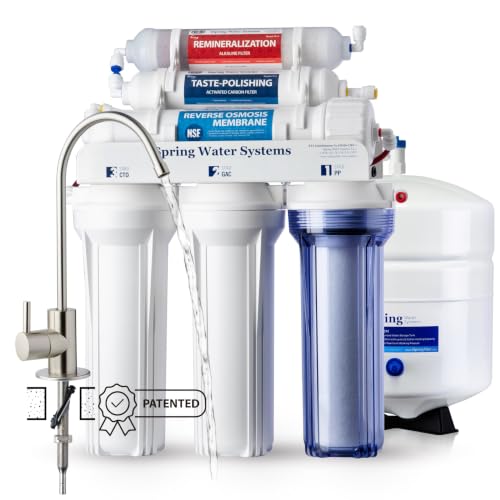
iSpring RCC7AK-BN Alkaline RO System
What We Like
- NSF 58 certified whole system
- Remineralization stage for balanced pH
- Transparent first-stage filter housing
- Patented top-mounted faucet design
Trade-offs
- 27.6 lb is heavy for under-sink installation
- Requires 27.6 lb unit to be lifted during installation
Full NSF/ANSI 58 certification for the entire system means every component has been independently tested to reduce a wide range of contaminants, including lead, fluoride, PFAS, and chlorine, among over 1,000 others. That level of third-party validation is rare among under-sink RO filters, and it gives you real confidence in the water coming out of your tap. The added remineralization stage delivers spring water with a balanced, healthy pH and multiple essential minerals, so filtered water tastes less flat. For anyone who wants both thorough purification and great-tasting water, this system delivers without cutting corners.
The iSpring RCC7AK-BN is a tank-based RO system, so it produces water more slowly than tankless competitors like the Waterdrop G3P600. At 75 gallons per day, you’ll have a steady supply for drinking and cooking, but filling a large container takes a bit longer than with high-output models. The 27.6-pound unit is heavier than many under-sink filters, so you’ll want sturdy cabinet space and a helper during installation. That said, the patented top-mounted fastener eliminates the need to tighten nuts from underneath the sink, making setup simpler than many traditional RO systems. The transparent first-stage housing lets you monitor contaminant buildup, so you know when it’s time for a filter change. This system is a reliable choice for your kitchen if you want NSF 58 certified performance and mineral-enhanced water.
Waterdrop G3P600 Tankless RO System

What We Like
- Smart display faucet with TDS and filter life tracker
- Tankless design saves 70% under sink space
- 2:1 low drain ratio produces less wastewater
Trade-offs
- Requires under-sink electricity for operation
- At 32 pounds, heavier than some under-sink systems
A 2:1 pure-to-drain ratio means for every two cups of filtered water, only one cup goes down the drain, cutting wastewater compared to many reverse osmosis systems. The tankless design saves 70% of under-sink space, and filter changes take about three seconds without tools or moving the unit, so maintenance stays simple. With a daily output of 600 gallons, this system fills an 8-ounce cup in eight seconds, delivering a steady flow for drinking or rinsing vegetables.
The trade-off is that this system needs an electrical outlet under your sink, which can be a dealbreaker if your cabinet lacks power. It’s also heavier than the Aquasana Claryum 3-Stage Max Flow, so installation may require a bit more effort. But if you have the space and an outlet, the real-time feedback from the smart faucet and the high flow rate make it a standout for anyone who wants to stay informed about their water.
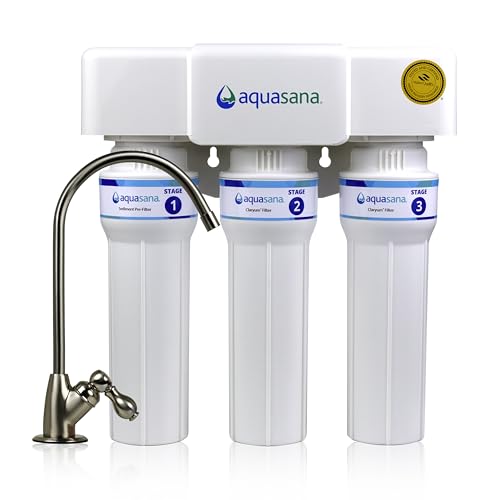
Aquasana Claryum 3-Stage Max Flow
What We Like
- 0.72 GPM flow rate
- Reduces 78 contaminants including PFAS
- Retains healthy minerals
- DIY installation kit included
Trade-offs
- Requires 15.85 inches under-sink clearance
- Does not reduce TDS
- Filter replacement every 6 months
This Claryum system is WQA certified to NSF 42, 53, and 401, reducing up to 99.99% of 78 contaminants including lead, PFAS, and microplastics while leaving beneficial minerals in your water.
The trade-off? This is a non-RO system, so it won’t reduce total dissolved solids (TDS) the way a reverse osmosis filter like the iSpring RCC7AK-BN would. If removing dissolved minerals and salts is a priority, you’ll want an RO system instead. But for fast, mineral-retaining filtration that tackles a broad range of contaminants, the Aquasana Claryum delivers a clean, convenient solution that requires 15.85 inches of under-sink clearance.
APEC Water RO-90 5-Stage RO System

What We Like
- 90 GPD high output capacity
- NSF certified for safety
- 5-stage filtration removes 99% of impurities
- 100% lead-free designer faucet included
Trade-offs
- Tank-based system takes up under-sink room
- 25-pound weight requires sturdy cabinet support
With a 90-gallon-per-day output and five-stage filtration certified by NSF to remove up to 99% of contaminants, this system delivers an enormous volume of ultra-pure water for a busy household. The large super-capacity filters mean fewer replacements over time, so you can enjoy crisp, bottled-water-quality taste without constant maintenance. It’s the right pick if your family goes through gallons daily and you want a proven, durable setup that doesn’t skimp on performance.
Size is the main compromise: at 25 pounds and with a storage tank, it needs more under-sink real estate than a compact tankless model like the Waterdrop G3P600. That extra bulk is the price you pay for the high flow rate and the peace of mind that comes from premium components and JG quick-connect fittings designed for a secure seal. For those with the room and the need for volume, this is a workhorse that won’t let you down.
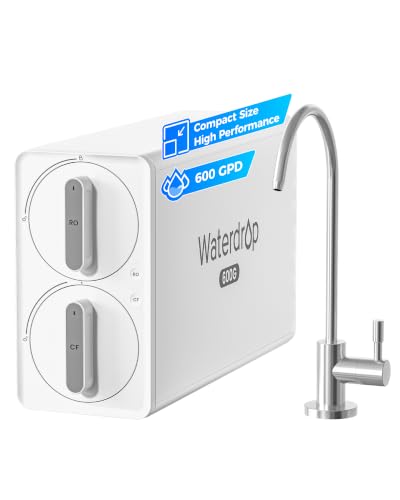
Waterdrop G6A6 Compact Alkaline RO
What We Like
- Ultra-compact tankless design saves 81.8% space
- 600 GPD high-flow for fast filling
- 8-stage filtration with mineral infusion
- 3-second twist-and-pull filter replacement
Trade-offs
- Mineral filter needs replacement every 6 months
- Not NSF certified for contaminant reduction (only lead-free materials)
The biggest selling point of this system is its compact size: it frees up over 80% of the under-sink space a traditional RO unit would take, so you can still stash a garbage disposal or cleaning supplies underneath. On top of that, it delivers 600 gallons per day, which means filling a water bottle takes just seconds. The eight-stage filtration includes a mineral layer that adds calcium and magnesium back for a balanced pH around 7.5. For anyone with a cramped cabinet who still wants the purity of reverse osmosis without sacrificing storage, this is a practical fit.
The mineral filter needs swapping every six months, while the RO membrane lasts a full two years. Compared to the iSpring RCC7AK-BN, which uses a bulkier tank design, the Waterdrop G6A6 is far more compact. For those with room for a larger system and a need for certified performance, the iSpring may be a better fit. But if saving every inch of cabinet space is your priority, this Waterdrop is the clear winner.
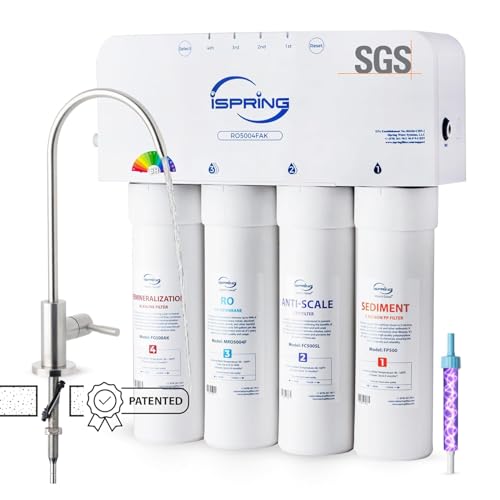
iSpring RO5004F-AK UV Alkaline RO
What We Like
- Built-in UV light lasts 8,000 hours
- Mineral boost adds essential minerals back
- Tankless design frees under-sink space
- SGS tested for PFAS and TDS reduction
Trade-offs
- Heavier than many tankless models at 15 lb
- Filter replacement set includes multiple cartridges
A built-in UV light that lasts up to 8,000 hours means this system adds an extra layer of protection against microorganisms. That makes it a strong pick for anyone who wants peace of mind about microbial contaminants. The 500 GPD output is fast enough to fill a pitcher or glass without waiting, and the 2:1 pure-to-drain ratio wastes less water than many traditional RO systems. With a mineral boost stage that adds back essential minerals and a balanced pH, it delivers water that tastes more like natural spring water than typical filtered water. This setup is ideal for households that prioritize both thorough filtration and great taste.
The filter replacement set includes multiple cartridges (FP500, FC500SL, MRO5004F, and FG500AK), so maintenance involves tracking several components rather than a single filter. Still, the UV protection and remineralization make it a well-rounded choice for those who want a complete, health-focused under-sink system without sacrificing flow rate or water quality.
Product photos
Aquasana Claryum 2-Stage Under Sink

What We Like
- Reduces 78 contaminants including lead and PFAS
- Retains healthy minerals like calcium and magnesium
- Easy twist-off filter replacement
Trade-offs
- Does not reduce Total Dissolved Solids (TDS)
- Requires 12 inches of clearance under sink
- Filter inlet/output use 1/4-inch tubing
At less than 10 cents per gallon, this two-stage system delivers a flow rate of half a gallon every minute, so you can fill a pot without waiting around. It reduces up to 99% of 78 contaminants, including lead and PFAS, while leaving beneficial minerals like calcium, potassium, and magnesium in your water. That makes it a practical choice for anyone who wants cleaner drinking water without stripping out the good stuff, all at a low cost over time.
This system won’t reduce Total Dissolved Solids (TDS), so if you’re after ultra-pure water like you’d get from a reverse osmosis system, the iSpring RCC7AK-BN Alkaline RO System is a better match. But that system takes up more under-sink space and costs more per gallon. For most households focused on taste and common contaminants, this Aquasana offers an easy, space-efficient solution.
Product photos
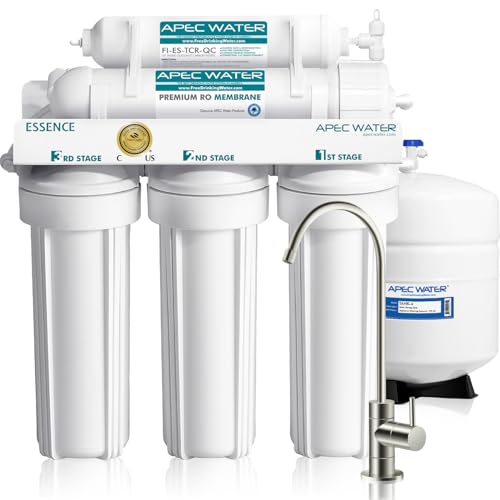
APEC Water ROES-50 5-Stage RO System
What We Like
- Quick-connect fittings for easy setup
- Removes 99.99% of impurities
- Includes all components for installation
- NSF/ANSI 372 & 58 certified
Trade-offs
- 50 GPD flow rate is slower than tankless systems
- Bulky tank takes up under-sink space
With a 50-gallon-per-day output and five-stage filtration certified to NSF/ANSI 58, this system strips away 99.99% of impurities including arsenic, lead, fluoride, and microplastics. The quick-connect fittings and color-coded tubing make it genuinely approachable for a first-time installer, and the kit arrives with everything you need from the tank to the brushed nickel faucet. For someone who wants ultra-pure water without calling a plumber, this setup keeps the process simple and the results reliable.
Speed and space are the trade-offs here. At 50 GPD, it fills a glass more slowly than higher-output models, and the included storage tank eats up cabinet real estate. The 24.9-pound weight adds to the challenge during installation. If your under-sink area is tight or you need high flow on demand, you might prefer a tankless model. But for straightforward DIY installation and proven filtration, this system delivers exactly what it promises.
Product photos
GE Dual Stage Under Sink System

What We Like
- Twist & Lock tool-free filter changes
- Push-to-connect fittings for easy install
- Filter change indicator on faucet
Trade-offs
- Filters need replacement every 6 months
- No reverse osmosis for heavy contaminant removal
The GE Dual Stage Under Sink System uses a twist-and-lock design that lets you swap filters without tools or mess, making it one of the most straightforward under-sink filters to maintain. With push-to-connect fittings, installation is equally simple, and the built-in filter change indicator on the faucet takes the guesswork out of knowing when it’s time for a new cartridge. This setup is ideal for someone who wants clean drinking water without the complexity of a multi-stage RO system or the hassle of scheduling professional maintenance.
You’ll also need to replace the FQK2J filters every six months, which is more frequent than some longer-lasting alternatives. For a homeowner who prioritizes quick, no-fuss upkeep over maximum contaminant removal, this system delivers a practical balance of performance and convenience.
Product photos
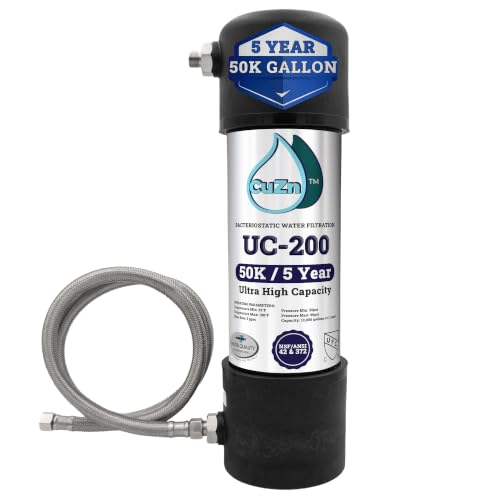
CuZn UC-200 Under Sink Filter
What We Like
- 5-year filter life reduces replacements
- Inline design for simple DIY installation
- NSF/ANSI 42 & 372 certified components
- 3-stage filtration retains beneficial minerals
Trade-offs
- Does not reduce TDS like RO systems
- Requires 15 inches of vertical clearance under sink
A five-year filter life is the standout feature here, most under-sink filters need replacing every six months, so this one saves you from constant cartridge swaps and ongoing costs. The CuZn UC-200 uses a 3-stage process with sediment membrane, KDF-55, and coconut shell carbon to reduce lead, chlorine, and PFAs while keeping beneficial minerals in your water. It’s an excellent pick if you want simple, low-maintenance filtration without the complexity of a reverse osmosis system, and the inline design means you can install it yourself without drilling.
This filter doesn’t reduce total dissolved solids (TDS), so if you’re after the purest mineral-free water, you’d want a reverse osmosis system like the iSpring RCC7AK-BN instead. The UC-200’s 15-inch height also requires a bit more vertical clearance under your sink than some compact models. But for anyone who prioritizes long filter life and straightforward installation over ultra-pure output, this is a smart, fuss-free solution that keeps your tap water tasting clean for years.
Product photos
How We Evaluated Under Sink Water Filter Systems
Our evaluation began with a deep dive into manufacturer specifications and certifications for each system. We examined NSF/ANSI standards, contaminant reduction claims, flow rates, and physical dimensions to understand what each filter promises and how it performs on paper. This data formed the foundation for comparing systems head-to-head.
We then identified four criteria that matter most for under-sink water filters. Filtration capability covers what contaminants a system removes and whether it holds independent certifications. Physical footprint considers height, depth, and whether the system uses a tank or tankless design, since cabinet space is always at a premium. Installation and maintenance looks at how easy the system is to set up and how often filters need changing. Flow rate and capacity determines whether the system can keep up with a busy household’s water demands.
This is a research-led evaluation, not a hands-on test. We rely on published data, expert consensus, and what owners consistently report in their feedback. The best system for you will depend on your specific water quality concerns, cabinet dimensions, and whether you have access to an electrical outlet under your sink.
What To Look For In Under Sink Water Filter Systems
Choosing an under-sink water filter means matching your water quality needs with the physical realities of your kitchen cabinet. Here are the key factors to consider before you buy.
Focus on three things: what contaminants you need removed, how much space you have under your sink, and how often you want to change filters. These three factors will narrow your choices significantly.
Filtration Type and Contaminant Reduction
The biggest decision is whether you need reverse osmosis (RO) or a simpler carbon-based filter. RO systems remove the broadest range of contaminants, including heavy metals, fluoride, nitrates, and total dissolved solids (TDS). Non-RO systems like the Aquasana Claryum models retain beneficial minerals but do not reduce TDS. Check your water quality report or use a home test kit to identify what is actually in your water before choosing a system.
Physical Dimensions and Cabinet Clearance
Measure your under-sink space carefully before shopping. Tank-based RO systems like the APEC Water RO-90 require significant cabinet room for both the filter housing and the storage tank. Tankless designs like the Waterdrop G6A6 save up to 81.8 percent of under-sink space but may require an electrical outlet. Minimum clearance heights range from 12 to 16 inches depending on the model, so a tape measure is your most important tool.
Flow Rate and Tank Capacity
Flow rate determines how fast water comes out of your dedicated faucet. Non-RO systems typically flow faster, with the Aquasana Claryum 3-Stage reaching 0.72 GPM. Tank-based RO systems store filtered water and dispense it on demand, so the tank’s gallon capacity matters for filling large pots. Tankless RO systems like the Waterdrop G6A6 offer high flow rates up to 600 GPD but require electricity to operate.
- Measure your under-sink cabinet height, depth, and width before shopping.
- Check whether you have an electrical outlet under the sink for tankless or UV systems.
- Verify your incoming water line size and shut-off valve type.
- Consider how often you are willing to change filters, from every 6 months to every 5 years.
A simple rule: the more contaminants you want removed, the more space and maintenance the system will require. There is no free lunch in water filtration.
Under Sink Water Filter Systems Compared
The table below compares the ten under-sink water filter systems across key specs so you can see at a glance which models fit your needs.
| Product | Filtration Stages | Dimensions | Weight |
|---|---|---|---|
| iSpring RCC7AK-BN Alkaline RO System | 6-stage | 14.5 x 5.2 x 18.5 in | 27.6 lb |
| Waterdrop G3P600 Tankless RO System | 8-Stage | 18.1 x 5.7 x 17.8 in | 32.0 pounds |
| Aquasana Claryum 3-Stage Max Flow | 3-Stage | 12.0 x 4.2 x 12.8 in | 8.3 pounds |
| APEC Water RO-90 5-Stage RO System | 5-Stage | 16.0 x 5.2 x 17.5 in | 25.0 lb |
| Waterdrop G6A6 Compact Alkaline RO | 8-Stage | 15.9 x 5.3 x 9.6 in | N/A |
| iSpring RO5004F-AK UV Alkaline RO | UV + Alkaline + RO | 15.2 x 6.1 x 16.6 in | 15.0 lb |
| Aquasana Claryum 2-Stage Under Sink | 2-Stage | 8.2 x 4.2 x 9.0 in | 0.1 pounds |
| APEC Water ROES-50 5-Stage RO System | 5-Stage | 15.5 x 5.2 x 17.0 in | 24.9 lb |
| GE Dual Stage Under Sink System | Dual Stage | N/A | 4.0 pounds |
| CuZn UC-200 Under Sink Filter | 3-stage | 4.5 x 4.5 x 15 inches | N/A |
Frequently Asked Questions
What is the difference between reverse osmosis and carbon filtration?
Reverse osmosis forces water through a semi-permeable membrane to remove up to 99 percent of contaminants, including heavy metals, fluoride, and dissolved solids. Carbon filtration uses activated carbon to reduce chlorine, taste, odor, and some organic compounds but does not remove TDS or fluoride. RO systems require more space and produce wastewater, while carbon filters are simpler and retain beneficial minerals.
How much under-sink clearance do I need for a water filter system?
Clearance requirements vary by model, but most systems need at least 12 to 16 inches of vertical space under your sink. Tank-based RO systems require additional room for the storage tank, often adding 10 to 12 inches of width. Always measure your cabinet height, depth, and available floor space before purchasing, and check the manufacturer’s minimum clearance specifications.
Do under-sink water filters require electricity?
Most standard carbon filters and tank-based RO systems operate without electricity. Tankless RO systems and models with UV lights or smart displays require a standard electrical outlet under the sink. If your cabinet does not have an outlet, you can hire an electrician to install one or choose a system that does not need power.
How often do I need to replace the filters?
Filter replacement schedules range from every 6 months for most carbon and sediment filters to every 2 to 3 years for RO membranes. The CuZn UC-200 stands out with a 5-year filter life, significantly reducing maintenance frequency. Many systems include filter life indicators on the faucet or through smart display features to remind you when replacement is due.
Will an under-sink filter remove lead and PFAS?
Many under-sink filters are certified to reduce lead and PFAS chemicals. The Aquasana Claryum models specifically list PFAS reduction among their 78 contaminant claims, and RO systems like the iSpring RCC7AK-BN remove lead along with a wide range of other impurities. Always check the manufacturer’s certification and contaminant reduction list to confirm the system targets your specific concerns.
The Bottom Line
The iSpring RCC7AK-BN Alkaline RO System is our Best Overall pick for homeowners who want a fully certified, remineralized reverse osmosis system that delivers great-tasting water. Its NSF 58 certification and alkaline stage set it apart for those who prioritize both safety and flavor, though the 27.6-pound weight means installation is a two-person job.
If your under-sink space is tight, the Waterdrop G6A6 Compact Alkaline RO saves 81.8 percent of cabinet space while delivering fast-flowing mineral-enhanced water. For budget-conscious households, the Aquasana Claryum 2-Stage provides broad contaminant reduction at an affordable price point without the complexity of RO.
The single most important factor in choosing an under-sink filter is matching the system’s contaminant reduction to your actual water quality. Test your water first, measure your cabinet second, and the right choice will become clear.
